
























More than 92,000 D-Link NAS systems discovered vulnerable to remote attack
Apr 8, 2024
John Aldred
John Aldred is a photographer with over 25 years of experience in the portrait and commercial worlds. He is based in Scotland and has been an early adopter – and occasional beta tester – of almost every digital imaging technology in that time. As well as his creative visual work, John uses 3D printing, electronics and programming to create his own photography and filmmaking tools and consults for a number of brands across the industry.
Share:

A Network Attached Storage (NAS) system is pretty common for photographers and filmmakers. When we pick up our cameras, we’re often doing so to create a large amount of data, and we need somewhere to store it – and/or back it up.
One brand of NAS systems is D-Link, the same company that makes routers and other networking hardware. Well, they’ve made more than 92,000 NAS systems vulnerable to attack, and they’re not doing a thing about it.
D-Link NAS: What’s the problem?
According to Bleeping Computer, a threat researcher has discovered a hidden backdoor in multiple D-Link NAS storage systems. A backdoor that they say is hard-coded into the device. That means it was put there intentionally by somebody at D-Link.
The flaw only appears to have been discovered in some of their end-of-life products. However, many customers will still use them if they still fit their storage needs. After all, if it ain’t broke, why fix it?
The flaw was discovered by “Netsecfish” and affects models including the DNS-340L, DNS-320L, DNS-327L and DNS-325, among others. He also discovered a second injection vulnerability through which attackers can provide it with commands to have it assist in Distributed Denial of Service (DDoS) attacks.
What is a backdoor?
A backdoor in computing is essentially a way for somebody to access a system by means other than the officially intended method.
It’s analogous to real life. You’ve got a house, and you have a front door on which guests knock. You can then you can choose to let them in or not – or you can give them a key so that they can get in whenever they want.
But those people you don’t want coming into your house… It doesn’t matter how much you reinforce your front door or how many locks you put on it if you’ve got a back door that they can use to easily bypass your security and get into your property.
A software backdoor works on essentially the same principle. It’s a way for somebody to bypass the main way into the system and just get in. The only real protection you have is that most people don’t know those backdoors exist.
But once it becomes common knowledge, as is the case now with the affected D-Link NAS systems, anyone can get in.
What are the affected models?
Netsecfish describes four different models of D-Link NAS, with several firmware version numbers, that are vulnerable to the backdoor exploit. Again, these are end-of-life products and the last updates were quite a while ago.
- DNS-320L Version 1.11, Version 1.03.0904.2013, Version 1.01.0702.2013
- DNS-325 Version 1.01
- DNS-327L Version 1.09, Version 1.00.0409.2013
- DNS-340L Version 1.08
But these backdoors existed while they were still current, fully supported models. Someone at D-Link would have known they were there the entire time. And no patches were ever released. While the backdoor might have only been made public now, you can pretty much guarantee that people knew about it and exploited it back then.
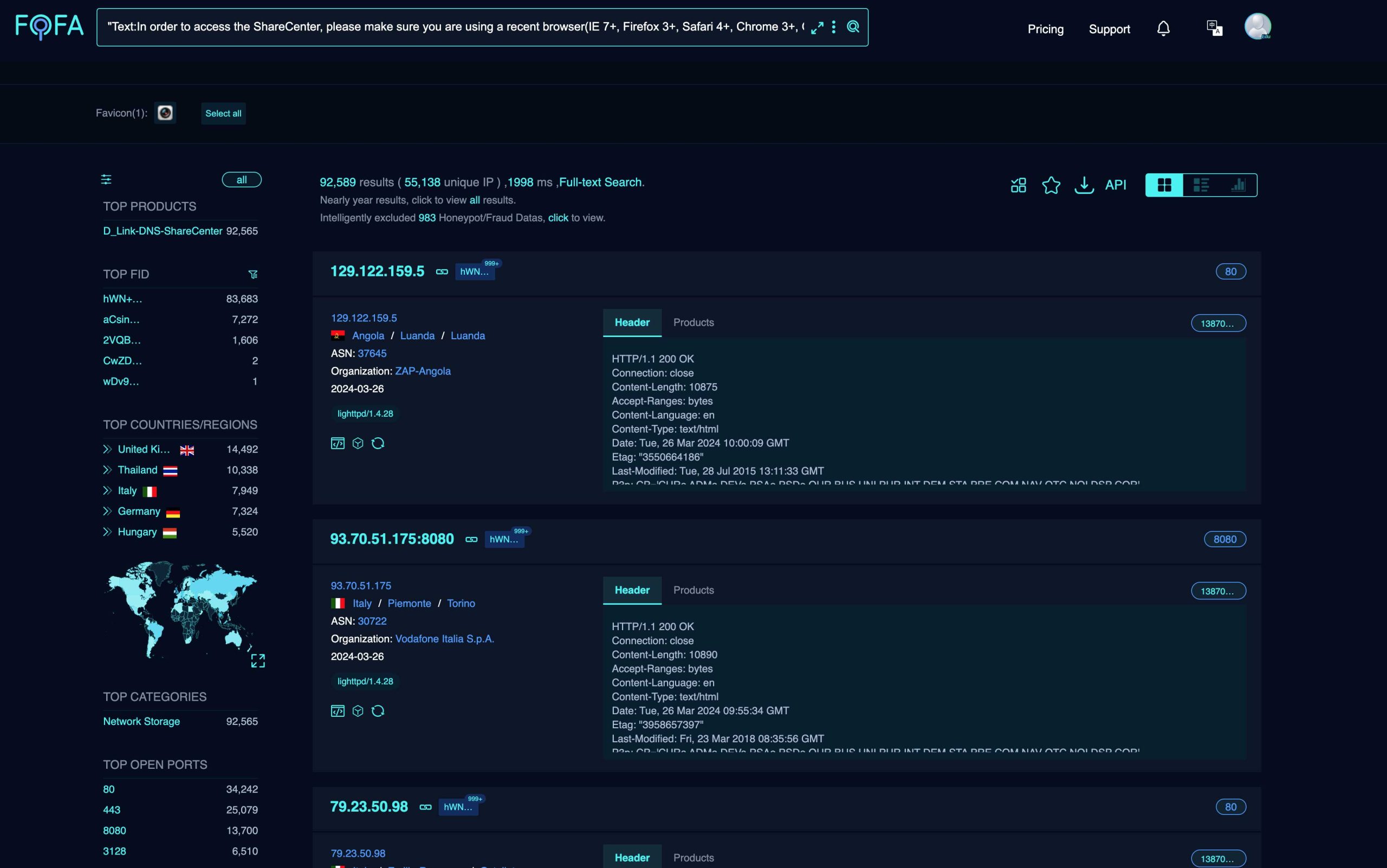
There are likely more vulnerable models out there that netsecfish hasn’t been able to test. So far, he has discovered more than 92,000 vulnerable D-Link NAS systems connected to the Internet. The UK tops the chart with almost 14,500 affected devices.
What is D-Link doing about it?
The company is doing absolutely nothing to fix the vulnerabilities contained within these NAS systems. Essentially, as far as they’re concerned, they’re old, obsolete, end-of-life products. If people want a fix, then they need to buy one of D-Link’s newer NAS systems.
They did, however, put out a notice on their website warning users of these devices to go and upgrade.
D-Link US recommends that D-Link devices that have reached EOL/EOS be retired and replaced.
So, this is generally a fair response. Nobody’s asking Microsoft for Windows XP updates anymore. And you’ll never get iOS15 running on your iPhone 3GS. The products in question went end-of-life between 2017 and 2020.
But, again, this backdoor existed while they were still current models. I mean, if there’s been no new firmware updates since they were dumped, it couldn’t have been introduced after, right?
Call me crazy, but when it turns out that a company intentionally puts a backdoor in their products that renders all my files (and more) at risk, I’m never buying one of their products again. Especially when their solution is “buy a new one” without so much as an apology.
What should you do about it?
If you’re still using an old D-Link NAS to store your photos and videos, I would do as D-Link suggests. Go buy a new NAS system. But probably best to go buy one from somebody else.
Sure, D-Link isn’t the only company that’s had NAS issues. Drobo has had its share of problems in the past and in 2021, Western Digital faced its own exploit issues – which were different from its 2018 exploit issues on the same devices – although WD is usually quick to patch where possible.
D-Link also isn’t the only company that abandons products after a certain amount of time. But, given that the exploit was actually created by somebody at D-Link and intentionally placed into their products, how much trust can you have in the company or its products going forward?
I mean, until somebody discovers one, there’s no reason to believe that there are similar backdoors in current model D-Link NAS systems. Well, you know, except for the fact that they’ve done it before.
I’ll let you decide how much you think you need to be worried about your own data security, but I doubt I’ll be buying another D-Link product again.
[via Bleeping Computer]

John Aldred
John Aldred is a photographer with over 25 years of experience in the portrait and commercial worlds. He is based in Scotland and has been an early adopter – and occasional beta tester – of almost every digital imaging technology in that time. As well as his creative visual work, John uses 3D printing, electronics and programming to create his own photography and filmmaking tools and consults for a number of brands across the industry.



Join the Discussion
DIYP Comment Policy
Be nice, be on-topic, no personal information or flames.
5 responses to “More than 92,000 D-Link NAS systems discovered vulnerable to remote attack”
To exploit this, the attacker need port 80 access on your NAS. This only can happen remotely if you explicitly forward port 80 from your external router to the internal NAS ip, which is very unlikely. This could also happen if he have access to your wifi, but using guest access and strong passwords should prevent this.
Well, there are at least 92,000 units out there that are configured with port 80 access via the router, hence how they were able to be detected. Many people want remote access to their NAS when they’re not at home.
Stop calling it intentionally. No manufacturers put a hackeble backdoor in their product intentionally. It might be an oversight or bad design, but doing it intentionally is bad business.
You calling it “intentionally” make you sound like a conspiracy theories or even worse, dum.
Not removing it might have been an oversight but putting it there was absolutely intentional. Also, it’s spelled “dumb”. :)
End of life or not – things are different if we’re talking about a vulnerability that could become a real exploit or a backdoor. And the difference is called INTENTION.
From the information available at https://github.com/netsecfish/dlink?tab=readme-ov-file it does not seem like a sloppy software development mistake. It more looks like blatant malice on manufacturer’s side. And this is where you can’t cheap out with the EoL excuse. “Ey, bro, sorry that your car just blew up with the time bomb we built into it at factory level and killed your wife. It’s out of warranty!”. Hopefully someone is sueing those honorable folks at D-Link.
I have a D-Link DGS-108 at home. This is a “dumb” switch, i.e. no HTML frontend, no management, no configuration. Hopefully it is dumb enough and does not phone home or do other weird things.