





















This DIY 3D printed adapter lets you use your speedlight softboxes on Bowens mount strobes and LEDs
Jun 21, 2022
John Aldred
John Aldred is a photographer with over 25 years of experience in the portrait and commercial worlds. He is based in Scotland and has been an early adopter – and occasional beta tester – of almost every digital imaging technology in that time. As well as his creative visual work, John uses 3D printing, electronics and programming to create his own photography and filmmaking tools and consults for a number of brands across the industry.
Share:

For a lot of photographers, when we started dabbling with flash, we used speedlights. And even if we didn’t, we might have bought a small strobe like the Godox AD200 and one of those 60cm square softbox kits with the S1 or S2 bracket. But as we upgrade to larger Bowens mount strobes or LED lights, those softboxes kind of just sit there on the shelf doing nothing.
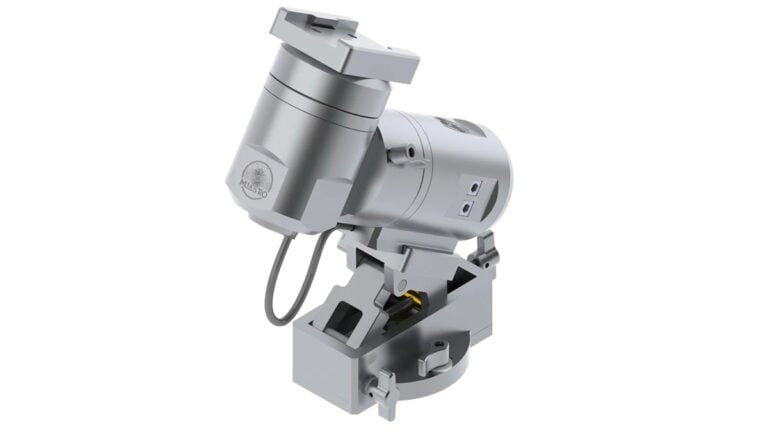
Well, Farrukh Pitafi has solved that issue by designing a 3D printable adapter that mounts into your light’s Bowens mount socket and provides the ring around the outside to let you use those speedlight softboxes. And he’s made the files available to download so you can make your own.
In the video above, Farrukh goes through his entire design & modelling, slicing, printing and fitting process from start to finish to help you get the best results and from his demonstration of the adapter, it seems to work extremely well. There are a couple of caveats, though, as Farrukh mentions in the video. Not least of which is the material you choose to print it with.
You might get away with PLA for low-powered strobes, but if you’re going to be using big strobes – especially if you’ve got the modelling light on often – or continuous LED lights, then they’re going to get fairly hot and PLA doesn’t stand up to heat too well. You really don’t want to melt this thing into your Bowens mount socket and even relatively low power 60W LED lights can get quite warm. So, he suggests other materials like PETG or ABS. Those materials aren’t immune to heat either but they’re going to withstand a lot higher temperatures than PLA without permanently deforming.


If you want to download Farrukh’s Bowens mount modifier to use speedlight softboxes on your bigger lights, head on over to Thingiverse and be sure to check out Farrukh’s YouTube channel to see his other content.
See more from DIYPhotography.net on Google
Add DIYPhotography.net as a trusted source. This makes
our stories more likely to appear in your Google Search results.
 Add as a preferred source on Google

John Aldred
John Aldred is a photographer with over 25 years of experience in the portrait and commercial worlds. He is based in Scotland and has been an early adopter – and occasional beta tester – of almost every digital imaging technology in that time. As well as his creative visual work, John uses 3D printing, electronics and programming to create his own photography and filmmaking tools and consults for a number of brands across the industry.


Join the Discussion
DIYP Comment Policy
Be nice, be on-topic, no personal information or flames.
9 responses to “This DIY 3D printed adapter lets you use your speedlight softboxes on Bowens mount strobes and LEDs”
I so need to get myself a 3D printer: there are so many cool things to print.
Do what I did before I got a 3D printer… Get Udi to print it. ;)
@disqus_3VWXoe5ucH:disqus – I’ll play!
just using a bowens mount speedring insert will get you the same thing. This is a product of stupiditiy/ignorance.
The only thing stupid and ignorant here is your comment. Have a great day! :)
Sorry to say but you’re the one on the ignorant side here
Genius!
I’m wanting to 3D print a light modifier (like a custom snoot) for my Godox AD600 Pro, but I only have PLA available to me.
My concern is about losing rigidity (which is supposed to be around 140-149 F.) with the modeling light, or with moderate usage. Any thoughts or advice?
I don’t know what you mean about only having PLA available to you, but I’d print in PETG. Most places that sell PLA will also sell PETG.