

















Using Infra Red Masters To Trigger Optical Slaves
Oct 3, 2011
Udi Tirosh
Udi Tirosh is an entrepreneur, photography inventor, journalist, educator, and writer based in Israel. With over 25 years of experience in the photo-video industry, Udi has built and sold several photography-related brands. Udi has a double degree in mass media communications and computer science.
Share:
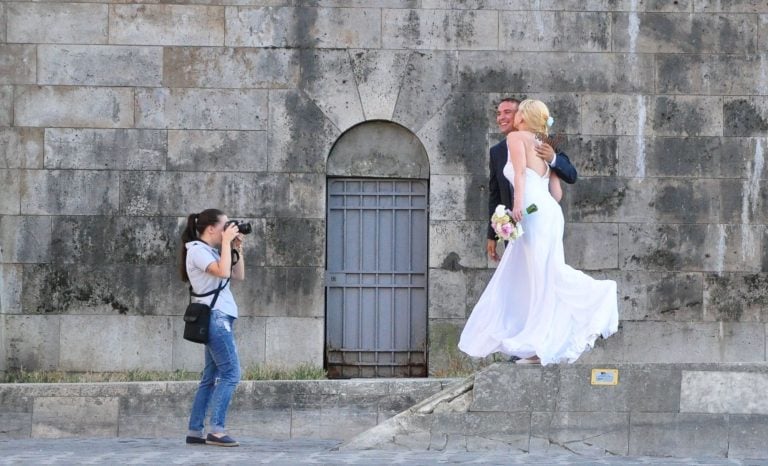
 If you’re an avid Strobist, you know that the Strobist community is all about off-camera flash. In fact your submitted images can be removed from the pool if you use an on camera flash (there are exceptions to anything, of course, but as a general thumb rule this is how it goes).
The only exception allowed is “FWIW, on-camera flash is fine if it is used to trigger other off-camera flashes”, I assume that this exception was set in place for those who can not afford wireless triggers or only have one slave flash with an optical sensor.
This thing is that triggering a slave with an on board flash may impact the lighting of an image. even if you set the master to its lowest output three is some light coming from that flash.
Now, it is it fill you are after, this may actually be a conscious decision, but if you want no flash at all coming from on camera, there is a simple hack to make only optical sensors magically see the master’s light burst. I call it The Dark Master. buehahahahahahHAHAHAHA!
Photographer Victor W (who is no small gun when it comes to off camera flash hacking) came up with a smart method of hiding the light burst from anything but optical slaves – make it Infra Red.
The nice thing about slave sensors is that most are very sensitive to infra-red light. So the sensor does not really care if it get hit by a white light, a warm light or just a dull unseen to the naked eye infra-red light.
Sadly, camera sensors are also sensitive to infra red light. But luckily for us most digital cameras actually have an IR filter to block out any IR light from hitting the sensor, so for all we care, infra red light has a really small impact on “regular” digital photography.
There are two parts for this hack a simple part and a simpler part.
Part One – Create an Infra Red Filter
You’ll need an unused E6 (A.K.A Slide) film and a… well that’s about it. Get it developed, unexposed, and make sure you clearly instruct the lab to process your “dead” film.
Here is how Victor explains it:
“Because these ‘slides’ were displayed via a projector they are clear to infra red light otherwise they would melt under the intense heat of the projection bulb.
So if you purchase a blank slide film and send it for processing it will be returned as you can see from the picture above completely black. Plus completely clear to infra red light!! Very handy. #

Part Two – Cover Your Strobe
Here you’ll want to cover your master completely with two sheets of “IR filter”. If you go through this exercise make sure you leave enough space between the slide and flash for heat to dissipate so the slide won’t stick to your strobe.
“A double thickness, (ie two overlapped pieces), is as good as any 720nm commercially available filter. If you want bigger pieces then purchase a ‘120’ slide film and if you want really big bits then you can still obtain large format slide film, (5 inches by 4 inches).
You can use this to make your own Infra red filters for the lens of your camera, (small pieces on your camera phone/compact works well), or as I have done in the picture below make an Infra red flash.#

See more from DIYPhotography.net on Google
Add DIYPhotography.net as a trusted source. This makes
our stories more likely to appear in your Google Search results.
 Add as a preferred source on Google

Udi Tirosh
Udi Tirosh is an entrepreneur, photography inventor, journalist, educator, and writer based in Israel. With over 25 years of experience in the photo-video industry, Udi has built and sold several photography-related brands. Udi has a double degree in mass media communications and computer science.




Join the Discussion
DIYP Comment Policy
Be nice, be on-topic, no personal information or flames.
One response to “Using Infra Red Masters To Trigger Optical Slaves”
When i use this system on my flash, mine film burn and make smoke… tryed different films, why ?