















Using A Double Flash Bracket To Add Modeling light To Your Setup

DSC_4404

One of the downsides of using a small strobe is that you don't get the nice modeling light like the big studio guns.

That means that you have to pre-visualize your light. If you are new to strobes this may not be trivial even on a bare strobe, but throw some modifiers in (e.g. a softbox or an umbrella) and it get even harder. This is why a modeling light is can be your best friend as you make your first steps into the modifiers world. In this tutorial I will explain how you can add a modeling light to a strobe using a DIY Double Flash Bracket, but any double flash bracket will do.

The build is really straight forward, say 5 minutes of work (20 if you count the round trip to Home Depot), but involves live wires. That means that the usual disclaimer applies - either know what you're doing or get help from your local electrician. Modeling light is great, but it is not worth dying over.

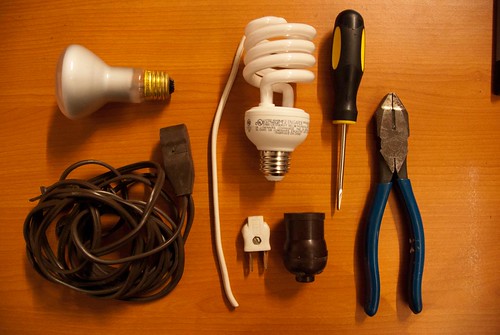
Materials
DSC_4393

  • 1 CFL Lamp (saves on both heat and power vs. Tungsten)
  • 1 Lamp Socket
  • 1 Plug
  • A Short Power Cable
  • 1 Extension cord (optional if you made the short power cable long).
  • Pliers, screwdriver and other tools.
  • Optional: Double Flash Bracket.

Instructions

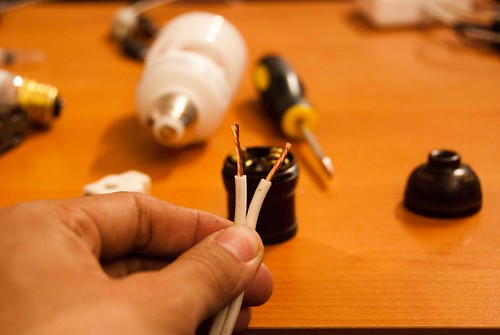
The first step is to equip the socket with a short power cord.
DSC_4396

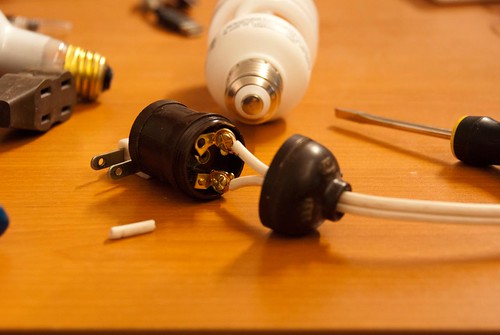
Expose the wires on the short cord

DSC_4398

Screw the wires into the socket and tighten the screws. If you have a cable that is already attached to a plug, great! Recycle it into this project. If not, screw the other end of the cable to a plug.

DSC_4400

Here is what the project looks like without a strobe, just the modeling light and bracket.

DSC_4401

Remember, we are using the Double Flash Bracket here, but this is just one way of doing this. A pony spring clamp will probably work just the same if you clamped it to a light stand and attached the socket on the clamp's legs.

DSC_4402

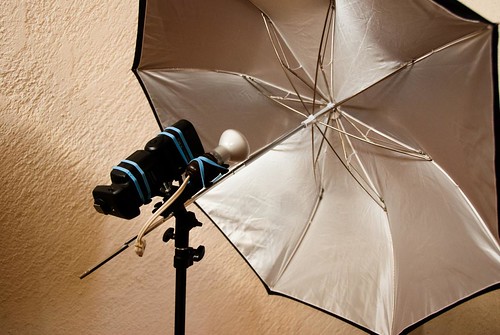
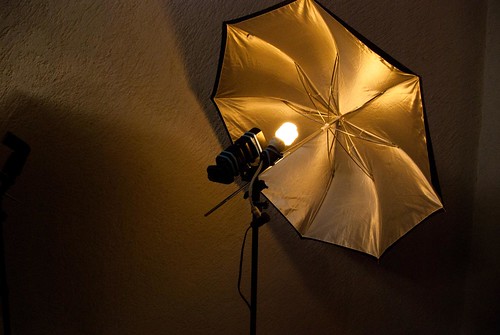
Now you can see how the construction comes together, a strobe on one"leg" of the bracket and a lamp on the other. In this specific one I used a tungsten lamp, which is really hot, so be careful. In the images below I opted for the CFL type as it is easier to handle.
DSC_4406

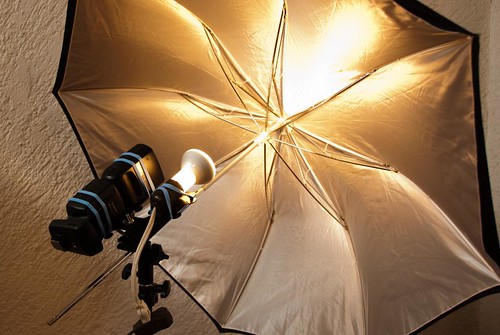
In the image below, you can see me using the same device for modeling a Westcott Apollo 28". In this case it is even more critical to use a CFL bulb as heat from a tungsten bulb will build up and eventually set your box on fire.

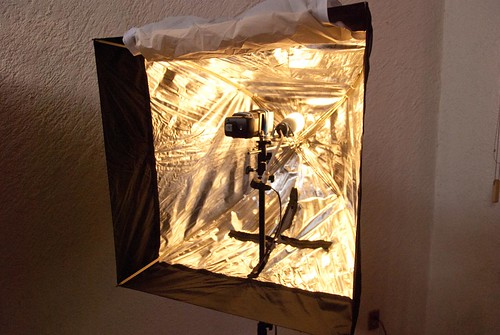
DSC_4408

DSC_4407

There you have it, instant modeling light.

About The Author

Ray Panduro is a photography hobbyist who adopts the analog passion to the digital era. You can follow his stream here.

Get the DIYP greatness via RSS, newsletter and Twitter
Connect with the community: Facebook Page, Discussions
Share Ideas, Setups, Images and Projects on DIYP's Flickr, visit Readers Photos

Comments

really nice stuff...

really nice stuff....

I had been trying out some video with LED light and silver umbrella.... gotta try this one...

thanks for sharing this!! :)

At the right time!

I was wondering how I could do this, now I have a pretty good idea! lol

Thanks for sharing, i'm busy

  • January 23, 2012
  • Nadine

Thanks for sharing, i'm busy making a similar thing as i don't have a strobe, or light or softbox.  but this is a great idea.

CFL modeling light

  • January 23, 2012
  • Joe

How do you wire it so that the modelling light turns off while the shutter is open as they do on actual studio strobes?

Hi, the modeling light does

Hi, the modeling light does no turn off, but if you recall your strobist knowledge if you use a high shutter speed you can kill the modeling light like the ambient light, just remember to use a light that is not brighter than your flash... and also remember the modeling light just to let you know how will the light hit your subject once you are happy with the position you can turn it off an just use the strobe.

:D

Awesome idea! Might try this. 

Add just one more step...

Great post... I love the whole site.

I'd add a note for the inexperienced though... use an "underwriter's knot," so named because it prevents injury and fire.

All you have to do is tie the two wires together in a special bulky knot after they are threaded through the hole in the base and before screwing the bare wires onto the contacts. That way a tug on the cord is stopped by the knot, instead of pulling a wire off the contact.

Here's an explanation:

http://electrical.about.com/od/wiringcircuitry/a/underwriterknot.htm


Modeling Light Hack

Couldn't I just strap on a flashlight? This would be less work overall and make the whole thing portable. I know the light distribution wouldn't be as good, but it would work for the most part wouldn't it.


That is an idea that I

That is an idea that I thought as well but at home and doing a lot of strobist I will need a lot of battery to be functional besides the ones used in the strobe, but as you say is a good idea to be portable for travels :D

good idea but...

  • January 23, 2012
  • Gary

The modelling lght definitely helps previsualize, it also assists the autofoucus in a low light situation. Although I don't think a low wattage incandescent tungsten lamp wil cause a fire in your softbox, it will get very hot. The other issue, though, is using mixed color values. As the first image of the the CFL setup shows a yellow cast (White Balance possibly set to Daylight) most common household CFL I've seen are not color rated. Yes, some more advanced "photo" CFL have *K temp ratings but those are pricey. I'm seeing the price drop on the new LED medium base lamps and I've seen daylight rated on some. They give a long life, low power consumption and they are dimmable, unlike the CFL. With more availability the prices will drop and they will become the standard.

I forgot to mention that you

I forgot to mention that you need to adjust the white balance but get a correct CFL with a daylight color balance. It just happen that those are the to lights that I have at home to recycle xD, but If you know how to take advantage of the modeling light and kill the ambient light will work fine no matter what color is the modeling light.

If on location you could also

  • January 23, 2012
  • Mark

If on location you could also use a high powered LED tourch (flash light)

The same post but in spanish

Thanks for the post Udi, Im glad you like it and is helping others to creat interesting stuff, if sombody  needs the translation in spanish you can visit the post in my blog

http://www.pixelanalogo.com/2012/01/17/como-incorporar-una-luz-de-modela...

Any comment let me know

Si requieren el post en español lo pueden checar en mi blog:

http://www.pixelanalogo.com/2012/01/17/como-incorporar-una-luz-de-modela...

Saludos!

Great Idea

  • January 24, 2012
  • Zeke

So simple it never occured to me. Great idea!

Great idea but ...

This kind of post is one of the reasons this blog is so popular:-) One thing though: modeling using AC powered light soures will limit your ability to shoot on remote locations. What if we swap the lamp with a strong, battery operated tourch? Does that makes any sense?

Post new comment

The content of this field is kept private and will not be shown publicly.
CAPTCHA
This question is for testing whether you are a human visitor and to prevent automated spam submissions. It is not case sensitive
3 + 6 =
Solve this simple math problem and enter the result. E.g. for 1+3, enter 4.