








Do photographers see what other people don’t?
Feb 13, 2017
Martin Cox

We love it when our readers get in touch with us to share their stories. This article was contributed to DIYP by a member of our community. If you would like to contribute an article, please contact us here.
Share:

I had a few hours to kill before work this morning. So I decided to head down to a public garden a few miles from my house. In the summer this place is full of colour, with roses growing everywhere, up trellises, along the walls, above your head. It’s an old Fort on the seafront, built to defend the city from French invasion.
At this time of year, it was dead. The only colour was the light grey of the footpaths, & the brown of the soil. I was sitting on the ground, trying to get some nice low angle shot of the sundial in the middle, when a couple of little old ladies walked along behind me. I didn’t hear much, but I did hear one of them say “Perhaps he sees something we can’t.”
As I was cycling home again I started to think about what they had said. Since I started taking photography seriously, I often find that I think about what I see in a different way. I try to look past the everyday stuff, & look for the underlying patterns in the world around me, or the colour in unexpected places. Instead of thinking “Oh, that’s a nice view” I think about how best to capture the moment, & share it with the world. I don’t think I saw anything that they could not, but I hope I was able to see it in a different way.
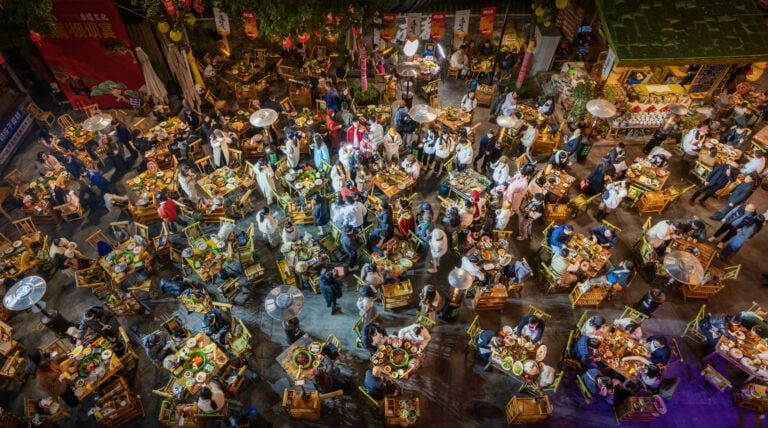
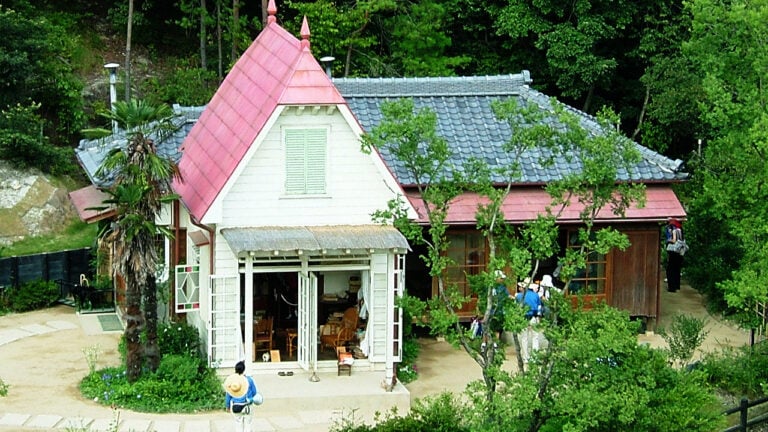
I’ve got some of the photos here. It’s not my best work though:


About the Author
Martin Cox is an amateur photographer based in Portsmouth, UK. He enjoys creating portraits of his friends and family, as well as shooting in cemeteries. His aim is to build up skill and confidence in street photography, documenting everyday life in an engaging way. If you’d like to see more of his work, you can check out his website.

We love it when our readers get in touch with us to share their stories. This article was contributed to DIYP by a member of our community. If you would like to contribute an article, please contact us here.


Join the Discussion
DIYP Comment Policy
Be nice, be on-topic, no personal information or flames.
11 responses to “Do photographers see what other people don’t?”
I think it’s a mixture of both. I think being a photographer helps you be more observant & in that way can often see things that others may not even notice & it also helps you see things in a different way, not just seeing an object but noticing it’s actual shape, colour, the way the light hits it & how it would look at a different vantage point. I know personally since I’ve begun to photograph more, I look the world around me in a different way & notice more around me than before. Definitely one of our “superpowers”, along with being able to freeze time.
why posting medicore snapshots that are fugly as they can get.
the exposure sucks, the sky is blown, nobody knows what is the subject in these images.
hy posting medicore snapshots that are fugly as they can get
he exposure sucks, the sky is blown nobody knows what is the subject in these images. [source?]
he whole framing and composition is done without any thoughts. [Source?]
s this an experiment? ike showing art critics images painted by a monkey and wait for their reaction?
The grammar in your eloquent comment is hardly the work of an intelligent being. Maybe it would be wise to actually learn a thing or two about the art of ‘constructive’ criticism, instead of bashing your forehead on the keyboard like a Neanderthal trying to scratch an itch and attempting to form some coherent sentances?
What is there not to be understood in his comment?! His statement is more than valid. Snapshots with no value at all. This is not a C&C website, don’t post it if it looks like shit.
Perhaps you’ve failed to notice that English doesn’t appear to be the first language of many of the contributors to this site. Why would you expect any different from its readers?
Despite the grammatical issues, the comments were spot on.
i had the same thought, the topic of the article is intresting but the shots are garbage and totally unrelated.
For me, many times it’s “yes”. It can be incredibly distracting. I’ll get caught up on some detail and “lock” onto to it. It doesn’t stop the workflow. I have enough experience to move fast, adapt/adjust, and “let it go”.
In many ways it’s a throwback to my film, studio, and deadline days. You had to “get it right” fast or it could get expensive and crazy down the line. Often both. Ah, the good times – when I’d walk into the studio and find a catalog shoot with a dozen objects and whimsical layouts – with proofs due in 24 hours. At best, you could pop off a Polaroid to check things – if you were working with large format film. Maybe. The shot had to be right “in your head” before pressing the shutter, so you could break the set and move on to the next object. The goal was to “get it in one shot”.
Digital changed that – a little. The expense of film isn’t a factor, you can review a shot much faster, and it’s easier to digital retouch (sometimes).
Freeman Patterson:
“Seeing, in the finest and broadest sense, means using your senses, your
intellect, and your emotions. It means encountering your subject matter
with your whole being. It means looking beyond the labels of things and
discovering the remarkable world around you.”
This isn’t about critiquing the images here. I can see “the idea” behind them. They’re “in the moment shots”, and “Inspiration” is an appropriate tag. That’s good. It’s also an overcast day, which may or may not be part of the “story”.
Yes, I could do (just) a little work on them, but that would change them to my “idea”. Maybe they’ve been worked on to get this look to more accurately reflect “his idea”.
Negative criticism without positive support doesn’t help. I’ve seen far too many text book perfect pictures. I can do them in my sleep. Martin: keep capturing those images and being curious. You may come up with a different and challenging new viewpoint. Photography, like all the arts, is like that.
Martin, now, you’ve been published. Now go to a good museum and study the old masters paintings, showing what good composition is, and LEARN. also look up the best photographers, and see why their work of visually memorable. learn from the best there is, Don’t blaze any trails until you know where you’re going.
Most good art and photography is the combination of lighting and composition. Simple as that.