

























Vaonis Vespera II X Edition: Is this the best-looking smart telescope?
Oct 27, 2025
Soumyadeep Mukherjee
Soumyadeep Mukherjee is an award-winning astrophotographer from India. He has a doctorate degree in Linguistics. His work extends to the sub-genres of nightscape, deep sky, solar, lunar and optical phenomenon photography. He is also a photography educator and has conducted numerous workshops. His works have appeared in over 40 books & magazines including Astronomy, BBC Sky at Night, Sky & Telescope among others, and in various websites including National Geographic, NASA, Forbes. He was the first Indian to win “Astronomy Photographer of the Year” award in a major category.
Share:
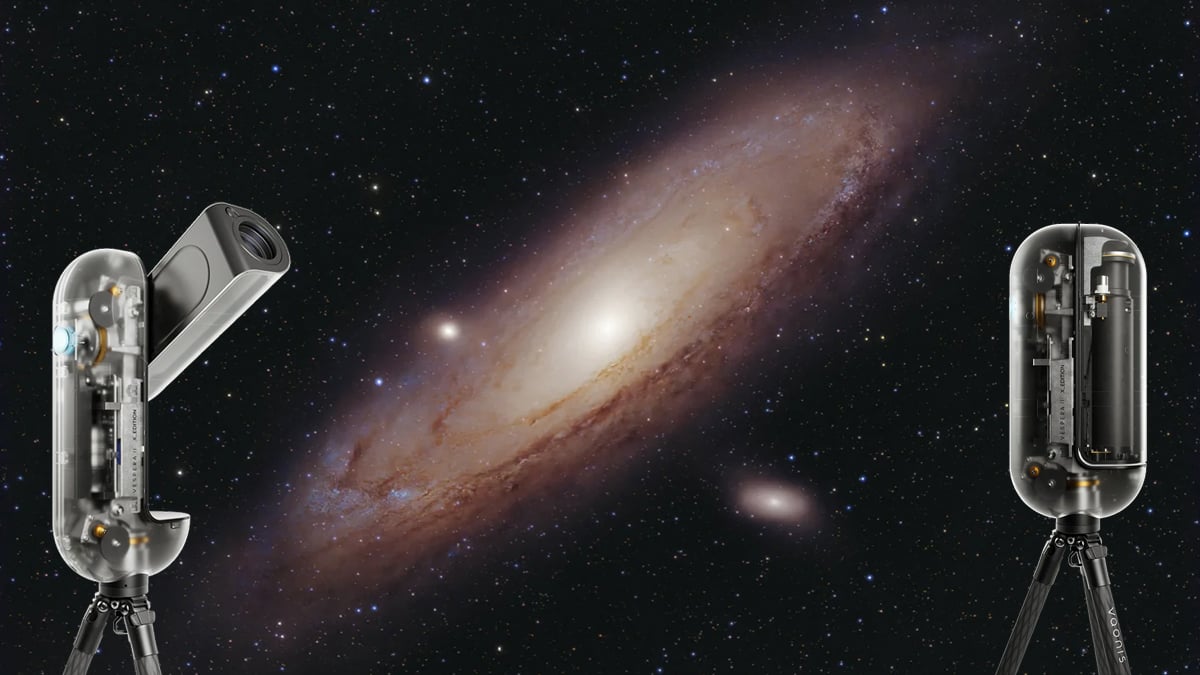
The boundaries between professional and consumer astrophotography have been steadily fading. In recent years, compact smart telescopes have transformed how people explore the night sky. Among the pioneers of this revolution stands Vaonis, the French company known for fusing optical engineering with modern digital technology. Their latest creation, the Vespera II X Edition, is a natural evolution of that philosophy: an elegant, all-in-one observatory that brings deep-sky imaging to anyone who loves the stars.
A new generation of smart astronomy
The Vespera II X Edition continues Vaonis’ mission to make astronomy intuitive and visually rewarding. It builds upon the original Vespera II, but with refined design elements, new optical enhancements, and expanded imaging capabilities. While traditional telescopes require complex setups, alignment procedures, and separate cameras, Vespera II X Edition condenses everything into a compact robotic instrument that operates through a smartphone or tablet.
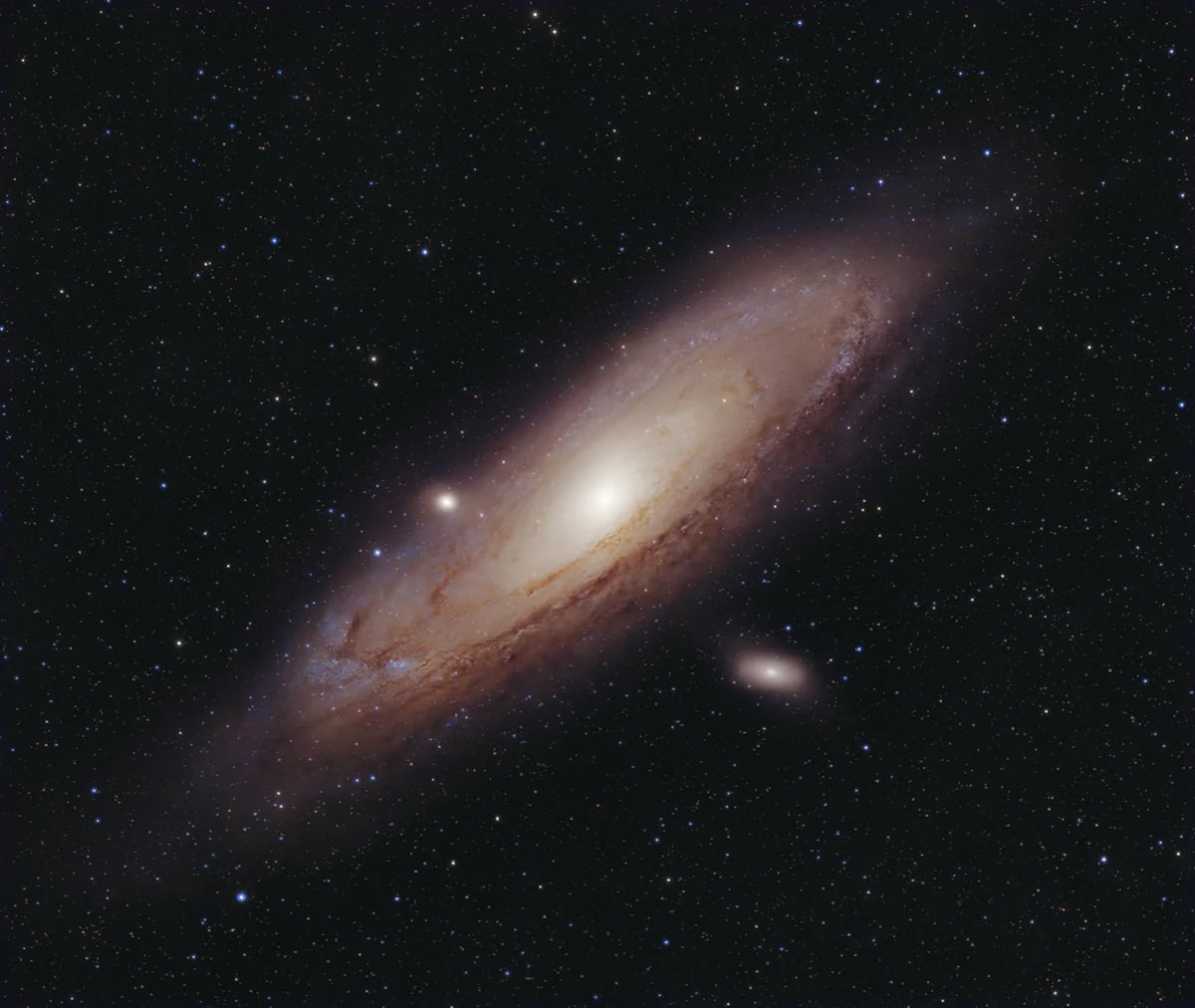
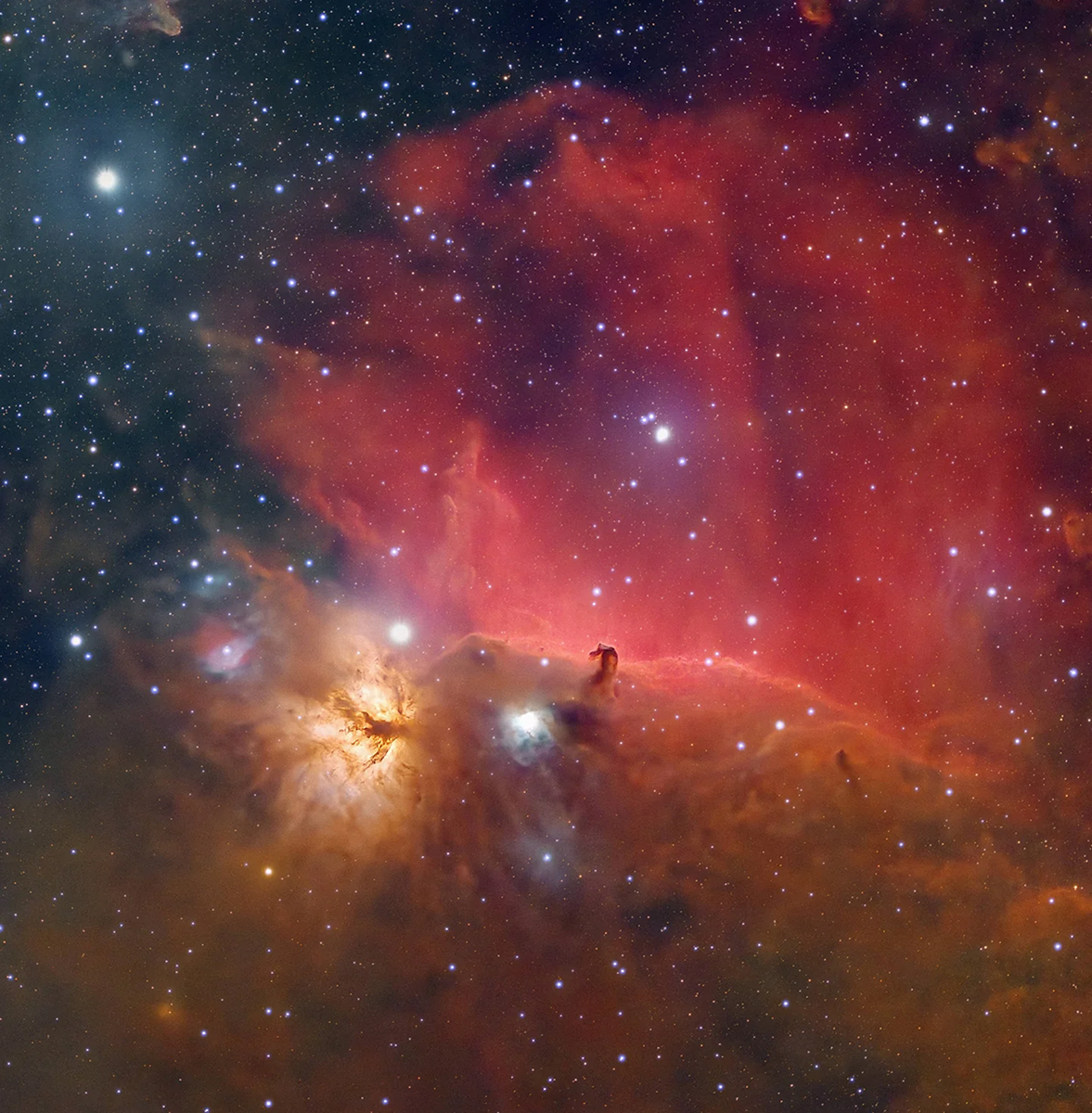
Its concept is simple: automation without compromise. With the Singularity app, users can select any celestial object, and the telescope automatically handles everything, from alignment to tracking and image stacking. It’s astronomy distilled to its essence, but still scientifically precise. Whether capturing galaxies, nebulae, or star clusters, the Vespera II X Edition delivers professional-quality images that reveal the deep universe with ease.
Vaonis describes this model as an observatory that fits in your backpack. The design may be minimalist, but the technology inside is cutting-edge. It embodies a shift in astronomy where accessibility meets sophistication, allowing everyone from beginners to experienced astrophotographers to focus more on discovery and less on equipment setup.
Refined design and build
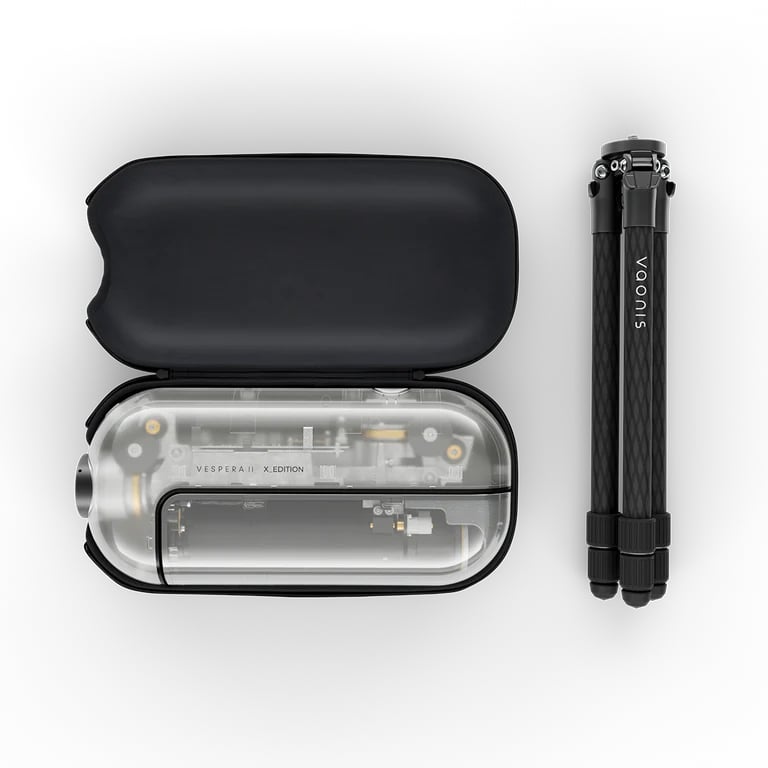
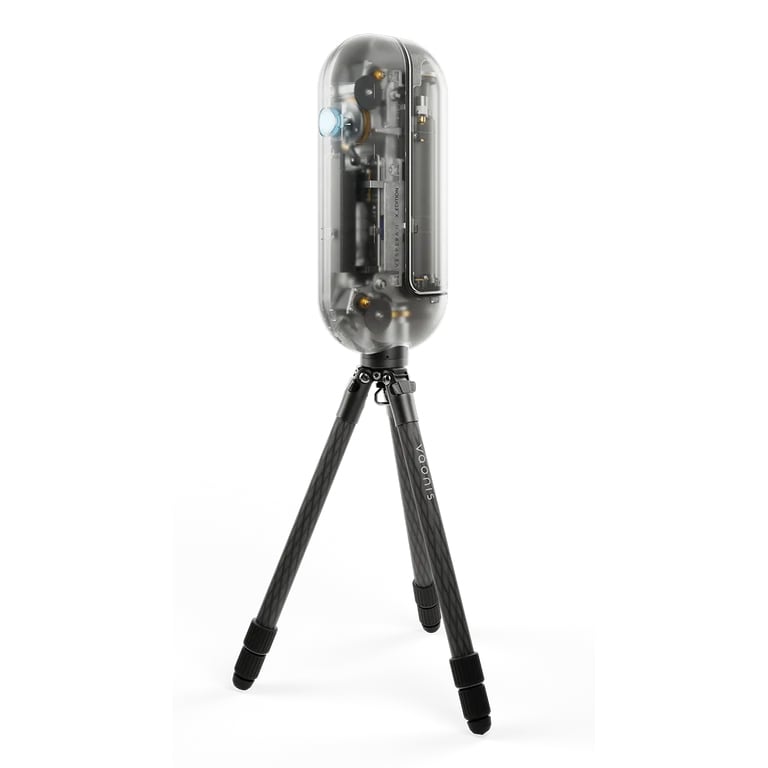
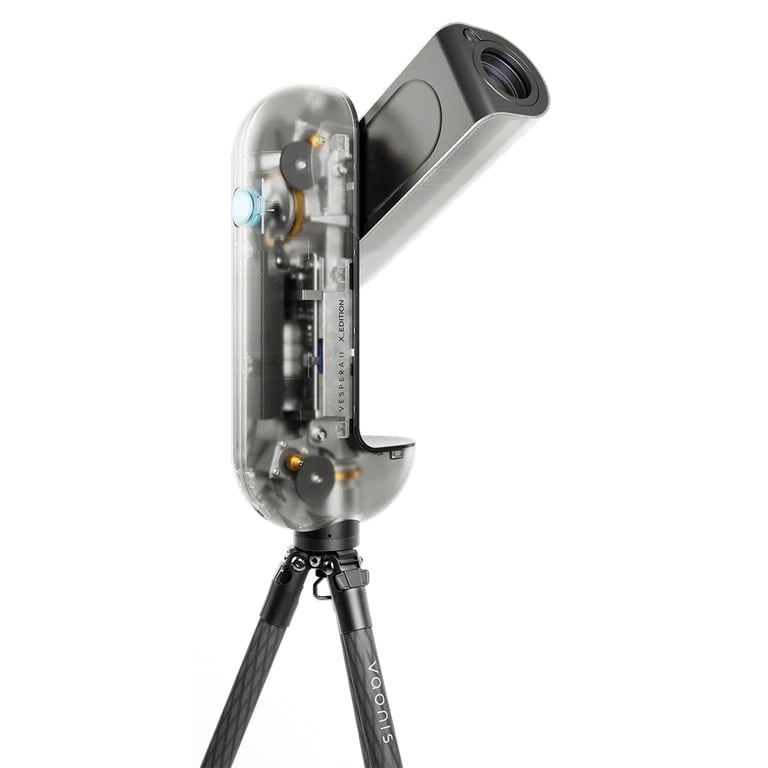
Visually, the Vespera II X Edition looks like a piece of modern art: sleek, compact, and beautifully engineered. The body retains Vaonis’ distinctive form factor: a sculpted arm that cradles the optical tube, mounted on a stable base that hides the motors and electronics. It’s built from high-quality materials that make it both durable and lightweight.
The smart telescope features a striking transparent optical arm that reveals the inner workings of its precision mechanisms, a design first for Vaonis. This clear structure symbolizes openness, innovation, and the fusion of art with science. Through the transparent casing, users can see the intricate components that drive the telescope’s movement and focus systems, turning a piece of advanced technology into something visually engaging.
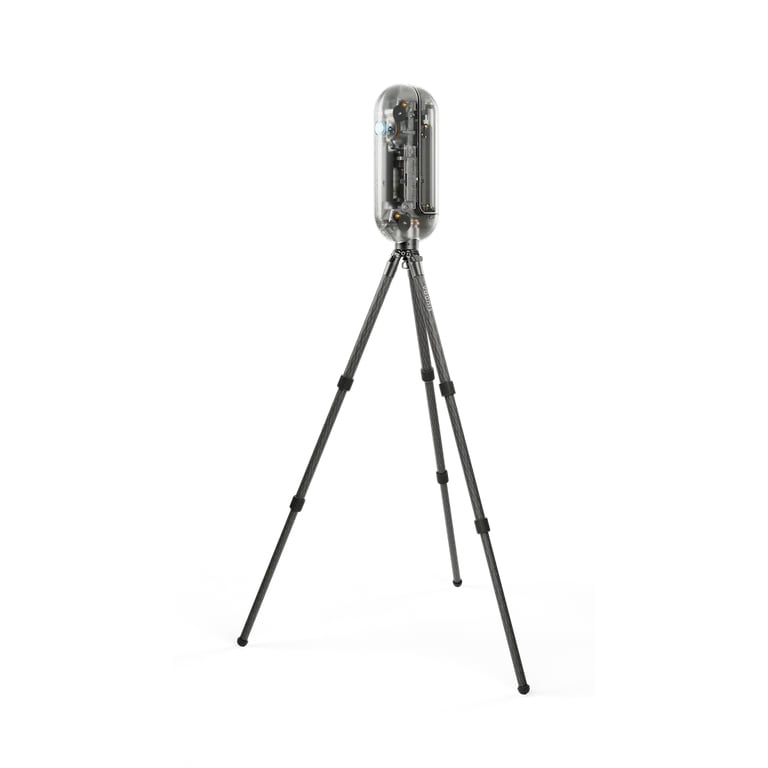
The telescope weighs just a few kilograms, making it ideal for field use. You can set it up on a tripod anywhere, in your backyard, a dark-sky site, or even during a trip to the mountains. The entire setup process takes only a few minutes. Once powered on, it calibrates itself, finds its orientation using GPS and star recognition, and starts imaging automatically.
Optical and sensor performance
At the heart of the Vespera II X Edition lies a 50 mm apochromatic quadruplet lens system with an f/5 aperture ratio. This optical setup ensures high sharpness and minimal chromatic aberration, critical for deep-sky imaging. Vaonis’ engineers optimized this lens to balance portability with image quality, achieving wide-field views without distortion.
The telescope uses a Sony IMX585 CMOS sensor, a high-performance 8.3-megapixel chip with 2.9 μm pixels. This sensor delivers a large dynamic range and excellent sensitivity, especially in low light, making it ideal for capturing faint nebulae and distant galaxies. The integration of this new sensor marks a significant step up in performance compared to earlier models.
Combined with the telescope’s image stacking and live-processing algorithms, the result is impressive. As the telescope gathers light over time, the app progressively enhances image quality, reducing noise and revealing details invisible to the naked eye. You can literally watch your image evolve as the telescope collects data, a captivating experience for any astronomy enthusiast.
The Singularity app
A major part of the Vespera experience lies in Vaonis’ Singularity app. It serves as the telescope’s brain and user interface. The app connects to the telescope over Wi-Fi and controls every aspect of its operation, from target selection to live image stacking.
Once connected, users can browse a database of celestial objects categorized by type, brightness, and visibility. The app suggests targets based on your location, weather, and moon phase. After you tap an object, the telescope automatically slews to it, tracks it, and begins imaging. The process is seamless. The app also provides live updates of the ongoing capture. You can see images improve in real-time as more data accumulates. For advanced users, manual controls allow adjustments in exposure, gain, and stacking duration. For casual users, the automatic mode handles everything perfectly well.
Key specifications
Here are some of the key specifications of Vespera II X Edition:
| Aperture | 50 mm |
| Focal length | 250 mm |
| Sensor type | Sony IMX 585 (color) |
| Definition | 3840 x 2160 (8.3 MP) |
| Sensor size | 11.2 x 6.3 mm |
| Pixel size | 2.9 µm |
| Native field of view | 2.5° x 1.4° |
| Pre-stacked images format | TIFF 16 bits |
| Battery life | 4 hours |
| Dimensions | 48 x 20 x 9 cm |
| Weight | 5 kg |
Price and availability
The Vespera II X Edition is sold as a limited edition of 150 units worldwide, and it is priced at $2,290. The product is available via the official website.
The Vespera II X Edition represents a major leap in how we experience astronomy. It removes barriers that traditionally kept people away from the hobby: the complexity of mounts, tracking, and calibration, while preserving the wonder and precision of deep-sky imaging. It embodies the shift toward connected, intelligent instruments that transform our relationship with the cosmos.
For many users, it will be their first telescope. For others, it will serve as a portable complement to a larger setup. But regardless of experience level, it delivers a consistent message: the universe is now within everyone’s reach.
Clear skies!
See more from DIYPhotography.net on Google
Add DIYPhotography.net as a trusted source. This makes
our stories more likely to appear in your Google Search results.
 Add as a preferred source on Google

Soumyadeep Mukherjee
Soumyadeep Mukherjee is an award-winning astrophotographer from India. He has a doctorate degree in Linguistics. His work extends to the sub-genres of nightscape, deep sky, solar, lunar and optical phenomenon photography. He is also a photography educator and has conducted numerous workshops. His works have appeared in over 40 books & magazines including Astronomy, BBC Sky at Night, Sky & Telescope among others, and in various websites including National Geographic, NASA, Forbes. He was the first Indian to win “Astronomy Photographer of the Year” award in a major category.




Join the Discussion
DIYP Comment Policy
Be nice, be on-topic, no personal information or flames.