
















Lessons from a shark-shooting photographer
Sep 2, 2024
Alex Baker
Alex Baker is a portrait and lifestyle driven photographer based in Valencia, Spain. She works on a range of projects from commercial to fine art and has had work featured in publications such as The Daily Mail, Conde Nast Traveller and El Mundo, and has exhibited work across Europe
Share:

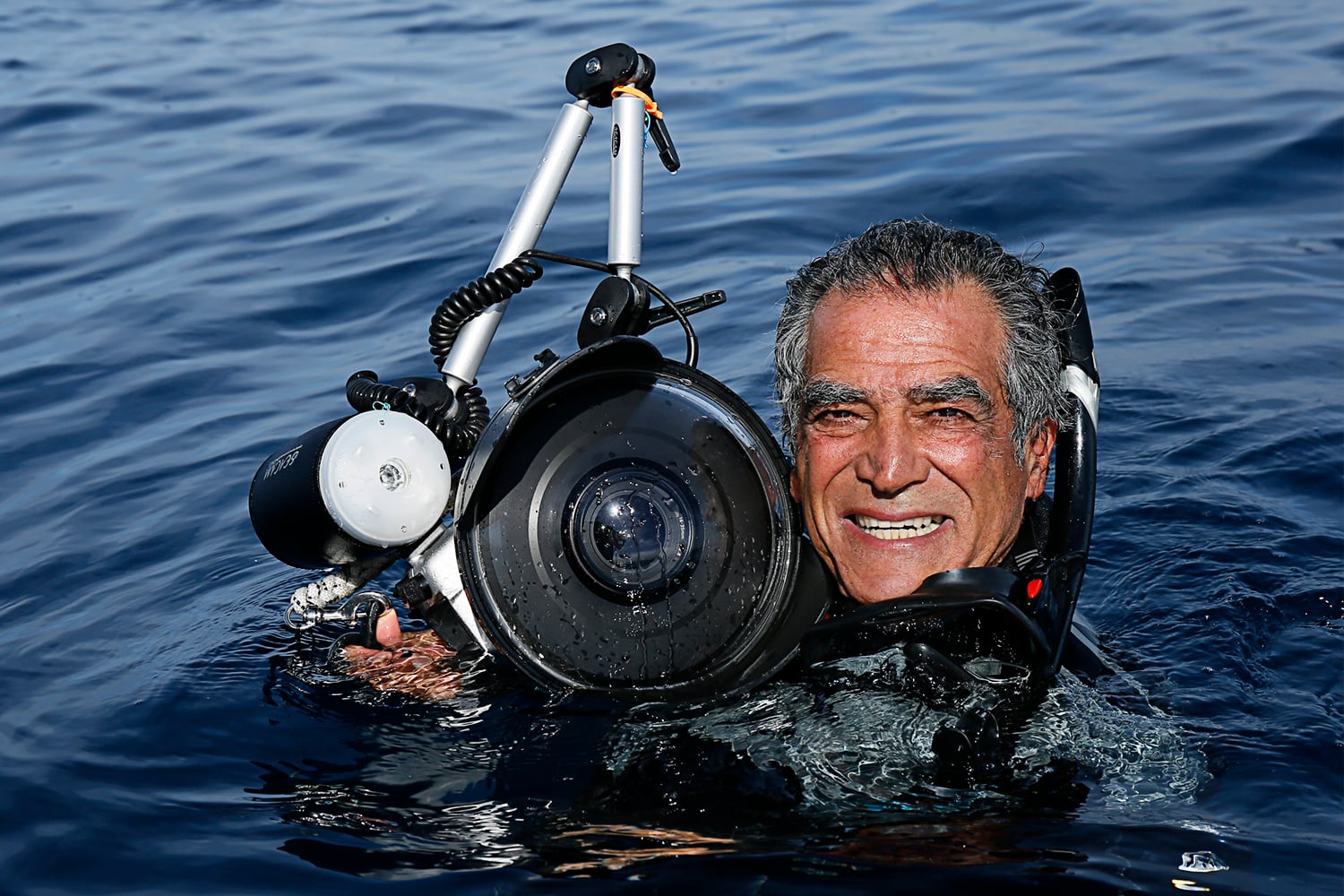
Amos Nachoum is a renowned wildlife photographer known for his extraordinary work capturing the raw beauty and power of the world’s largest and most elusive creatures. Specializing in underwater photography, Amos’ images highlight the profound connection between humans and some of the ocean’s most misunderstood animals, including great white sharks, polar bears, and whales.
Amos’ work is both a celebration of nature’s wonders and a poignant reminder of the fragility of these ecosystems. Through his lens, he not only documents the natural behavior of these incredible creatures but also inspires greater awareness and conservation efforts for endangered species across the globe. DIYP was lucky to catch him on dry land to ask him a few questions.
DIYP: How did you get started in photography?
Amos: I started photography when I was very young when I was about 12 years old. I found my father’s old camera in the attic, and I started taking photographs. When I left home, I began a career in photojournalism and then in fashion photography. But after 6 or 8 months, to me, it was all the same. I did not feel a passion for the camera and for taking a good picture of people like that.
After that, I became a war photographer until 1975 or ’76. Then, I decided to study film and television in New York. I drove a taxi at night and took a diving course to improve my English. I already had a lot of experience in diving, and I ended up becoming a dive instructor.
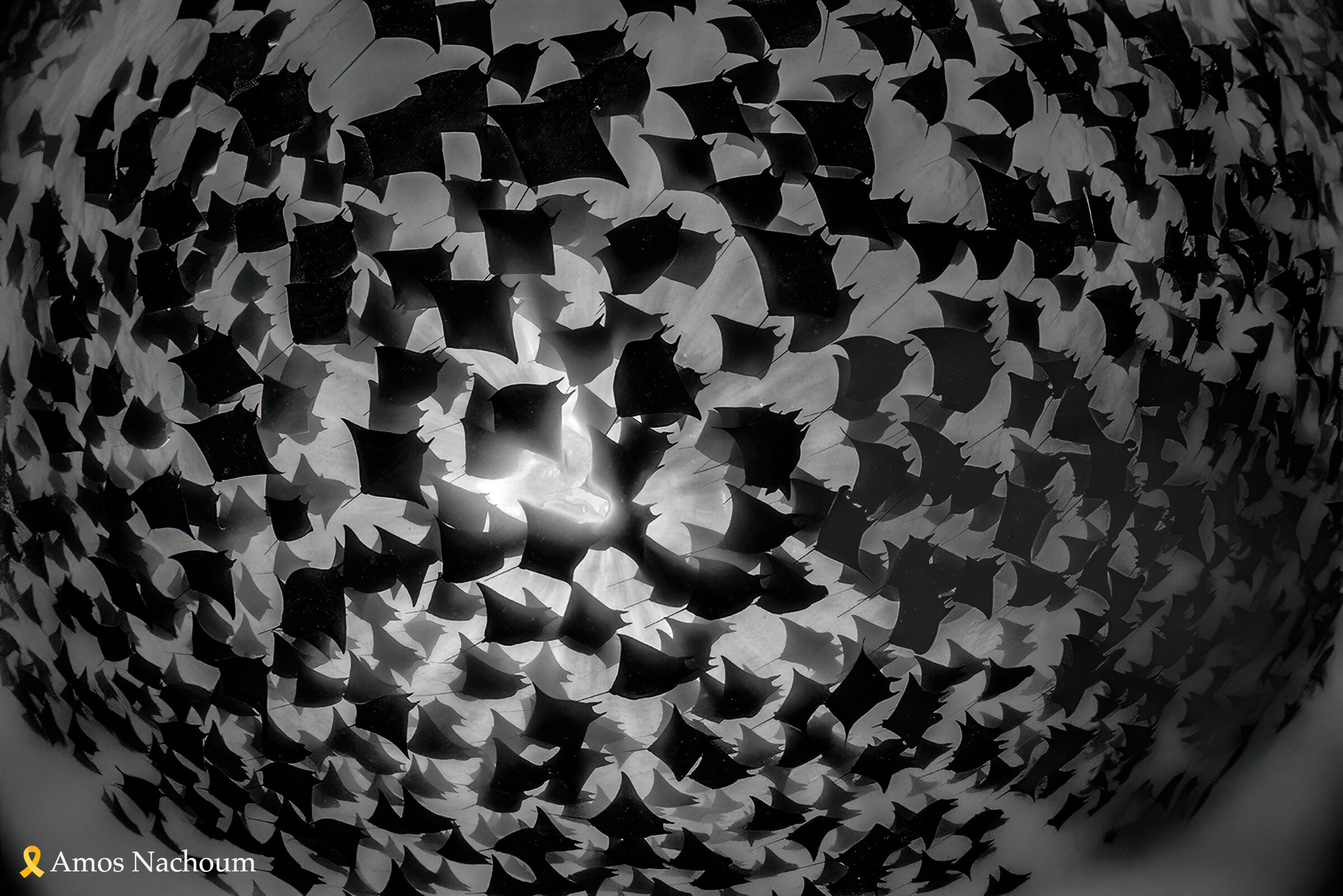
DIYP: What drew you specifically to underwater photography, and how did you develop your passion for capturing images of marine wildlife?
Amos: I took a dive group out to Cuba, which was considered to be one of the best diving places. I had already dived a lot in the Red Sea, and I realised the potential for taking groups there. I then started liveaboard diving trips where people could experience the abundance of fish and animals. I was able to return to my love of photography and filmmaking in the underwater world, which led to a career photographing marine life and running diving expeditions.
I realized then that as a photographer, I needed to have a niche, a speciality. Underwater photography was really popular, and Jacques Cousteau was very popular, but I wanted to do something different. So, I decided that I would focus only on big animals like whales, sharks, and crocodiles, using photography to promote environmental conservation.
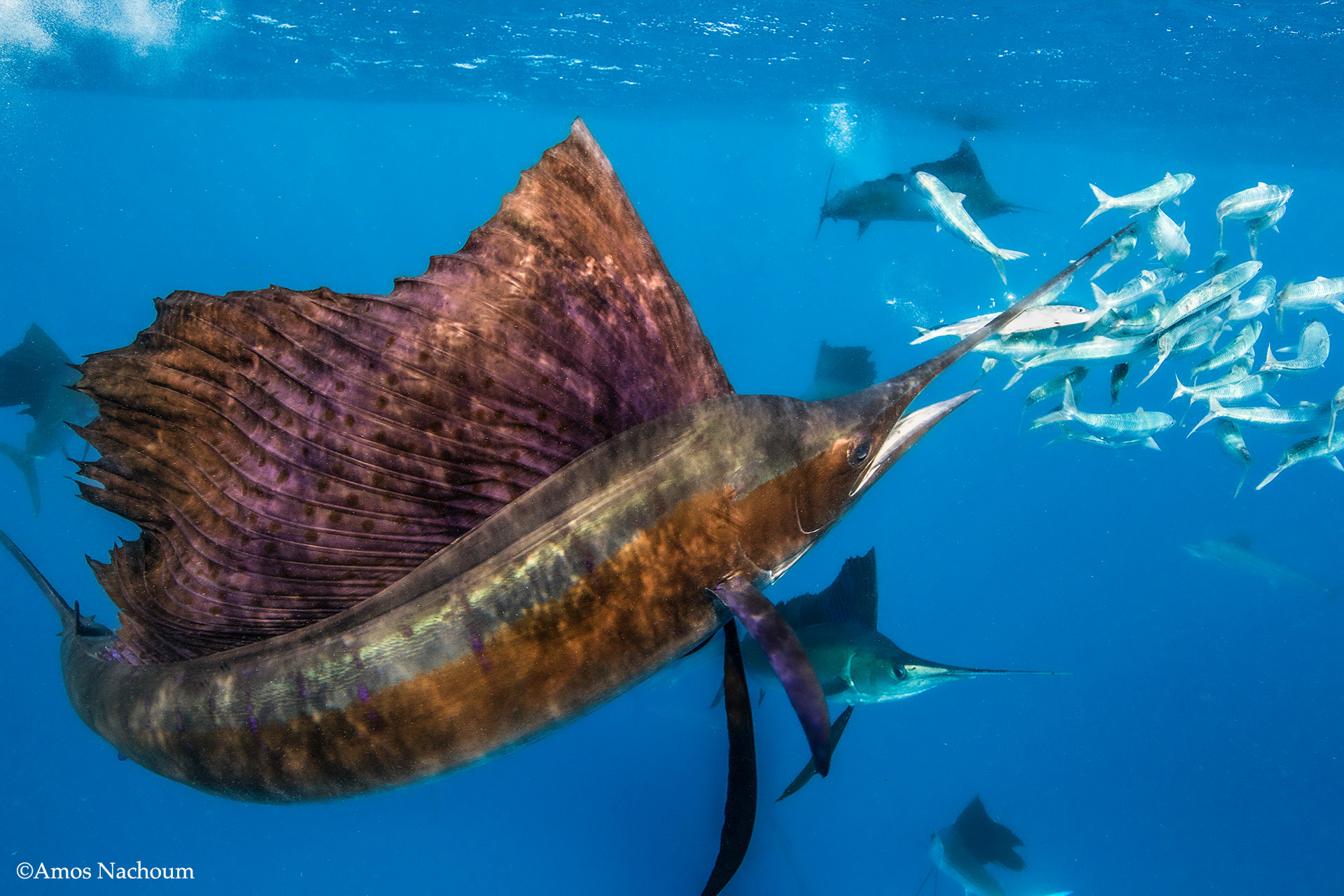
DIYP: Was there a particular encounter with an animal that solidified your decision to focus on this field?
Amos: I wouldn’t say one particular encounter, but many. In my experience, there were a lot of misconceptions about these “dangerous” large animals. My underwater encounters with them were very different from how the BBC and Hollywood usually depict those animals. The approach has been quite aggressive because of the lack of time and budget; it’s push, push, push.
So, I decided to match Eastern philosophy with Western philosophy. I wanted to combine passion with money and time. In the West, money and time are the most important things. In Eastern philosophy, the most important things are passion and patience.
So, for example, I will go for much longer trips in order to observe the animal and not aggravate it. We have the time to watch the animal and be able to photograph it as it behaves normally.
DIYP: How do you prepare for photographing potentially dangerous animals like great white sharks or polar bears?
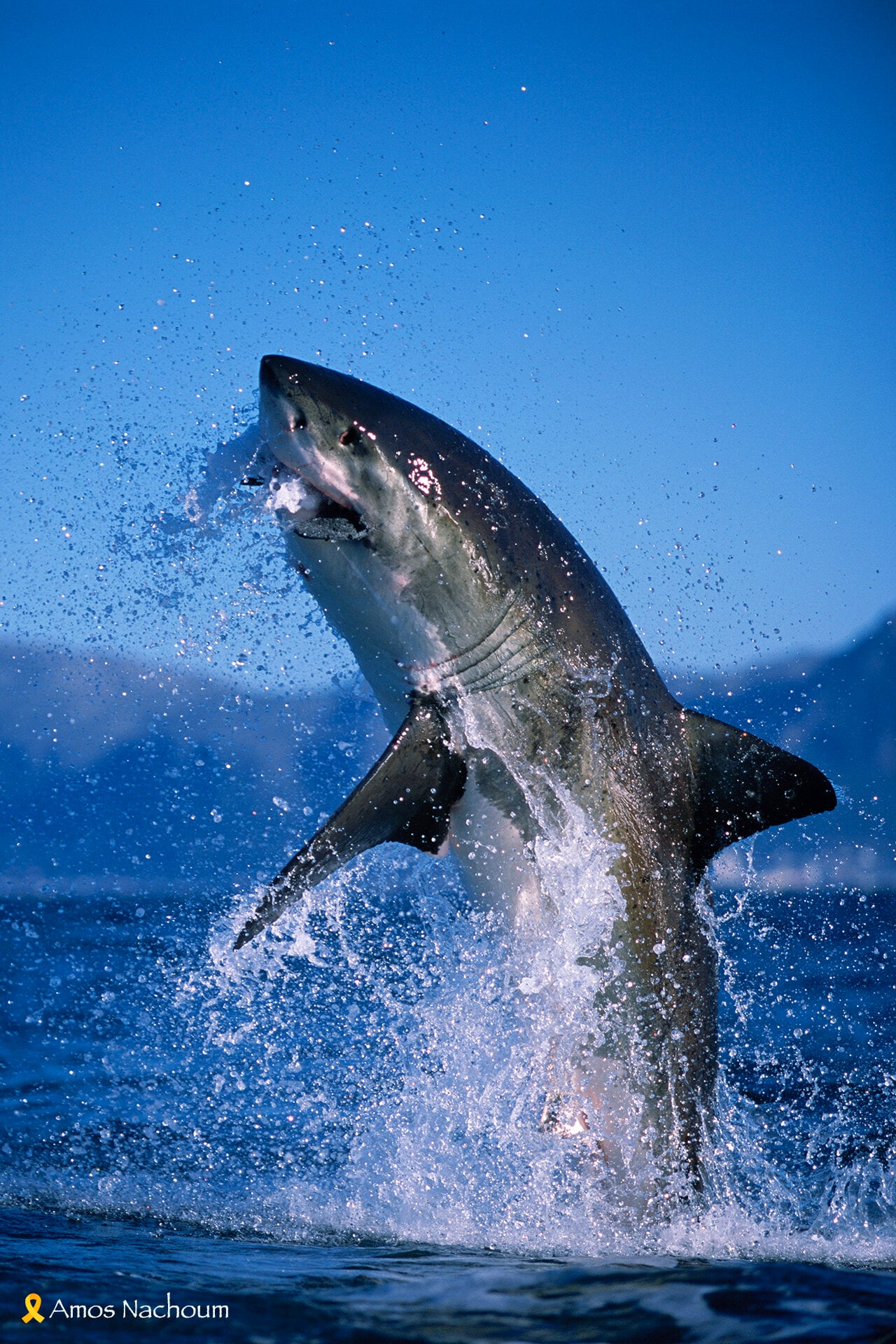
Amos: In 1982 I went to Australia with an expert in great white sharks. We were filming for the Discovery Channel, and we used bait and blood in the water to attract the sharks. This puts the animals into a sort of frenzy, and that is how you capture the sensationalized images like the film Jaws that we are all used to seeing. But that is not natural behaviour for a great white. That movie actually did a lot of damage to great white sharks’ reputation.
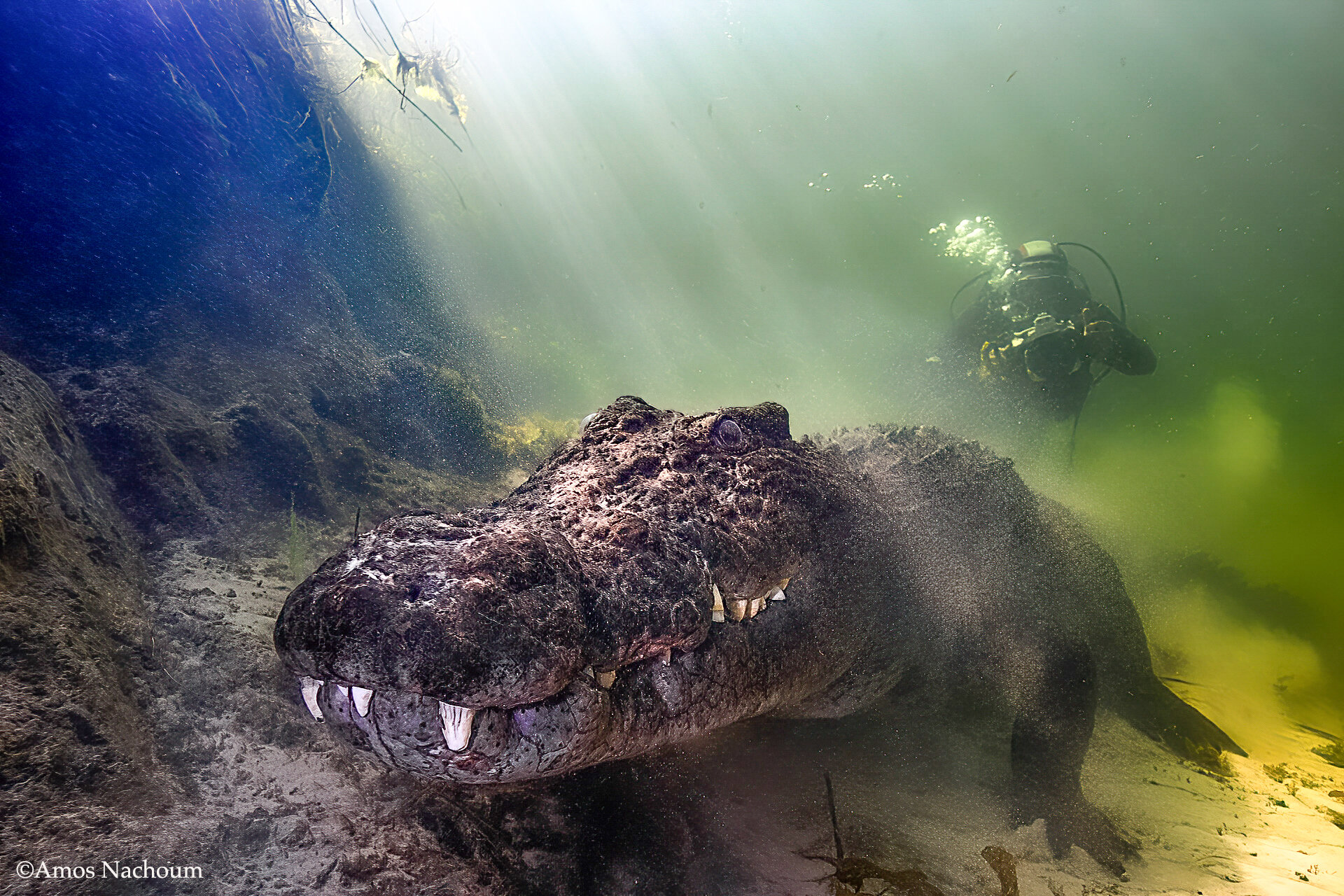
Similarly, with crocodiles and anacondas. These animals have a terrible reputation, but you have to first understand their natural behaviour and how they respond in their environment. Take crocodiles, for example. Yes, it’s true that they do attack and kill people. However, all of the pictures of crocs feeding are on the surface, never underwater. The croc cannot bite or feed underwater. Otherwise, they will breathe in the water and drown. They don’t catch the prey underwater; they catch it above water and drag it down to drown it, and then they surface again and eat it above the water. So, as a diver, I can be completely submerged under the water, and the croc cannot bite me.
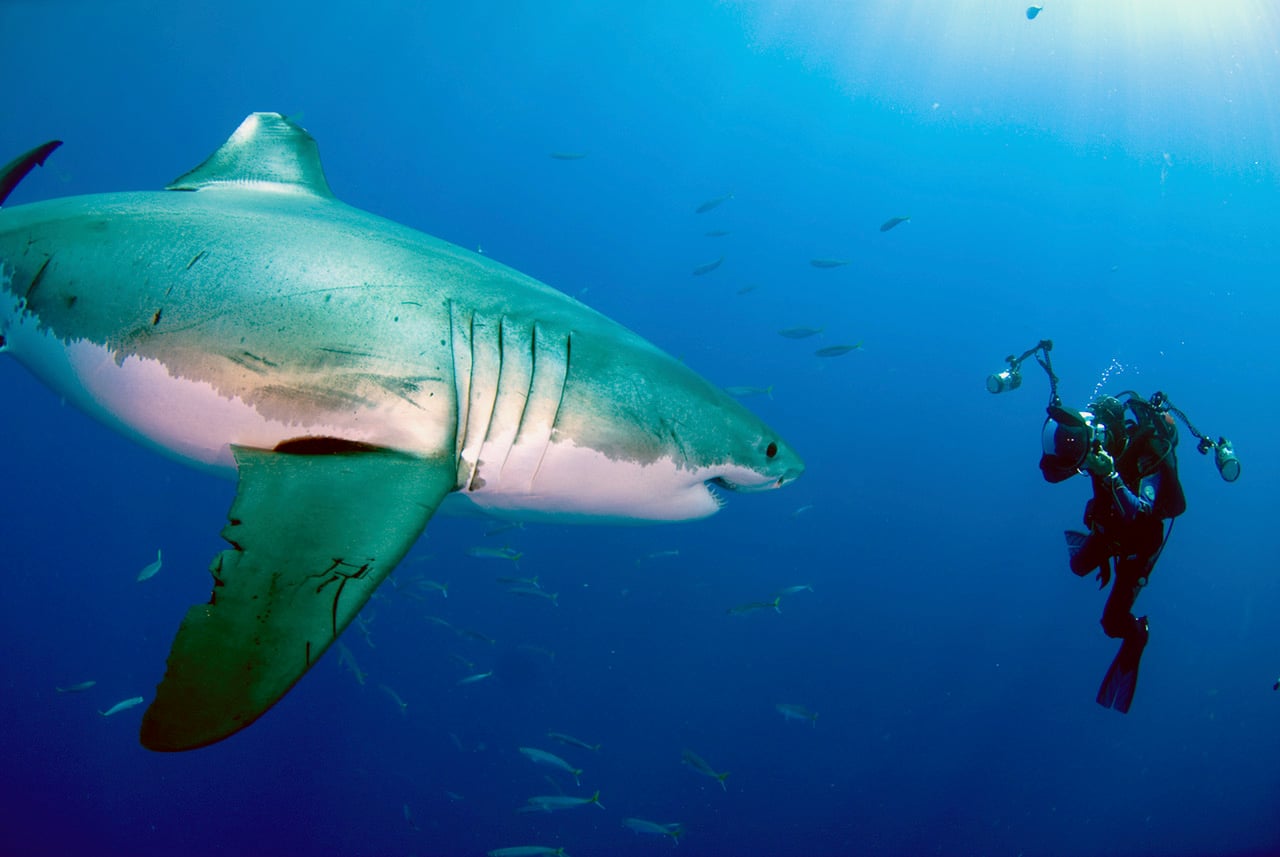
With sharks, for example, if you don’t bait them and don’t have food, they have nothing to be aggressive about. You have to not act like their prey. So I am always vertical in the water; I don’t swim away from them; I stay still, and I blow bubbles.
The camera in my hand is like a shield, if you want to call it that. Of course, I’m focused on telling the story, not on being afraid. I have to trust my experience and my instincts and believe what is happening in front of my eyes is the truth, not the scary images from the media that I may have in my mind.
DIYP: Talking of sharks, you’ve photographed a great white with a 50mm lens and no cage. Can you tell us about that experience?
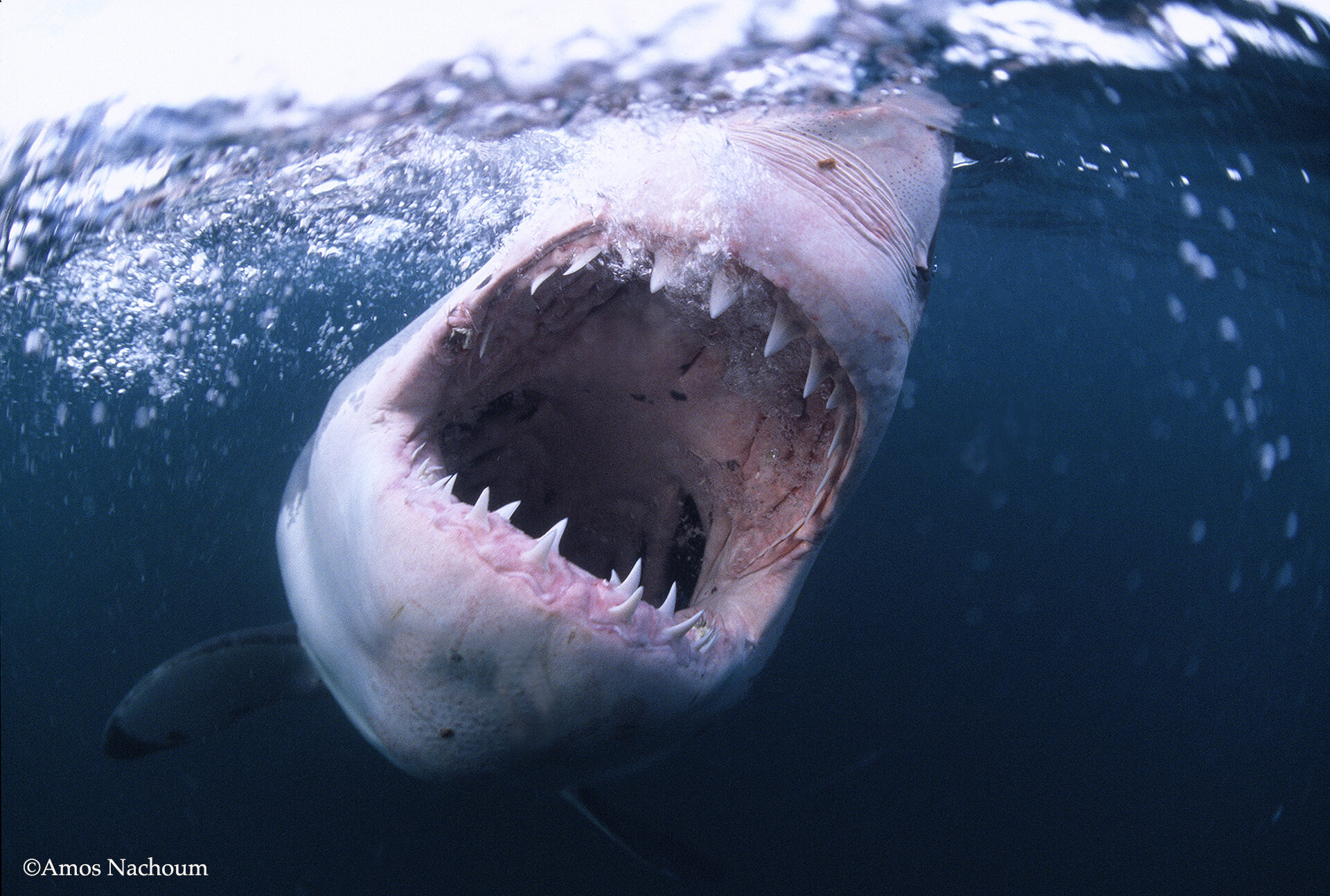
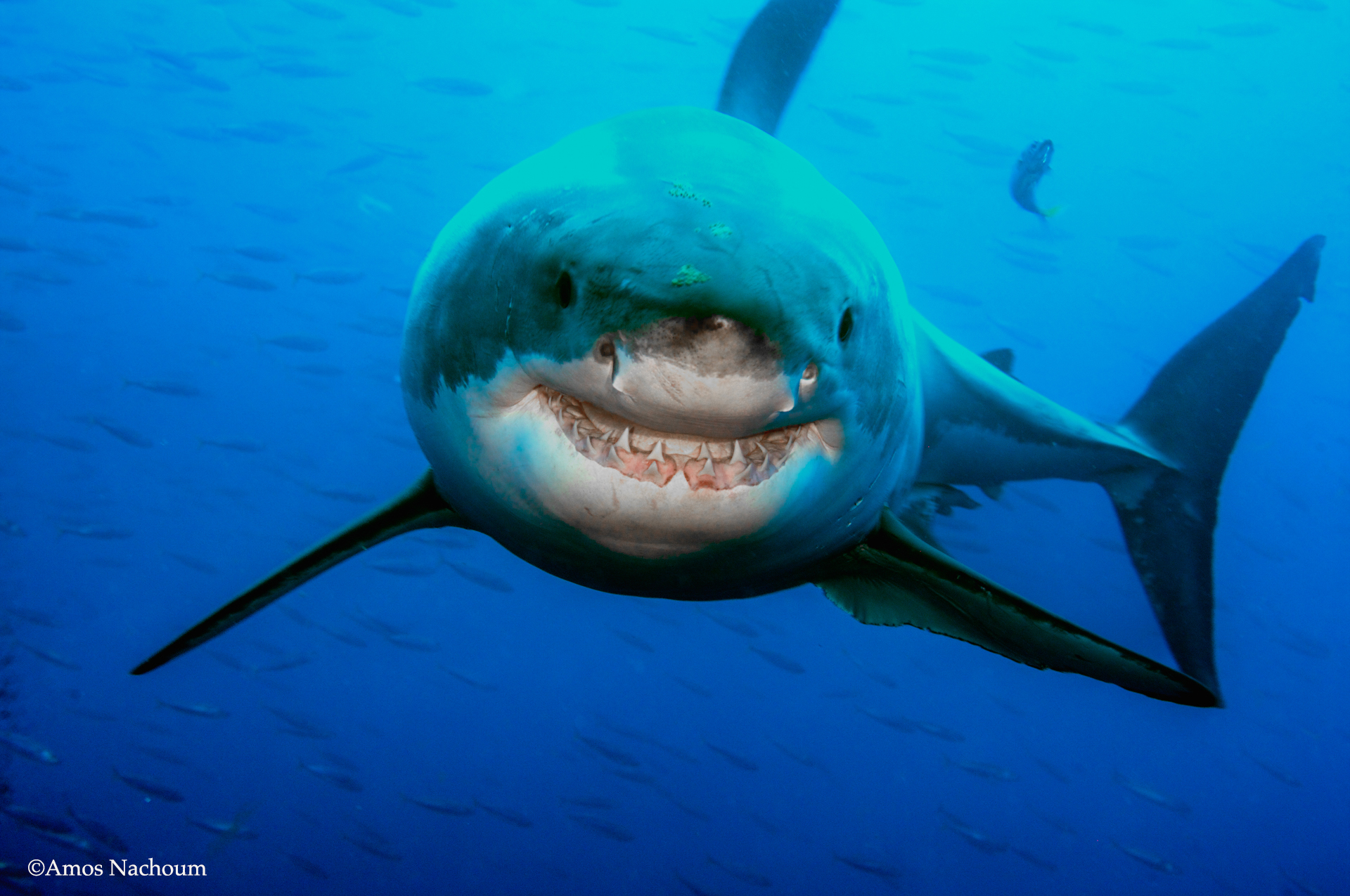
Amos: On a trip to Mexico, I wondered what would happen if we didn’t bait the shark. The visibility was very good, the waters were crystal clear. We lowered the dive cage to 10 metres, and it was open so the shark could enter the cage. But it was just curious, it could hear my oxygen tank tapping on the bars of the cage and it came to see what was happening.
Normally we work with a very wide-angle lens underwater because of visibility; you have to be quite close to the animal to photograph it because the water is about 800 times denser than air. But this obviously creates a fair bit of distortion. I wanted to show these great whites in the same way that I could see them, not with their jaws distorted and magnified. So I took a 50mm lens, and I ended up with the photo of a smiling shark, and it received a great reception from people. This moment really cemented my commitment as a photographer for conservation.
DIYP: What are your essential pieces of gear and equipment? Lighting is a significant challenge underwater—what are some techniques you use to ensure your photos capture the vivid colours and details of marine life?
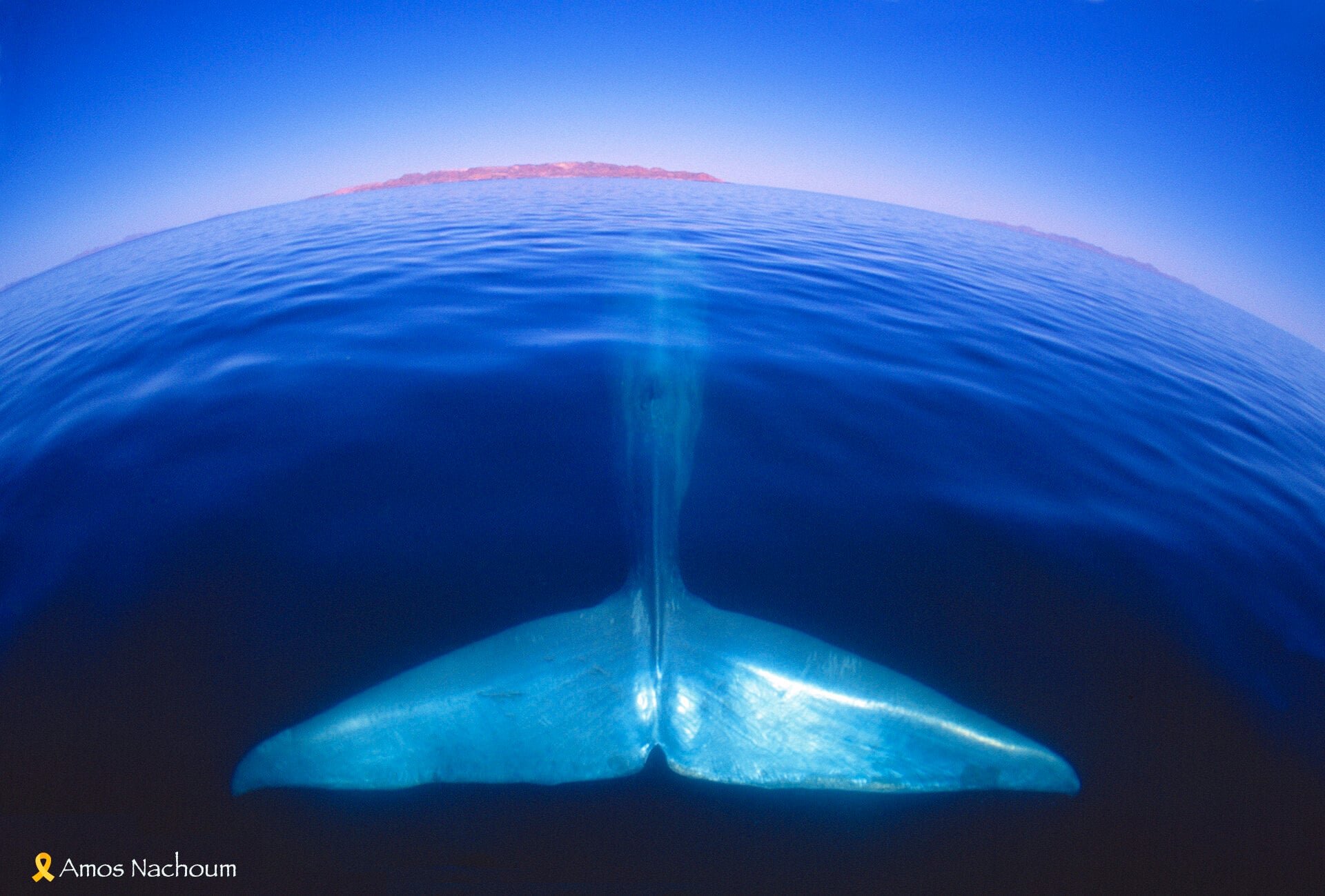
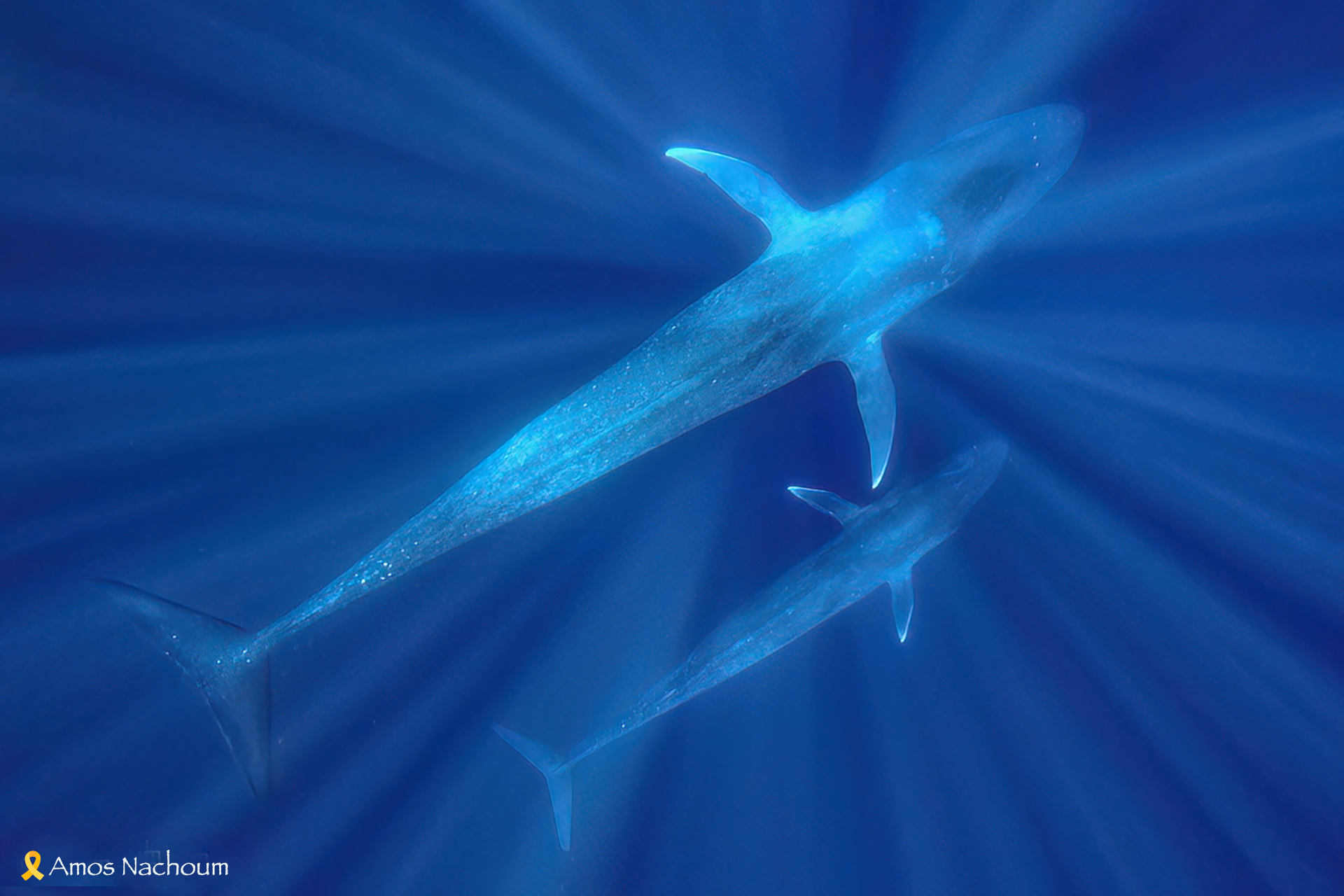
Amos: I use the Nikon Z9 with underwater housing, it’s relatively standard equipment. We generally don’t use underwater strobes, because how can you light up a blue whale? So, we generally have to wait until the animals are close enough to the surface of the water to have enough light. But this is all just part of their natural behaviour, they come up towards the surface frequently enough for it not to be a problem.
DIYP: Your photo of the leopard seal and penguin is a particularly well-known image. Can you tell us about that shot and how it came about? Why do you think it evokes such a strong reaction?
Amos: It’s something that happened while I was diving in Antarctica. The timing was during the seals’ big predation. I went to a remote island where very few people had been, or nobody had been and waited. I watched the behaviour a lot. It almost took three years to actually capture it. Every year, only one, two, or three weeks of the year. I think in the third year; I realized there was a particular place where I could stay and watch and wait until it happened.
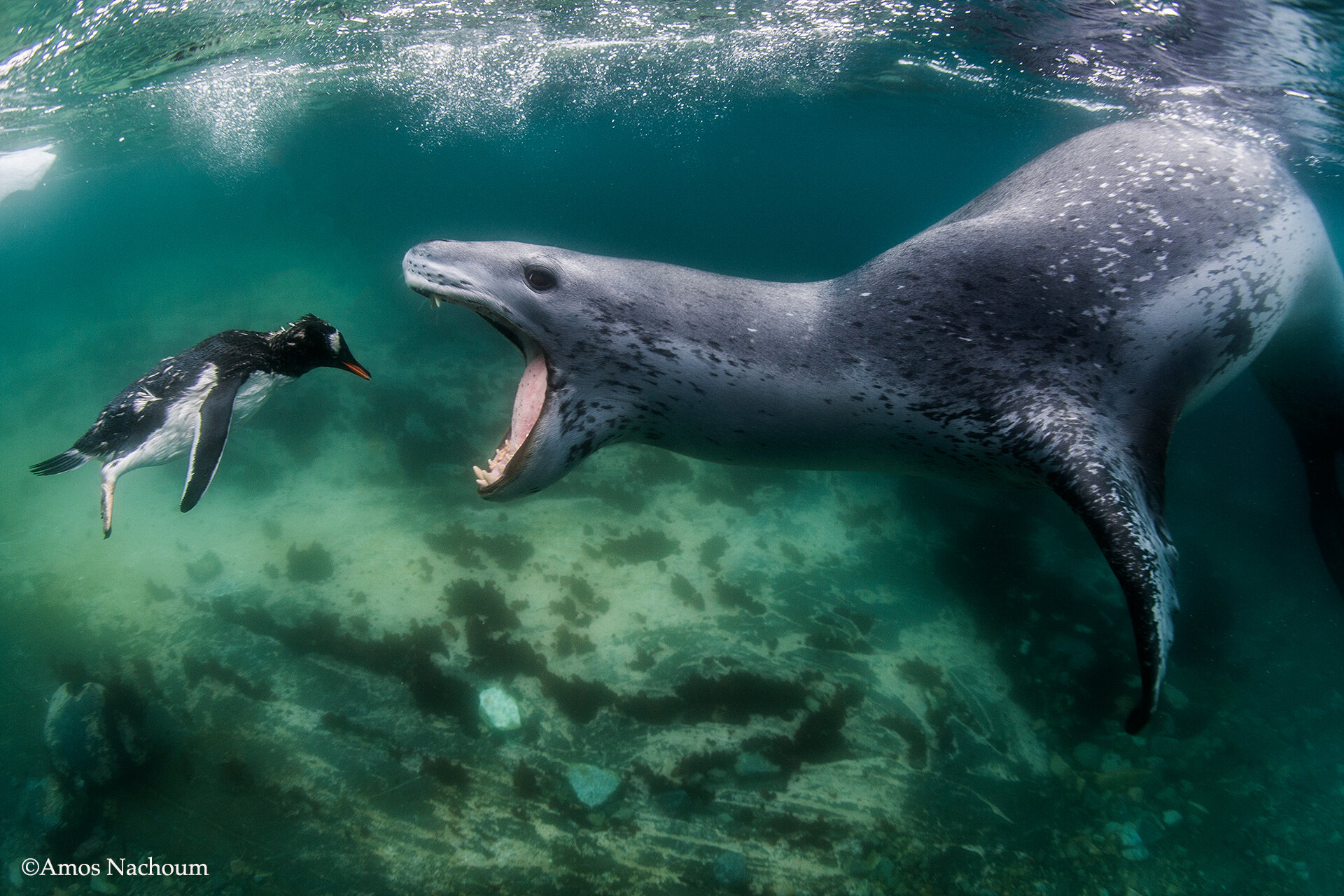
I was sitting for six hours on the edge of a cliff to see the leopard seal coming up into the air in the lagoon. The seals stay in the water for a long time and can hold their breath. The young penguin jumped into the water to play and came too close. The seal slapped his head, took it and ran with it back to the water. I quickly entered the water, but slowly so as not to disturb the seal, I was parallel to it and just alongside it. Not in front but only side by side enough to see them. I was able to see the air hole in the ice, but the seal did not care about me.
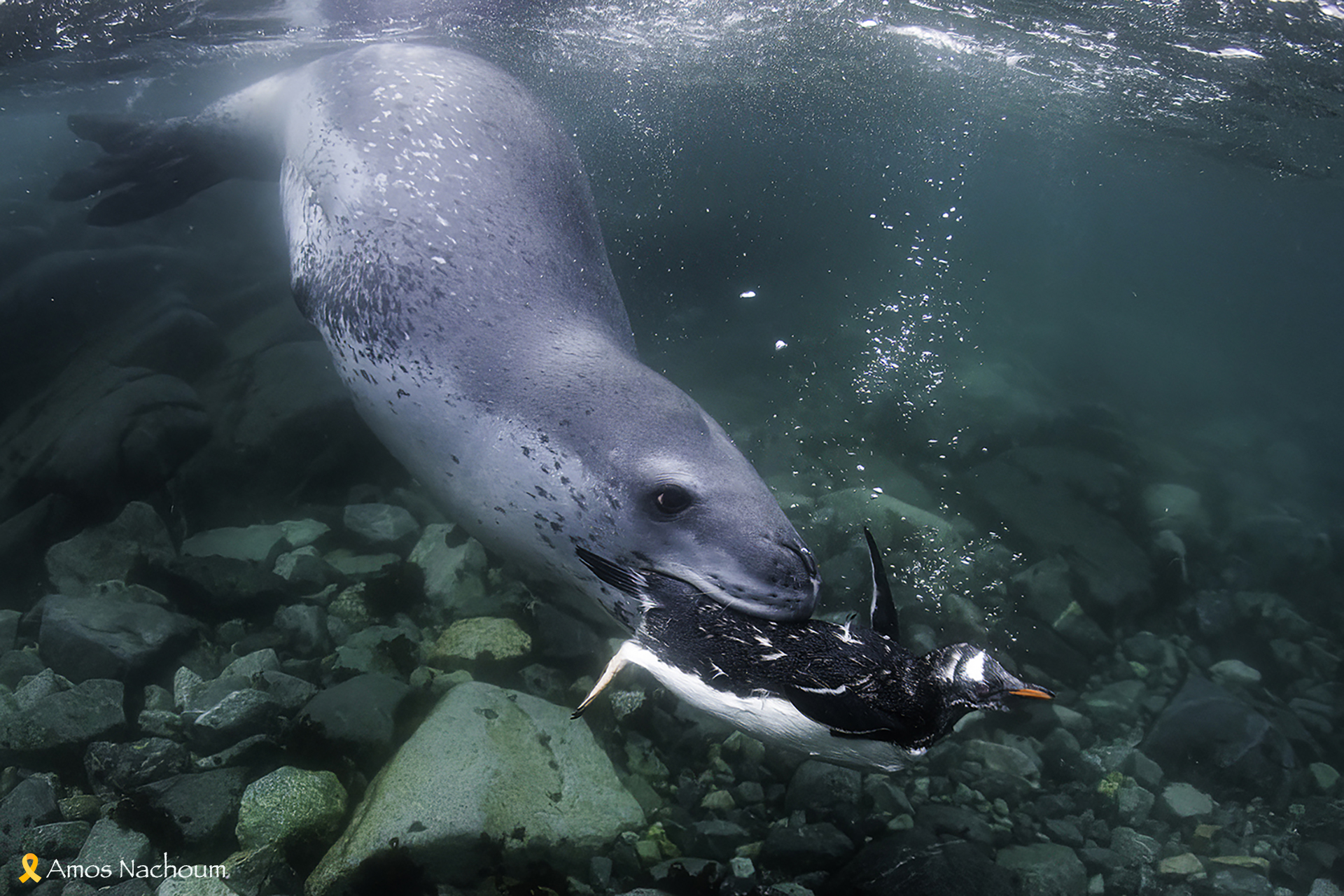
I didn’t interfere with his behaviour. And it was a process. It held the penguin by the leg. He took it to the water. It tried to drown the penguin, but the thing fought hard. The penguin would run away, was able to walk and then the seal would run after it, catch it, and bring it back to the water. But by the second time, the penguin had already drowned.
In the photo the penguin is head down, no life in it. And then the seal comes with his mouth and then look at the penguin. I was wearing a dry suit but I didn’t notice the cold, because of the adrenaline rush and the desire to tell the story. It is more powerful than the feeling of being cold. The way our brain works is amazing.
DIYP: What advice would you give to aspiring wildlife photographers, especially those interested in underwater photography?
Amos: Many young people want to be a photographer like Jacques Cousteau or shoot exciting documentaries for National Geographic, for example. But you need to learn how to think outside of the box. Take time to think about what makes you different from any other photographer or filmmaker. And then think about how to use the camera without hurting the environment and how to use your knowledge for conservation and for education. How can you change people’s perception of things and make a positive impact?
DIYP: Are there any upcoming projects or expeditions you’re particularly excited about?
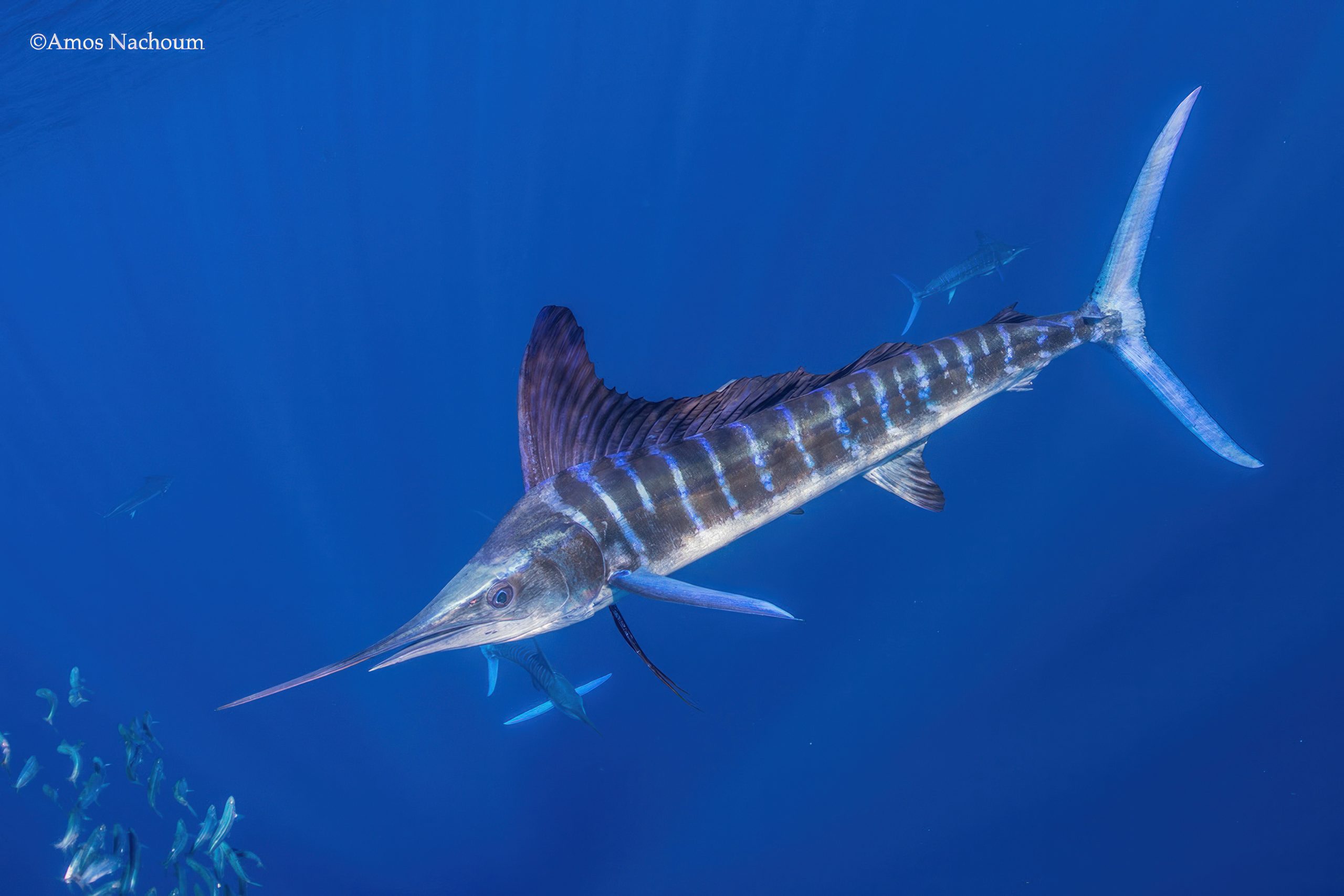
Amos: The next expedition is actually to Galapagos to see whale sharks. And after that we go to photograph bluefin tuna, which are endangered. I’m excited especially about the bluefin tuna because it’s hardly ever been done. They are very hard to find, and it’s incredibly costly to go out in the middle of the ocean, and to charter a boat. But at this point in my life I can allow myself to take a risk, it’s my driving force.
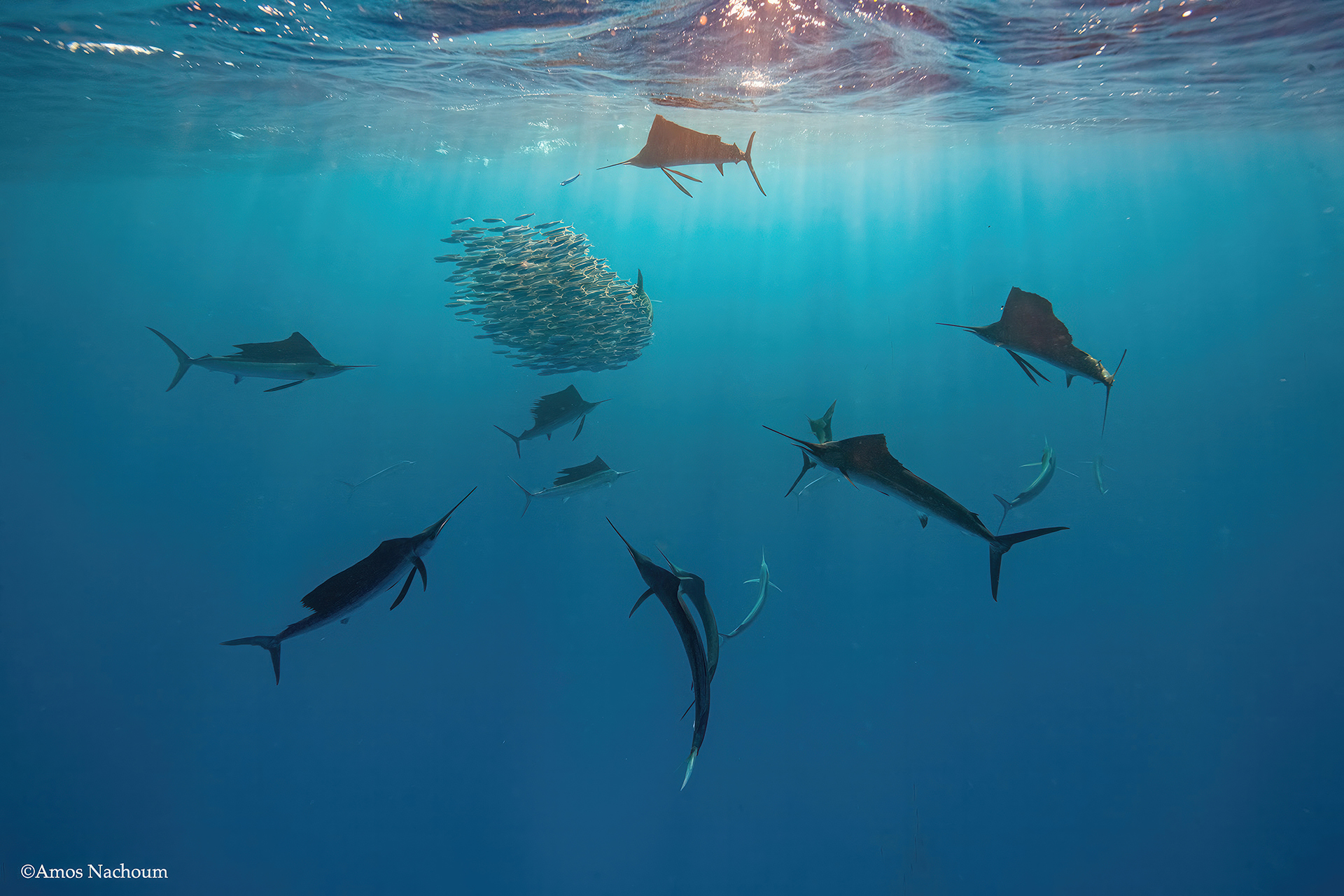
Over 90% of wild bluefin tuna have been decimated in the world. I want to be able to capture their fight or flight, the sardines that they live on, and then see who else also joins them. The dolphins, orcas, sharks, the birds on the surface – the entire ecosystem. So all this is a big drama, and that’s another step in education or contribution to conservation. Come with a camera, take one picture at a time, and document it.
DIYP: Your work often highlights endangered species and ecosystems. How do you see your photography contributing to conservation efforts?
Amos: I see a lot of pressure on the animals and ecosystems from tourism or over fishing. Many people are not thinking primarily about the pressures on the animals and their environment.
These pressures affect the food chain and food supply changes and also the ocean currents and temperatures. These in turn affect the presence of the animals and how we can see them in the wilderness.
It’s so easy as a photographer to go in and take the money shot, and then leave. And actually what’s more valuable is the whole story around that. It is not about taking the money shot. I want my photography to bring peace to the environment and create harmony. Through visual storytelling, I can make people more aware of the environmental challenges facing marine ecosystems.
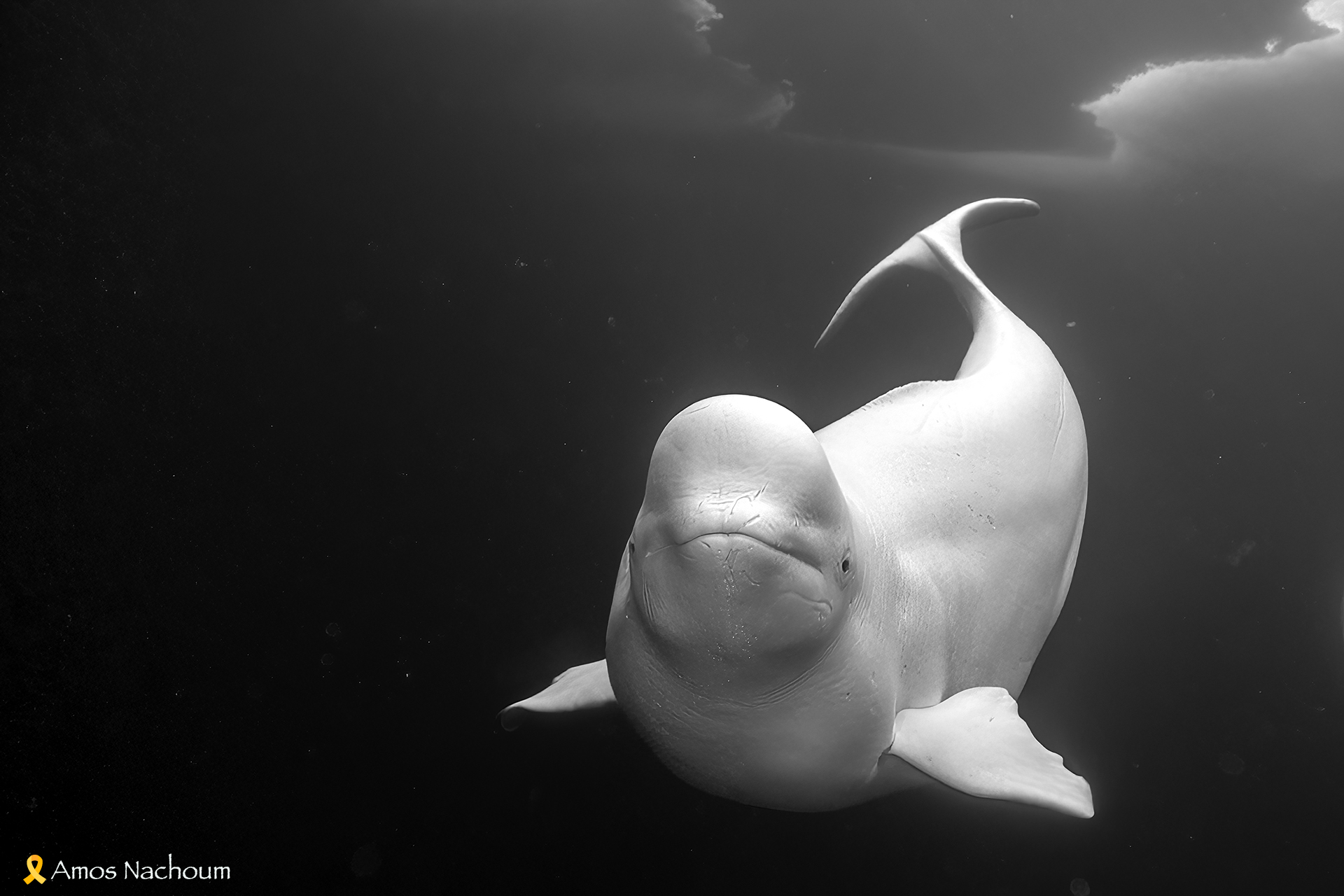
You can see more of Amos’ work and find out more about his expeditions on his website, or follow him on Instagram.
Featured Photographer of the Week (or FPOTW for short) is where we share amazing talent with our community. If you know of anyone who’d be happy to be a part of our ‘Featured Photographer of the Week Series’, please contact us here.
See more from DIYPhotography.net on Google
Add DIYPhotography.net as a trusted source. This makes
our stories more likely to appear in your Google Search results.
 Add as a preferred source on Google
Filed Under:
Tagged With:
Alex Baker
Alex Baker is a portrait and lifestyle driven photographer based in Valencia, Spain. She works on a range of projects from commercial to fine art and has had work featured in publications such as The Daily Mail, Conde Nast Traveller and El Mundo, and has exhibited work across Europe
Related Posts
 Lessons learned after six months of shooting only with a phone
 Photographer takes magnificent photos of great white shark 12 feet in the air
 Real Or Fake? GoPro Captures Man/Shark Close Encounter at Sydney Harbour
 Whale shark with 50 remoras in her mouth wins Scuba Diving Magazine’s 2020 underwater contest
Join the Discussion
DIYP Comment Policy
Be nice, be on-topic, no personal information or flames.