























Major Social Media Image Size Changes That Could Break Your Photography Brand
Oct 7, 2025
Darlene Lleno
Darlene Lleno brings a unique perspective to DIY Photography as someone who grew up surrounded by camera gear but chose words over lenses. With five years of writing experience, she specializes in photography content that’s both technically informed and genuinely passionate. Growing up with a photographer twin brother meant camera talk was everyday conversation in her household. While he mastered capturing moments, Darlene discovered she preferred being the subject and the storyteller behind the scenes. As a travel enthusiast and mother of two, she understands the importance of preserving life’s precious moments. When not exploring new destinations or writing for DIY Photography, you’ll find her reading or tending to her garden. Her approach to photography writing is refreshingly authentic, she may not be behind the camera, but she knows exactly what it takes to help others capture the shots that matter most.
Share:
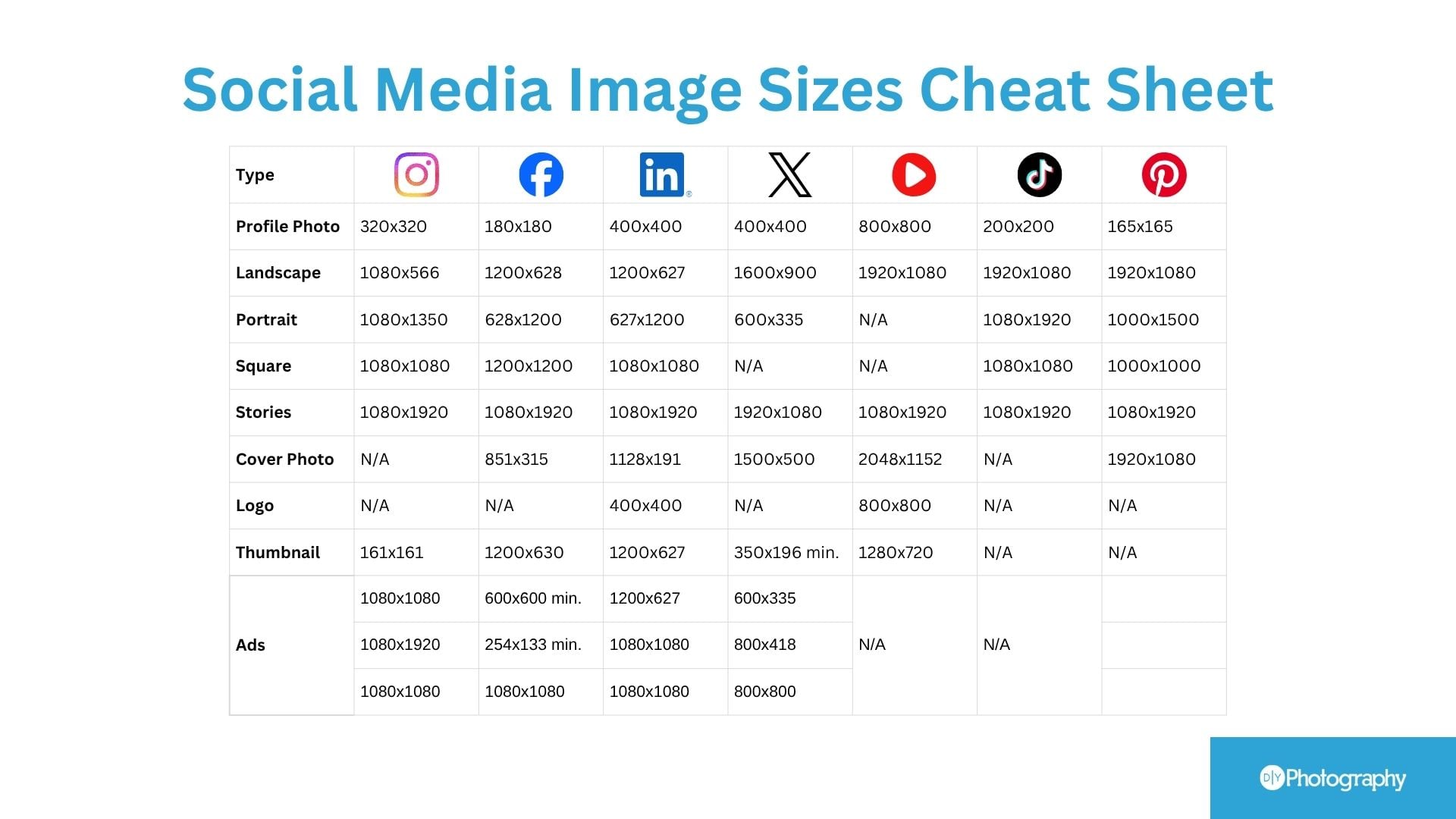
Social media image sizes continue evolving rapidly across all major platforms. Photography businesses must stay current with these specifications to maintain visibility and engagement. Platform algorithms increasingly prioritize content that meets exact dimensional requirements.
Your brand’s success depends on presenting images in correct dimensions. Wrong specifications lead to automatic cropping and reduced quality. Professional photographers using outdated formats risk algorithm penalties and decreased organic reach.
Modern platforms evaluate technical specifications alongside creative content when determining visibility. Understanding current social media image sizes becomes critical for maintaining competitive positioning. Photography businesses must adapt their workflows to meet these changing requirements.
Read more: Major Social Media Image Size Changes That Could Break Your Photography BrandCurrent Platform Requirements for Photography Businesses
Each major platform maintains specific dimensional standards that directly impact photographer visibility. Understanding these specifications is essential for maintaining professional credibility and client acquisition rates. Modern algorithms evaluate technical quality alongside creative content when determining reach.
Professional photographers must create multiple versions of images to optimize performance across different networks. Single-format approaches no longer provide adequate results across platforms. Platform-specific optimization has become as important as original composition.
Recent platform updates show continued emphasis on mobile-optimized content formats. Photography businesses adapting to mobile-first specifications report higher engagement rates. Understanding platform preferences helps photographers create content that performs better organically.
Instagram’s Current Format Standards

Instagram maintains strict requirements across its various content types as of early 2025. The platform continues favoring vertical formats for most content categories. Feed posts perform optimally at 1080×1350 pixels in 4:5 aspect ratio for maximum engagement.
Profile pictures require 320×320 pixels minimum for sharp display across all contexts. Photography businesses need clear logos or portrait shots that remain recognizable at various display sizes. Instagram’s circular crop significantly affects how profile images appear.
Stories maintain 1080×1920 pixel requirements with 9:16 aspect ratio. Instagram applies compression to content that doesn’t match exact specifications. Professional photographers notice quality differences between properly formatted and automatically adjusted images.
Reels continue dominating Instagram’s algorithm with vertical format requirements. Photography tutorials and educational content perform better in 9:16 vertical format. Behind-the-scenes content works exceptionally well in this format.
Facebook’s Visual Content Specifications
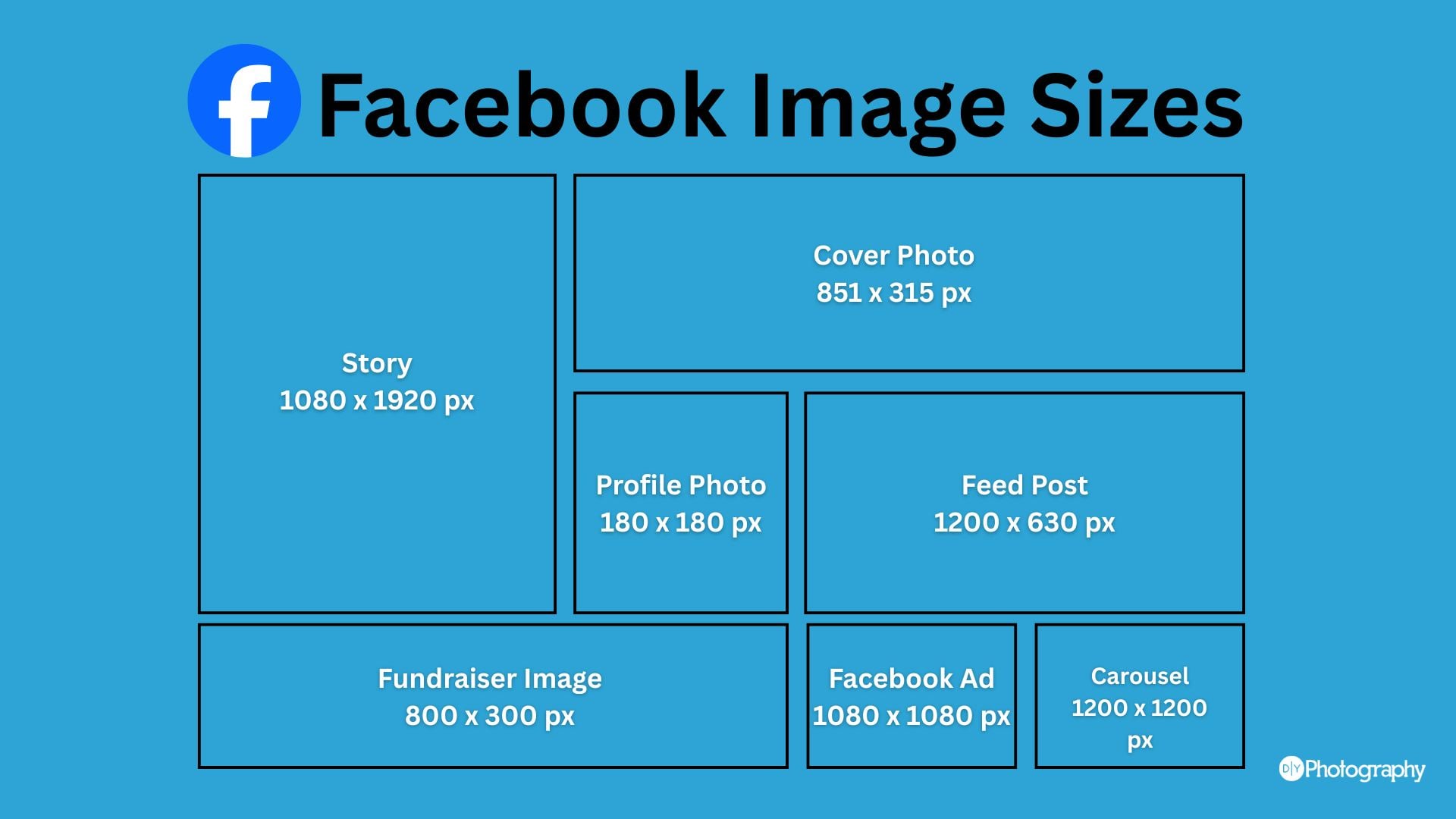
Facebook maintains specific requirements for optimal content display across its platform. Single images perform best at 1200×630 pixels for feed posts. The platform automatically scales content but may reduce quality during this process.
Cover photos require 851×315 pixels for desktop viewing with different mobile scaling. Photography businesses must ensure branding remains readable across viewing contexts. Wedding photographers benefit from carefully planned cover compositions.
Album posts support individual images up to 2048×2048 pixels maximum. This provides opportunities for detailed portfolio presentation. Facebook’s zoom functionality works better with higher resolution uploads within platform limits.
Event images work optimally at 1920×1080 pixels for landscape orientations. Photography workshops and educational events need proper formatting for maximum visibility. Event images appear across multiple Facebook contexts.
LinkedIn’s Professional Content Standards
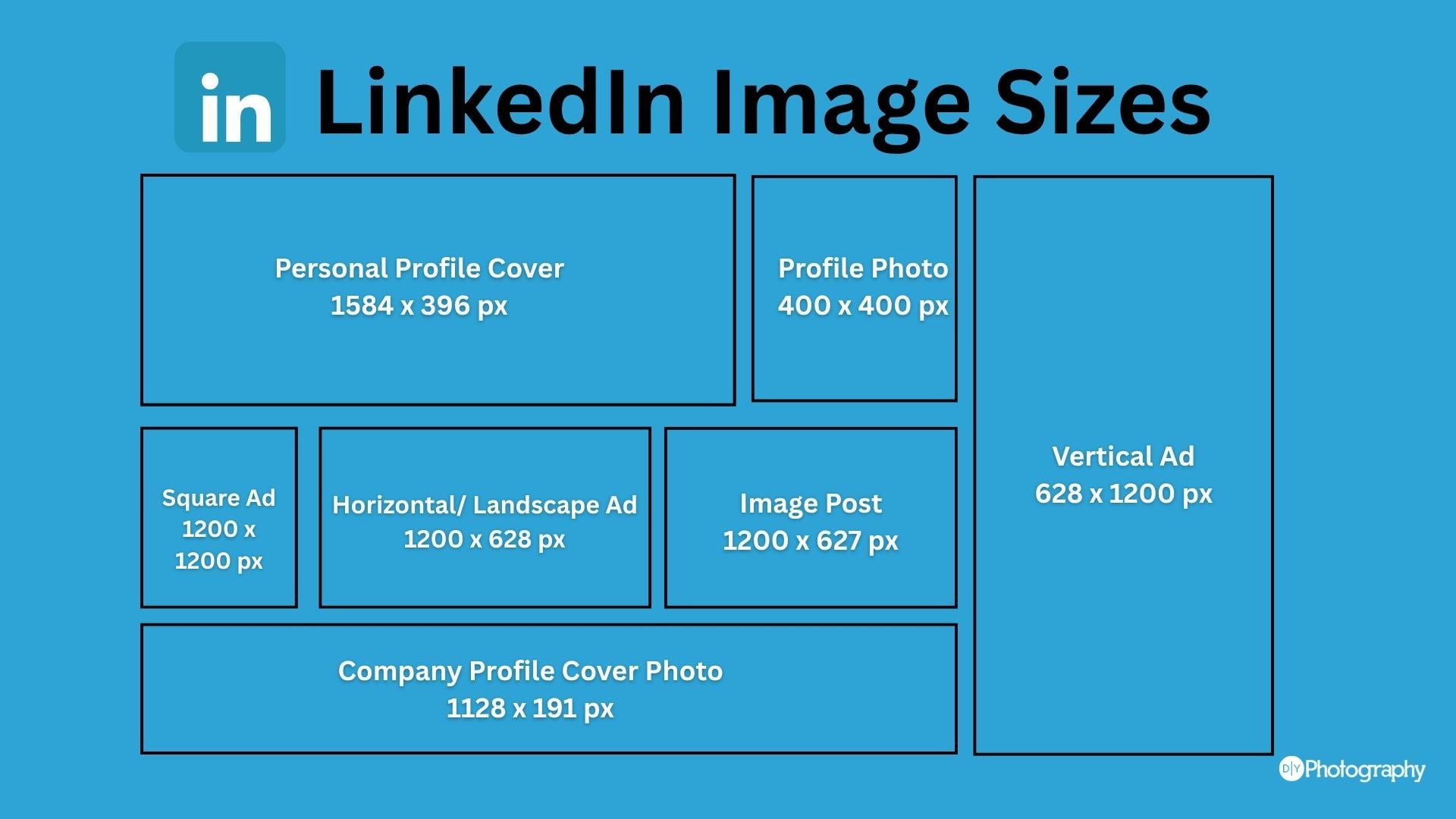
LinkedIn maintains specific requirements for professional content presentation. Profile images need minimum 400×400 pixels with 1:1 aspect ratios. Company pages follow similar dimensional standards with different display contexts.
Background images work best at 1584×396 pixels for comprehensive brand storytelling. Professional photographers should showcase work while maintaining business-appropriate presentation. Commercial photography content displays effectively when properly formatted.
Post images perform optimally at 1200×627 pixels in landscape format. Portrait orientation posts require 1080×1350 pixel dimensions. Professional content receives better algorithm treatment when specifications match platform preferences.
Article header images require 1280×720 pixels for maximum visual impact. Photography business owners creating industry content benefit from proper header optimization. LinkedIn’s algorithm favors articles with correctly sized visual elements.
Pinterest’s Visual Discovery Standards

Pinterest operates as a visual discovery platform with unique dimension requirements. The platform favors vertical content with 2:3 aspect ratios for maximum pin engagement. Standard pins perform best at 1000×1500 pixels for optimal display.
Profile images require 165×165 pixels minimum for clear brand representation. Photography businesses need recognizable logos that work at small display sizes. Pinterest’s circular profile crop affects brand presentation significantly.
Cover images need 1920×1080 pixels for board headers and profile banners. Landscape photographers benefit from optimized cover images showcasing portfolio highlights. Board covers appear in search results and discovery feeds.
Square pins work at 1000×1000 pixels for specific content types. Photography businesses can use square formats for before-and-after comparisons. Story pins maintain 1080×1920 pixel requirements similar to other platforms.
TikTok’s Mobile-First Requirements

TikTok maintains strict vertical format requirements across all content types. Profile photos require 200×200 pixels minimum for sharp display. Photography businesses need clear brand imagery that works at small sizes.
Feed videos and carousel posts require 1080×1920 pixels with 9:16 aspect ratio. Phone photography content performs particularly well on this platform. TikTok’s algorithm heavily favors properly formatted vertical content.
Stories maintain identical 1080×1920 pixel requirements for consistency across features. Photography businesses creating educational content must adapt to vertical formats. Behind-the-scenes content and quick tips work exceptionally well on TikTok.
Ad content follows the same vertical specifications as organic posts. Photography businesses running promotional campaigns must ensure proper formatting. TikTok’s younger demographic responds well to authentic vertical content.
YouTube’s Video Platform Standards

YouTube maintains specific requirements for channel branding and video thumbnails. Profile images require 800×800 pixels minimum for sharp display across devices. Photography businesses need recognizable logos that scale well.
Channel art requires 2560×1440 pixels for optimal display across different devices. The safe area for text and logos measures 1546×423 pixels. Video content creators must consider various viewing contexts when designing channel art.
Video thumbnails perform best at 1280×720 pixels with 16:9 aspect ratio. Custom thumbnails significantly impact click-through rates for photography tutorials. Professional-looking thumbnails help establish credibility with potential subscribers.
YouTube Shorts require 1080×1920 pixels with 9:16 aspect ratio. Photography businesses adapting long-form content to Shorts format report increased reach. Short-form vertical video continues growing in importance across platforms.
Twitter/X Image Specifications

Twitter maintains specific requirements for optimal image display in feeds. Profile photos work best at 400×400 pixels for clear brand representation. Photography businesses need recognizable imagery that works at various display sizes.
Header images require 1500×500 pixels for proper display across desktop and mobile. Street photographers benefit from compelling header images showcasing their style. Twitter’s header prominently displays on profile pages.
In-feed images perform optimally at 1600×900 pixels for landscape posts. Portrait posts work at 1080×1350 pixels for maximum engagement. Twitter displays up to four images per post in grid format.
Square posts maintain 1080×1080 pixel specifications for balanced compositions. Photography businesses can share portfolio highlights in square format. Twitter’s timeline displays images prominently when properly sized.
Technical Considerations for Cross-Platform Success
Modern social media requires technical precision alongside creative excellence. File formats and compression settings affect how photography appears across platforms. Professional photographers must understand these technical requirements for consistent results.
Color space management remains critical for maintaining visual integrity across platforms. Different networks handle color spaces differently during upload processing. sRGB provides most consistent results while other color spaces may display poorly.
Compression algorithms vary significantly between platforms and affect final image quality. Instagram applies different compression than LinkedIn for similar content types. Professional photographers must account for these differences when preparing social media image sizes.
File Format Selection Strategies
JPEG remains optimal for most social media image sizes across platforms. Professional photographers should export at 85-90% quality settings for best platform compatibility. Higher quality settings create larger files without visible improvement after platform compression.
PNG works better for images containing text elements or sharp graphic components. Transparency support makes PNG valuable for watermarks and branding elements. However, larger file sizes may face platform restrictions or slower upload times.
HEIF offers improved compression with quality retention but has limited platform support. iOS devices can upload HEIF to some platforms directly. Other platforms convert HEIF to JPEG during processing which may affect quality.
WebP provides excellent compression ratios with good quality maintenance. Modern browsers support WebP effectively. Many social platforms don’t accept WebP natively, requiring conversion workflows.
Resolution and Quality Management
Higher resolution uploads typically produce better results after platform compression processing. Professional photographers should exceed minimum social media image sizes when platform limits allow. Additional resolution provides compression headroom for better final display quality.
Pixel density considerations affect appearance across different viewing devices. Retina displays require higher resolution content for sharp presentation quality. Professional photographers must consider device diversity when preparing social content.
Sharpening workflows must account for platform-specific compression algorithms. Over-sharpened images may appear harsh after additional platform processing. Post-processing workflows should include platform-appropriate sharpening techniques for different photography genres.
Upload timing may affect compression quality during high-traffic periods. Some platforms apply more aggressive compression during peak usage times. Professional photographers report quality variations based on upload timing.

Workflow Automation for Efficiency
Professional photography businesses benefit from systematic approaches to creating multiple image formats. Manual resizing for each platform consumes time better spent on creative work. Automated solutions maintain consistency while significantly improving productivity.
Adobe Lightroom’s export preset system streamlines social media preparation across multiple platforms. Custom presets eliminate manual dimension calculations for each network. Professional photographers can process entire shoots for all platforms simultaneously.
Third-party automation tools provide advanced batch processing capabilities for complex format requirements. These applications handle intricate export scenarios efficiently. Photography businesses report significant time savings using proper automation workflows.
Cloud-based optimization services offer platform-specific processing without local software requirements. These solutions automatically adjust images for optimal social media performance. Professional photographers benefit from automated optimization that stays current with platform changes.
Export System Development
Lightroom export templates eliminate repetitive manual work for social media image sizes. Professional photographers create platform-specific presets with appropriate dimensions and quality settings. Batch processing becomes efficient with well-organized template systems.
Photoshop actions automate complex multi-step processing sequences including resizing and format optimization. Actions ensure consistent results across large image batches. Photography businesses maintain brand consistency through systematic automated processing.
File naming conventions help organize multi-platform exports effectively. Systematic naming prevents confusion during upload processes. Professional workflows include clear identification systems for various formats and posting schedules.
Folder organization should reflect platform requirements and content scheduling needs. Structured file systems accelerate content creation and publishing workflows. Photography businesses benefit from standardized organization across all projects.
Quality Assurance and Testing
Professional photography requires systematic quality control for social media content. Testing uploads across devices ensures consistent presentation quality. Mobile viewing often differs significantly from desktop presentation.
Color accuracy varies between platforms and viewing devices requiring verification. Professional photographers must confirm color reproduction meets standards across viewing scenarios. Monitor calibration becomes important for accurate social media preparation.
Performance metrics provide feedback on formatting effectiveness across platforms. Photography businesses should track engagement across different social media image sizes. Data-driven optimization decisions improve social media marketing results.
A/B testing reveals optimal formats for specific content types and audiences. Professional photographers can compare performance between different formatting approaches. Platform preferences evolve regularly requiring ongoing optimization efforts.
Business Impact of Proper Social Media Formatting
Correct social media image sizes directly influence photography business growth metrics. Professional presentation builds credibility with potential clients and industry peers. Technical attention to detail reflects overall business quality and competence.
Client acquisition improves when portfolio work displays optimally across all platforms. Properly formatted content receives better algorithm treatment and higher organic reach. Professional photographers report measurable business growth from optimized social media presence.
Brand recognition increases with consistent formatting across all social networks. Photography businesses maintaining professional technical standards build stronger market positions. Clients recognize and appreciate technical competence in digital presentation.
Search visibility improves with platform-optimized content meeting current technical specifications. Social media algorithms favor properly formatted posts in discovery features. Professional photographers gain competitive advantages through consistent technical excellence.
Measuring Return on Investment
Engagement metrics demonstrate business value from proper social media image sizes. Professional photographers should track performance across different formatting approaches. Higher engagement typically correlates with increased client inquiries and booking opportunities.
Key metrics for tracking optimization ROI include:
- Engagement rates across different image format approaches
- Click-through rates from social media to portfolio websites
- Conversion rates from social media traffic to actual bookings
- Time savings achieved through automated workflow systems
- Client satisfaction with social-ready deliverable quality
Conversion tracking shows how formatting decisions affect actual booking rates. Photography businesses can measure client acquisition from different social platforms. Proper formatting often correlates with improved conversion rates from social media traffic.
Time savings from automated workflows improve overall business profitability and efficiency. Professional photographers can allocate more time to client work rather than technical preparation. Streamlined social media processes contribute to improved work-life balance.
Client satisfaction increases when delivered images work effectively across social platforms without additional adjustments. Modern clients expect social-ready deliverables as standard service offerings. Photography businesses providing optimized content build stronger client relationships.

Competitive Advantages Through Technical Excellence
Professional photographers mastering current social media image sizes gain market positioning benefits. Technical competence differentiates businesses in competitive photography markets. Clients increasingly recognize and value digital presentation expertise.
Industry leadership develops from sharing knowledge about platform optimization best practices. Photography educators benefit from understanding current technical requirements thoroughly. Teaching proper formatting techniques builds professional reputation and industry authority.
Collaboration opportunities increase with demonstrated technical competence in social media presentation. Other professionals prefer partnering with photographers who understand digital requirements completely. Technical formatting knowledge opens doors to professional networking opportunities.
Future-proofing businesses requires staying current with evolving platform developments. Social media image sizes will continue changing with technology advances. Professional photographers who adapt systematically maintain competitive advantages.
Staying Current With Platform Evolution
Social media platforms continuously update their technical requirements and algorithm preferences. Photography businesses must establish systematic monitoring approaches for these changes. Professional success depends on adapting efficiently to new specifications.
Industry resources provide regular updates on platform modifications and technical changes. Professional photography organizations share technical updates through member communications. Photography education platforms and industry publications discuss current best practices regularly.
Platform communications include official developer blogs and announcement channels. Following platform accounts provides direct notifications about specification changes. Professional photographers should monitor multiple information sources for comprehensive coverage.
Professional photography communities share practical experiences with platform changes. Online forums and social media groups discuss real-world implementation challenges. Peer networks provide valuable insights into effective adaptation strategies.
Building Adaptable Systems
Flexible workflows accommodate changing platform requirements without complete system reconstruction. Professional photographers should design modular systems that accept new specifications easily. Adaptable approaches enable quick adjustments for platform updates.
Systematic approaches to future-ready workflows include:
- Creating modular export templates for easy modification
- Maintaining documentation of current platform specifications
- Establishing regular review schedules for platform updates
- Building relationships with other professionals for knowledge sharing
- Investing in equipment supporting anticipated technical developments
Version control systems help manage multiple format requirements effectively. Photography businesses can maintain archives of different platform specifications for reference. Documentation helps predict trends and prepare for anticipated changes.
Training schedules should include regular updates on platform developments and technical changes. Professional photographers require ongoing education about evolving technical standards. Industry workshops and online courses provide structured learning opportunities.
Equipment considerations should account for anticipated platform needs and technical developments. Camera capabilities and post-processing software must support evolving social media requirements. Professional gear investments should accommodate expected technical changes.
Start Optimizing Your Social Media
Social media image sizes significantly impact photography business success across all platforms. Platform-specific optimization improves engagement rates and client acquisition potential. Systematic workflows save time while maintaining consistent professional quality.
Professional photographers must balance technical competence with creative excellence in competitive markets. Platform requirements continue evolving with technology advances and user behavior changes. Building adaptable systems ensures sustainable business success.
Staying current with specification changes provides ongoing competitive advantages in photography markets. Technical excellence differentiates professional businesses from casual content creators. Proper social media formatting reflects overall business quality and professional attention to detail.
See more from DIYPhotography.net on Google
Add DIYPhotography.net as a trusted source. This makes
our stories more likely to appear in your Google Search results.
 Add as a preferred source on Google

Darlene Lleno
Darlene Lleno brings a unique perspective to DIY Photography as someone who grew up surrounded by camera gear but chose words over lenses. With five years of writing experience, she specializes in photography content that’s both technically informed and genuinely passionate. Growing up with a photographer twin brother meant camera talk was everyday conversation in her household. While he mastered capturing moments, Darlene discovered she preferred being the subject and the storyteller behind the scenes. As a travel enthusiast and mother of two, she understands the importance of preserving life’s precious moments. When not exploring new destinations or writing for DIY Photography, you’ll find her reading or tending to her garden. Her approach to photography writing is refreshingly authentic, she may not be behind the camera, but she knows exactly what it takes to help others capture the shots that matter most.
Related Posts
 The Social Media Fallacy – Does Social Media Generate Business Income?
 Media companies can’t use your social media photos without permission, court rules
 360-Degree 26-Gigapixel Image from Stanley Cup Finals Includes Social Media Interaction
 Court orders Canon Italia to remove Elia Locardi’s image from their social media pages
Join the Discussion
DIYP Comment Policy
Be nice, be on-topic, no personal information or flames.