






















NovaStar Scarlet A62Q: A Telescope Made for Affordable Astrophotography
Feb 19, 2026
Soumyadeep Mukherjee
Soumyadeep Mukherjee is an award-winning astrophotographer from India. He has a doctorate degree in Linguistics. His work extends to the sub-genres of nightscape, deep sky, solar, lunar and optical phenomenon photography. He is also a photography educator and has conducted numerous workshops. His works have appeared in over 40 books & magazines including Astronomy, BBC Sky at Night, Sky & Telescope among others, and in various websites including National Geographic, NASA, Forbes. He was the first Indian to win “Astronomy Photographer of the Year” award in a major category.
Share:
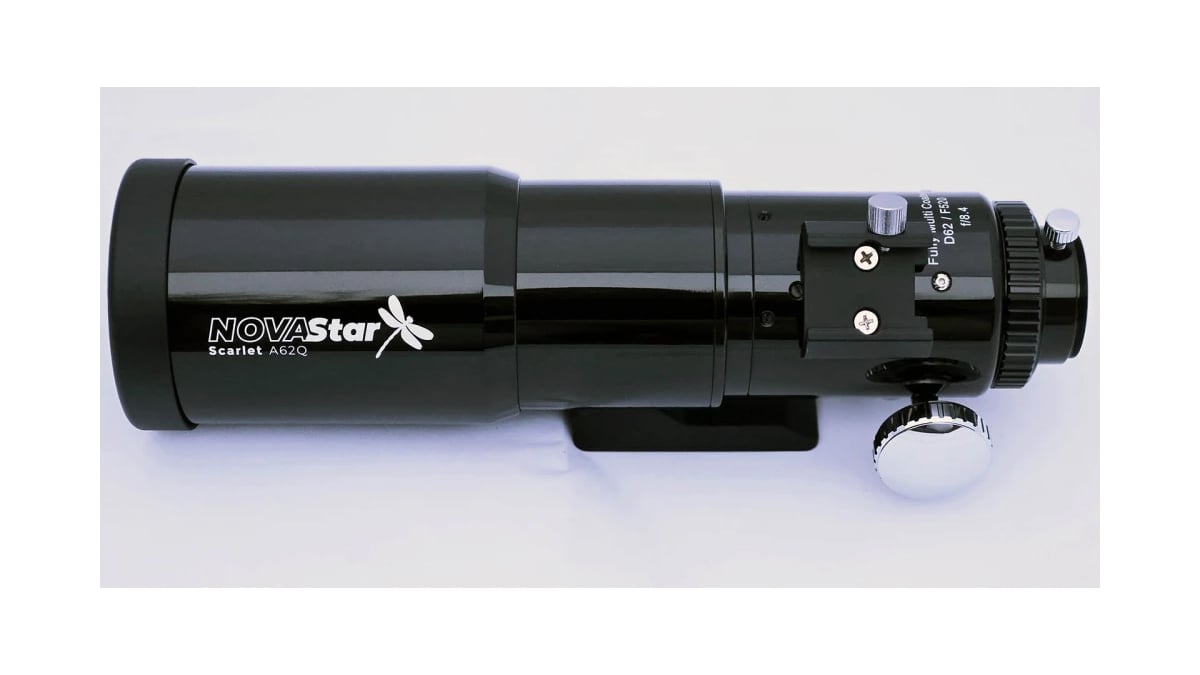
Small apochromatic refractors have become central to modern entry-level astrophotography. Their closed-tube design, modest weight, and predictable optical behavior make them attractive to new imagers. Within this landscape, manufacturers continue to refine compact astrographs that balance performance with affordability. The NovaStar Scarlet A62Q enters this space as a quadruplet refractor intended to simplify the early stages of deep-sky imaging.
The telescope combines a 62 mm aperture with a 520 mm focal length, producing a focal ratio of f/8.4. These parameters place it in the moderate focal length category rather than the ultra-wide astrograph class. More importantly, the optical system incorporates built-in field correction. As a result, the instrument aims to deliver a flat imaging field without requiring external flatteners.
Optical design
The defining feature of the Scarlet A62Q is its four-element refractor system. The quadruplet configuration serves two main purposes. First, it improves control over field curvature. Second, it supports better correction of off-axis aberrations compared with simpler doublet systems.
In many beginner refractors, users must add a separate field flattener to achieve acceptable edge performance. That extra component introduces additional spacing requirements and potential alignment errors. Here, the corrective optics are already integrated into the optical train. Consequently, the telescope presents a more self-contained imaging solution.

The 520 mm focal length produces a moderately wide field of view. This range works well for large open clusters and extended nebulae. At the same time, the focal ratio of f/8.4 reflects a deliberate design choice. Faster systems collect light more quickly, but they often demand tighter tolerances. By contrast, a slightly slower system can deliver more forgiving focus and stable star profiles. For beginners learning the fundamentals of capture and tracking, this trade-off often proves beneficial.
Multi-coated optical surfaces further support the design. These coatings improve light throughput and reduce internal reflections. In practical imaging scenarios, that translates to improved contrast and more consistent color rendering across the frame.
Mechanical construction
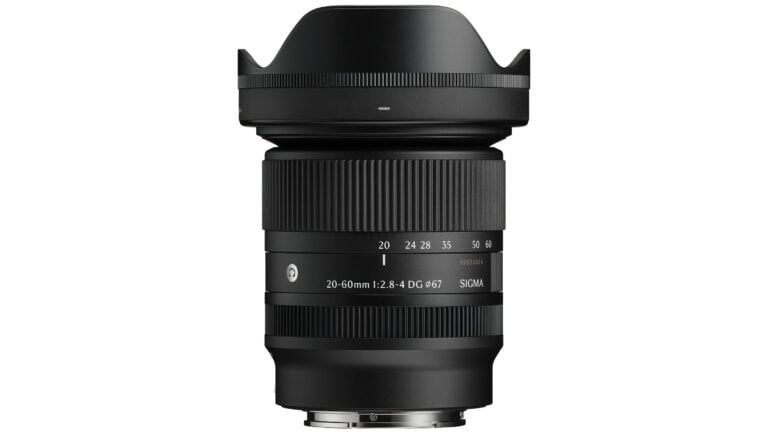
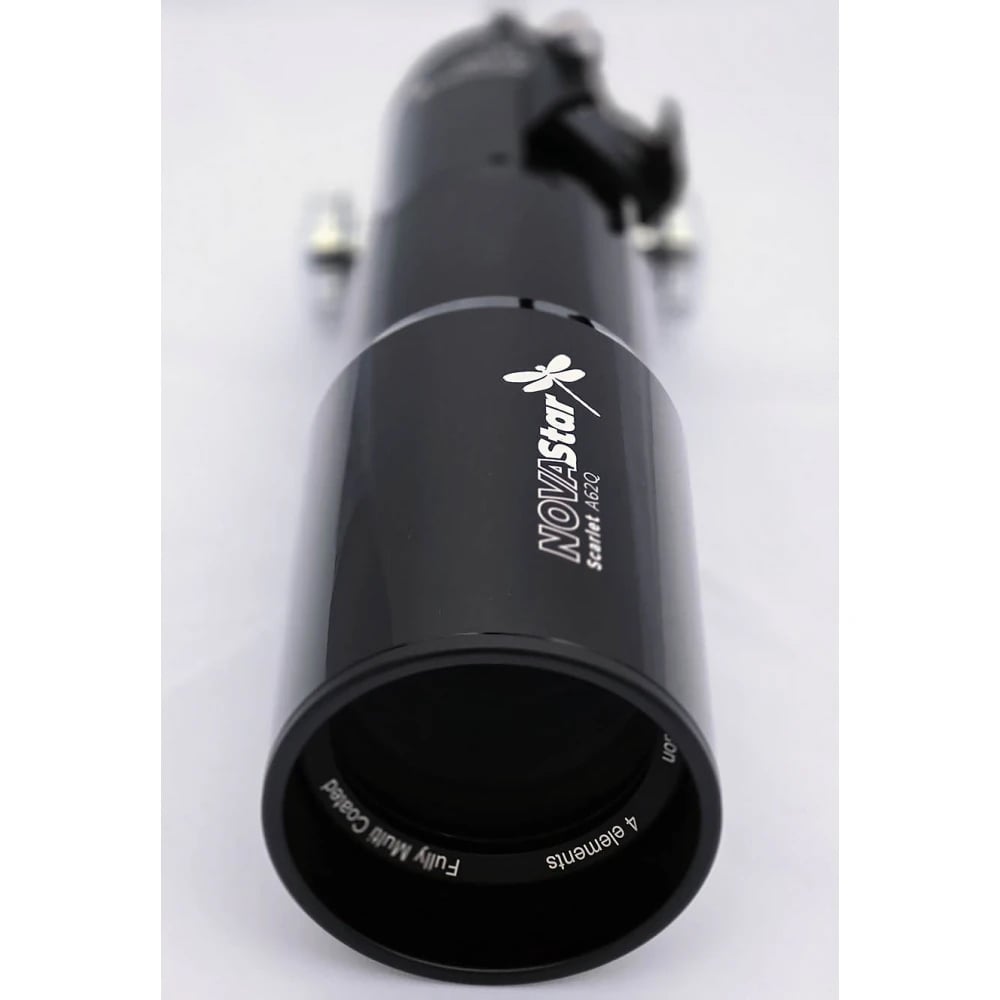
The Scarlet A62Q emphasizes portability. The optical tube weighs about 1.5 kg and maintains a compact physical profile. With the dew shield retracted, the tube measures roughly 31 cm in length. Even when extended, the overall footprint remains modest.
This compact geometry serves several purposes. First, it reduces the load on lightweight equatorial mounts and star trackers. Second, it simplifies packing for field work. Astrophotographers who travel frequently often prioritize equipment that occupies minimal space without sacrificing structural rigidity.
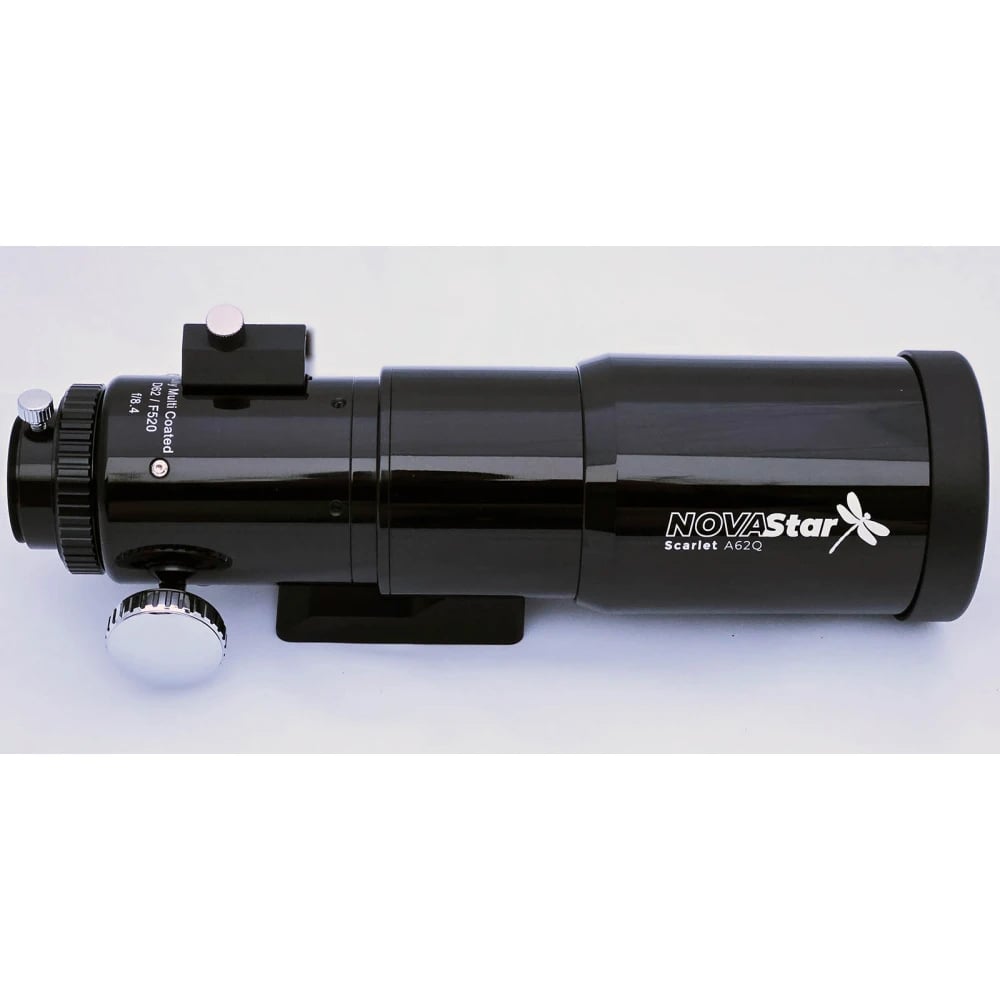
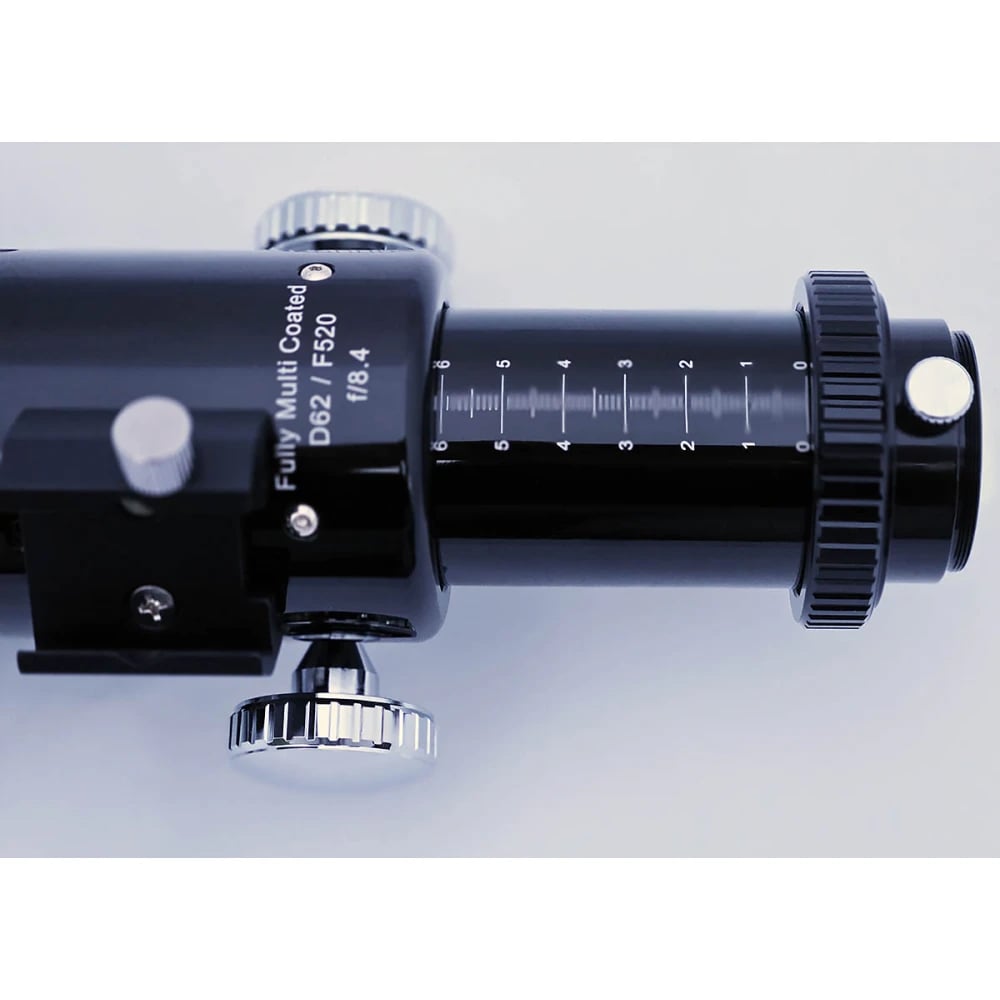
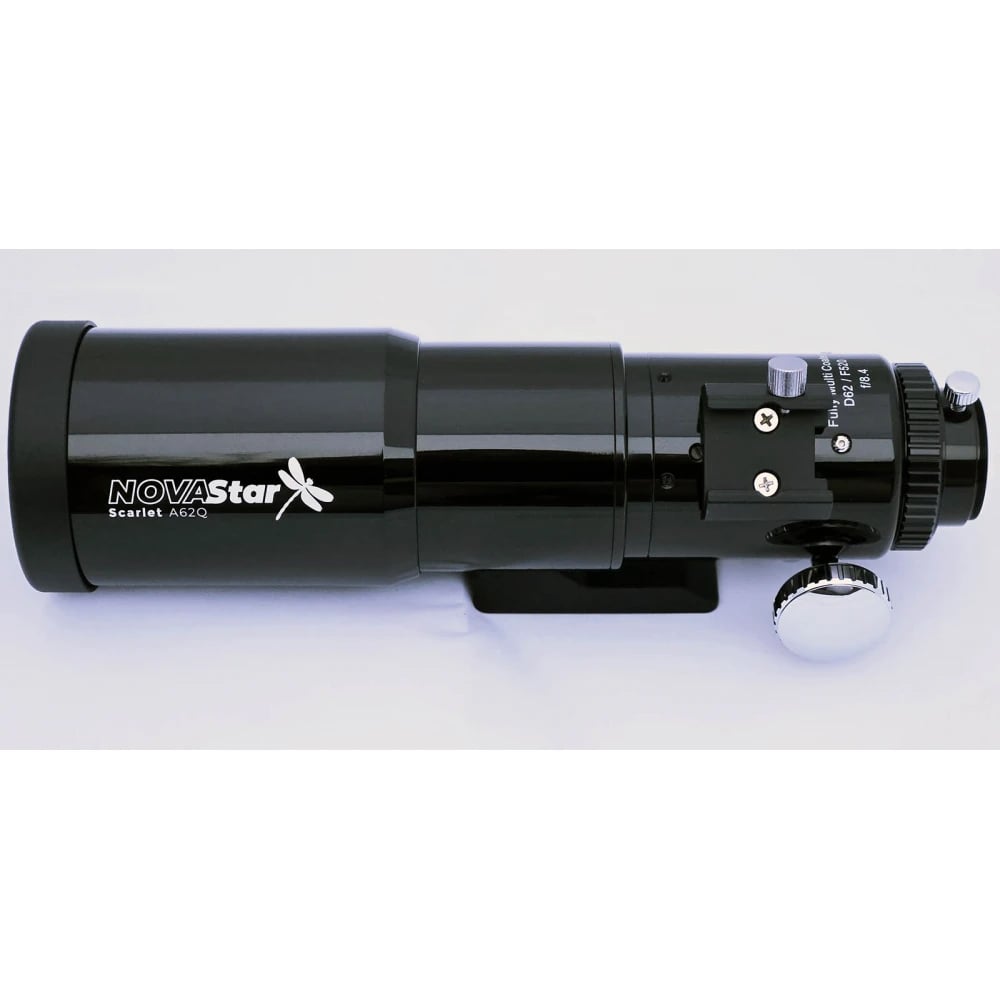
The tube assembly uses metal construction with a glossy exterior finish. The machining appears clean and consistent. The retractable dew shield slides smoothly and locks securely in place. At the rear of the telescope sits a single-speed Crayford focuser. This friction-based design avoids gear backlash and typically provides smooth linear motion. The drawtube accommodates standard accessories without requiring proprietary adapters.
During typical operation, the focuser offers controlled movement suitable for basic imaging workflows. However, because the unit lacks a dual-speed reduction mechanism, users must exercise care when approaching critical focus. Many beginners address this by using a Bahtinov mask or by adding an electronic focuser later in their workflow.
Mounting flexibility and system integration
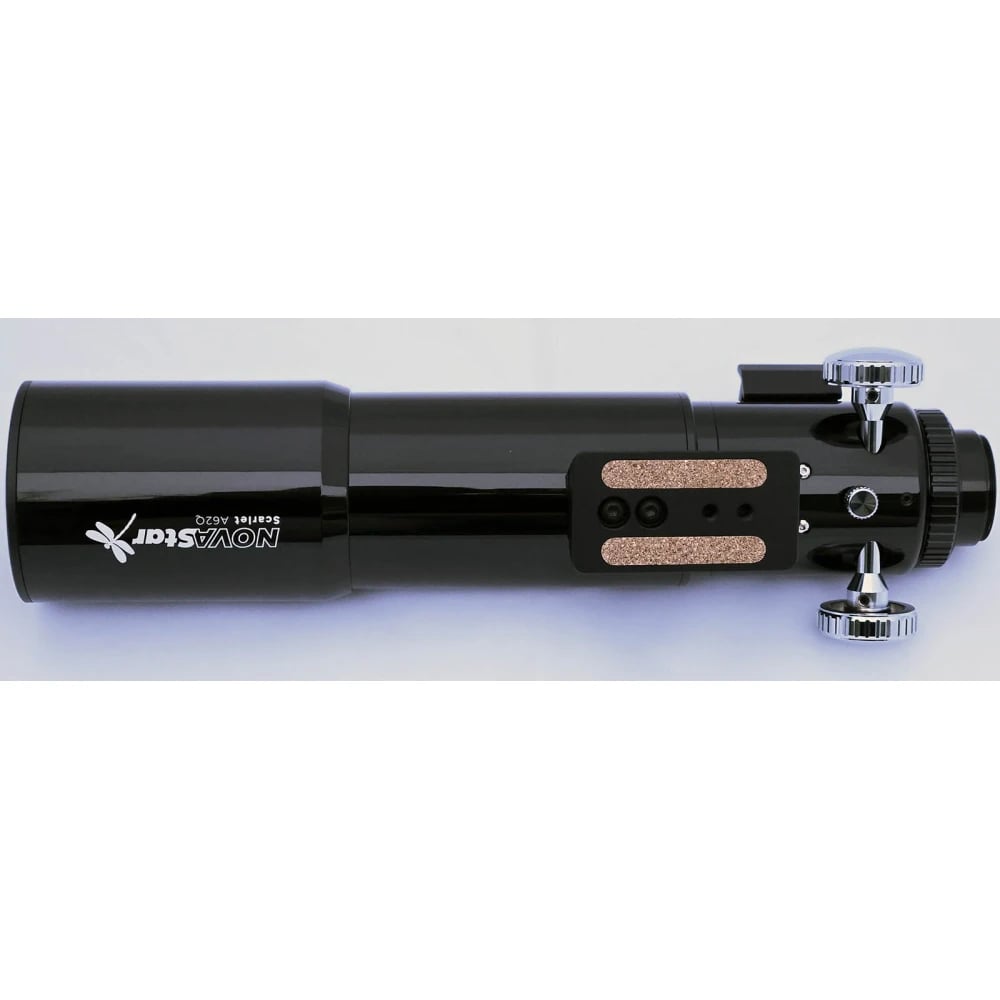
Ease of integration often determines how quickly beginners achieve usable results. The Scarlet A62Q reflects this reality through its mounting and connectivity choices. A photography-style tripod plate is integrated directly into the tube assembly. This feature allows immediate attachment to many heavy-duty photo tripods. At the same time, users can mount the telescope on standard astronomical dovetail systems when transitioning to equatorial mounts.
This dual compatibility supports a gradual upgrade path. A newcomer might begin with a portable star tracker and later move to a full tracking mount without replacing the optical tube.
The rear assembly includes a standard 1.25-inch holder and an M42 camera thread. These interfaces cover the majority of entry-level imaging configurations. DSLR users can connect through common T-rings, while dedicated astronomy cameras can thread directly into the optical path.
Because the field correction is internal, the imaging train remains relatively simple. Users do not need to calculate additional backfocus spacing for a separate flattener. This reduces one of the most common sources of frustration for beginners.
Price and availability
The Novastar Scarlet A62Q is priced at $263. The telescope is available for ordering via the official 365Astronomy website.
NovaStar supplies the optical tube inside a foam-lined hard case. This inclusion improves transport safety and reduces the need for third-party storage solutions. For users who regularly move equipment between locations, a dedicated case significantly lowers the risk of mechanical damage.

An entry point into refractor astrophotography
The entry-level refractor market has expanded significantly in recent years. Within this crowded field, the Scarlet A62Q distinguishes itself through its integrated optical correction and compact footprint.
From a design perspective, the Scarlet A62Q functions as a learning platform. The integrated flat field removes one layer of optical complexity. The moderate focal ratio eases focusing demands. The lightweight body simplifies mount requirements
Although the telescope emphasizes simplicity, effective use still depends on proper technique. The f/8.4 focal ratio means exposure times will be longer than with fast astrographs. Therefore, accurate tracking remains important for deep-sky imaging. For users seeking a small, self-contained refractor for introductory deep-sky imaging, the Scarlet A62Q could be an option.
Clear skies!
See more from DIYPhotography.net on Google
Add DIYPhotography.net as a trusted source. This makes
our stories more likely to appear in your Google Search results.
 Add as a preferred source on Google

Soumyadeep Mukherjee
Soumyadeep Mukherjee is an award-winning astrophotographer from India. He has a doctorate degree in Linguistics. His work extends to the sub-genres of nightscape, deep sky, solar, lunar and optical phenomenon photography. He is also a photography educator and has conducted numerous workshops. His works have appeared in over 40 books & magazines including Astronomy, BBC Sky at Night, Sky & Telescope among others, and in various websites including National Geographic, NASA, Forbes. He was the first Indian to win “Astronomy Photographer of the Year” award in a major category.




Join the Discussion
DIYP Comment Policy
Be nice, be on-topic, no personal information or flames.