






















Why location scouting will help take your landscape photography to the next level
Dec 27, 2017
John Aldred
John Aldred is a photographer with over 25 years of experience in the portrait and commercial worlds. He is based in Scotland and has been an early adopter – and occasional beta tester – of almost every digital imaging technology in that time. As well as his creative visual work, John uses 3D printing, electronics and programming to create his own photography and filmmaking tools and consults for a number of brands across the industry.
Share:

There’s generally two approaches to landscape photography. The first is to just turn up and just photograph what you see as you notice it. It’s a somewhat haphazard, but very therapeutic way of shooting landscapes. And while you’re happy if you come home with great shots, it’s the journey that’s most important. The other type are the landscape photographers that plan ahead. Neither method is better than the other, and both are equally valid. If you want to plan ahead, though, location scouting is vital.
This video from German photographer Michael Breitung talks us through his location scouting process and why it’s so important to him. It really can make a big difference and offer you a lot more consistency and reliability when you head out to create images.
I’m really not a landscape photographer, but I do photograph people in the landscape a lot. At least, I do when the weather’s not behaving the way it is right now. So, I go location scouting a lot. Now is the time of year when I’m exploring and trying to find new landscapes in which to place people. I imagine how the trees and flowers will grow back in 3 or 4 months. I use apps like Sun Scout to show me exactly where and when the sun will rise as Spring and Summer hit.
It lets me see the shot way in advance of actually standing there with an actual subject. It also means that when I do show up with a client we’re not wasting half of the day looking for cool places to shoot. I already know exactly where we’re going to go.
When the subject is the landscape itself, it’s really no different. Finding the spots in advance, taking test shots, checking where the sun will rise, fall and its path throughout the day, allows you to pre-visualise the shot. It means that when the weather conditions are favourable, you’re able to head out and go right where you need to be instead of having to hunt for a spot for two hours on the day. Hunt and potentially miss the best vantage point.
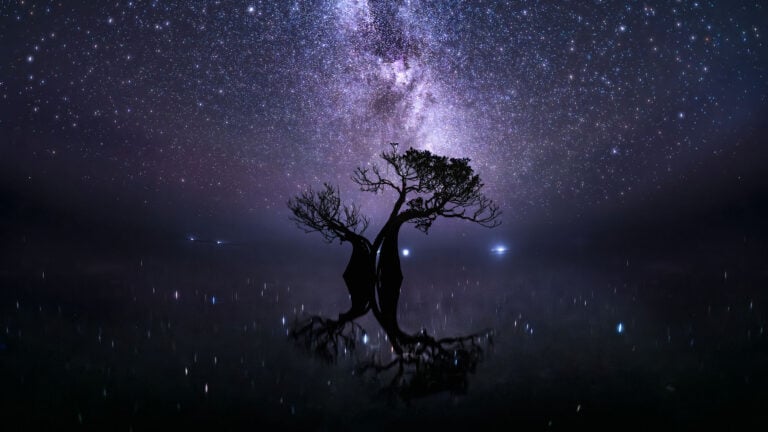
Here’s an example Michael shows where he scouted the location. He only had a few days left at this place, and spent some time exploring. He made test shots to figure out the shots he liked. He then went back during sunrise on his final day to get the shot. He wouldn’t have been able to find this composition in pitch black before the sun came up.

At another location, Michael found his composition the day before the shoot. Looking at a scene in the bright daylight tells you exactly where all the high and low parts are in the terrain, the exact shape of the skyline, where things stand out against each other in the environment. Again, another shot that would be virtually impossible to see in pitch black before the sunrise.

As well as the photography, there’s the logistics. Scouting in advance let him know exactly how long it would take him to reach the location. He could plan out the route and know how to find it again in the dark.
So, if you’re in a new location for a few days, and you want to help ensure some good shots while you’re there, spend some time scouting the place travelling light. Then come back with the gear you need to get the shot when the light and weather is just right.

John Aldred
John Aldred is a photographer with over 25 years of experience in the portrait and commercial worlds. He is based in Scotland and has been an early adopter – and occasional beta tester – of almost every digital imaging technology in that time. As well as his creative visual work, John uses 3D printing, electronics and programming to create his own photography and filmmaking tools and consults for a number of brands across the industry.
Related Posts
 8 location scouting tips from a pro location manager
 Develop these four habits to help take your landscape photography to the next level
 This is why location scouting is so important for destination and event photographers
 Watch: Smartphone photography tips to help you take your mobile photography to the next level
Join the Discussion
DIYP Comment Policy
Be nice, be on-topic, no personal information or flames.
2 responses to “Why location scouting will help take your landscape photography to the next level”
If your purpose is to photograph people in the landscape, OK, scout the location, and return with the talent and the gear. If you’re scouting to photograph the LANDSCAPE, scout WITH your gear. The shot you scouted may not be there when you return.
That’s been my experience, too. Always get the best shot you can on your scouting trip, then hope to get something better when you come back. But realize that the sky, or the wind, or precipitation might not allow the shot you have in your mind when you return.
It’s different if you’re shooting close to home. Then you can scout and return again and again until you get the perfect shot. But if you’re time-limited, you have only a countable number of chances to get the shot and the elements might not line up no matter how well you have scouted.