


























How to make a cheap DIY bullet time rig with a lazy susan and some drawer slides
May 14, 2019
John Aldred
John Aldred is a photographer with over 25 years of experience in the portrait and commercial worlds. He is based in Scotland and has been an early adopter – and occasional beta tester – of almost every digital imaging technology in that time. As well as his creative visual work, John uses 3D printing, electronics and programming to create his own photography and filmmaking tools and consults for a number of brands across the industry.
Share:
It’s 20 years since The Matrix was released (don’t you feel old?), but the bullet time effect is still incredibly popular. I don’t know what the deal is with the title they gave for this video, but The King of Random just put up this video covering how they made their bullet time slow motion camera rig using a handful of off-the-shelf components. It’s a simple design, but very effective, producing some fantastic final results.
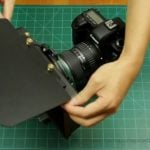
It’s a fairly small scale rig, using a single camera that spins around really quickly shooting a high frame rate. In this case, the Sony RX100 shooting at 960fps. It’s a very lightweight camera, and the rig is built accordingly. You’re certainly not going to be throwing a Phantom on here and spinning it around. But as Phantoms are out of the budget of most people anyway, I don’t suppose that matters.
The rig is based around a Lazy Susan bearing. A pair of sliding drawer rails are attached to this, with one containing a bracket to mount the camera and the other acting as a counterweight to help keep things stable. A Lazy Susan bearing has a hole in the middle, so a couple of pieces of wood are put in place here to support a platform onto which you’ll put your small subject.
Then it’s just a case of hitting record, spinning the camera, and stopping it right after it’s finished recording the action. The RX100 only records the last few seconds when it’s shooting 960fps, so if you wait too long, you’ll miss the action you wanted to record.
A very neat little rig, and one you can build yourself for maybe $30 worth of parts and some spare offcuts of wood.
See more from DIYPhotography.net on Google
Add DIYPhotography.net as a trusted source. This makes
our stories more likely to appear in your Google Search results.
 Add as a preferred source on Google

John Aldred
John Aldred is a photographer with over 25 years of experience in the portrait and commercial worlds. He is based in Scotland and has been an early adopter – and occasional beta tester – of almost every digital imaging technology in that time. As well as his creative visual work, John uses 3D printing, electronics and programming to create his own photography and filmmaking tools and consults for a number of brands across the industry.

Join the Discussion
DIYP Comment Policy
Be nice, be on-topic, no personal information or flames.