
















Hera Captures Stadium-Sized Crater on Dimorphos Asteroid Hit by NASA
Nov 29, 2026
Soumyadeep Mukherjee
Soumyadeep Mukherjee is an award-winning astrophotographer from India. He has a doctorate degree in Linguistics. His work extends to the sub-genres of nightscape, deep sky, solar, lunar and optical phenomenon photography. He is also a photography educator and has conducted numerous workshops. His works have appeared in over 40 books & magazines including Astronomy, BBC Sky at Night, Sky & Telescope among others, and in various websites including National Geographic, NASA, Forbes. He was the first Indian to win “Astronomy Photographer of the Year” award in a major category.
Share:
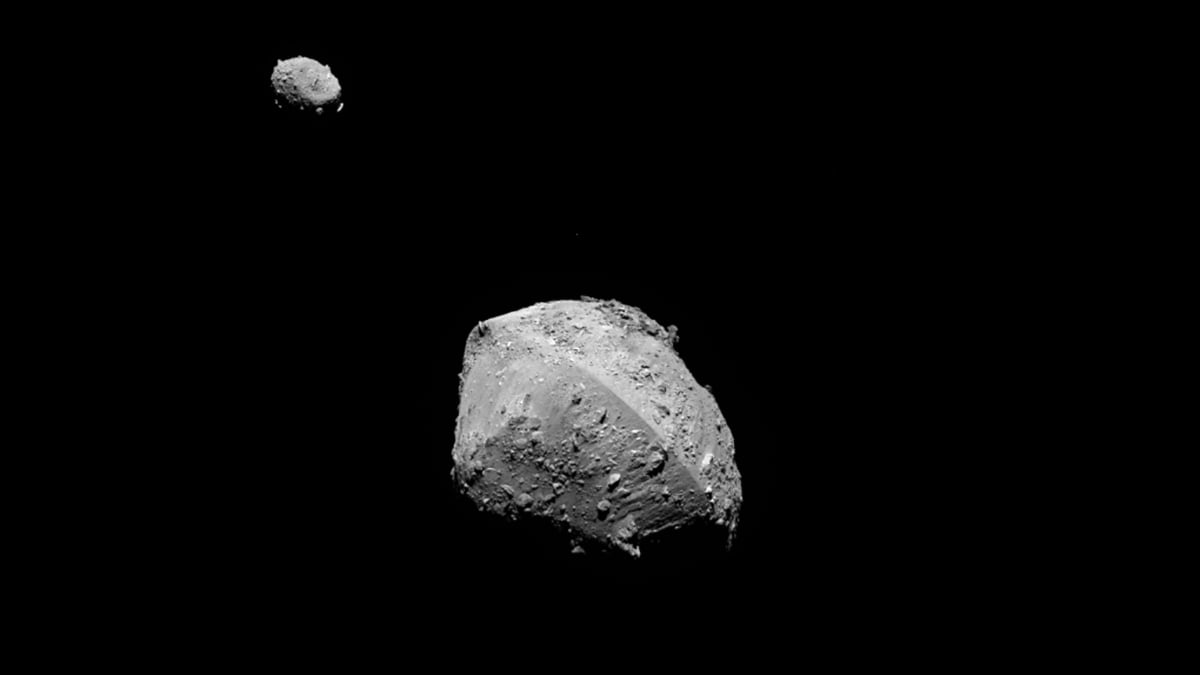
After NASA’s DART spacecraft hit the asteroid Dimorphos in September 2022, it left a mark that astronomers could not examine closely from Earth. The collision changed the asteroid’s orbit around its larger companion, Didymos, and sent material flying into space. Now, more than four years later, ESA’s Hera spacecraft has reached the binary asteroid system and photographed the damaged surface at close range. Its images reveal a vast crater that stretches across much of Dimorphos, giving us the first detailed look at the results of a deliberate attempt to change an asteroid’s motion.
NASA’s DART changed an asteroid’s orbit
The target of NASA’s Double Asteroid Redirection Test (DART) was the Didymos binary asteroid system. Didymos measures approximately 730 metres across and has a smaller companion called Dimorphos. The two bodies orbit their common centre of mass, with Dimorphos travelling around the larger asteroid at an average distance of about one kilometre.
DART launched on November 24, 2021, and reached the system after a ten-month journey. On September 26, 2022, the 580-kilogram spacecraft struck Dimorphos at approximately 6.1 kilometres per second. The collision destroyed the spacecraft and sent a large quantity of material flying away from the asteroid.
Hera finds a crater stretching across Dimorphos
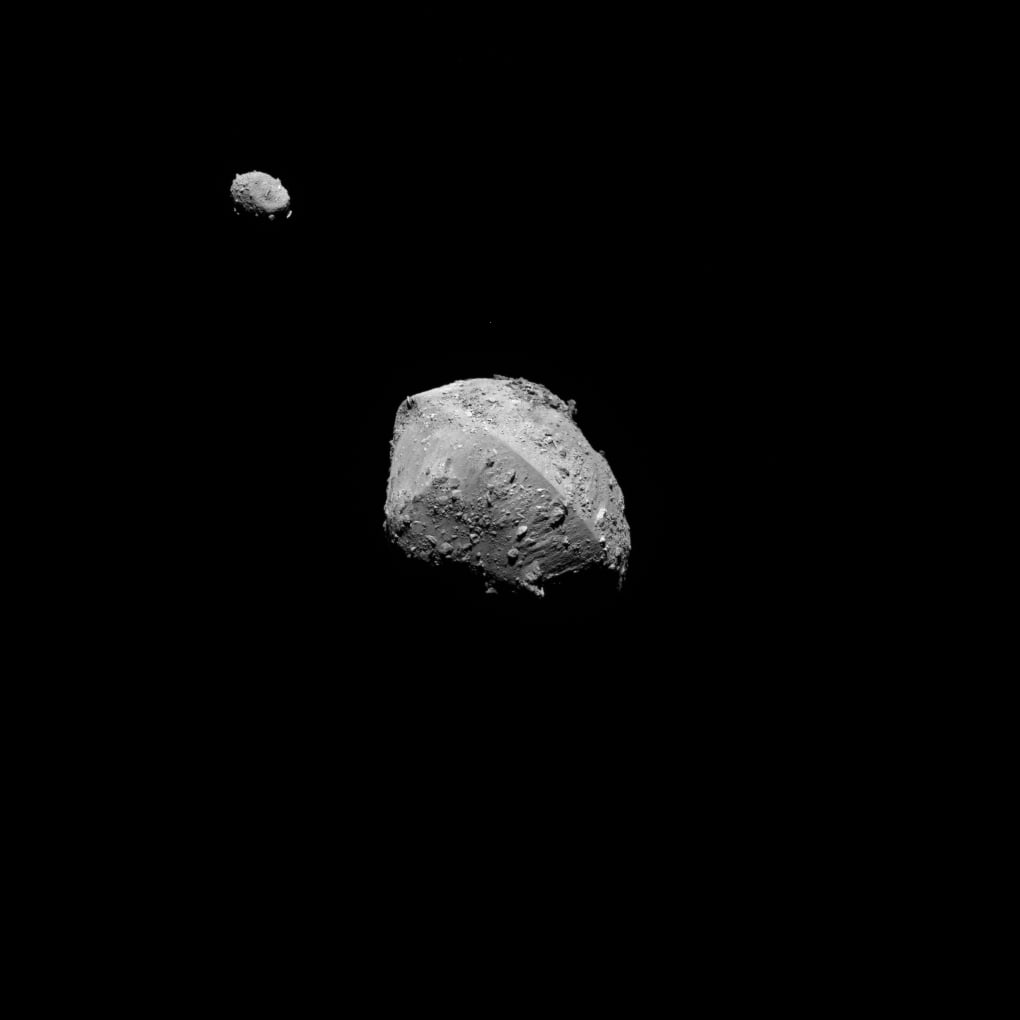
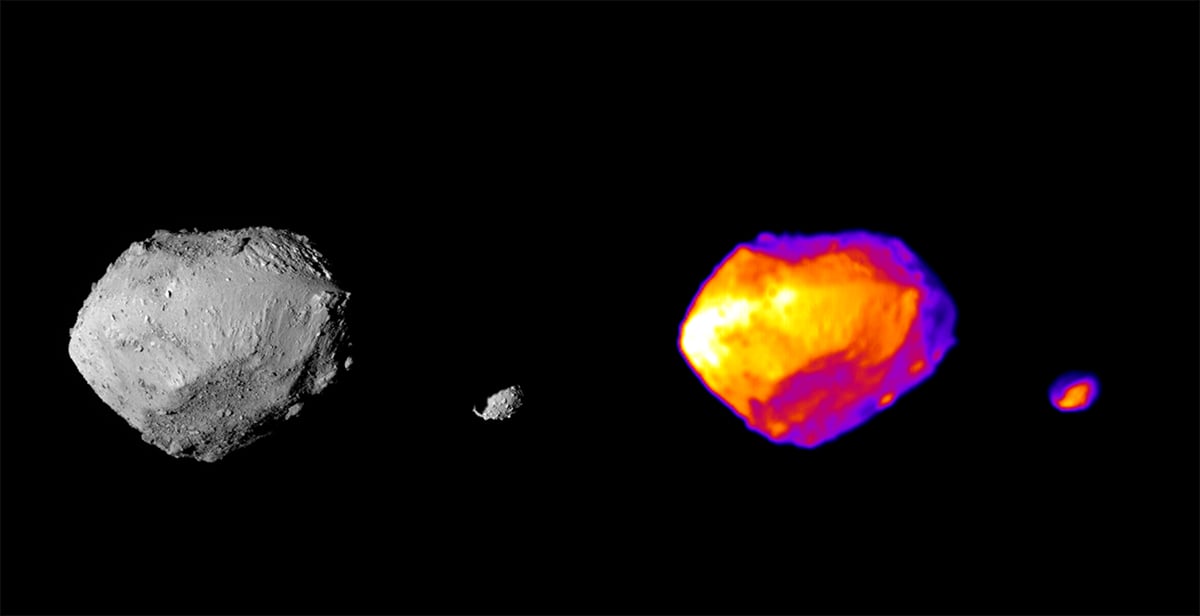
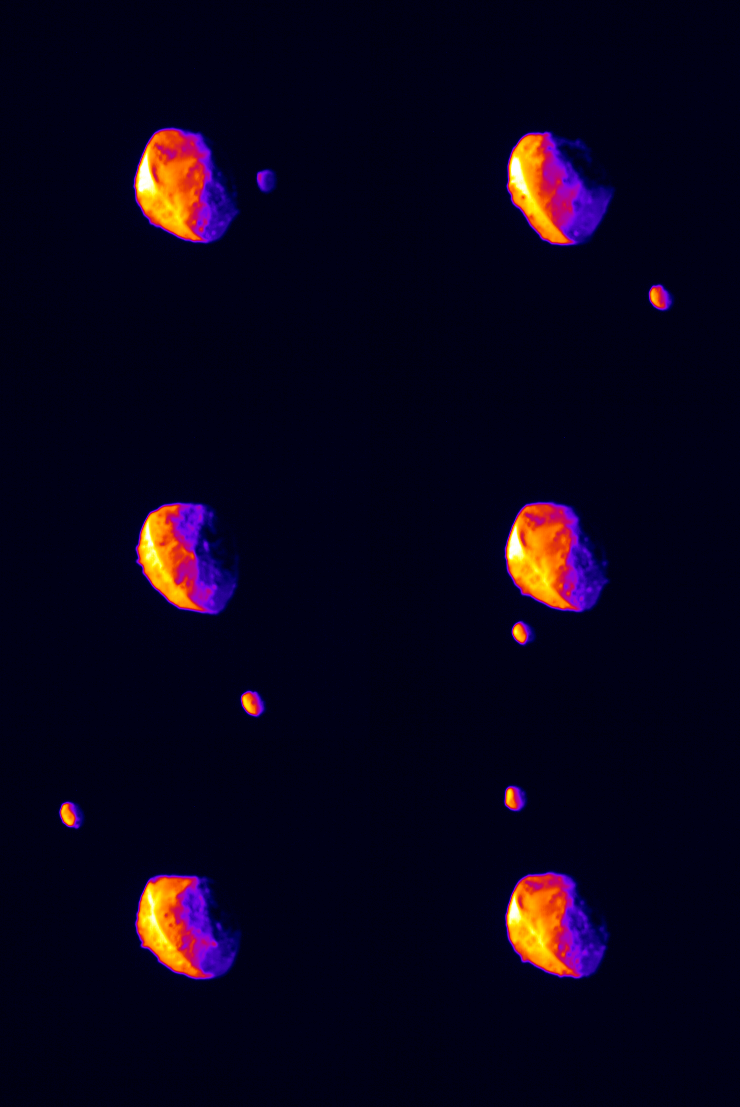
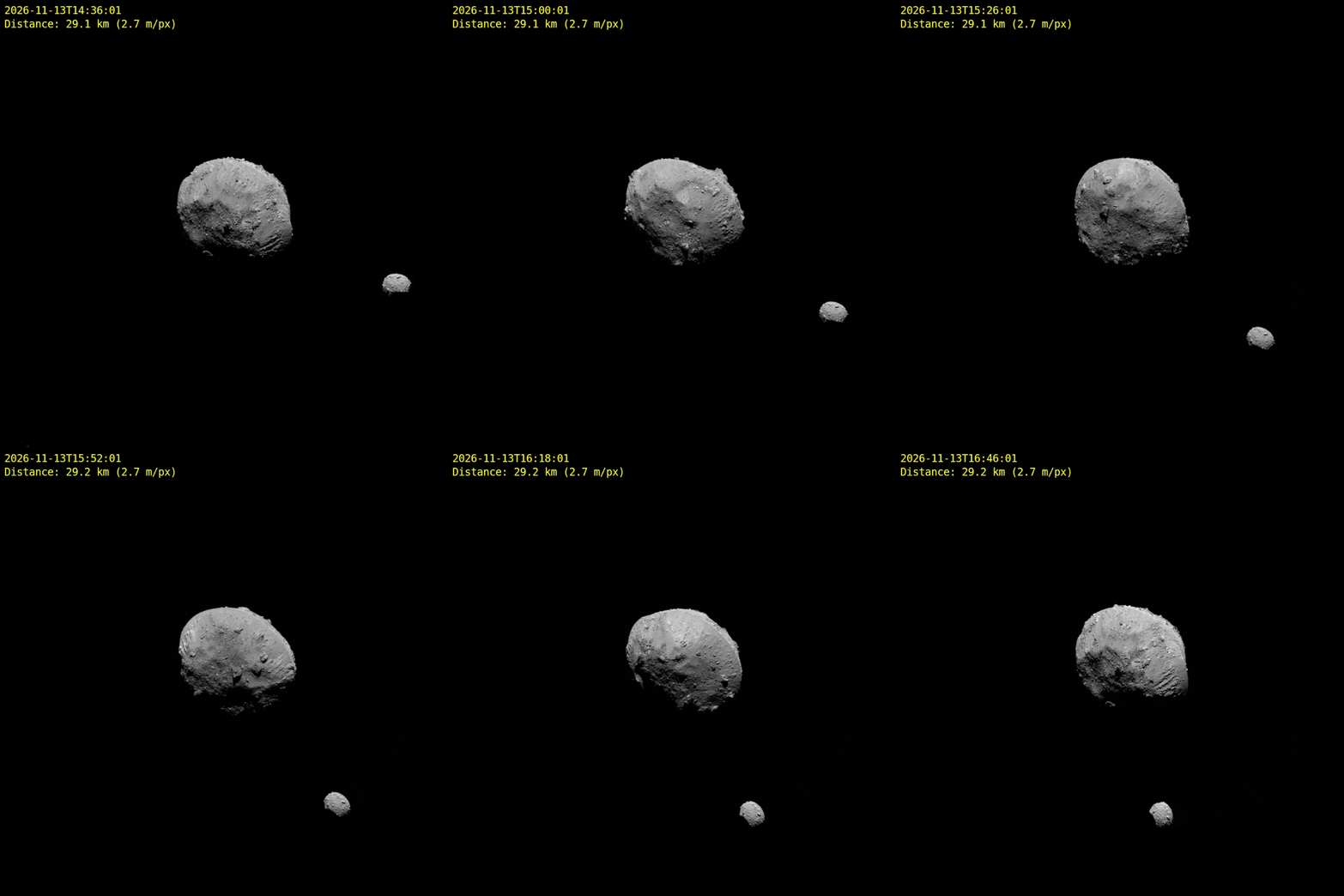
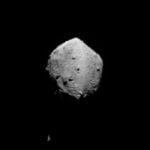
Hera’s first images have settled a question that scientists had debated since the DART collision. The impact flattened the entire face struck by DART, producing a crater that extends across almost the full width of Dimorphos.
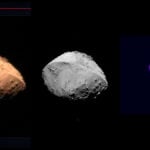
The scale becomes more apparent when researchers compare Hera’s images with the photographs DART captured shortly before impact. The earlier images show the moonlet as a relatively rounded body covered in boulders. Hera’s observations reveal a dramatically altered face, with the impact structure occupying nearly the entire visible side.
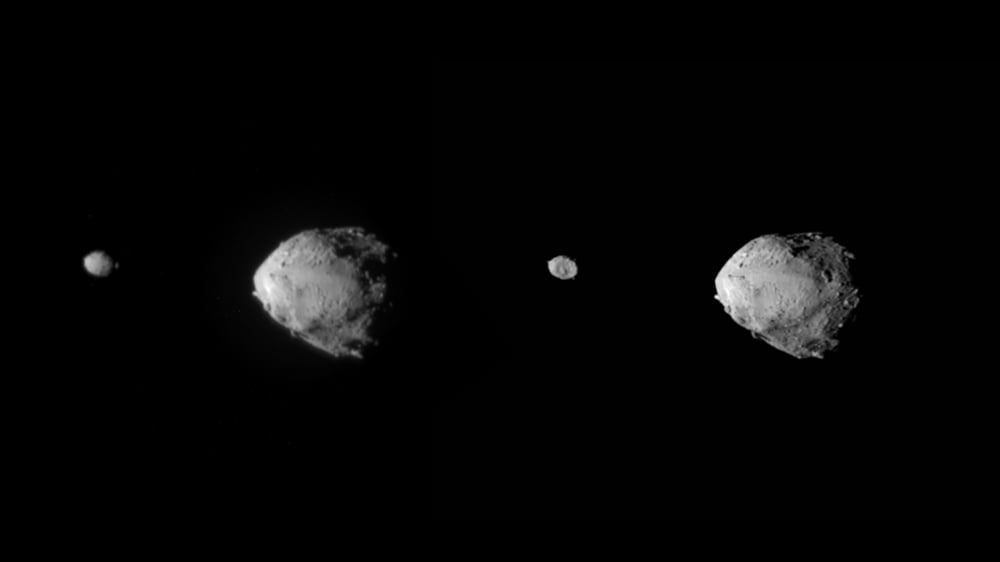
The collision also changed how Dimorphos rotates. Before DART arrived, the moonlet kept approximately the same face towards Didymos throughout its orbit. Its rotation remained synchronized with its orbital motion, much like the Moon‘s relationship with Earth. Hera’s observations show that Dimorphos now tumbles chaotically. The impact disturbed its earlier rotational state and left it moving in a much less regular manner.
Hundreds of boulders appear around Didymos and Dimorphos
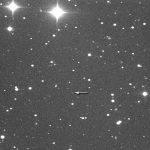
Long-exposure observations from the spacecraft have revealed hundreds of boulders surrounding the binary asteroid system. These objects measure a few meters across and were not identified in earlier observations.
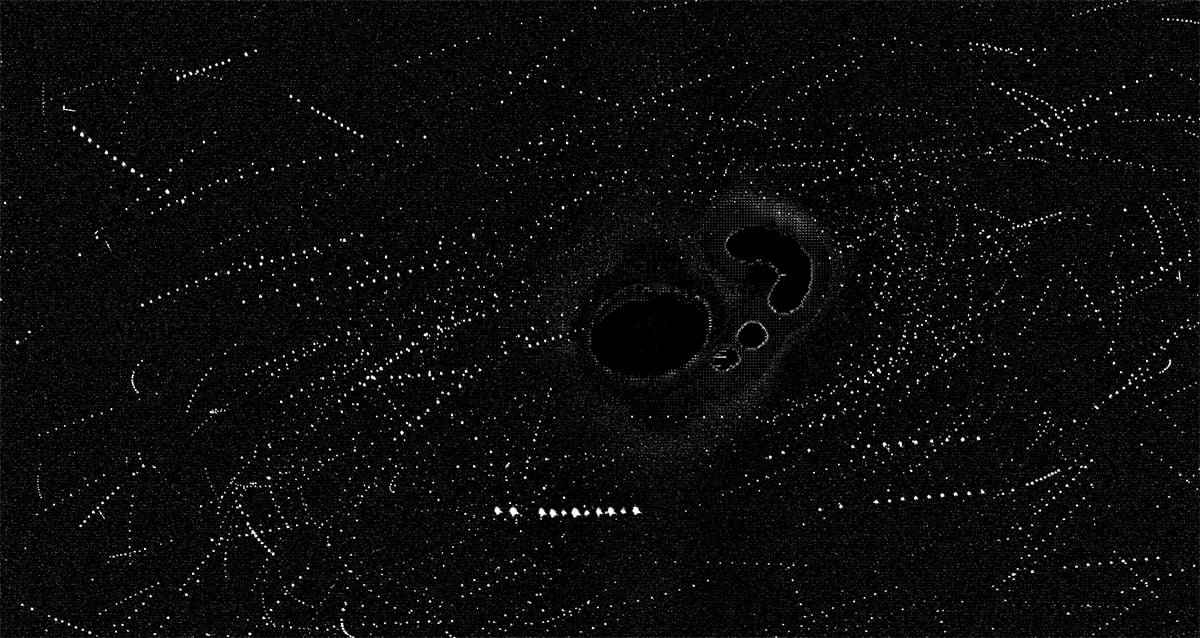
The discovery raises an interesting question about their origins. Some boulders might have escaped from Dimorphos during the DART collision. The spacecraft threw considerable amounts of material into space, and some fragments may have remained gravitationally bound to the asteroid pair.
Didymos offers another possible source. The larger asteroid rotates rapidly, completing one turn in approximately 2.26 hours. Its fast rotation may cause loose surface material to escape into space. Scientists have also considered whether this process helped create Dimorphos in the first place.
Clear skies!
See more from DIYPhotography.net on Google
Add DIYPhotography.net as a trusted source. This makes
our stories more likely to appear in your Google Search results.
 Add as a preferred source on Google

Soumyadeep Mukherjee
Soumyadeep Mukherjee is an award-winning astrophotographer from India. He has a doctorate degree in Linguistics. His work extends to the sub-genres of nightscape, deep sky, solar, lunar and optical phenomenon photography. He is also a photography educator and has conducted numerous workshops. His works have appeared in over 40 books & magazines including Astronomy, BBC Sky at Night, Sky & Telescope among others, and in various websites including National Geographic, NASA, Forbes. He was the first Indian to win “Astronomy Photographer of the Year” award in a major category.
Join the Discussion
DIYP Comment Policy
Be nice, be on-topic, no personal information or flames.