
























How to create a cinemagraph in Photoshop
Aug 5, 2016
John Aldred
John Aldred is a photographer with over 25 years of experience in the portrait and commercial worlds. He is based in Scotland and has been an early adopter – and occasional beta tester – of almost every digital imaging technology in that time. As well as his creative visual work, John uses 3D printing, electronics and programming to create his own photography and filmmaking tools and consults for a number of brands across the industry.
Share:

If you haven’t been living under a photographic rock lately, you’ll probably have heard about Plotagraph. It’s a new system which allows you to give some motion to a still. It’s an evolution of the cinemagraph. A hybrid of still image and video. While Plotagraph has had a mixed reception, the concept is still a popular one.
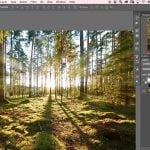
Unlike Plotagraph, cinemagraphs are made from a video clip, not just a single still image. So, there’s a little more work involved in their creation. But, with the help of this video from PhotoshopCAFE, Colin Smith walks us through the entire process. The best part about it is that it can all done within Photoshop.
I’ve had a go at making cinemagraphs before, to learn and understand the process. I used Adobe After Effects for mine, and hadn’t really considered using Photoshop. After Effects exists for projects just like this. It contains many tools to help simplify the process. At the same time, though, it can be more cumbersome to work with, especially if you’re already comfortable with Photoshop.
Whichever software you use, the basic process is roughly the same.
- Shoot a video clip from a stable platform like a tripod. While recording, keep in mind which parts of the image you want to remain still.
- Bring the clip into your software of choice.
- Create a still image based on the frames in the video. In Colin’s example, the model blinks and her chest moves as she breaths. Sensor noise and compression artifacts also introduce slight motion. A still image can be compiled from multiple video frames.
- Add the video sequence back on top of the image, masking out the parts you want to remain still. This lets your animation play on top of the still image.
- Export out as a video file or animated gif.
From here you can upload to your website, YouTube, Facebook or wherever.

Watching Colin’s video, the process does look much faster and simpler in Photoshop than it is in After Effects. It also works in versions of Photoshop as far back as CS6, although the UI might be slightly different.
I might have to revisit these myself.
Have you made any cinemagraphs? Have you thought about giving it a try? Let us know in the comments and show off some of yours.

John Aldred
John Aldred is a photographer with over 25 years of experience in the portrait and commercial worlds. He is based in Scotland and has been an early adopter – and occasional beta tester – of almost every digital imaging technology in that time. As well as his creative visual work, John uses 3D printing, electronics and programming to create his own photography and filmmaking tools and consults for a number of brands across the industry.


Join the Discussion
DIYP Comment Policy
Be nice, be on-topic, no personal information or flames.
3 responses to “How to create a cinemagraph in Photoshop”
This is Awesome. Plotagraph is way too expensive.
Thanks for sharing your terrific knowledge with us!
Love it! I was thinking of how these are made and had no idea this can be done in PS.
Thank you!