
























Always Do This When Swapping Your Lens
Jan 9, 2026
Alex Baker
Alex Baker is a portrait and lifestyle driven photographer based in Valencia, Spain. She works on a range of projects from commercial to fine art and has had work featured in publications such as The Daily Mail, Conde Nast Traveller and El Mundo, and has exhibited work across Europe
Share:
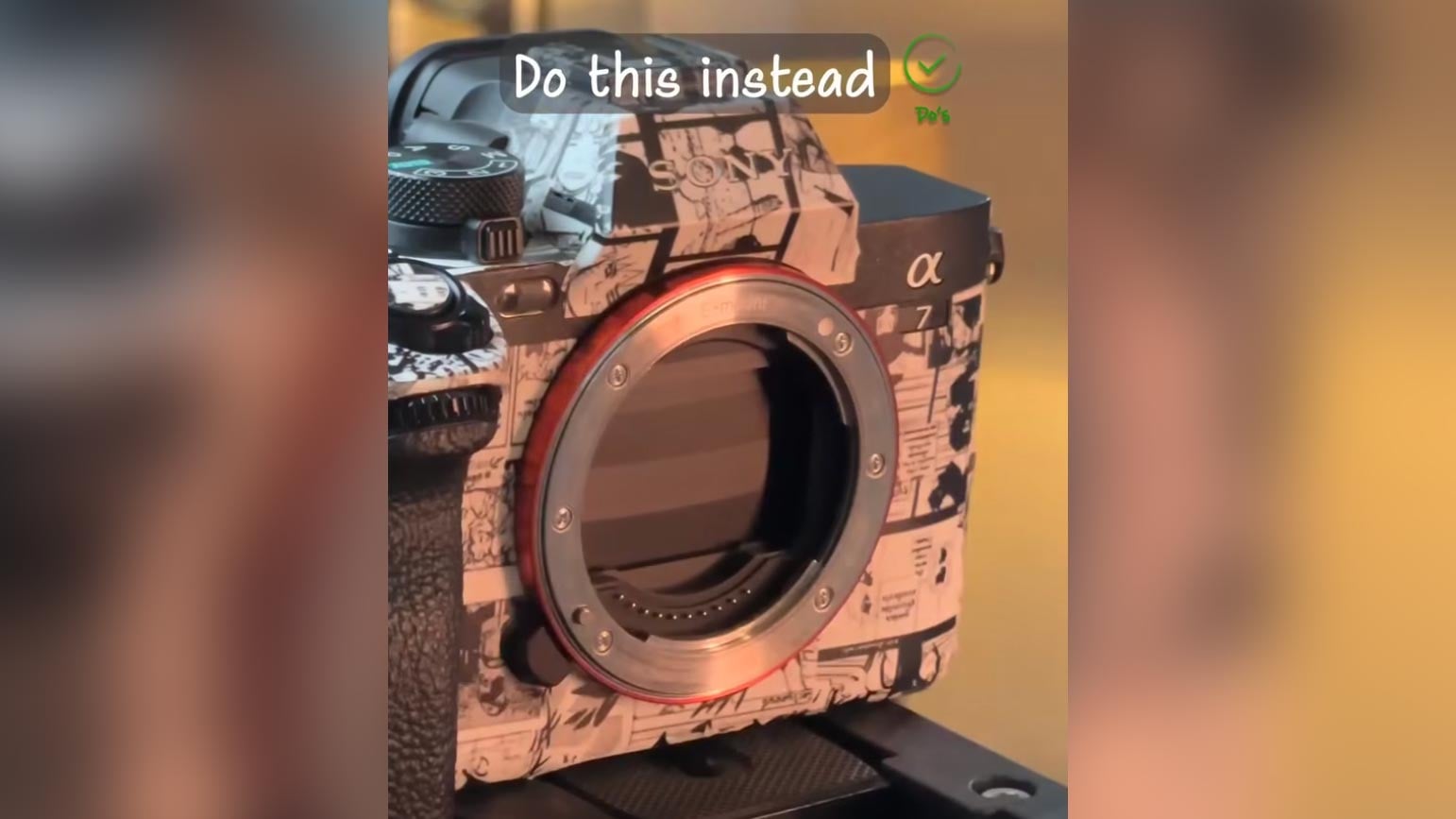
As photographers, we obsess over sharp glass, balanced exposures, and dynamic range charts, but one of the most vulnerable parts of your camera is also the easiest to forget about. This video makes a simple but important point: when you change your lens, make sure to power your camera off, because that automatic sensor cover is doing real work. And if you’re shooting mirrorless, that matters even more.
Unlike DSLRs, mirrorless cameras place the sensor right behind the lens mount. There’s no mirror box acting as a buffer. Remove the lens, and your sensor is suddenly front and centre, exposed to dust, moisture, and whatever else happens to be floating around. Sure, you can point the camera body down, facing the ground, to eliminate the chances of something getting inside, but even then, that’s fine in a studio, less so on a windy beach or a city street.
Why Mirrorless Sensors Are More Exposed
With mirrorless systems, every lens change is a direct invitation for debris to settle on your sensor. Even tiny dust particles can show up as dark spots in skies or evenly lit backgrounds, which is exactly what you don’t want.
Modern cameras help by automatically closing the sensor cover when powered off. It’s a small mechanical movement, but it creates a physical barrier between your sensor and the outside world. Turning the camera off before changing lenses is a preventative measure and means that you won’t have to send your camera off for cleaning quite so often.
A Simple Habit That Saves You Time (and Money)
Using the sensor cover properly won’t eliminate the need for cleaning forever, however, it dramatically reduces how often you’ll need it. Power the camera down, point the mount opening slightly downward, keep lens changes quick, and avoid swapping glass in dusty conditions when possible (top tip: I never change lenses on the beach).
None of this is exciting. It won’t improve your dynamic range or autofocus speed. But it will keep your files cleaner, your edits faster, and your sensor healthier. And sometimes, boring habits are exactly what good photography looks like.
See more from DIYPhotography.net on Google
Add DIYPhotography.net as a trusted source. This makes
our stories more likely to appear in your Google Search results.
 Add as a preferred source on Google

Alex Baker
Alex Baker is a portrait and lifestyle driven photographer based in Valencia, Spain. She works on a range of projects from commercial to fine art and has had work featured in publications such as The Daily Mail, Conde Nast Traveller and El Mundo, and has exhibited work across Europe


Join the Discussion
DIYP Comment Policy
Be nice, be on-topic, no personal information or flames.
One response to “Always Do This When Swapping Your Lens”
I use Sony A6400s and am long in the habit of powering down before changing the battery, card, or lens. I may have read somewhere once that that was Best Practice with any ILC. I am lucky enough to have acquired two A6400 bodies and an A6300. Most of the time, I use only the two 6400s, one with a Sony E 18-135mm f/3.5-5.6, and the other with a Sony E 55–210mm f/4.5–6.3. Probably 80% of my pictures are made with the 18-135. This kit’s range is awesome and eliminates the need to change lenses at all, but I am lucky to have afforded it.