














Leica Revives Its Rare Hammertone Finish for Two M Cameras
Nov 16, 2026
Alysa Gavilan
Alysa Gavilan has spent years exploring photography through photojournalism and street scenes. She enjoys working with both film and mirrorless cameras, and her fascination with the craft has grown over the decades. Inspired by Vivian Maier, she is drawn to capturing everyday moments that often go unnoticed.
Share:
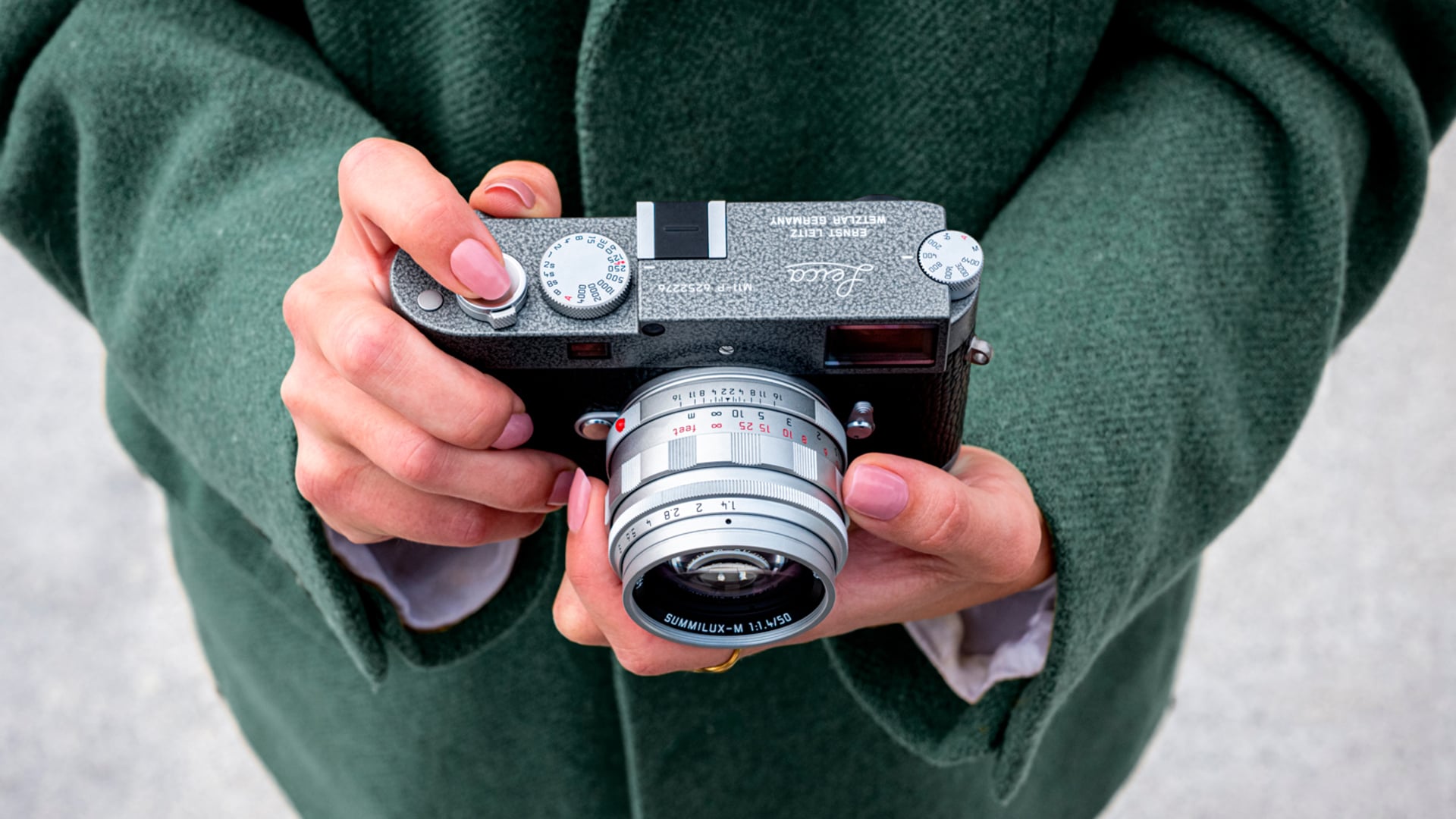
Leica has found a way to make its cameras look even less like ordinary cameras. The company is introducing two special editions, the Leica M-A Hammertone and M11-P Hammertone, featuring a textured metal finish inspired by some of its rarest historical models. Beneath the distinctive exterior, one is a fully mechanical film camera and the other is a modern digital rangefinder.
The new editions bring back a finish Leica has used sparingly over the decades. Both cameras feature hammertone top and base plates, with solid brass construction, black vulcanite style leatherette, white engravings, and silver control details.
A finish with a history
Hammertone finishes have been associated with industrial equipment since the 1930s, partly because of their durable appearance and technical character. The textured surface forms during the drying process, when metal pigments and special additives create variations in surface tension.
Leica has used the finish on a handful of unusual cameras, including the Leica MD documentation camera and a particularly rare 1964 model reportedly limited to just 10 units. Other references include the 2003 MP LHSA, 2011 M9 Hammertone, and 2016 M-A Vienna Edition.
For the new releases, Leica has reworked its finishing process at its Wetzlar manufacture. Producing a consistent texture requires careful work from its specialists, although each camera retains its own individual surface characteristics.
The M11-P Hammertone also gets some additional cosmetic changes. Its top and base plates have newly rounded edges, while the screw on the front receives a silver chrome finish.
The M-A keeps film photography mechanical
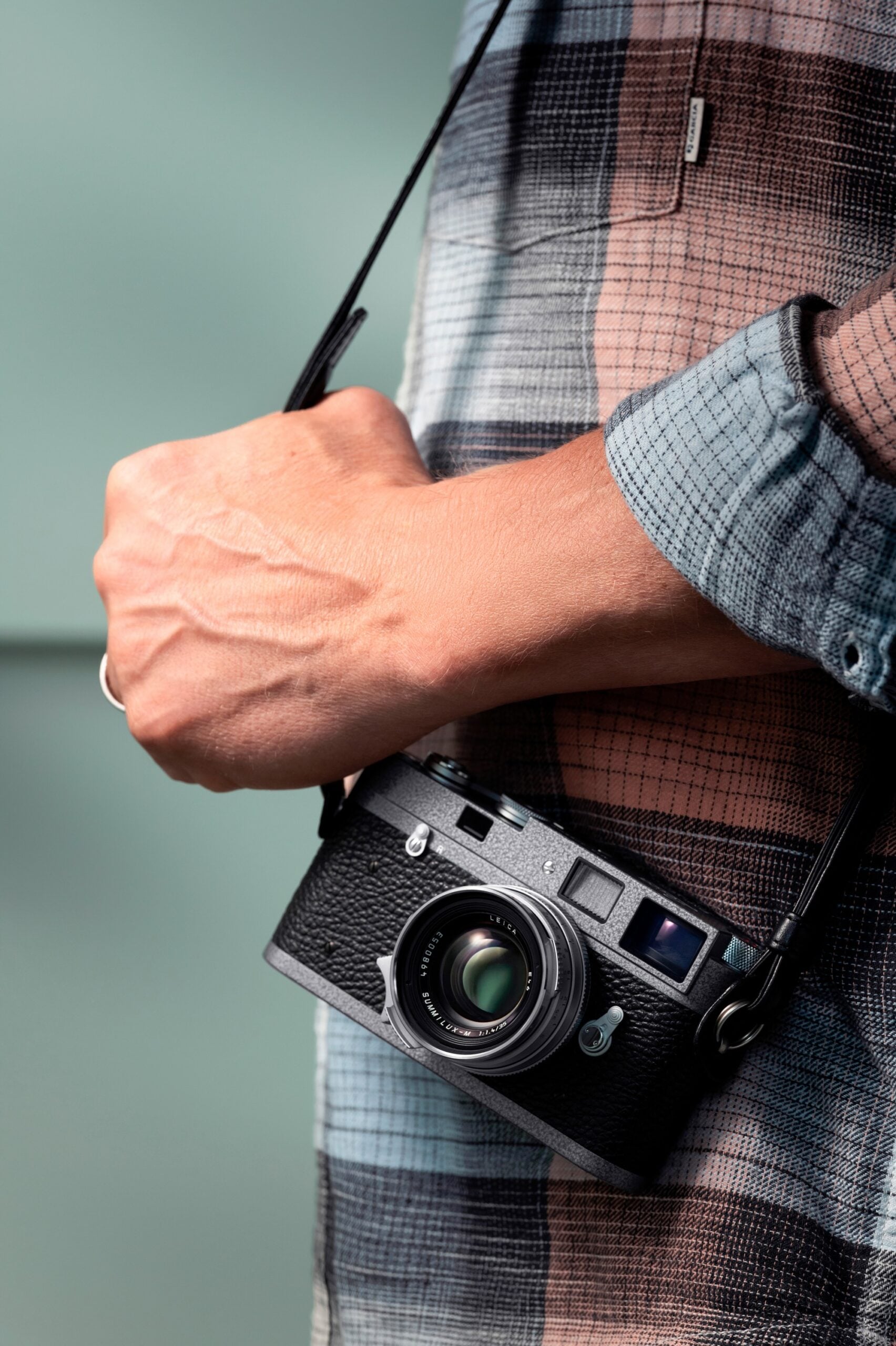
The Leica M-A Hammertone is the more traditional of the two. It retains the standard M-A’s mechanical design, with no digital electronics or automatic exposure controls.
Photographers manually set the aperture, shutter speed, and ISO sensitivity according to the film loaded in the camera. The result is a rangefinder designed around the fundamentals of analog photography, with the hammertone finish providing the main difference from the regular model.
For photographers who prefer film, the M-A offers a deliberately straightforward shooting experience. There are no menus, batteries required for exposure control, or digital image previews to distract from the process.
The M11-P adds digital credentials
The M11-P Hammertone brings the same finish to Leica’s digital M system. Its specifications match the standard M11-P, including a 60 megapixel full frame BSI CMOS sensor with Triple Resolution Technology. Photographers can capture images at 60, 36, or 18 megapixels.
Other features include 256GB of internal storage, a scratch resistant sapphire crystal screen with anti reflective coating, and connectivity through Bluetooth, Wi-Fi, or cable using the Leica FOTOS app.
It also includes Leica Content Credentials, which attach verifiable information about an image’s authorship, attributes, and editing history. This is particularly relevant as photographers look for ways to establish the origin and authenticity of digital images.
Two cameras, one expensive texture
Both editions became available worldwide starting November 12, 2026, through Leica Stores, the Leica Online Store, and authorized dealers.
The Leica M-A Hammertone costs $8,000, while the digital M11-P Hammertone is priced at $10,950. The package for the M11-P also includes a BP-SCL7 battery finished to match the camera.
Neither model introduces a new sensor or major shooting feature. Their appeal lies in the combination of established M camera designs and a finish rarely seen on Leica bodies.
For collectors, the historical references may be as important as the cameras themselves. For everyone else, the question is simpler: would you pay a premium for a camera that looks like no other?
[Photos via Leica]
See more from DIYPhotography.net on Google
Add DIYPhotography.net as a trusted source. This makes
our stories more likely to appear in your Google Search results.
 Add as a preferred source on Google

Alysa Gavilan
Alysa Gavilan has spent years exploring photography through photojournalism and street scenes. She enjoys working with both film and mirrorless cameras, and her fascination with the craft has grown over the decades. Inspired by Vivian Maier, she is drawn to capturing everyday moments that often go unnoticed.



Join the Discussion
DIYP Comment Policy
Be nice, be on-topic, no personal information or flames.