













ESA’s Hera Spacecraft Resolves Two Asteroids From 1000 km Away
Oct 29, 2026
Soumyadeep Mukherjee
Soumyadeep Mukherjee is an award-winning astrophotographer from India. He has a doctorate degree in Linguistics. His work extends to the sub-genres of nightscape, deep sky, solar, lunar and optical phenomenon photography. He is also a photography educator and has conducted numerous workshops. His works have appeared in over 40 books & magazines including Astronomy, BBC Sky at Night, Sky & Telescope among others, and in various websites including National Geographic, NASA, Forbes. He was the first Indian to win “Astronomy Photographer of the Year” award in a major category.
Share:
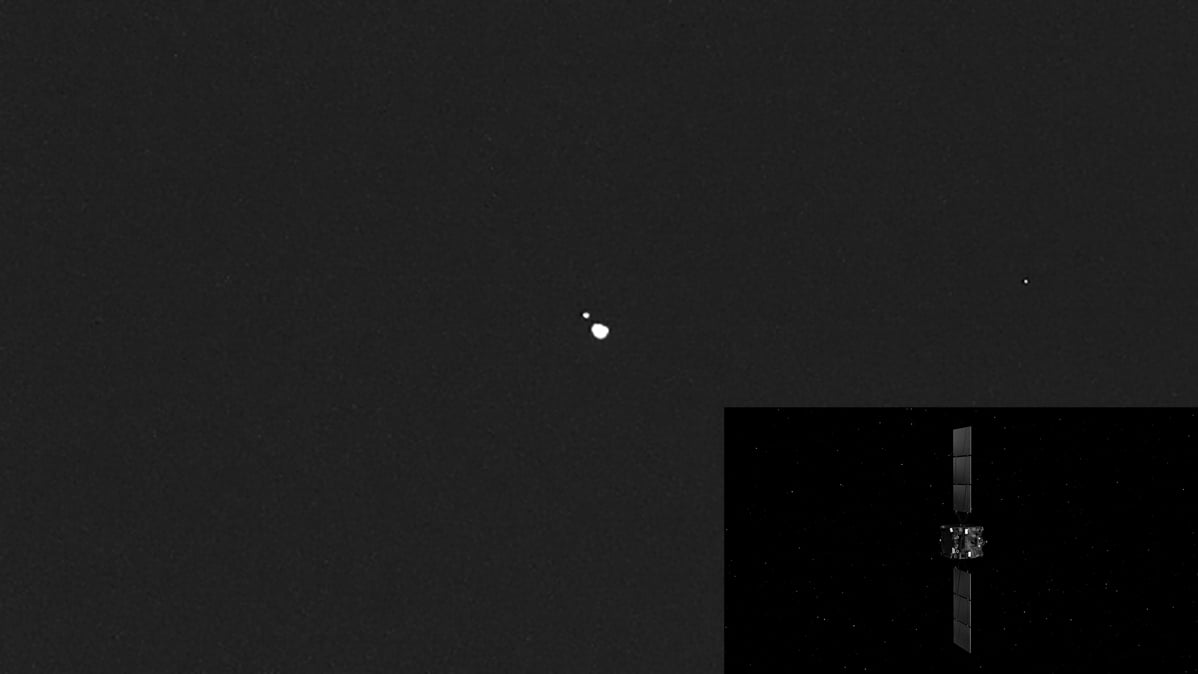
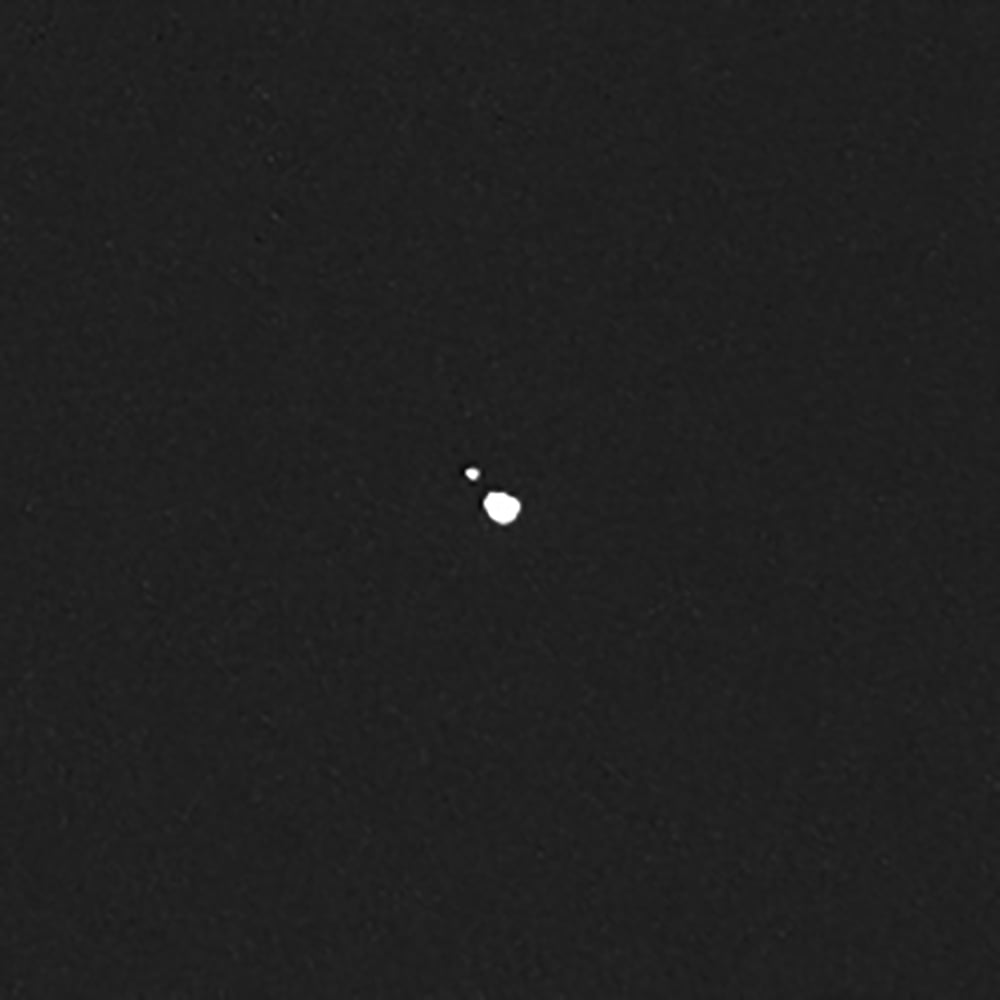
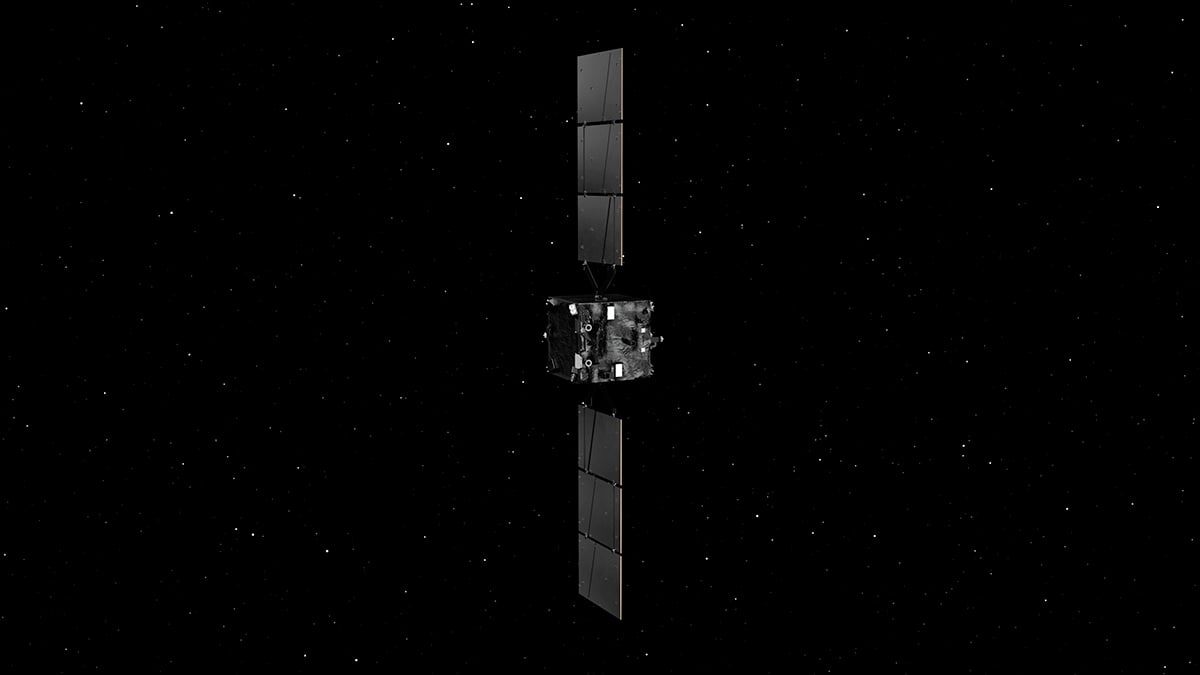
The European Space Agency’s Hera spacecraft has captured its first image resolving Didymos and its smaller companion, Dimorphos, as two separate objects. Hera photographed the asteroid pair on 18 October 2026 from about 1,280 kilometres away. Dimorphos appears as a tiny point beside Didymos, occupying roughly one pixel in the image. Although the camera cannot yet reveal the smaller asteroid’s surface, the observation marks an important step in Hera’s approach to the system.
Two asteroids, one binary system
From a distance, Didymos and Dimorphos appear as a single point of light. Their small separation makes it difficult for a camera to distinguish them when the spacecraft is still far away. Hera’s first resolved image shows that its Asteroid Framing Camera can separate the two objects as the spacecraft approaches.
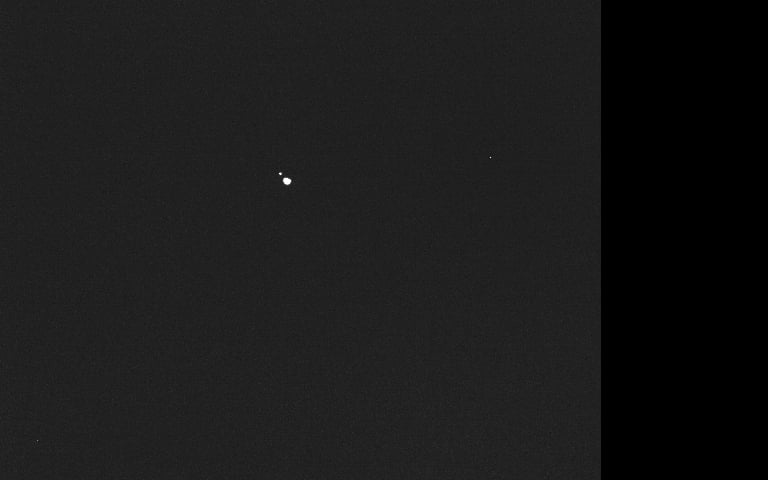
Didymos measures about 780 metres across, while Dimorphos is approximately 151 metres wide. The smaller asteroid orbits Didymos at an average separation of roughly 1.15 kilometres. Their relative positions and brightness will change as Hera moves around the system, giving the team different views of the pair.
Hera will use its observations to identify surface features, track its position, and guide its movements near the asteroids. At such small bodies, gravity is weak, and the spacecraft cannot navigate as it would around a large planet. Images will help the team understand the surrounding terrain and select suitable observation positions.
NASA deliberately crashed DART into Dimorphos
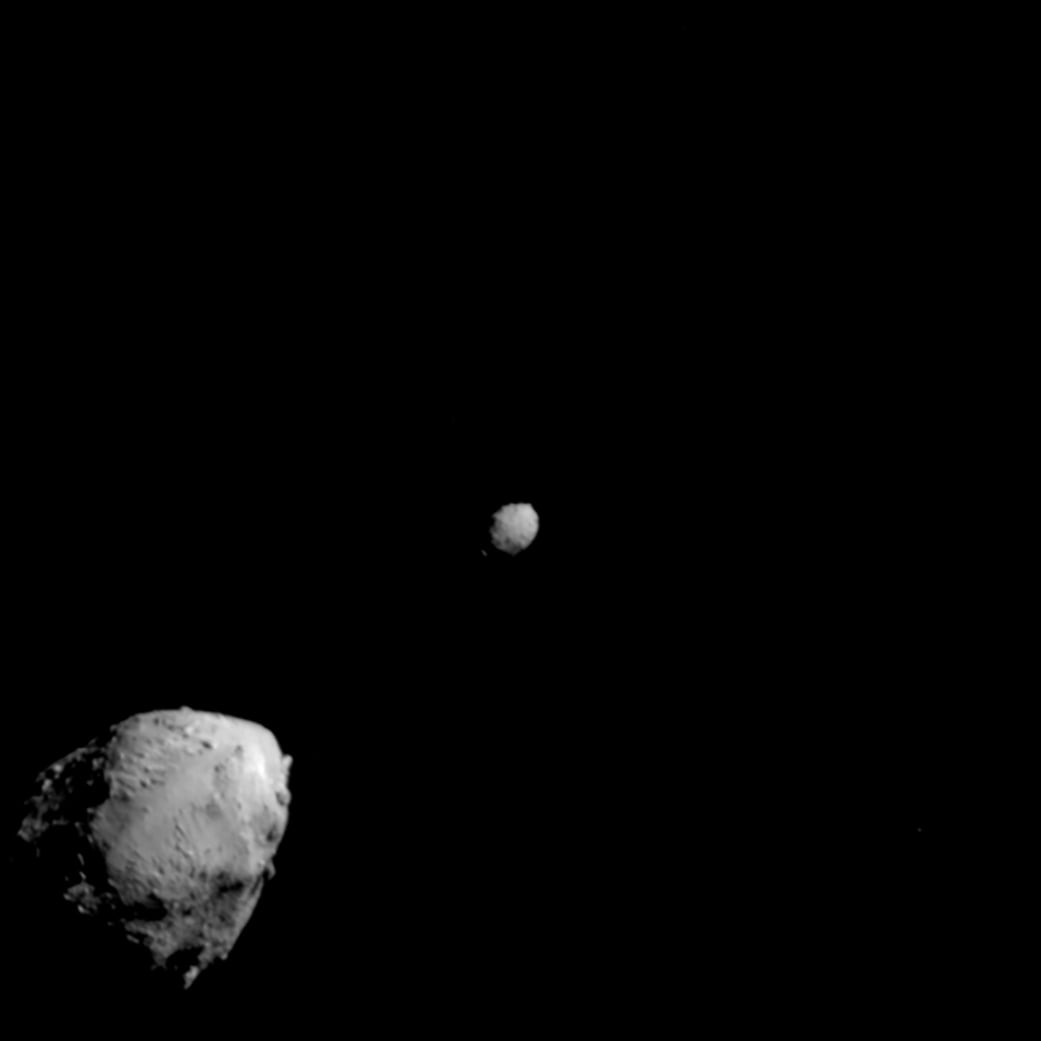
NASA launched the Double Asteroid Redirection Test, or DART, to test kinetic impact as an asteroid-deflection method. The spacecraft struck Dimorphos on 26 September 2022, travelling at about 6.1 kilometers per second. Scientists chose the binary system because they could measure the smaller asteroid’s orbital period from Earth before and after the collision. This gave them a way to check whether the impact had changed its motion.
Before the collision, Dimorphos took about 11 hours and 55 minutes to orbit Didymos. After DART struck, its orbital period shortened by roughly 33 minutes. The impact also threw a plume of debris into space. As that material escaped, it carried momentum away from Dimorphos and added to the change produced by the spacecraft itself. The experiment showed that a kinetic impact could alter an asteroid’s motion by a measurable amount.
Hera’s cameras will reveal more
Hera was launched on 7 October 2024 and is scheduled to reach the Didymos system in November 2026. Once it arrives, the spacecraft will begin a detailed survey of both asteroids, with particular attention to Dimorphos and the site of the DART collision. ESA expects the first detailed images of Dimorphos on 25 November 2026.
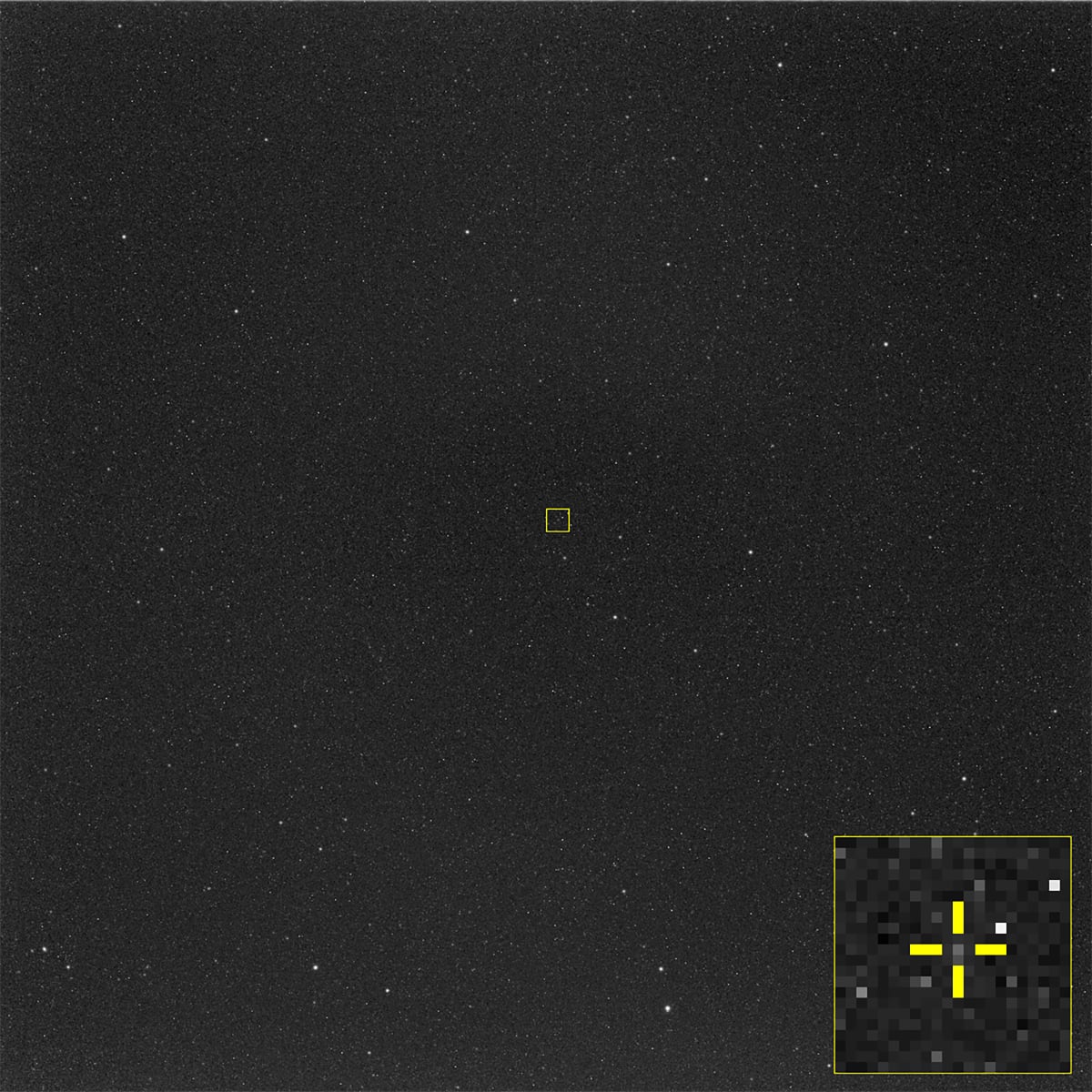
The Asteroid Framing Camera will provide visible-light images throughout the investigation. Hera also carries a thermal infrared imager, which will measure how the surface absorbs and releases heat. These measurements will complement the visible images and give scientists more information about the physical properties of the asteroid.
Hera will also deploy two small satellites, Milani and Juventas, to carry out additional investigations. Milani will study the surface composition and dust around the asteroid system. Juventas will use radar to probe Dimorphos’s interior, helping scientists investigate its internal structure.
Clear skies!
See more from DIYPhotography.net on Google
Add DIYPhotography.net as a trusted source. This makes
our stories more likely to appear in your Google Search results.
 Add as a preferred source on Google

Soumyadeep Mukherjee
Soumyadeep Mukherjee is an award-winning astrophotographer from India. He has a doctorate degree in Linguistics. His work extends to the sub-genres of nightscape, deep sky, solar, lunar and optical phenomenon photography. He is also a photography educator and has conducted numerous workshops. His works have appeared in over 40 books & magazines including Astronomy, BBC Sky at Night, Sky & Telescope among others, and in various websites including National Geographic, NASA, Forbes. He was the first Indian to win “Astronomy Photographer of the Year” award in a major category.
Join the Discussion
DIYP Comment Policy
Be nice, be on-topic, no personal information or flames.