


















ToupTek GPM585M: A Monochrome Guide Camera With Infrared Sensitivity
Nov 2, 2026
Soumyadeep Mukherjee
Soumyadeep Mukherjee is an award-winning astrophotographer from India. He has a doctorate degree in Linguistics. His work extends to the sub-genres of nightscape, deep sky, solar, lunar and optical phenomenon photography. He is also a photography educator and has conducted numerous workshops. His works have appeared in over 40 books & magazines including Astronomy, BBC Sky at Night, Sky & Telescope among others, and in various websites including National Geographic, NASA, Forbes. He was the first Indian to win “Astronomy Photographer of the Year” award in a major category.
Share:
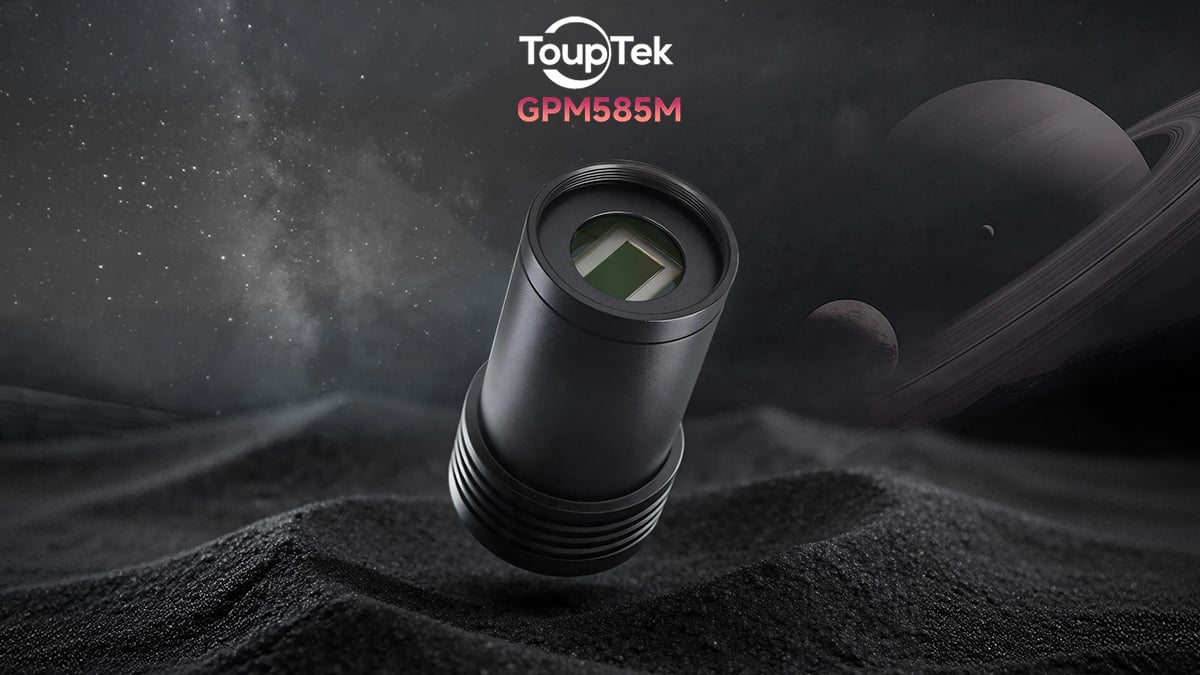
When astrophotographers take long exposures of galaxies and nebulae, even a small tracking error can soften the finest details. A guide camera helps prevent that by tracking a star and sending corrections to the telescope mount. ToupTek Astro’s new GPM585M, of course, handles this familiar task, but its sensor and removable protective window also make it worth considering for infrared imaging.
The GPM585M uses Sony’s 8.3-megapixel IMX585 monochrome CMOS sensor. It records 3840 × 2160 pixels, each measuring 2.9 microns. ToupTek highlights its infrared response around 650 nm and suggests using the camera for Milky Way photography from light-polluted locations. ToupTek also lists lunar, white-light solar, and planetary imaging among its possible applications.
A monochrome sensor for finding guide stars
The GPM585M uses a 1/1.2-inch Sony IMX585 sensor. Its back-illuminated design and monochrome architecture distinguish it from many smaller guide cameras. The sensor provides 8.3 megapixels, giving users a sizeable area for finding stars and tracking their positions.
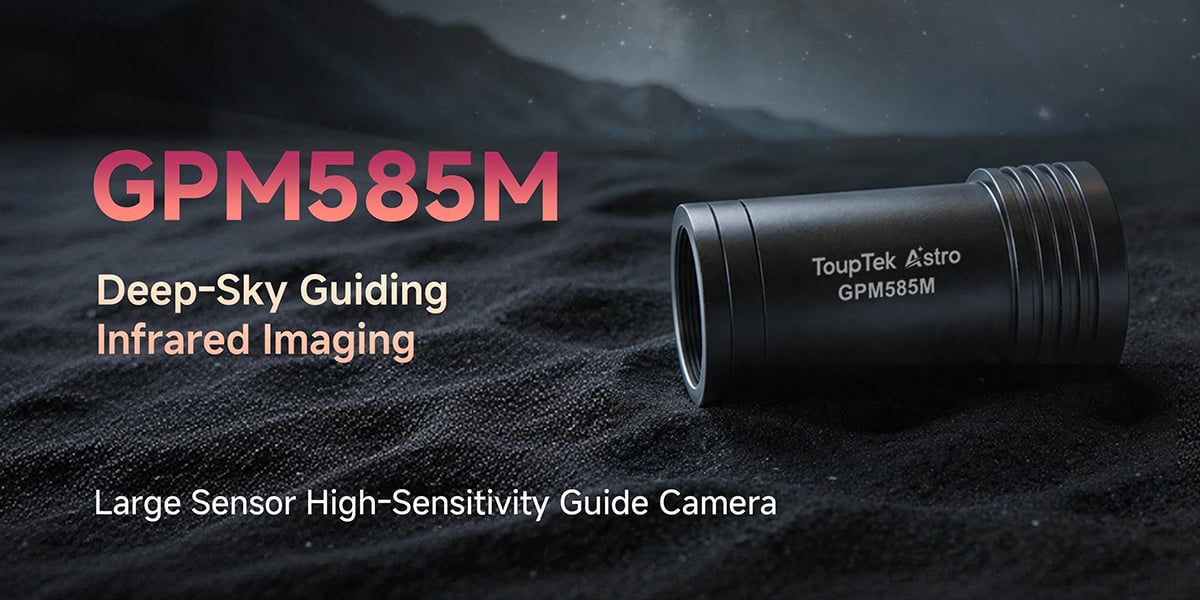
A monochrome sensor can help when a guide camera needs to pick out a faint star. Guiding software measures the star’s position across successive exposures and detects unwanted movement. It then tells the mount to correct its tracking. The camera needs to deliver a dependable star profile, even when the reference star appears faint.
The GPM585M’s sensor size can also help when choosing a guide star. An off-axis guider samples light from a small area near the edge of the telescope’s field. A larger sensor may bring more candidate stars into view, depending on the telescope’s focal length and the guider’s optical design.
The guide camera also includes Sony’s STARVIS 2 technology. It provides lower read noise, reduced dark current, and greater dynamic range. These can help a camera detect faint signals, although the results depend on exposure settings and operating conditions.

Infrared imaging
ToupTek puts particular emphasis on the GPM585M’s infrared response. They highlight its quantum efficiency around 650 nm and promote the camera for infrared Milky Way photography. That recommendation gives the product a second role beyond conventional autoguiding.
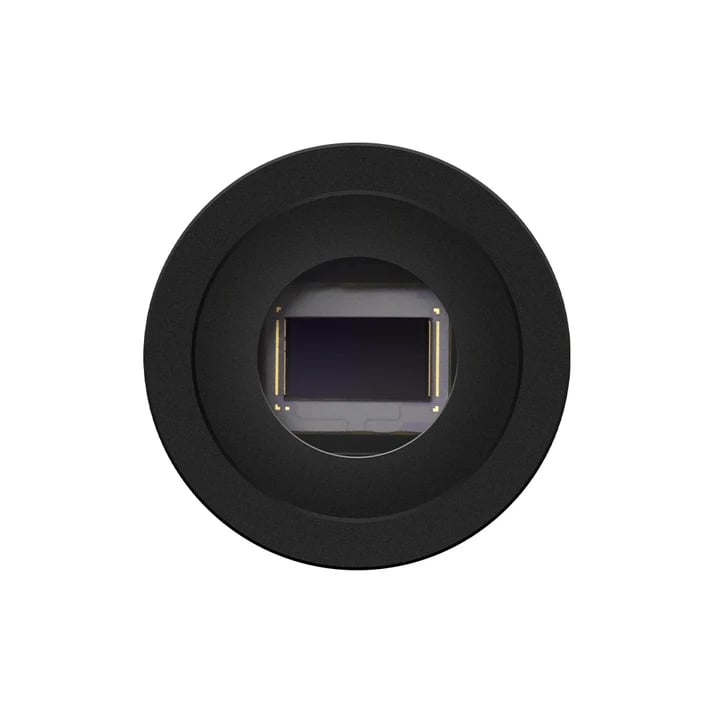
The GPM585M’s monochrome sensor suits experiments with selected wavelengths. A suitable filter can restrict incoming light to a particular spectral range. Photographers can then record the resulting signal without a Bayer array dividing the pixels into red, green and blue channels.
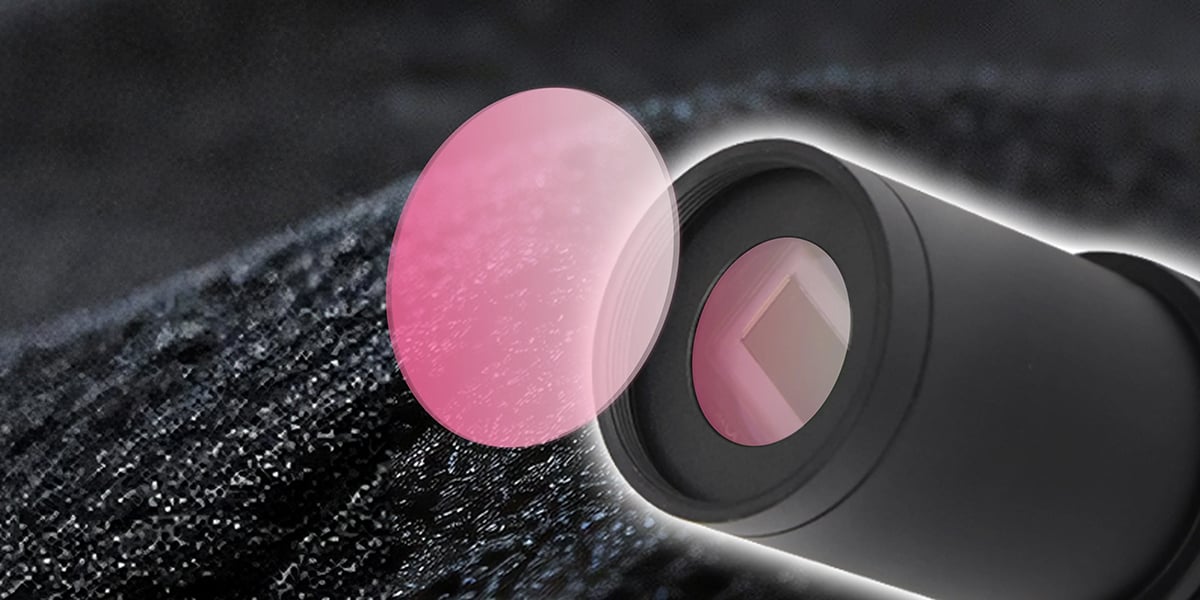
ToupTek fits an anti-reflection-coated protective window measuring 19 mm across and 0.55 mm thick. A retaining ring secures it inside the adapter. Users can remove the original window and install a compatible third-party filter. ToupTek suggests replacement filters measuring 19–22 mm in diameter and approximately 1 mm thick.
Faster readout and binning support
The GPM585M includes hardware region-of-interest capture, or ROI. It allows the camera to read a smaller section of the sensor instead of capturing the full frame. When the guide star occupies only a small part of the image, users can restrict capture to that area. The camera then handles less data per frame, which can help increase the capture rate.
The GPM585M also supports software binning from 1×1 to 8×8. Binning combines information from neighbouring pixels through stacking or averaging. This can improve the visibility of a faint star in the resulting image, although it reduces spatial resolution.
ToupTek specifies a native 12-bit analogue-to-digital converter. It records 4,096 possible intensity levels, compared with 256 levels in an 8-bit output. This gives the camera more tonal steps to represent differences in brightness.
USB-C, ST4 and a standard 1.25-inch interface
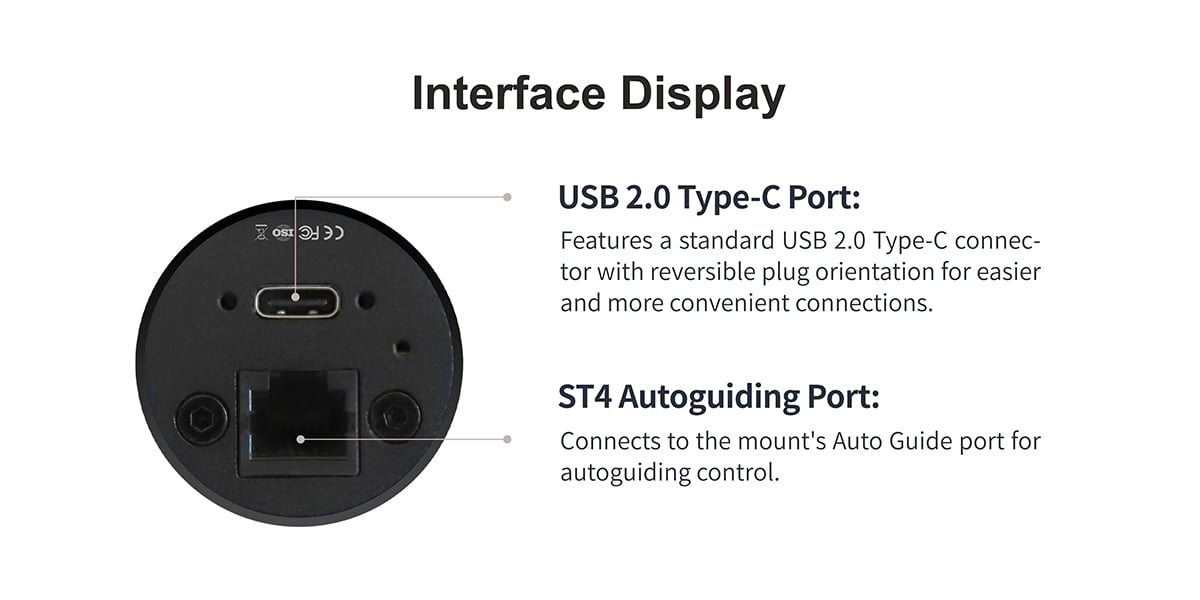
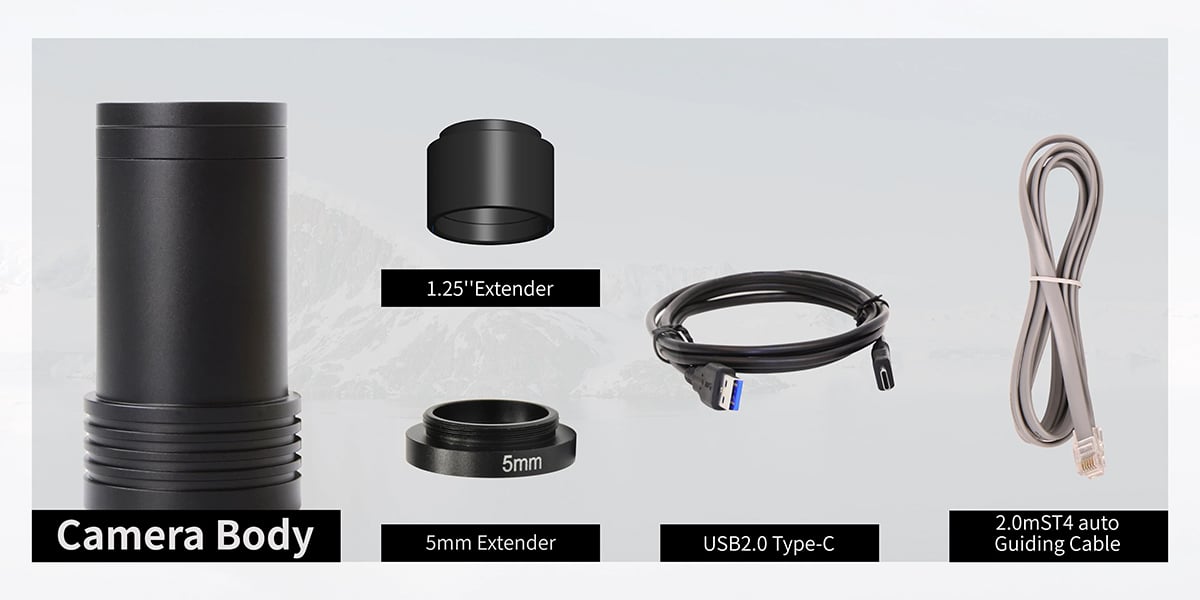
ToupTek has fitted the GPM585M with a USB Type-C connection using USB 2.0. The camera also includes an ST4 port for connecting to a compatible telescope mount. USB handles image data and camera communication, while ST4 provides a direct guiding interface.
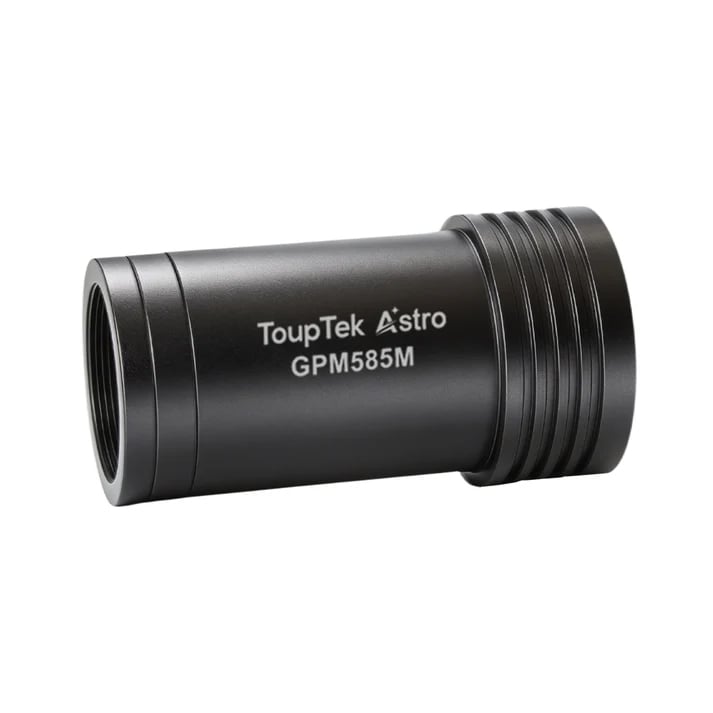
The camera’s standard 1.25-inch interface allows it to fit compatible off-axis guiders and optical accessories. ToupTek also offers an optional 1.25-inch extension tube for setups that need additional spacing.
Price and availability
ToupTek GPM585M is currently priced at $239. It is available for ordering via ToupTek’s official website.
Clear skies!
See more from DIYPhotography.net on Google
Add DIYPhotography.net as a trusted source. This makes
our stories more likely to appear in your Google Search results.
 Add as a preferred source on Google

Soumyadeep Mukherjee
Soumyadeep Mukherjee is an award-winning astrophotographer from India. He has a doctorate degree in Linguistics. His work extends to the sub-genres of nightscape, deep sky, solar, lunar and optical phenomenon photography. He is also a photography educator and has conducted numerous workshops. His works have appeared in over 40 books & magazines including Astronomy, BBC Sky at Night, Sky & Telescope among others, and in various websites including National Geographic, NASA, Forbes. He was the first Indian to win “Astronomy Photographer of the Year” award in a major category.



Join the Discussion
DIYP Comment Policy
Be nice, be on-topic, no personal information or flames.