











You Can 3D-Print This DIY 160mm Dobsonian Telescope
Oct 21, 2026
Soumyadeep Mukherjee
Soumyadeep Mukherjee is an award-winning astrophotographer from India. He has a doctorate degree in Linguistics. His work extends to the sub-genres of nightscape, deep sky, solar, lunar and optical phenomenon photography. He is also a photography educator and has conducted numerous workshops. His works have appeared in over 40 books & magazines including Astronomy, BBC Sky at Night, Sky & Telescope among others, and in various websites including National Geographic, NASA, Forbes. He was the first Indian to win “Astronomy Photographer of the Year” award in a major category.
Share:
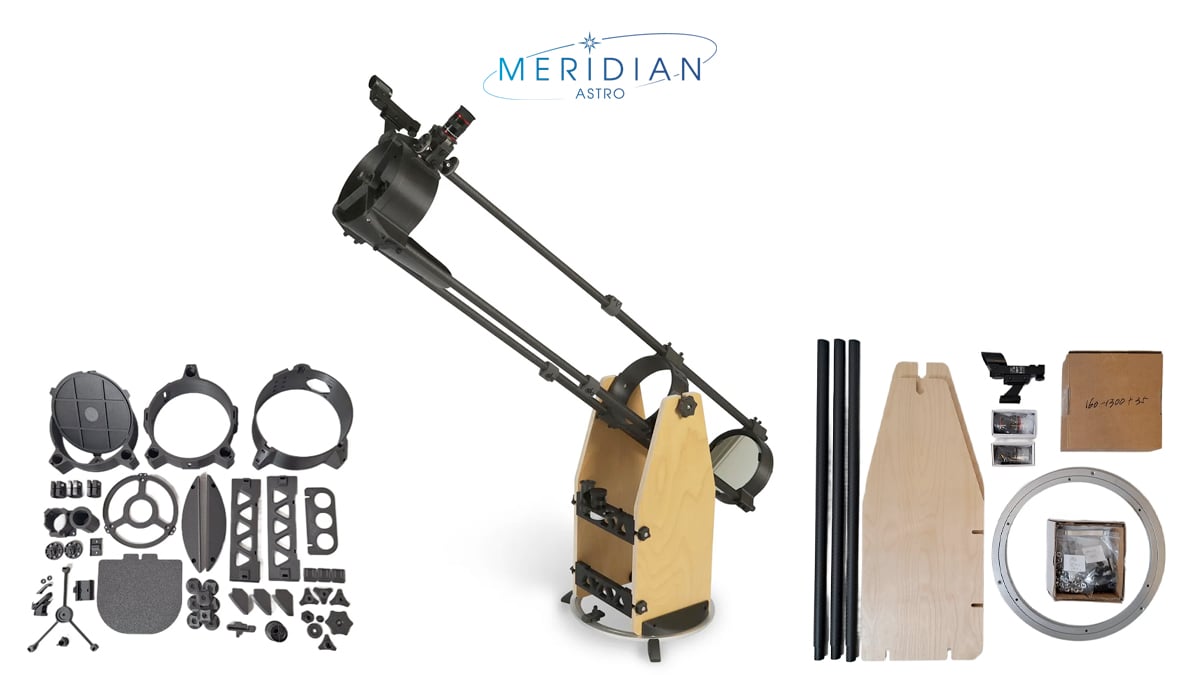
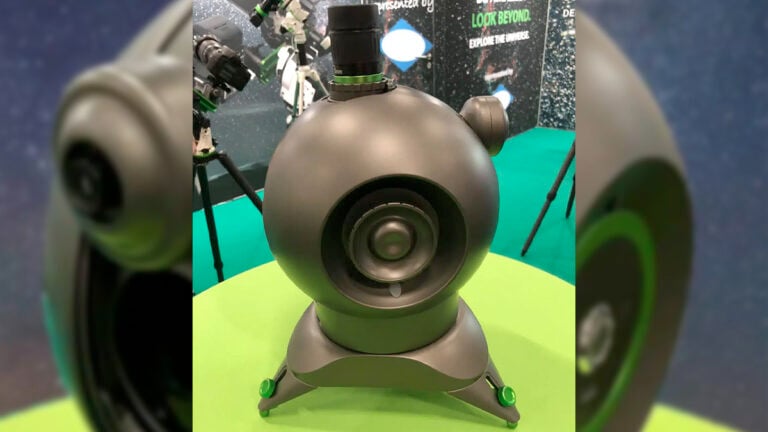
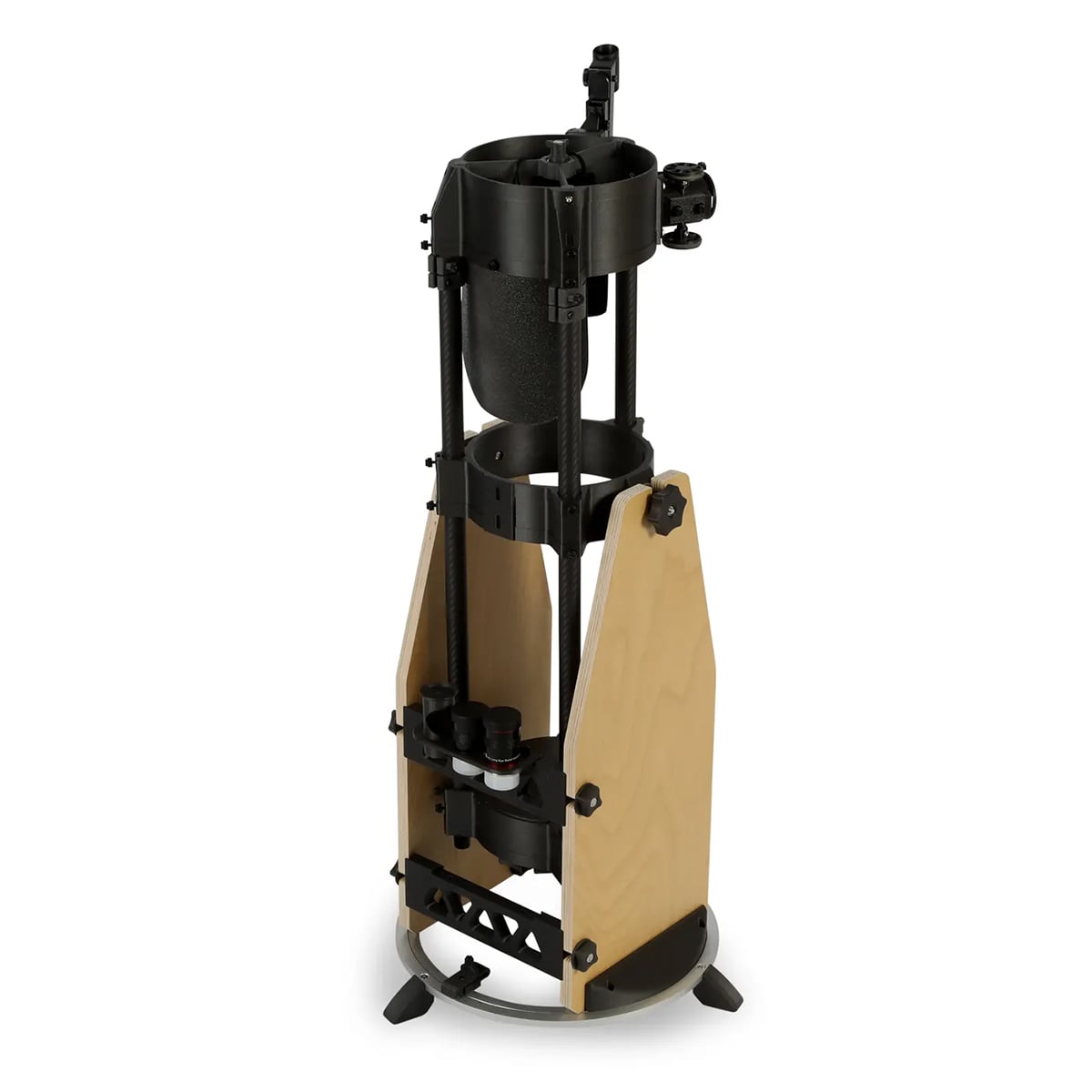
A 160mm telescope collects enough light to give amateur astronomers a good range of objects to explore. But it also comes with a heavy weight, and the complete setup can become cumbersome to transport. To solve this, Meridian Astro has designed its C160, a 160mm Dobsonian telescope with a lightweight, collapsible structure. The complete telescope and stand weigh 5.5 kg, with the optical tube accounting for 2.2kg. Users can dismantle the instrument for transport and pack it into a suitcase or duffel bag.
The C160 also gives buyers several ways to build the telescope. They can order a kit with 3D-printed structural parts or print those components themselves. Meridian Astro makes the STL design files available for free, allowing experienced makers to source the hardware independently. The company is offering the project through Kickstarter.
A 160mm Newtonian Reflector
The C160 uses a 160mm spherical primary mirror with a focal length of 1,300mm, giving it a focal ratio of f/8. It follows the Newtonian reflector design, in which the primary mirror gathers incoming light and reflects it towards a smaller secondary mirror. The secondary redirects the light through the focuser, where an eyepiece magnifies the image for the observer.
There will be two eyepieces with the telescope kit. The 25mm Super Plössl has a 52-degree apparent field of view, while the 9mm wide-field eyepiece offers 68 degrees. With the telescope’s stated focal length, these eyepieces provide magnifications of 52x and approximately 144x.
Beyond the Moon and planets, observers can turn to double stars, open clusters, and brighter nebulae. A dark observing site will definitely help reveal fainter objects.
The C160’s weight and packing arrangement are central to its appeal. According to Meridian Astro, users can dismantle the telescope and pack it into a suitcase or duffel bag. The company lists an assembled height of 133cm and a total system weight of 5.5kg. This includes the stand, which weighs 3.3kg, while the optical tube weighs 2.2kg.
Mirror Alignment, focusing and mount adjustments
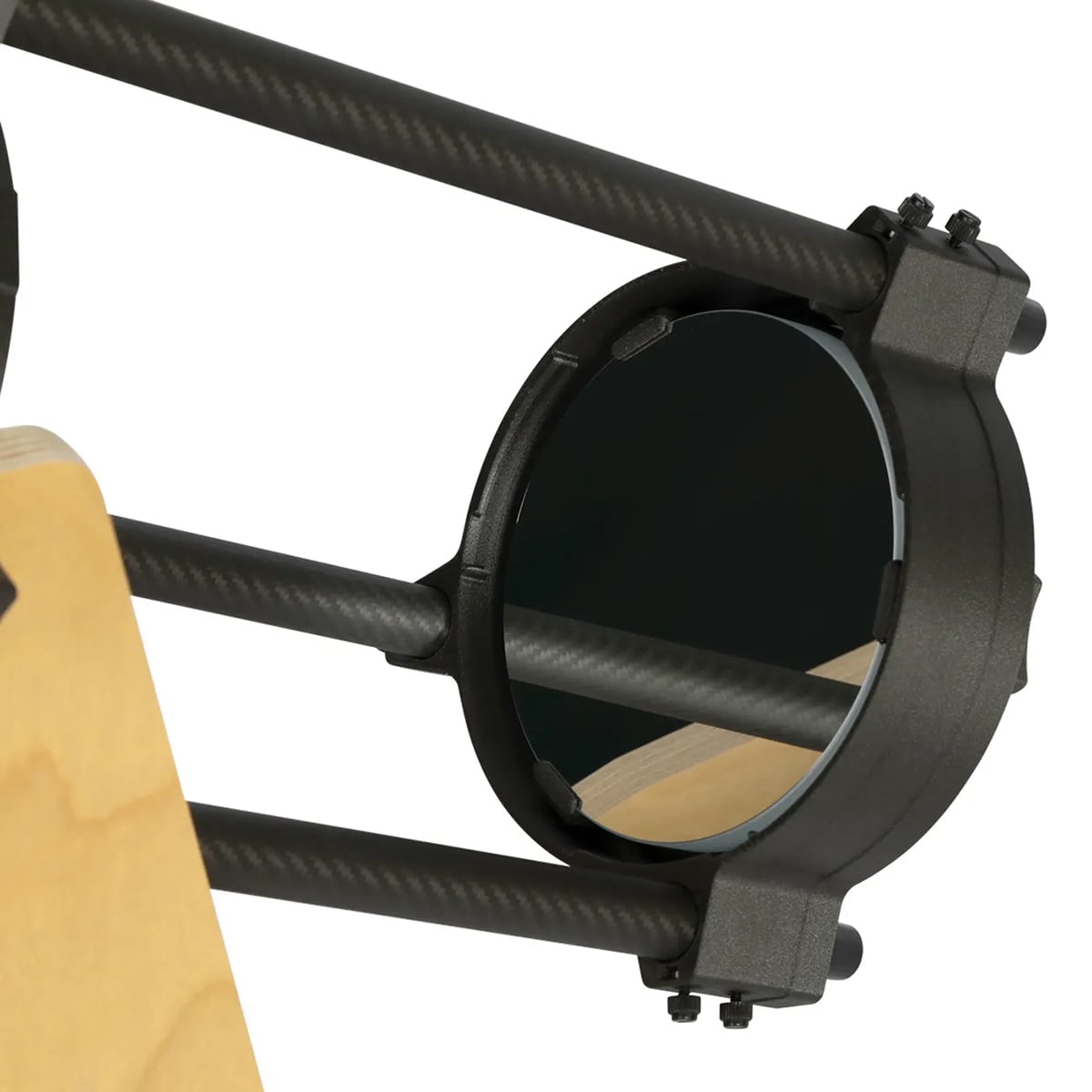
Newtonian telescopes require accurate alignment between their primary and secondary mirrors. Astronomers call this process collimation. The Meridian Astro C160 allows owners to adjust both mirrors without tools.
The C160 uses a Crayford focuser, which moves the eyepiece smoothly without the backlash associated with conventional rack-and-pinion mechanisms. This helps observers make small focus adjustments when examining lunar features or viewing planets at higher magnifications. The kit also includes a red-dot finder to help users point the telescope towards a target before looking through the main eyepiece.
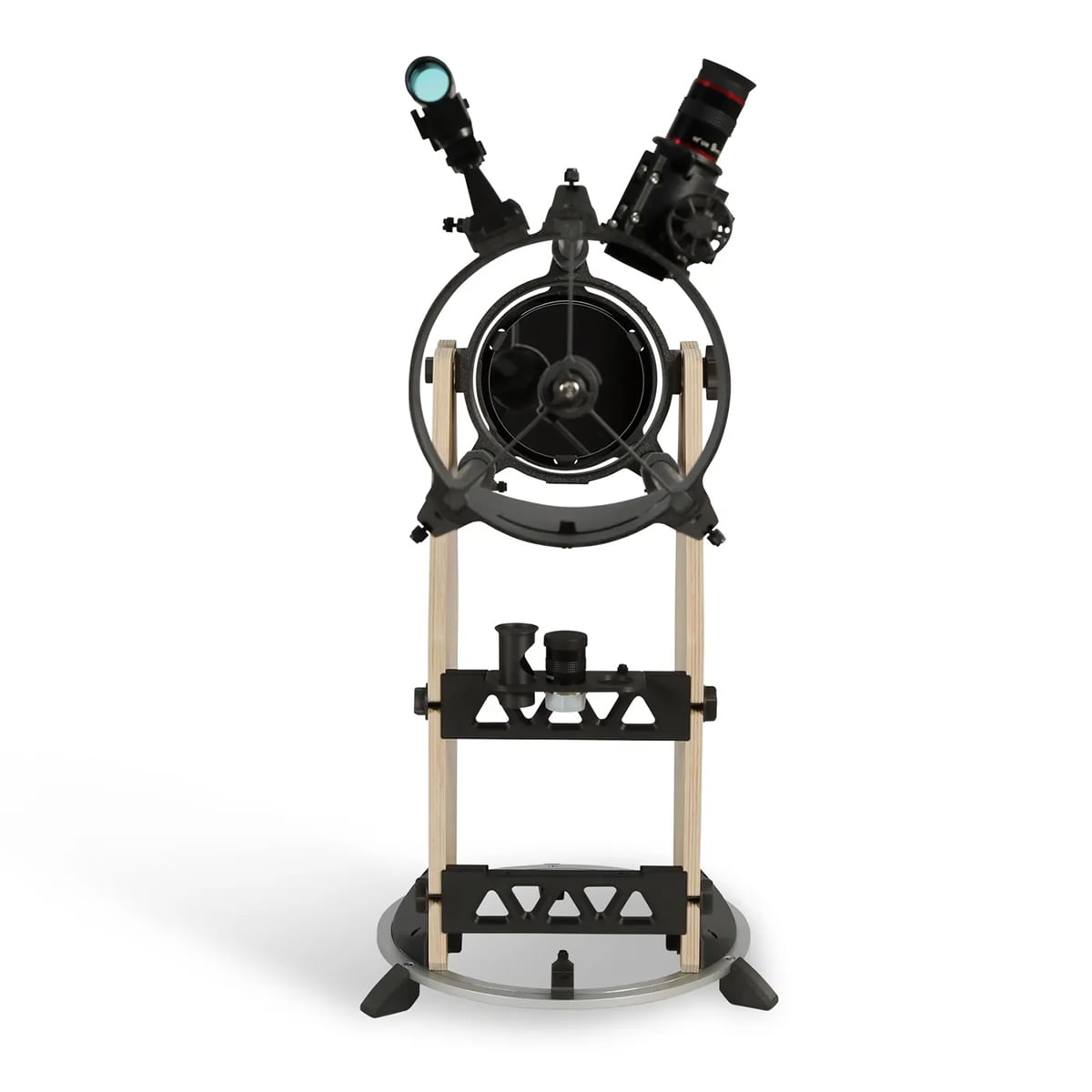
The mount allows owners to adjust friction on both axes. They can tune the movement to suit their preferences, balancing smooth repositioning against the need to keep the telescope steady.
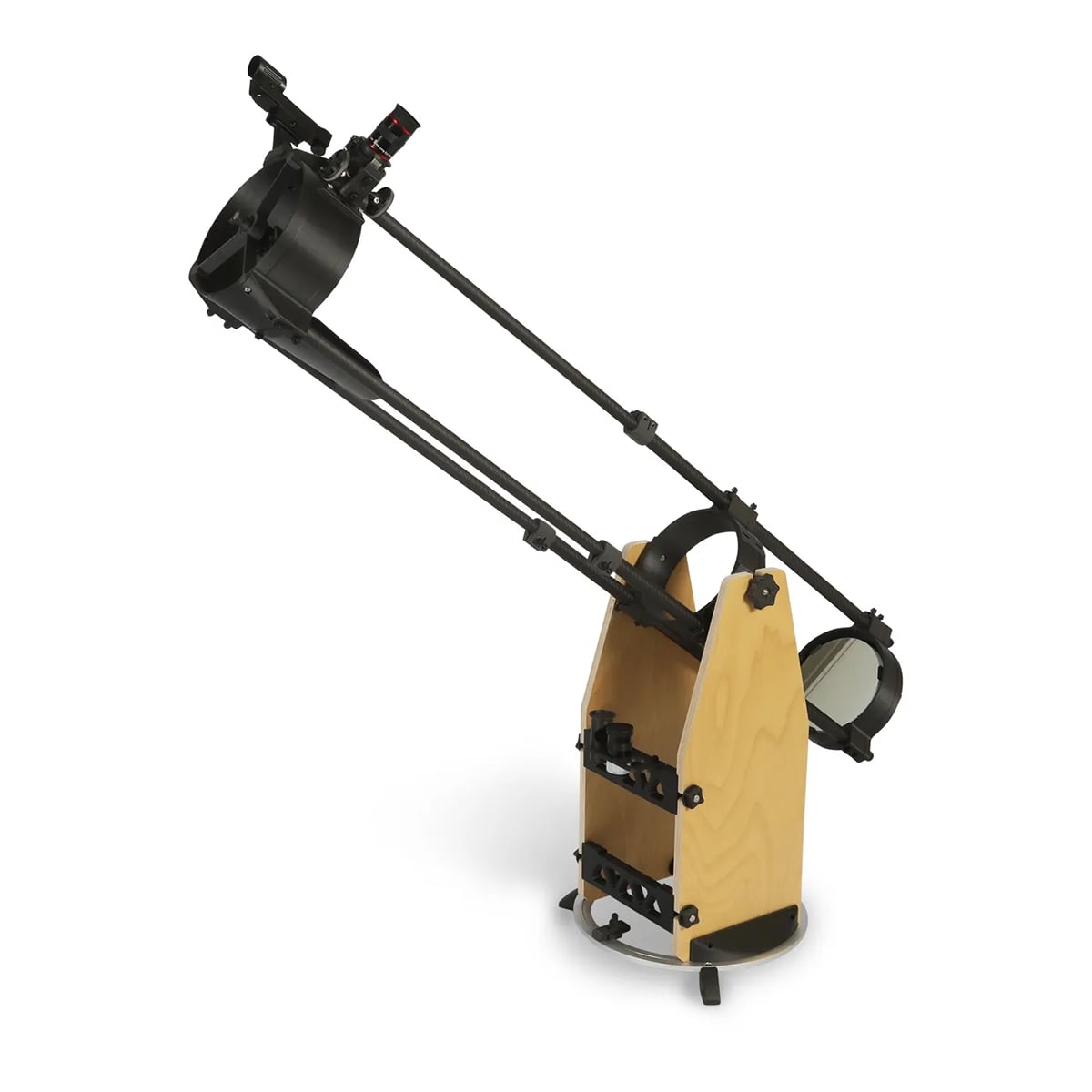
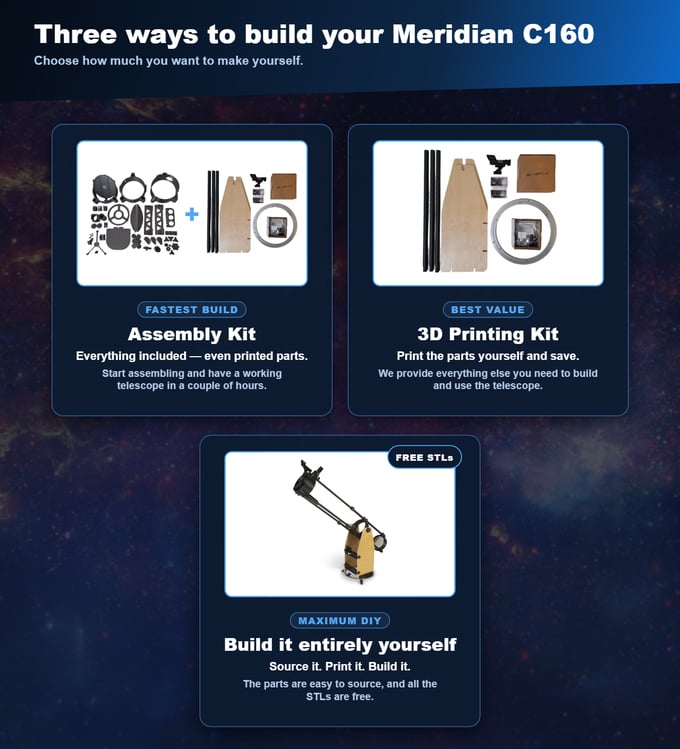
Three ways to build the C160
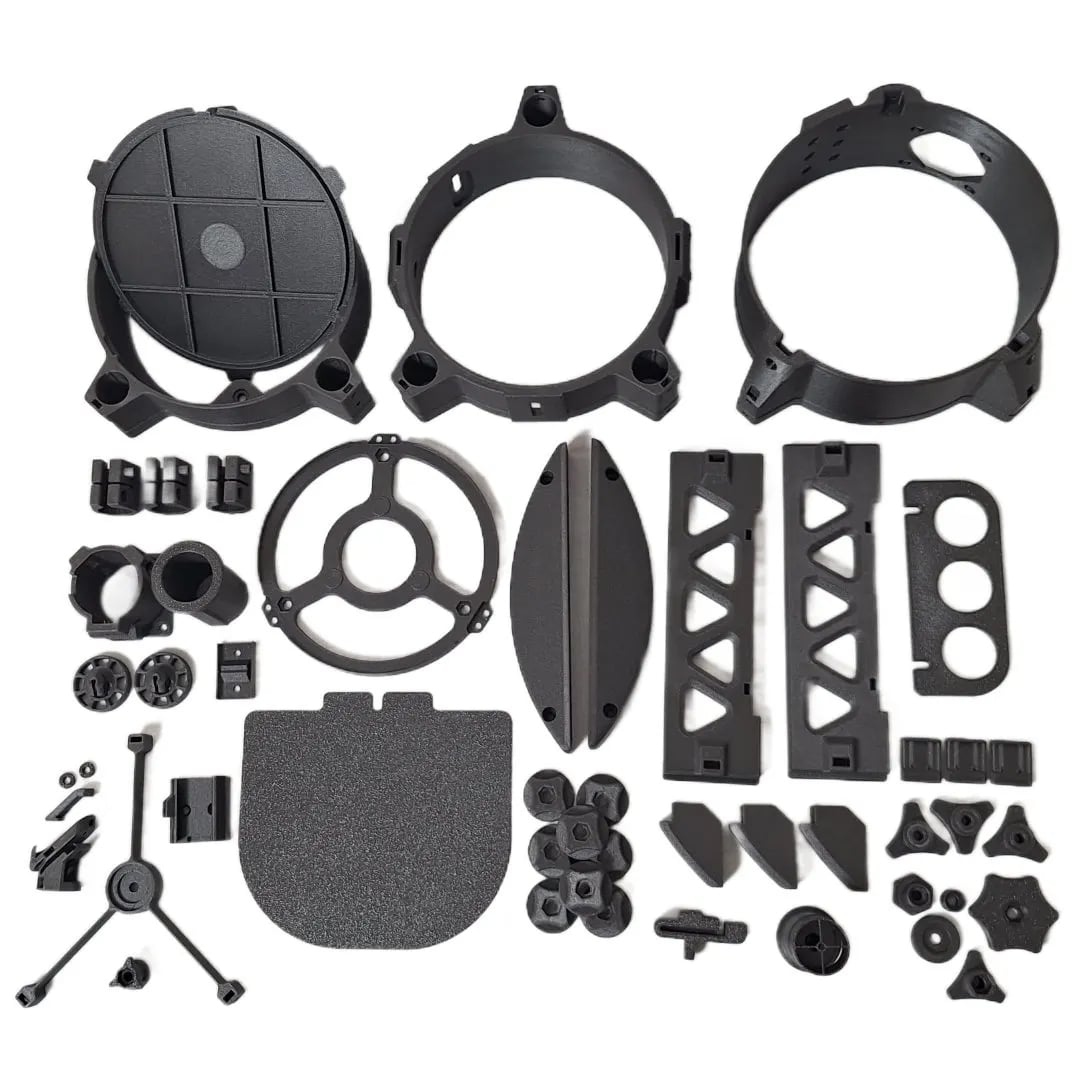
The telescope’s 3D-printed structure gives buyers a lot of choices. Meridian Astro uses printed components in the C160’s construction and says they require less than 1kg of filament.
Meridian Astro offers a 3D Printing Kit and an Assembly Kit. The first supplies some of the components but leaves printing to the buyer. The second includes the printed parts, allowing the owner to begin assembling the telescope without producing those pieces at home.
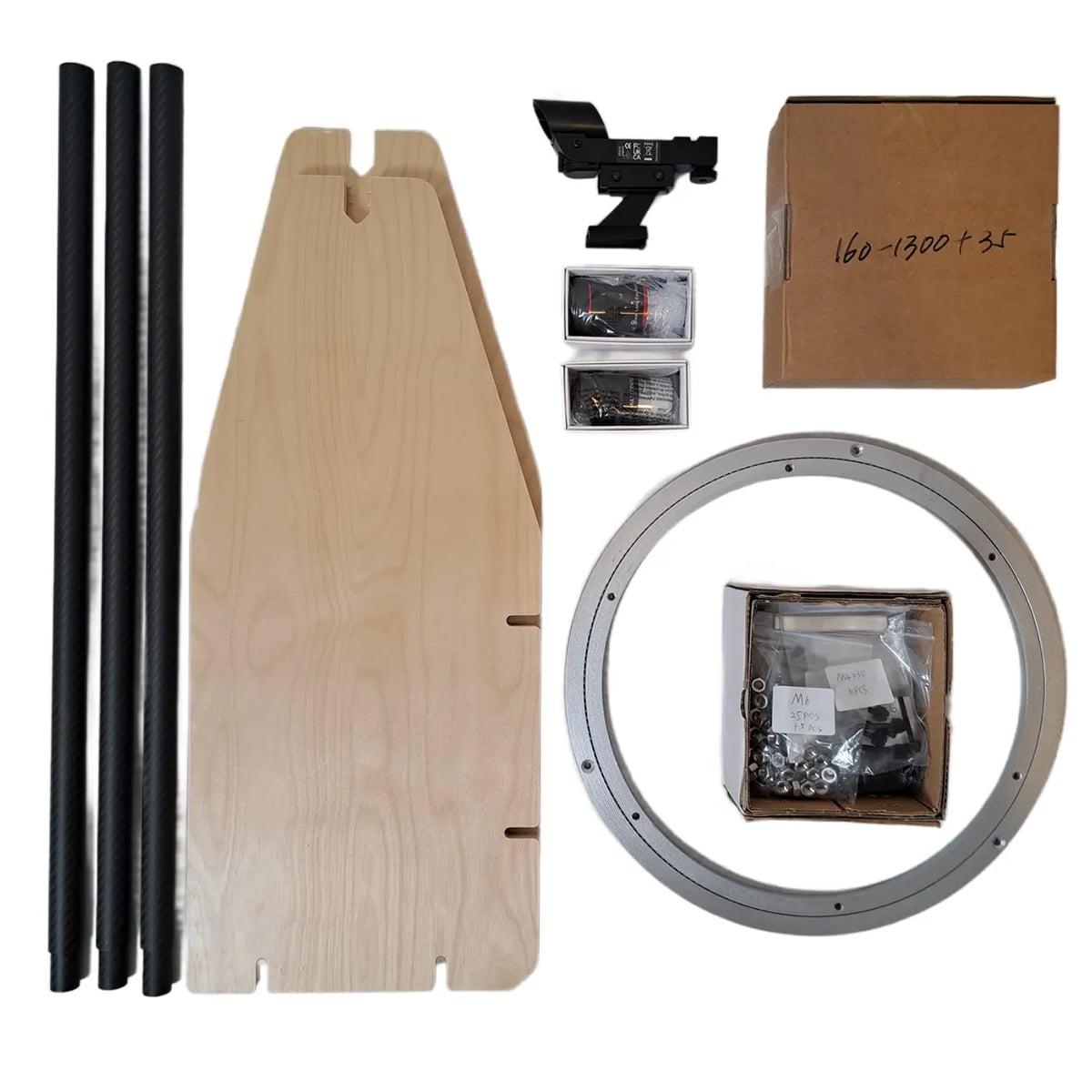
Meridian Astro also provides the STL files free of charge. As a third option, experienced makers and DIY lovers can download the designs, source the required hardware, and build the complete telescope independently.
Meridian Astro recommends PLA and PETG-CF for the printed parts. The company specifies a minimum printer build area of 205 × 218mm. It also recommends automatic bed levelling and a printer capable of handling jobs lasting at least eight hours. Someone without a suitable printer can investigate local 3D-printing services or choose the kit that includes the printed components.
Price and availability
The Meridian Astro C160 is listed as a Kickstarter project. The 3D Printing Kit is priced at $189. The Assembly Kit, where you get all the parts required for the telescope, is priced at $298. But this does not include shipping charges and taxes. Check the Kickstarter Project page for the applicable charges for your country. The delivery is expected in December 2026.
If you want to go the third and most exciting route, that is, to build the telescope from scratch, it is completely free. You can download the STL files from Meridian Astro’s website and get started.
Clear skies!
See more from DIYPhotography.net on Google
Add DIYPhotography.net as a trusted source. This makes
our stories more likely to appear in your Google Search results.
 Add as a preferred source on Google

Soumyadeep Mukherjee
Soumyadeep Mukherjee is an award-winning astrophotographer from India. He has a doctorate degree in Linguistics. His work extends to the sub-genres of nightscape, deep sky, solar, lunar and optical phenomenon photography. He is also a photography educator and has conducted numerous workshops. His works have appeared in over 40 books & magazines including Astronomy, BBC Sky at Night, Sky & Telescope among others, and in various websites including National Geographic, NASA, Forbes. He was the first Indian to win “Astronomy Photographer of the Year” award in a major category.



Join the Discussion
DIYP Comment Policy
Be nice, be on-topic, no personal information or flames.