




















Canon EOS R5 Mark II vs EOS R6 Mark III: Which Camera Should You Buy?
Jul 20, 2026
Leonard Skapp

Alex Baker is a portrait and lifestyle driven photographer based in Valencia, Spain. She works on a range of projects from commercial to fine art and has had work featured in publications such as The Daily Mail, Conde Nast Traveller and El Mundo, and has exhibited work across Europe
Share:
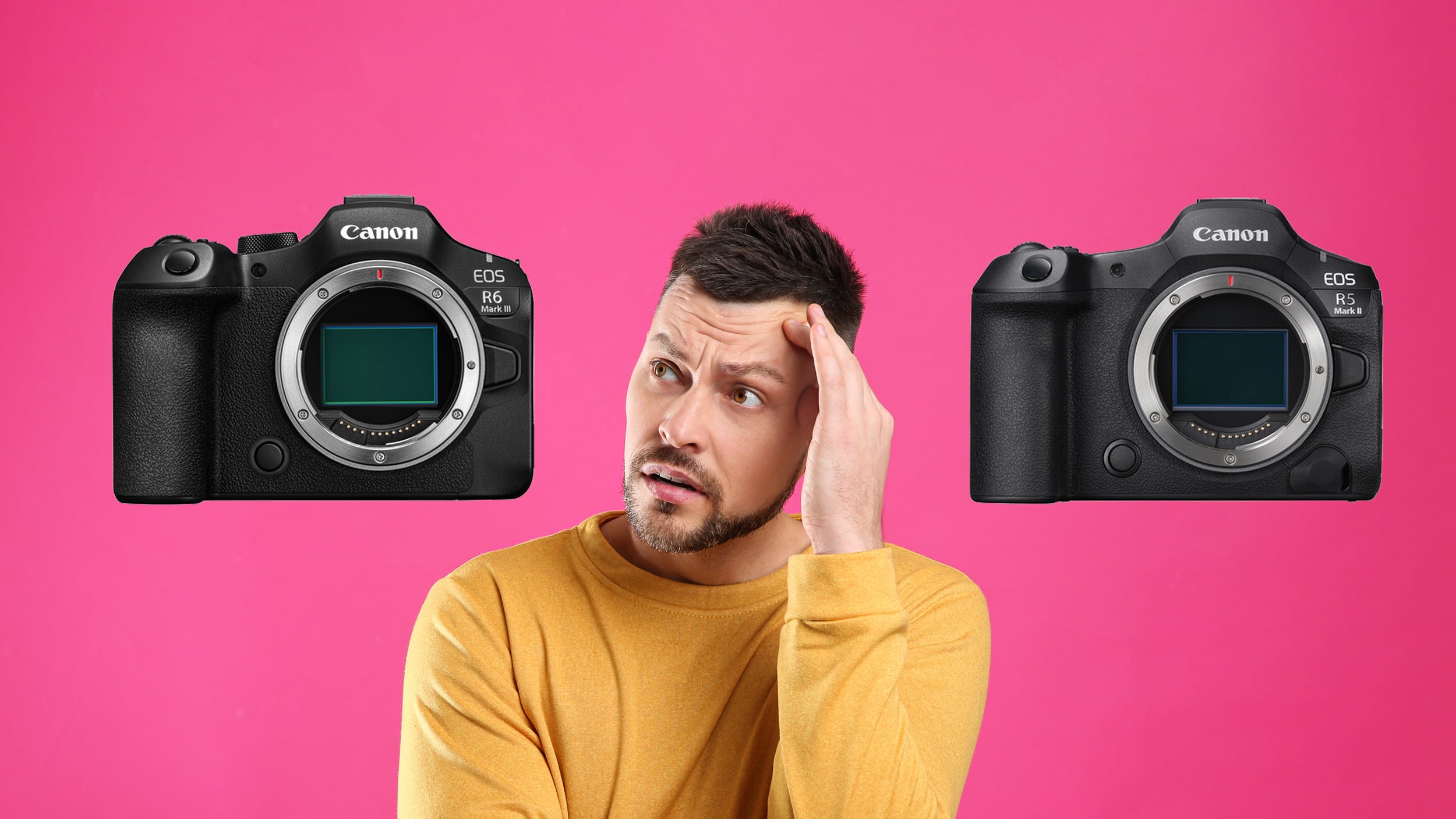
Canon’s EOS R5 Mark II and EOS R6 Mark III are two of the best full-frame mirrorless cameras in the EOS R lineup. They share Canon’s latest autofocus technology, powerful image stabilisation, impressive burst shooting, and excellent video features, but they’re designed with slightly different photographers in mind.
The EOS R5 Mark II is Canon’s flagship hybrid camera, aimed at professionals who want maximum resolution and cutting-edge performance. The EOS R6 Mark III brings many of those same technologies to a more affordable body, making it one of the most compelling all-around cameras Canon has ever produced. So, which one is right for you?
Resolution and image quality
Perhaps the biggest difference between the two cameras is resolution. The EOS R5 Mark II features a 45-megapixel stacked back-side illuminated (BSI) full-frame sensor, while the EOS R6 Mark III uses a 32.5-megapixel full-frame sensor.
While the R5 Mark II undoubtedly captures more detail, the R6 Mark III closes the gap considerably compared to previous generations. Its 32.5MP sensor provides plenty of resolution for weddings, portraits, travel, sports, events, and even commercial photography, while still leaving room to crop when needed.
The R5 Mark II remains the better choice for photographers who regularly produce very large prints, shoot wildlife where heavy cropping is common, or need every last pixel for commercial work. It also includes Canon’s impressive in-camera upscaling feature, capable of producing images up to 179 megapixels.

Autofocus performance
Canon’s autofocus system is one of the biggest reasons to choose either camera. Both cameras feature Canon’s latest Dual Pixel autofocus with intelligent subject recognition for people, animals, birds, vehicles, and more. Eye detection is fast, accurate, and remarkably reliable, even when subjects are moving unpredictably.
The EOS R5 Mark II goes one step further by adding Eye Control AF, allowing photographers to move the active focus point simply by looking through the viewfinder. For wildlife, sports, and action photographers, it’s a genuinely useful feature that can speed up subject acquisition. Whichever camera you choose, autofocus performance is among the best currently available.

Speed and performance
Both cameras are built for action. The EOS R6 Mark III can shoot at up to 40 frames per second using its electronic shutter and includes Canon’s Pre-Continuous Shoot Mode, which begins buffering images before the shutter is fully pressed. It’s an excellent feature for unpredictable subjects such as birds taking flight or the moment a footballer strikes the ball.
The EOS R5 Mark II reaches 30 frames per second, which is still exceptionally fast and more than enough for professional sports, wildlife, and photojournalism.
In reality, the difference between 30fps and 40fps is unlikely to influence your buying decision. Both cameras are capable of capturing moments that would have been impossible only a few years ago.
Low-light performance
Both cameras perform exceptionally well in low light, making them excellent choices for weddings, events, concerts, indoor sports, and night photography.
Historically, the EOS R6 series had a noticeable advantage thanks to its lower-resolution sensors. With the move to a 32.5-megapixel sensor, the gap is much smaller than it once was. Canon’s latest sensor technology and image processing allow both cameras to produce clean, detailed images at higher ISO settings.
The R6 Mark III still has a slight edge if low-light performance is your highest priority, while the R5 Mark II rewards photographers with additional resolution when lighting conditions are good. For most photographers, however, the difference isn’t large enough to be the deciding factor.
Video capabilities
Both cameras are exceptional hybrid cameras, but they’re aimed at slightly different creators.
The EOS R6 Mark III records 7K 60p 12-bit RAW Light internally, alongside Open Gate 7K 30p recording and 4K 120p slow motion. It’s an outstanding option for wedding filmmakers, documentary shooters, YouTubers, and content creators who regularly switch between stills and video.
The EOS R5 Mark II pushes things further with 8K 60p RAW, 4K 60p SRAW, and 4K 120p 10-bit recording, giving professional filmmakers maximum flexibility during editing and post-production.
For most hybrid photographers, the R6 Mark III offers everything they’ll ever need. If your livelihood depends on delivering the highest possible video quality, the R5 Mark II earns its flagship status.
Viewfinder and handling
Both cameras are built around weather-sealed magnesium alloy bodies with fully articulating touchscreens and dual card slots. The EOS R5 Mark II features a larger, sharper 5.76-million-dot electronic viewfinder, while the R6 Mark III uses a 3.69-million-dot OLED EVF. Both also include Canon’s Optical Viewfinder Assist modes to help DSLR users transition to mirrorless.
The differences are noticeable side by side, but both cameras are comfortable to use for long shooting sessions and offer excellent ergonomics.
Image stabilisation and connectivity
Both cameras feature Canon’s excellent in-body image stabilisation, making handheld photography and video much easier. The EOS R6 Mark III offers up to 8.5 stops of image stabilisation, helping photographers shoot at slower shutter speeds without reaching for a tripod.
Both cameras feature dual memory card slots, pairing a CFexpress card with an SD UHS-II card for speed and flexibility. They also include built-in Wi-Fi and Bluetooth for transferring images and controlling the camera remotely, while the R5 Mark II adds support for Wi-Fi 6E for faster wireless workflows.
Which camera is right for you?
Choosing between these cameras is less about which one is objectively “better” and more about how you shoot.
Choose the Canon EOS R5 Mark II if you regularly photograph landscapes, wildlife, architecture, advertising, or studio work where maximum resolution and professional features justify the additional cost. It’s Canon’s flagship for photographers who want the very best image quality and performance.
Choose the Canon EOS R6 Mark III if you’re looking for an outstanding all-round camera that excels at weddings, portraits, sports, travel, events, journalism, and hybrid photo-video work. It offers an excellent balance of resolution, speed, autofocus, and video features at a more accessible price.
Is the EOS R6 Mark II still worth buying?
Absolutely. Although the EOS R6 Mark III is now Canon’s latest all-around full-frame camera, the EOS R6 Mark II remains an excellent option if you’re shopping on a tighter budget. It continues to offer outstanding autofocus, excellent image quality, and strong video performance, and can often be found at a significant discount on the used market.
The money you save could be invested in better lenses, and that’s often a smarter upgrade. Camera bodies are replaced every few years, but great lenses can stay in your kit for decades.
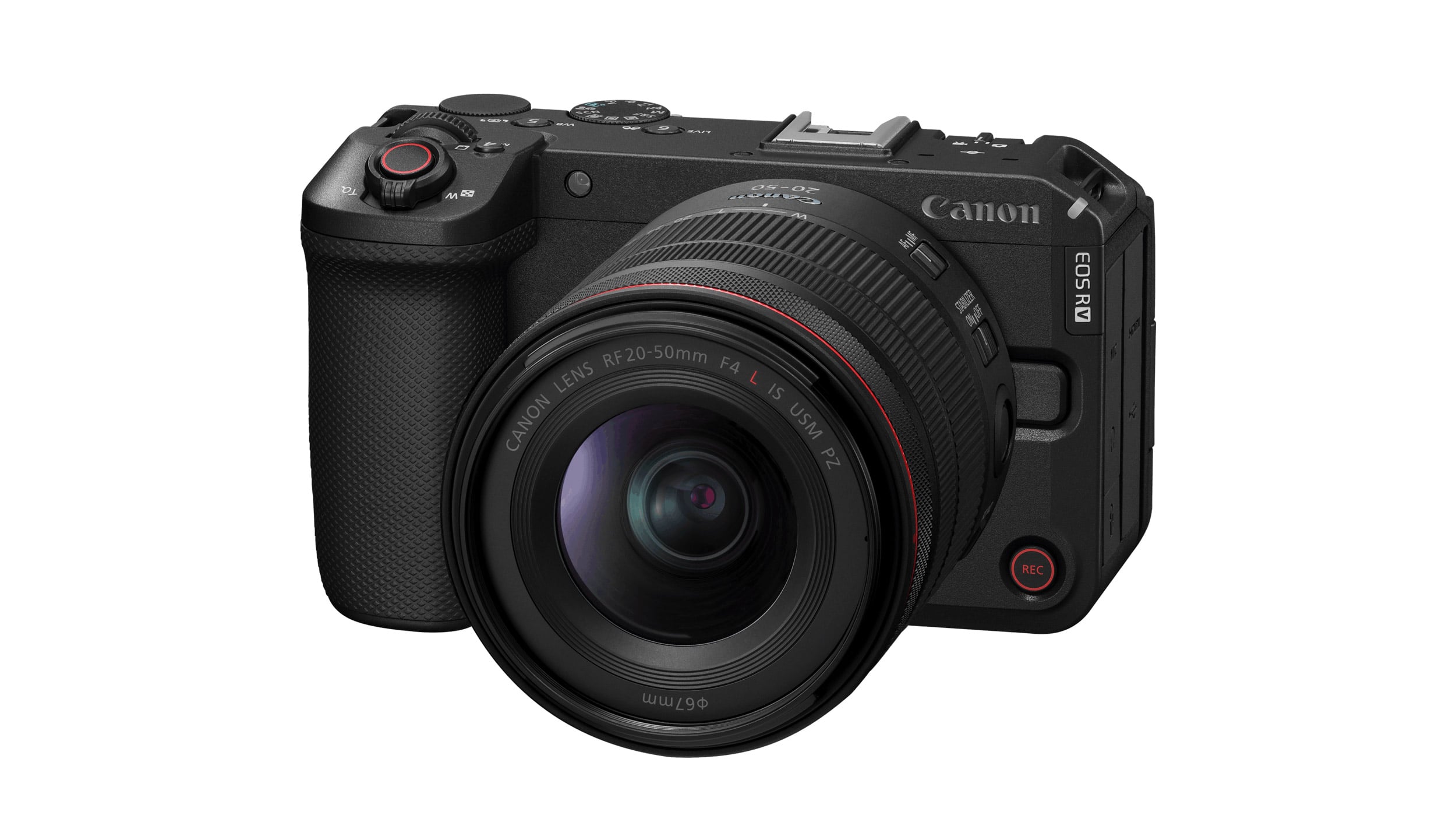
What about the EOS R6 V?
If your work leans more towards video than still photography, it’s also worth considering the Canon EOS R6 V. Sharing the same 32.5-megapixel full-frame sensor as the EOS R6 Mark III, the R6 V is designed specifically for hybrid creators and filmmakers. It adds professional video features such as 7K 60p recording, 7K Open Gate RAW, DCI 4K 120p, 2K 180p slow motion, and support for Canon Log 2 with over 15 stops of dynamic range. It also includes video-focused touches such as a rotating user interface and a vertical tripod mount for easier shooting in portrait orientation.
If photography is still your main focus, the EOS R6 Mark III is the more versatile choice. But if you’re a filmmaker, YouTuber, or content creator who shoots as much video as stills, the EOS R6 V is well worth a look.
Key takeaways
The Canon EOS R5 Mark II and EOS R6 Mark III are both exceptional mirrorless cameras capable of producing professional-quality images.
The R5 Mark II is the camera to choose if you need the highest resolution, advanced features like Eye Control AF, and Canon’s most powerful hybrid shooting capabilities. The R6 Mark III is arguably the better all-rounder, combining a 32.5-megapixel sensor, 40fps continuous shooting, excellent low-light performance, powerful image stabilisation, and advanced video features into a camera that will suit the vast majority of photographers.
Whichever you choose, you’re getting one of Canon’s finest mirrorless cameras. The real question isn’t which one is better, it’s which one best matches the way you shoot.
See more from DIYPhotography.net on Google
Add DIYPhotography.net as a trusted source. This makes
our stories more likely to appear in your Google Search results.
 Add as a preferred source on Google

About Leonard Skapp
Leonard “Len” Skapp is a photographer with a particular interest in cameras, lenses, accessories, camera bags, lens filters, tripods, camera straps, and, on rare occasions, photography itself. Equal parts reviewer and enthusiast, he enjoys digging into the technical details behind the latest gear and translating them into plain English for fellow photographers. He maintains that every purchase is a carefully considered investment, although his bank account and overflowing camera cupboard continue to dispute this claim.
We love it when our readers get in touch with us to share their stories. This article was contributed to DIYP by a member of our community. If you would like to contribute an article, please contact us here.
Related Posts
 Testing the ISO of Canon EOS R5 and R6 vs 1DX Mark III and 5D Mark IV
 EOS 5D Mark V and EOS R Mark II added to Canon’s internal roadmap, rumours suggest
 Obama’s official portrait was taken with a Canon 5D Mark II. Trump’s with a Canon 1Ds Mark III, which is even older
 Comparing the Canon EOS R, EOS RP, EOS R5 and EOS R6 head-to-head for portraits
Join the Discussion
DIYP Comment Policy
Be nice, be on-topic, no personal information or flames.