



















How to Start a Photography Business
Jun 10, 2026
Lydia Marlowe

Dunja Djudjic is a multi-talented artist based in Novi Sad, Serbia. With 15 years of experience as a photographer, she specializes in capturing the beauty of nature, travel, concerts, and fine art. In addition to her photography, Dunja also expresses her creativity through writing, embroidery, and jewelry making.
Share:

To start a photography business, the short answer would be: pick a niche, build a portfolio, sort the legal basics (register your business and handle tax), set your prices, put up a simple website, and start landing your first paying clients. You don’t need a studio, a license, or top-end gear to begin – you need a sellable skill and a way for people to find you.
But you know us, we’re here to give you a longer answer and help you tone down the panic when you read everything I listed above. This guide walks through it step by step of starting a photography business. And for the wider picture of earning from a camera, see our guide on how photographers make money.
Can I Start a Photography Business?
The short answer again is – yes. There’s no exam, no permit gate, no licensing body deciding you’re allowed. If you can take photos people will pay for and you handle the admin properly, you can start a photography business, maybe as soon as this week.
The catch isn’t legal permission, it’s the word “business.” The camera part is maybe 30% of the job, and that’s generous. The rest is marketing, invoicing, emailing, pricing, chasing leads, and more. This is why plenty of brilliant photographers fail at business (or never even try), and plenty of decent ones thrive. The difference in success is almost always the business side, not the photography skill. Go in knowing that, and you’re ahead of half the field.
How Do I Start a Photography Business?
Remember the sequence of steps from the intro? Here it is broken down a bit:
- Pick a niche. “Photographer” is generally too broad to sell. Pick a lane or two you can get genuinely good at and known for: weddings, portraits, real estate, product, events, food… I suggest you choose what you already love. You can always widen the niche later, or offer additional services like videography along with shooting stills.
- Build a portfolio. You need proof before anyone pays. Shoot the work you want to be hired for, perhaps even unpaid at first, until you’ve got a tight set of images that sell the niche.
- Handle the legal basics. Register your business per your local rules, sort out tax, and look into insurance and contracts. I can’t give you the exact details because they differ from state to state and country to country. But the IRS (or your country’s version of it) should know what to do.
- Set your prices. Work out what covers your costs, shooting and editing, time, and gear – then charge it. Underpricing to “get started” is the most common rookie mistake.
- Build an online presence. A good portfolio website and one social platform you’ll actually keep up (sadly, this is often Instagram). This is where people check you’re real and reach out to you.
- Get your first clients. This is one of the tough parts, but once you get the ball rolling, it gets easier. Rely on the word of mouth, second shooting, local networking, referrals, or even paid ads.
- Run it like a business. Contracts for every job, invoices that go out on time, basic bookkeeping. Boring, essential, the part that keeps you solvent.
How Do I Start a Photography Business With No Experience?
If you’d like to switch careers and still aren’t as great in photography or running a business, the steps remain similar, but the order is tweaked. Build your experience and portfolio first, and do everything else after.
With no experience, your only real obstacle is proof that you know what you’re doing. It’s not a quick fix, but if you’re really into it, you’ll get there. Take photos relentlessly: photograph your friends, take up free or low-cost sessions or styled shoots you set up yourself. You can search for gigs as a second shooter for an established photographer. Once your skills and portfolio are expanded, you’re not “inexperienced” anymore. You’re “new to business” and do have some knowledge and experience in photography itself.
Set a clear end date on the free work, though. “Building a portfolio” can quietly become “working for nothing forever” if you let it.
Do I Need a License?
In most places, there’s no specific “photography license” you need to take paid work. What you usually need is to operate as a proper business: a general business registration or local permit, depending on where you live, plus paying tax on what you earn. Some types of shoots (drones, certain public or commercial locations) have their own permit rules, so check those for your niche.
While photography itself isn’t licensed in most regions, running a business is regulated, and that’s the part you can’t skip.
Do I Need an LLC for a Photography Business?
You don’t need an LLC to start. Plenty of photographers begin as sole proprietors and register a formal structure later as they grow.
People set up an LLC (or the local equivalent) mainly for two reasons: liability protection, so a problem with a client doesn’t reach your personal assets, and tax or professional reasons as income scales. It’s worth doing eventually for a serious business, but it’s not a gate you have to clear before your first paid shoot. This varies a lot by country, so confirm your local rules rather than taking my word for it.
What Do I Need to Start a Photography Business?
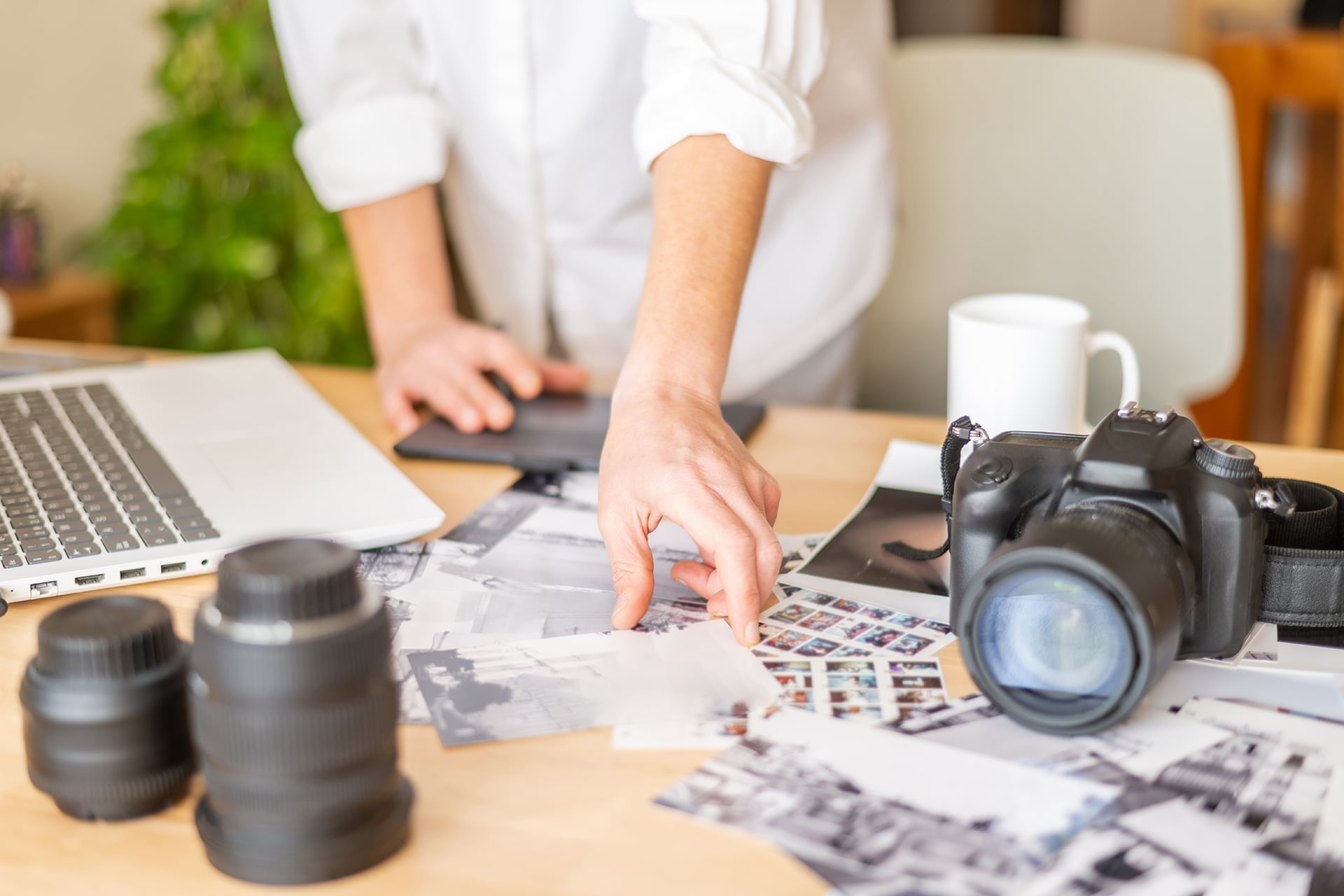
The good news is: you need less than the gear ads imply. The essentials are:
- A camera you know well. If you don’t already own one, get to know your gear before you even think about starting a business
- A versatile lens that suits your niche and that you know well beats a bag of kit you haven’t mastered. Don’t let “I need more gear” become the excuse that delays you or confuses you.
- Basic editing software. Editing is a big part of photography, so think about tools like Lightroom and Photoshop, Capture One, or similar.
- A portfolio. We’ve covered this already, and while it’s not something you’ll buy, it is something you definitely need to have.
- The admin layer. Contracts, an invoicing method, a way to take payment, and insurance if your niche calls for it.
- A way to be found. Website, social presence, or both.
Notice how little of that is gear. As I mentioned above, photography makes 30% of running a photography business, if not less.
Should I Start a Photography Business?
Now that you know what you need, this is a fair question to ask yourself before you step into it. Start a photography business if you can produce work people will pay for and you’re willing to spend more time running a business than holding a camera. Think harder if what you actually love is the shooting and you’d resent the invoicing, marketing, and client-wrangling – because that’s most of the job.
There’s no shame in keeping photography as the thing you love instead of the thing you monetize. Turning a passion into a business changes your relationship with it, sometimes for the better, sometimes not. So, it’s worth really thinking this through and being honest with yourself up front.
So, Where Do I Begin?
Today, before you overthink it: pick your niche and start shooting toward a portfolio. That single move unlocks everything downstream – you can’t price, market, or pitch until you have work to show. The legal and admin pieces matter, but they’re quick to sort once there’s an actual business to register.
Are you thinking about taking the leap, or already mid-setup and stuck on something? Or you never actually want to run a business as a photographer? Tell us where you’re at in the comments.
See more from DIYPhotography.net on Google
Add DIYPhotography.net as a trusted source. This makes
our stories more likely to appear in your Google Search results.
 Add as a preferred source on Google

About Lydia Marlowe
Lydia Marlowe is an architect and a hobbyist photographer who has never quite managed to keep the two apart. She travels at every excuse, usually returning with more photos of buildings and details than of the people she went with. She pays more attention to light and structure than to gear, and she firmly believes the best camera is the one you didn’t leave at home.
We love it when our readers get in touch with us to share their stories. This article was contributed to DIYP by a member of our community. If you would like to contribute an article, please contact us here.



Join the Discussion
DIYP Comment Policy
Be nice, be on-topic, no personal information or flames.