

















This Retouching Method Beats Any AI Editing Tool
Jun 1, 2026
Dunja Đuđić Kalinin
Dunja Djudjic is a multi-talented artist based in Novi Sad, Serbia. With 15 years of experience as a photographer, she specializes in capturing the beauty of nature, travel, concerts, and fine art. In addition to her photography, Dunja also expresses her creativity through writing, embroidery, and jewelry making.
Share:
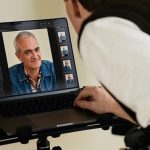
If you’re new to photography and retouching, perhaps you’re wondering: why bother learning to retouch by hand when AI can do it in seconds? It’s a fair question, and AI certainly has its place in photo editing. But there are still many situations where human touch will beat AI any day. In a recent video, Unmesh Dinda of PiXimperfect walks us through his BST retouching method in Photoshop and then puts generative AI head-to-head against the results. And if you’re wondering “why bother?”, well, the results will speak for themselves.
The BST Method
Unmesh calls this approach the “BTS Method” as it breaks portrait retouching into three stages: blemishes, softening, and tone. He starts by removing blemishes on a separate layer, using either the Remove tool for speed or the Healing Brush for more precise control. From there, he moves into skin softening using frequency separation, which splits the image into texture and color information so each can be adjusted without affecting the other. The final step is evening out skin tone with a custom gradient map, targeting specific color casts like reds or yellows across the face. It’s a structured, repeatable process that keeps every adjustment non-destructive and fully adjustable.
Of course, I won’t go into a full write-up here as the tutorial is relatively long, but this is why you have the video, so you can see Unmesh doing his Photoshop wizardry, which he’s known for.
The Part AI Can’t Replace
This is the core of the idea that AI can’t just replace a human retoucher. Throughout every stage of the editing process, Unmesh is making judgment calls. When removing a blemish, he’s not just telling Photoshop to fill in a spot. He’s deciding which nearby texture looks right for that specific area of skin and sampling it deliberately. That’s a creative decision and a deliberate choice only a human can make.
Unmesh puts it plainly: these are choices you simply don’t get with a prompt. You can try to describe what you want in detail, but translating something as nuanced as skin texture into words is a clumsy workaround for something that takes half a second to do by eye with a brush.
What Happens When You Let AI Retouch a Portrait
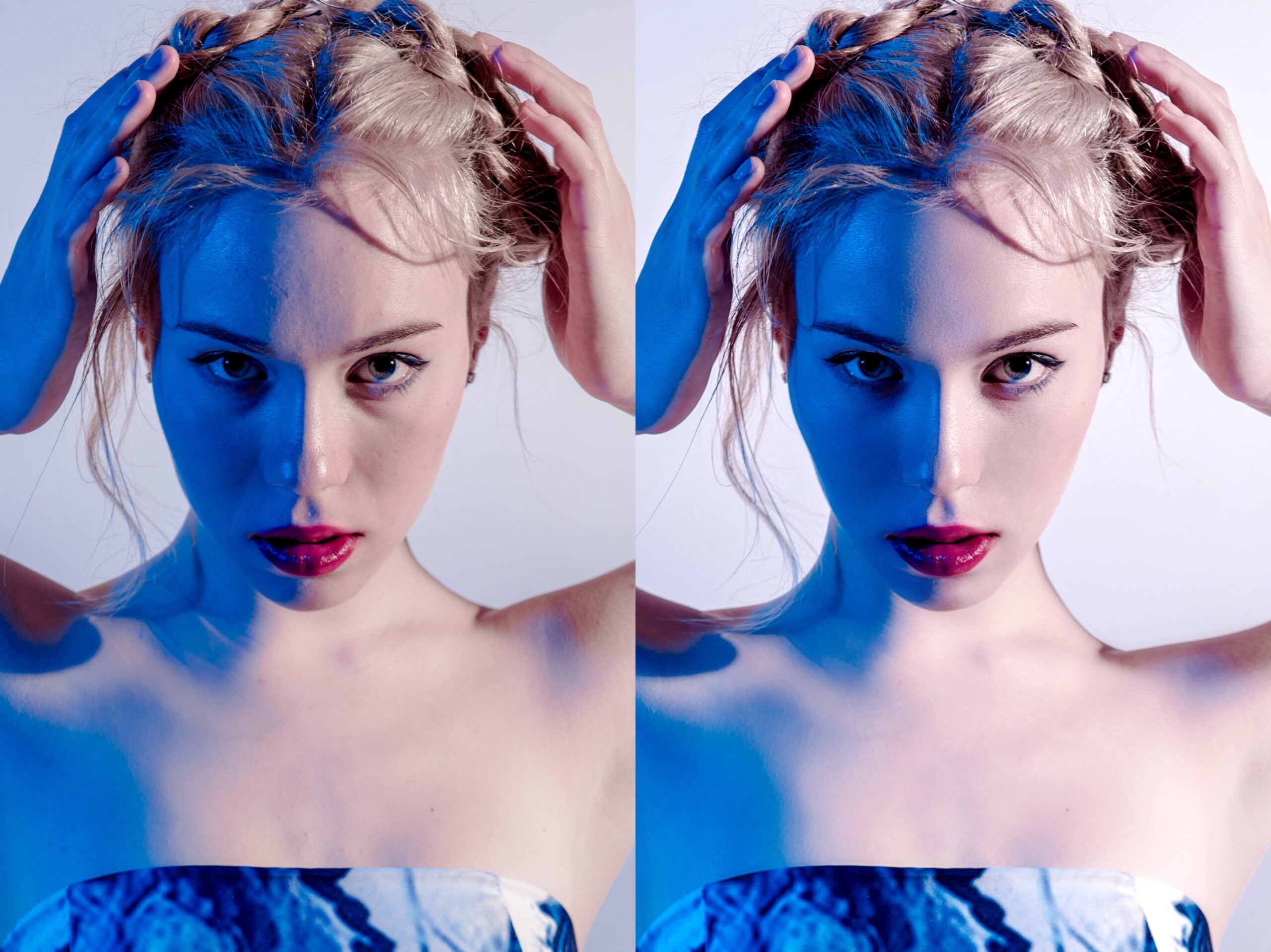
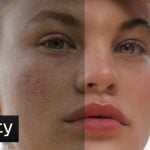
To test generative AI on a real-world portrait, Unmesh wrote a detailed prompt and ran it through a current AI model. Zoomed out, the result looks good enough. But zoom in, and the problems become obvious.
The skin texture is gone. Not softened, but gone. What replaces it doesn’t look like skin at all. The eyelashes are different and the lips have lost their detail and character. Individual strands of hair, sharp and present in the original, are replaced with something that reads more like a painted illustration than a photo. In Unmesh’s words, it’s not even the same person anymore.
And that’s the problem. Generative AI doesn’t retouch a photo the same way you would. It almost generates a whole new person out of it. It replaces portions of a portrait with something new, invented based on what it thinks should be there. In my eyes, this removes the soul and creativity from portraits and from the retouching process. And for commercial, editorial, or any work where preserving a person’s actual likeness is important, having them replaced by their AI version is unacceptable.
Unmesh does acknowledge that manual retouching isn’t always practical when you’re working through a large volume of images. After all, AI retouching tools were originally introduced to help us get faster (until it all went too far). However, his answer isn’t built-in generative AI.
When he even utilizes AI for retouching, he relies on purpose-built plugins like Retouch4me, which uses algorithms trained specifically for skin retouching.
Retouching Is a Creative Skill, Not Just a Task
One of the points Unmesh keeps coming back to is that retouching is an art form. And I agree – I used to lose myself in image editing, playing with colors and techniques, trying out tools, and so on. I have less time for it now, but I still believe image editing is another layer to our creative expression through photography. Knowing when to stop, which areas need work, and which don’t, how much softening is too much, these aren’t things you can fully outsource. They come from developing an eye and a feel for the work over time.
AI might be able to produce something that looks acceptable at a glance, and that can be fine for casual Instagram posts, if you ask me. However, this still isn’t the standard for professional retouching. You still want results that preserve what makes the subject look like themselves and reflect deliberate artistic choices made by a person who knows what they’re doing. This is why, while you can use some AI in your work, retouching and image editing in general are still creative skills and not just boring tasks you outsource to a machine.
[“B.S.T” Method of Retouching in Photoshop (Better Than Any AI) | PiXimperfect]
See more from DIYPhotography.net on Google
Add DIYPhotography.net as a trusted source. This makes
our stories more likely to appear in your Google Search results.
 Add as a preferred source on Google
Filed Under:
Tagged With:

Dunja Đuđić Kalinin
Dunja Djudjic is a multi-talented artist based in Novi Sad, Serbia. With 15 years of experience as a photographer, she specializes in capturing the beauty of nature, travel, concerts, and fine art. In addition to her photography, Dunja also expresses her creativity through writing, embroidery, and jewelry making.

Join the Discussion
DIYP Comment Policy
Be nice, be on-topic, no personal information or flames.