























Gemini North Photographs the Interstellar Comet 3I/ATLAS
Aug 1, 2025
Soumyadeep Mukherjee
Soumyadeep Mukherjee is an award-winning astrophotographer from India. He has a doctorate degree in Linguistics. His work extends to the sub-genres of nightscape, deep sky, solar, lunar and optical phenomenon photography. He is also a photography educator and has conducted numerous workshops. His works have appeared in over 40 books & magazines including Astronomy, BBC Sky at Night, Sky & Telescope among others, and in various websites including National Geographic, NASA, Forbes. He was the first Indian to win “Astronomy Photographer of the Year” award in a major category.
Share:
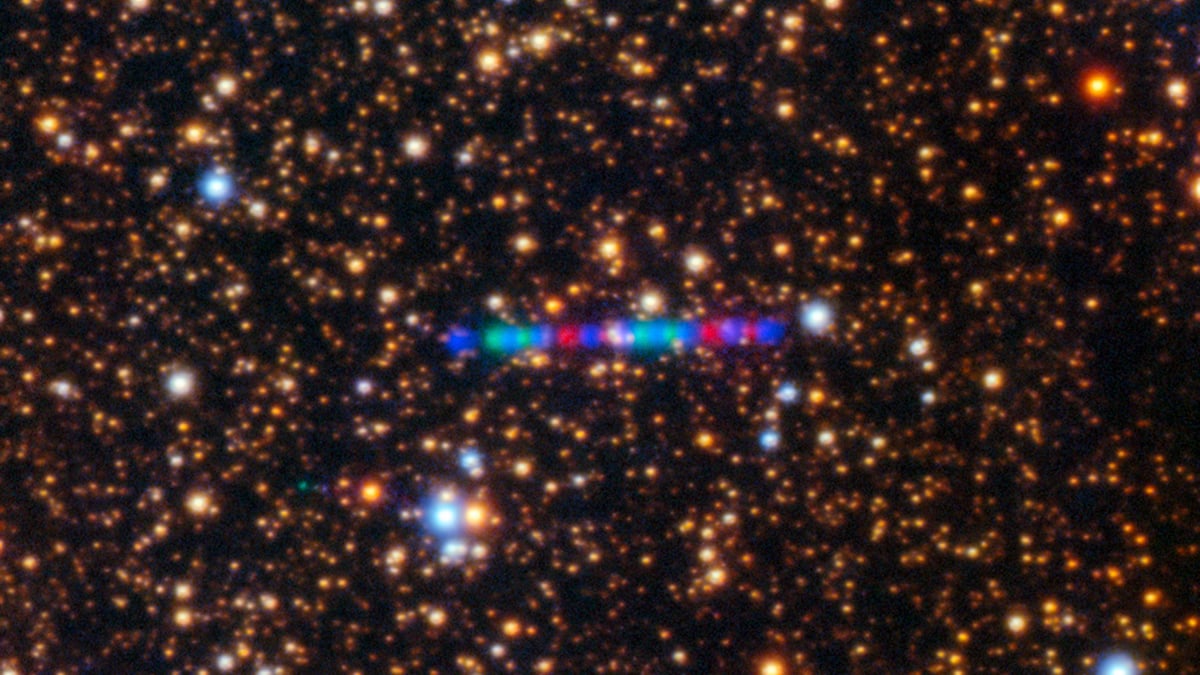
Astronomers had discovered the third known object from outside our Solar System. It is a comet named 3I/ATLAS, officially designated C/2025 N1 (ATLAS). The “I” in its name stands for interstellar. This means it came from beyond our Solar System. The discovery was announced by the International Astronomical Union’s Minor Planet Center on 15 July 2025. Observations from Gemini North in Hawaii played a key role. This telescope captured detailed images of the faint but fast-moving comet.
Discovery by ATLAS
The story began on 1 July 2025. The ATLAS (Asteroid Terrestrial-impact Last Alert System) survey spotted a faint object. ATLAS operates in Hawaii and scans the skies for dangerous near-Earth asteroids. But this time, it found something far more exciting. The object’s motion and speed were unusual. Within days, scientists suspected it was interstellar. Astronomer Karen Meech from the University of Hawaii led the follow-up campaign. Her team used the Gemini Multi-Object Spectrograph (GMOS) on Gemini North. They captured detailed images of the object’s compact coma. The coma is the cloud of gas and dust surrounding a comet’s nucleus.
The interstellar comet
3I/ATLAS is not bound by our Sun’s gravity. Its path through space is hyperbolic. That means it’s open-ended. It came in, and it will leave, never to return. The comet’s orbital eccentricity is around 6.2. For comparison, most Solar System objects have an eccentricity less than 1. Even the previous interstellar visitors had lower values. ‘Oumuamua, discovered in 2017, had an eccentricity of about 1.2. Borisov, found in 2019, had around 3.6. An eccentricity over 6 is a strong sign that 3I/ATLAS came from another star system.
Unlike ‘Oumuamua, which looked like a tumbling rock, 3I/ATLAS behaves like a classic comet. It has a bright coma and shows signs of outgassing. This makes it easier for astronomers to study. Initial estimates suggest the comet’s nucleus may be up to 20 kilometers wide. That’s huge. For comparison, ‘Oumuamua was less than half a kilometer long. Borisov was about 1 kilometer long. This large size gives scientists more material to observe and analyze.

A glimpse into other worlds
Studying 3I/ATLAS gives us a rare look at what comets are like in other star systems. This object likely formed in a distant solar system billions of years ago. Over time, it was ejected into interstellar space. It may have wandered for millions or even billions of years before reaching us. Early analysis suggests that 3I/ATLAS may come from the thick disk of the Milky Way Galaxy. The thick disk contains old stars and ancient planetary systems. If that’s true, this comet could be much older than our Solar System, which formed 4.6 billion years ago.
What Gemini North observed
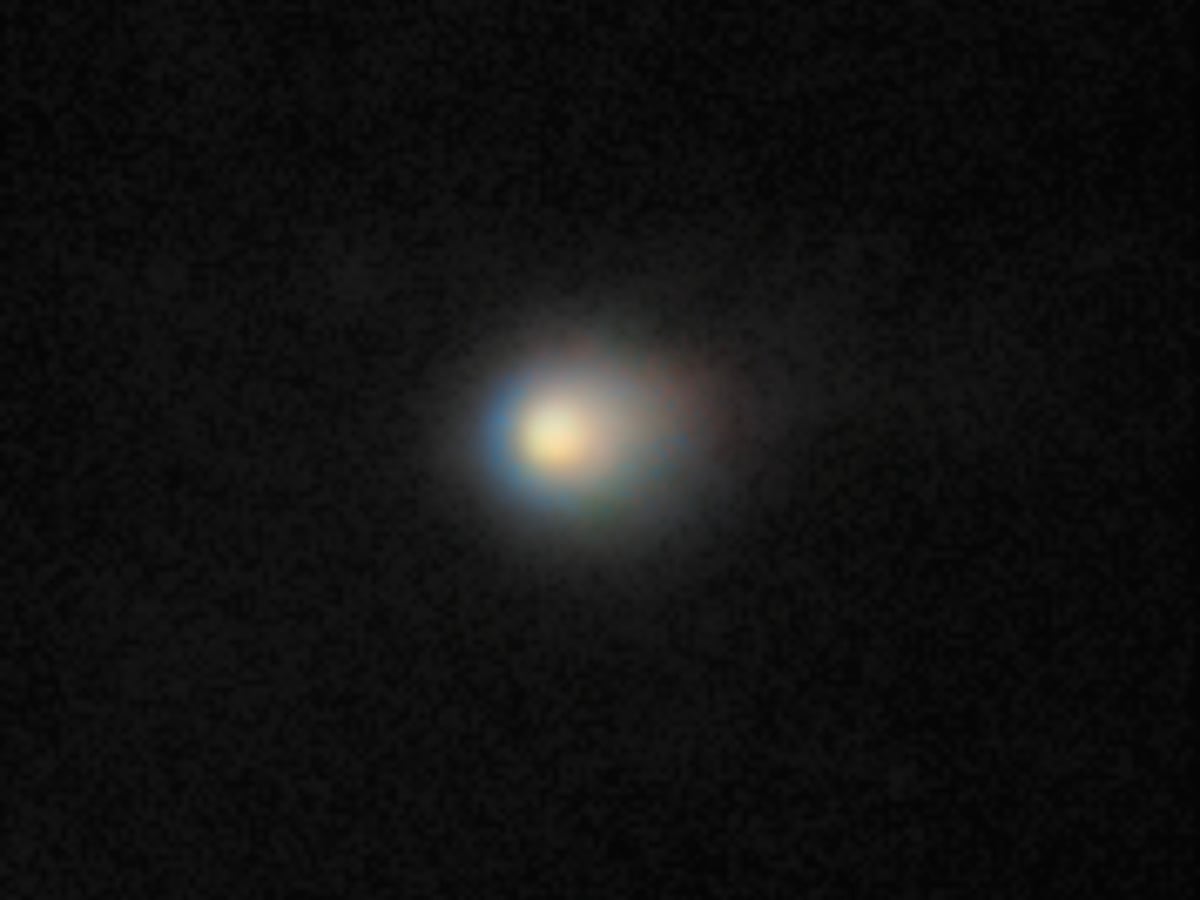
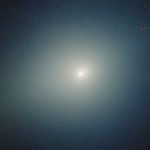
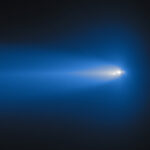
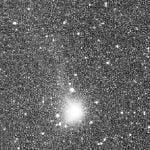
The images taken by Gemini North show a well-formed, compact coma. This is a cloud of ice and dust that forms when a comet heats up. As it gets closer to the Sun, it becomes more active. The GMOS instrument helped capture these fine details. It is mounted on the 8.1-meter Gemini North telescope located on Maunakea, Hawaii. These observations help astronomers measure the comet’s brightness, size, and structure. They also help plan future observations by space-based telescopes.
More interstellar visitors expected
This is only the third interstellar object ever confirmed. The first was 1I/‘Oumuamua in 2017. It puzzled astronomers with its strange shape and lack of a coma. The second was 2I/Borisov in 2019. It behaved more like a regular comet and gave astronomers valuable data. 3I/ATLAS appears to be the best target yet. It is larger, brighter, and more active than either of its predecessors. Astronomers expect that more interstellar objects will be discovered in the coming years. The Vera C. Rubin Observatory will scan the entire night sky. Its Legacy Survey of Space and Time (LSST) is expected to find many more such objects.
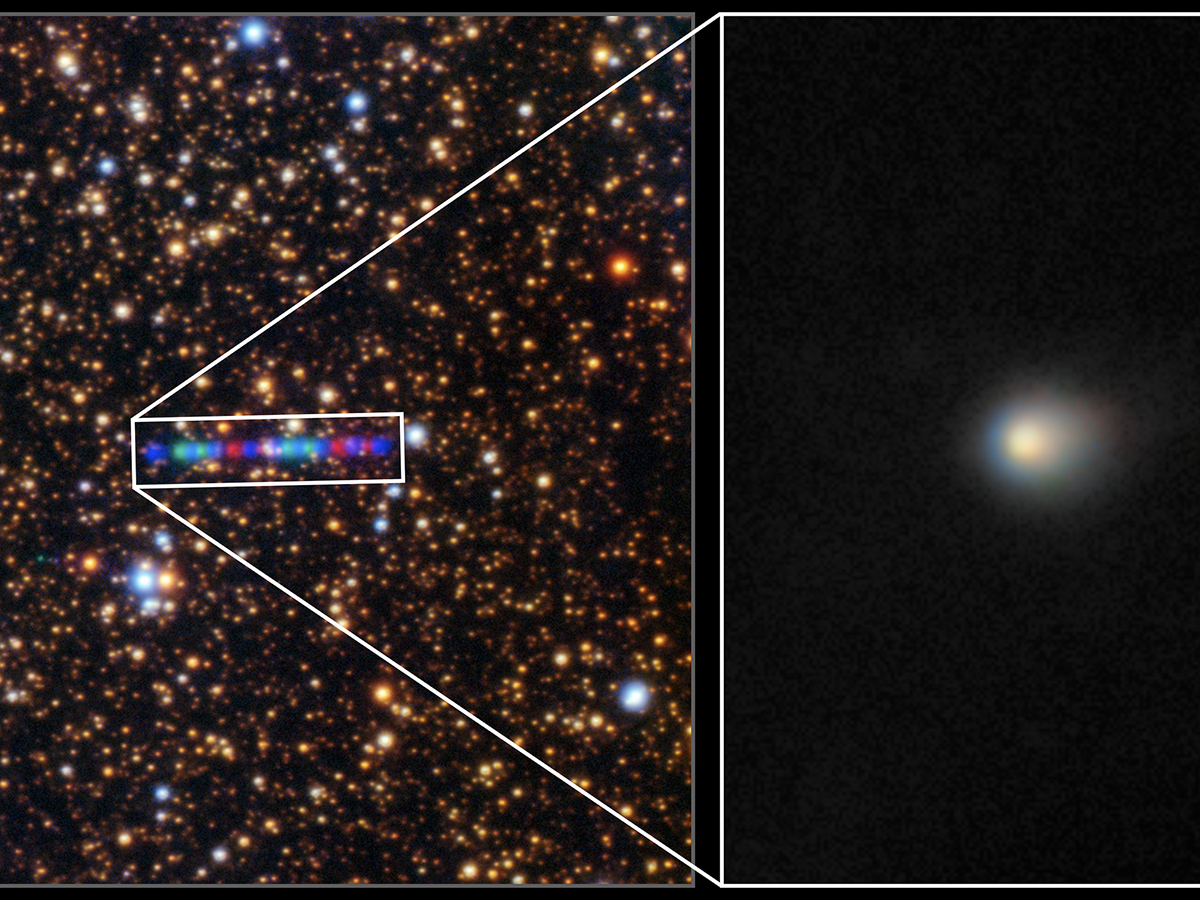
3I/ATLAS gives astronomers a rare chance to study something not from our Solar System. The discovery by the ATLAS survey and follow-up by Gemini North highlights the power of teamwork in astronomy. From its hyperbolic orbit to its active coma, 3I/ATLAS is truly unique. It is large, ancient, and mysterious. As it journeys through our Solar System, scientists will gather as much data as possible.
Clear skies!
See more from DIYPhotography.net on Google
Add DIYPhotography.net as a trusted source. This makes
our stories more likely to appear in your Google Search results.
 Add as a preferred source on Google

Soumyadeep Mukherjee
Soumyadeep Mukherjee is an award-winning astrophotographer from India. He has a doctorate degree in Linguistics. His work extends to the sub-genres of nightscape, deep sky, solar, lunar and optical phenomenon photography. He is also a photography educator and has conducted numerous workshops. His works have appeared in over 40 books & magazines including Astronomy, BBC Sky at Night, Sky & Telescope among others, and in various websites including National Geographic, NASA, Forbes. He was the first Indian to win “Astronomy Photographer of the Year” award in a major category.

Join the Discussion
DIYP Comment Policy
Be nice, be on-topic, no personal information or flames.
One response to “Gemini North Photographs the Interstellar Comet 3I/ATLAS”
Neat!