

















This AI turns your thoughts into images more accurately than ever
Aug 6, 2024
Dunja Đuđić Kalinin
Dunja Djudjic is a multi-talented artist based in Novi Sad, Serbia. With 15 years of experience as a photographer, she specializes in capturing the beauty of nature, travel, concerts, and fine art. In addition to her photography, Dunja also expresses her creativity through writing, embroidery, and jewelry making.
Share:

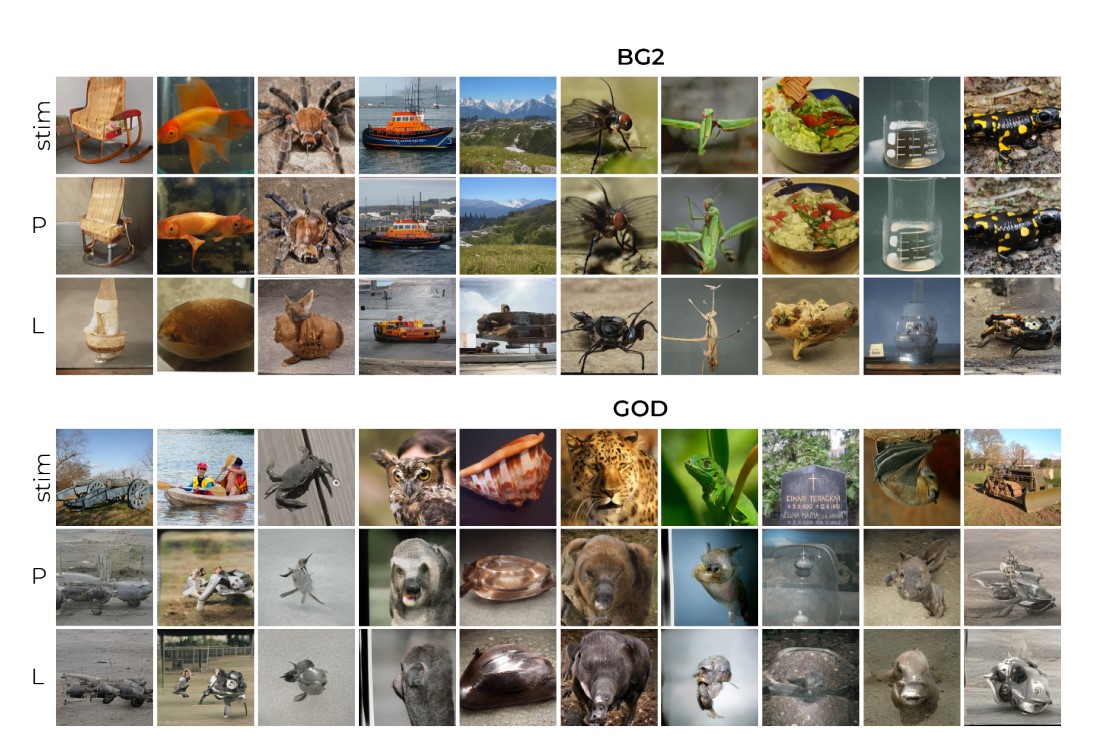
We’ve seen “mind-reading” AI tools that turn your brainwaves into images. And this technology just keeps getting better. Scientists at Radboud University in the Netherlands have made a significant leap forward in neuroscience and artificial intelligence by reconstructing images directly from brain activity more accurately than ever.
Using an advanced mind-reading AI system, the researchers were able to produce highly accurate representations of images based on both fMRI brain scans and direct recordings of brain activity from implanted electrodes in a monkey. This groundbreaking achievement marks a substantial step towards developing new treatments for vision loss.
The team conducted two separate studies. The first involved showing volunteers images of faces while capturing their brain activity using fMRI. The AI was then able to reconstruct images that closely resembled the originals. In the second study, the researchers analyzed existing data from a macaque monkey with implanted brain electrodes. The AI was able to recreate the original images with astonishing precision based on the recorded brain activity.
Key to the success of this research is the AI system’s ability to focus on specific brain regions. By learning which areas of the brain are most relevant for image reconstruction, the AI can produce remarkably accurate results.
Potential applications
The implications and potential uses are many. In the medical realm, it holds the potential to restore vision for those with visual impairments by stimulating the brain to create visual experiences. Additionally, understanding brain activity could provide invaluable insights into neurological disorders like Alzheimer’s, Parkinson’s, and epilepsy.
Beyond medicine, this technology could also revolutionize communication. Brain-computer interfaces could enable individuals with severe motor impairments to communicate through thought alone. Furthermore, enhanced human-computer interaction could become a reality, with devices controlled directly by the mind. It sounds like a Sci-Fi movie, doesn’t it?
However, the potential applications extend to even more areas. Neuromarketing could benefit from understanding consumer preferences and responses through brain activity, leading to more effective advertising and product development. If you ever felt like Instagram can even read your mind when offering ads – maybe in the future it actually will be able to.
Last but not least, in the entertainment realm, immersive gaming and virtual reality experiences could be enhanced by incorporating real-time brain responses.
“
The potential of PAMs extends far beyond their current application in neural decoding. Future studies should explore this further by integrating them across various domains and with other complex modalities where the queries cannot be predefined. Such research could revolutionize our understanding of how complex information is processed and interpreted,” the researchers concluded in the study.
[via Interesting Engineering]
See more from DIYPhotography.net on Google
Add DIYPhotography.net as a trusted source. This makes
our stories more likely to appear in your Google Search results.
 Add as a preferred source on Google

Dunja Đuđić Kalinin
Dunja Djudjic is a multi-talented artist based in Novi Sad, Serbia. With 15 years of experience as a photographer, she specializes in capturing the beauty of nature, travel, concerts, and fine art. In addition to her photography, Dunja also expresses her creativity through writing, embroidery, and jewelry making.
Related Posts
 Groundbreaking AI “reads your mind”: Turns thoughts into images with 75% accuracy
 History Of How Film & Camera Tech Evolved To Expose Different Skin Tones More Accurately
 This “mind-reading” AI turns your thoughts into photos
 “Reverse Prisma” AI turns paintings into photos and turns winter to summer
Join the Discussion
DIYP Comment Policy
Be nice, be on-topic, no personal information or flames.