





















Which lens is right for your Milky Way photos? Watch this 20-28mm f/1.4 shootout to find out
Aug 14, 2022
John Aldred
John Aldred is a photographer with over 25 years of experience in the portrait and commercial worlds. He is based in Scotland and has been an early adopter – and occasional beta tester – of almost every digital imaging technology in that time. As well as his creative visual work, John uses 3D printing, electronics and programming to create his own photography and filmmaking tools and consults for a number of brands across the industry.
Share:
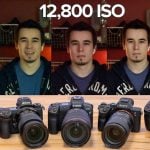
Last week, Sigma announced two new 20mm f/1.4 DG DN and 24mm f/1.4 DG DN Art series lenses. While the latter was also targeted towards photographers in general, both have a heavy lean toward astrophotography. But how well do they really perform? In this video, Nico at Nebula Photos puts seven 20-28mm prime lenses to the test including the two new Sigma lenses to try to figure that out.
As well as the two new Sigma lenses for mirrorless cameras, he also includes Sigma’s predecessors, designed for DSLRs, as well as others from Rokinon (Samyang) and Zeiss. It’s a pretty in-depth comparison, running a hair under 40 minutes, but includes a lot of detail in each lens with some fantastic comparisons of all seven lenses shot side-by-side using the Sigma fp L mirrorless camera.
All seven lenses are f/1.4 primes, all aimed primarily at the astrophotography market. Five of them are from Sigma – four of them are L mount and one is an adapted EF mount lens – with one each from Rokinon and Zeiss – both adapted EF mount lenses. It’s interesting to see the comparisons between them given the age and prices of each of them.
- Sigma 20mm f/1.4 DG DN – $899
- Sigma 20mm f/1.4 DG HSM – $899
- Sigma 24mm f/1.4 DG DN – $799
- Sigma 24mm f/1.4 DG HSM – $849
- Sigma 28mm f/1.4 DG HSM – $799
- Rokinon (Samyang) 24mm f/1.4 – $549
- Zeiss Milvus 25mm f/1.4 – $2,474
Note: It’s worth mentioning that some of the above lenses do occasionally pop up on sale with discounted prices, especially the Rokinon/Samyang and the older Sigma DG HSM lenses.
The two new ones from Sigma appear to be pretty clear winners over the two older 20mm and 24mm f/1.4 DG HSM Art series lenses. But what’s particularly surprising is how well the relatively inexpensive Rokinon/Samyang lens appeared in some tests and how shockingly badly the Zeiss performed in some, too. It’s a fascinating look and comparison between all seven lenses. If you’ve been looking to take the plunge on an ultra-wide angle, ultra-wide aperture lens for astrophotography, then it’s definitely worth having a watch.
Which of these lenses do you use for astrophotography? Do you have a preferred alternative to all of these lenses?
See more from DIYPhotography.net on Google
Add DIYPhotography.net as a trusted source. This makes
our stories more likely to appear in your Google Search results.
 Add as a preferred source on Google

John Aldred
John Aldred is a photographer with over 25 years of experience in the portrait and commercial worlds. He is based in Scotland and has been an early adopter – and occasional beta tester – of almost every digital imaging technology in that time. As well as his creative visual work, John uses 3D printing, electronics and programming to create his own photography and filmmaking tools and consults for a number of brands across the industry.


Join the Discussion
DIYP Comment Policy
Be nice, be on-topic, no personal information or flames.