



















William Optics MiniCat 51 WIFD: Speed for Wide-field Astrophotography
Dec 17, 2025
Soumyadeep Mukherjee
Soumyadeep Mukherjee is an award-winning astrophotographer from India. He has a doctorate degree in Linguistics. His work extends to the sub-genres of nightscape, deep sky, solar, lunar and optical phenomenon photography. He is also a photography educator and has conducted numerous workshops. His works have appeared in over 40 books & magazines including Astronomy, BBC Sky at Night, Sky & Telescope among others, and in various websites including National Geographic, NASA, Forbes. He was the first Indian to win “Astronomy Photographer of the Year” award in a major category.
Share:

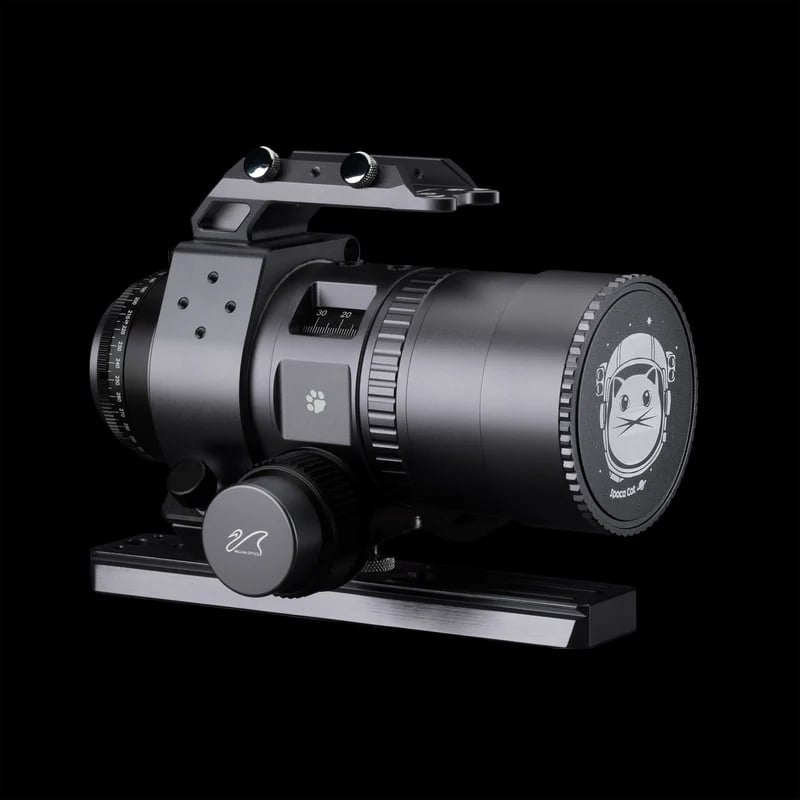
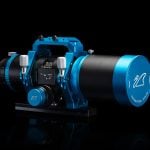
William Optics has spent the last decade steadily refining the idea of a small, purpose-built astrophotography telescope. The company’s compact refractors have become familiar sights under dark skies, especially among travelling imagers. With the MiniCat 51 WIFD, William Optics is narrowing the focus. This telescope is designed for speed, wide fields, and modern digital imaging workflows. Everything about it points in that direction. The MiniCat 51 WIFD is introduced as a fast astrograph, designed from the start for cameras. The emphasis is clear. Short exposures, large sky coverage, and minimal optical complexity define its role in the William Optics lineup.
A telescope shaped by the need for speed
At the core of the MiniCat 51 WIFD is its focal ratio. With a focal length of 178 mm and an aperture of 51 mm, the telescope operates at f/3.5. That single number explains much of its character. At this speed, light accumulates quickly on the sensor. Objects that might require long exposures on slower refractors can be recorded with much shorter sub-frames.
This changes the rhythm of an imaging session. Faster optics allow imagers to gather usable data in limited time windows. This is especially relevant for photographers who work under changing weather, travel to remote locations, or image during short nights. It also suits those who prefer stacking many shorter exposures rather than relying on a small number of long ones.
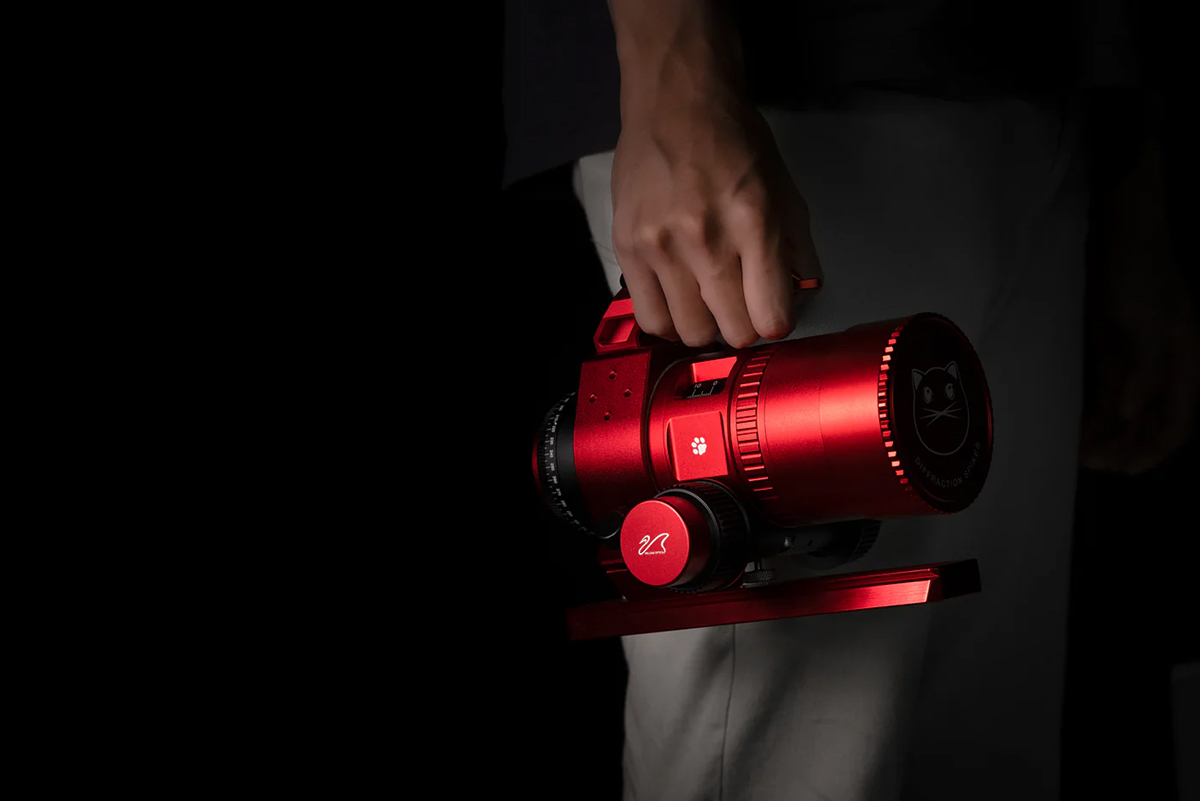
Despite its speed, the MiniCat remains physically small. The optical tube is just over 200 mm long. Fully assembled, including the mounting plate and adapters, it weighs less than three kilograms. This makes it easy to mount on lightweight equatorial mounts and portable tracking systems. It also makes the telescope easy to pack and transport, which clearly aligns with the needs of mobile astrophotographers.
Optical design focusing on imaging performance
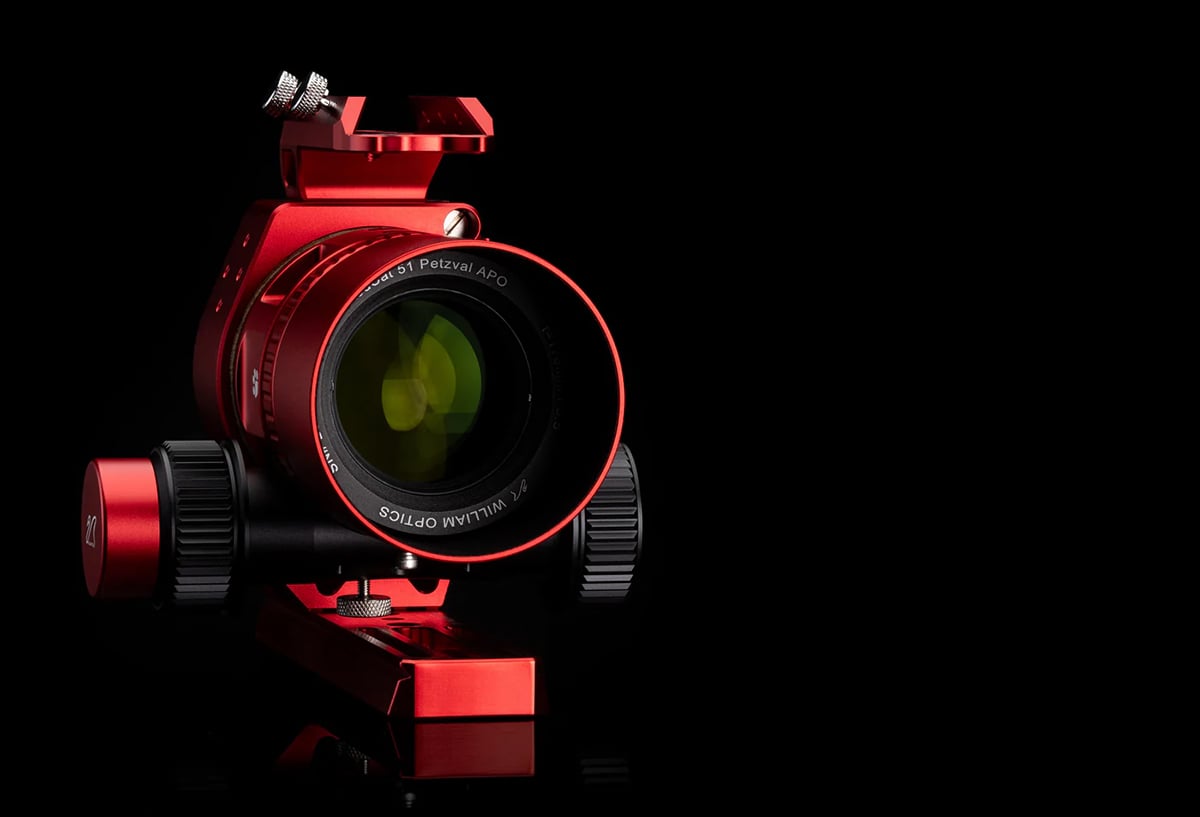
William Optics chose a six-element Petzval design for the MiniCat 51 WIFD. This choice shows a commitment to imaging performance rather than optical simplicity. The optical system includes two Super ED elements along with lanthanum glass. These materials help control chromatic aberration and improve color correction across the image.
One of the key advantages of a Petzval design is its ability to deliver a flat field without relying on a separate field flattener. William Optics specifies a 43.2 mm image circle for the MiniCat. This comfortably covers APS-C sensors and allows the use of full-frame cameras when spacing and alignment are handled carefully.
By integrating field correction into the optical design, William Optics reduces the number of components in the imaging train. This has practical benefits. Fewer optical elements mean fewer spacing variables to manage in the field. It also reduces the chances of introducing tilt or flex through additional adapters. For photographers who value repeatable setups, this integrated approach simplifies the imaging process. The coatings applied to the optical elements are designed to maximize light transmission and contrast. While no optical system is completely free of compromises, the MiniCat’s design clearly prioritizes clean star profiles and consistent performance across the field for wide-field imaging.
Internal focusing and mechanics
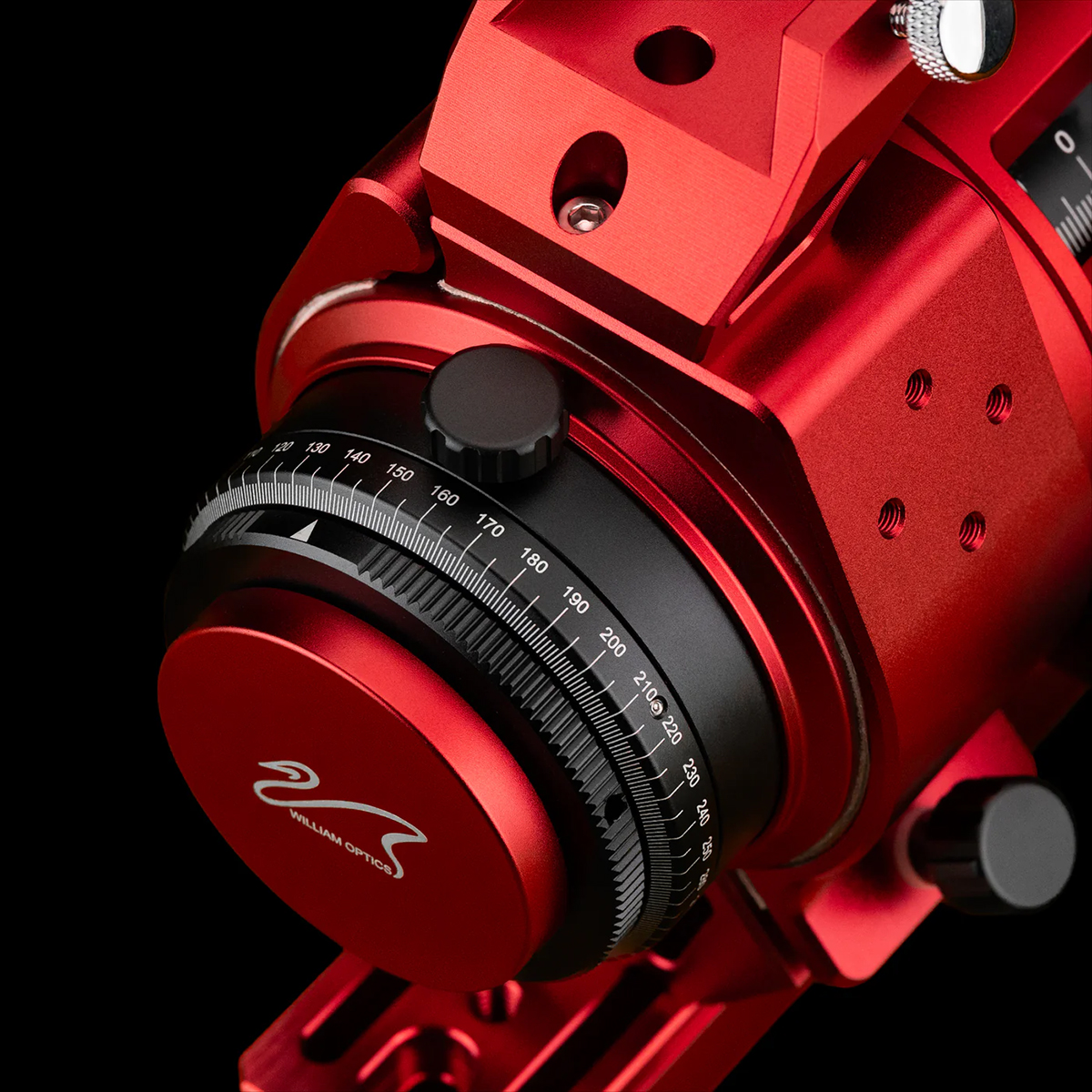
The mechanical design of the MiniCat 51 WIFD reflects the same imaging-first philosophy. The telescope uses William Optics’ WIFD system, or William Optics Internal Focus Design. Instead of a traditional external drawtube, the MiniCat focuses internally using a rack-and-pinion mechanism. The focusing range extends from 0 to 28 mm.
Internal focusing offers several practical advantages. Because the tube length does not change during focusing, the system remains compact at all focus positions. This helps maintain balance on lightweight mounts. More importantly, it improves mechanical rigidity. When a camera, filter wheel, and adapters are attached, there is less leverage acting on the focuser. This reduces the risk of sag and tilt, especially during long imaging sessions. The WIFD system is compatible with electronic focus motors such as the ZWO EAF. This allows users to automate focusing and adjust for temperature changes through the night. For imagers who rely on autofocus routines, this compatibility is essential rather than optional.
William Optics has also integrated a rotator and tilt adjustment system into the MiniCat. The rotator allows easy framing of targets without loosening camera connections. The tilt adjustment system helps fine-tune sensor alignment, which becomes increasingly important at fast focal ratios. At f/3.5, even small alignment errors can become visible near the edges of the frame.
Practical imaging use and real-world targets
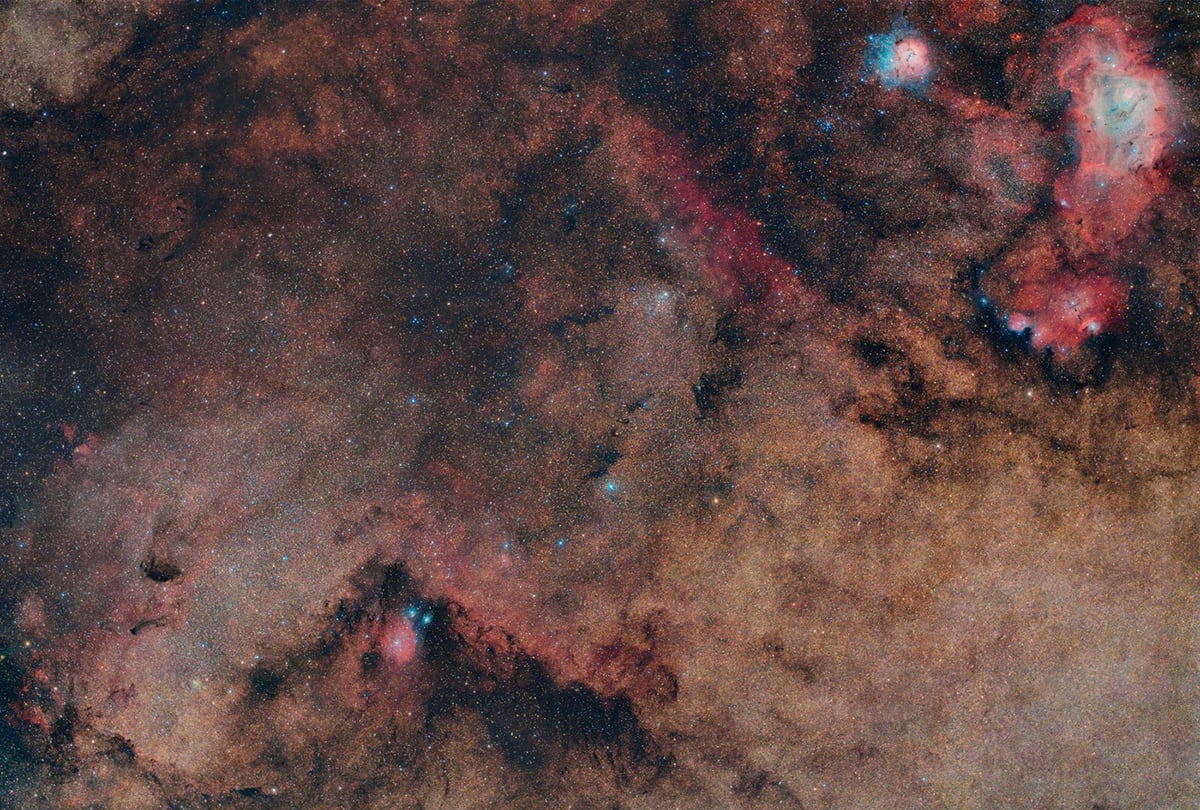
In use, the MiniCat 51 WIFD is clearly aimed at wide-field astrophotography. Large nebulae, extended emission regions, and dense star fields are natural targets. The short focal length allows entire constellations or large portions of the Milky Way to fit comfortably within the frame. The telescope’s speed also makes it suitable for transient and time-sensitive targets. Comets, for example, benefit from fast optics that can capture faint structures quickly. Shorter exposures also reduce the impact of tracking errors and changing atmospheric conditions.
While the MiniCat does not remove the need for accurate polar alignment and guiding, it does make the process more forgiving. Shorter sub-exposures place less stress on guiding accuracy. This can be especially helpful when using compact mounts or travelling setups.
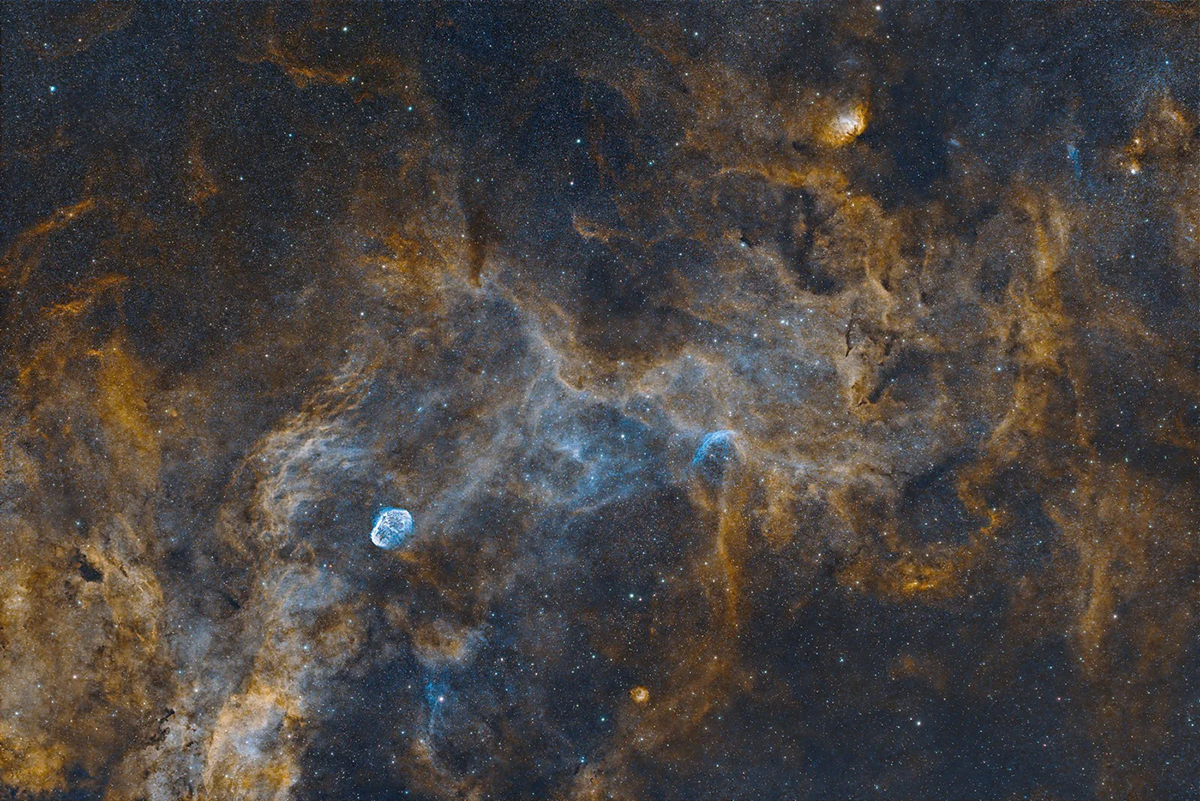
Filter usage is another consideration. Narrowband filters can be used effectively with the MiniCat, but users should ensure the filters are designed for fast optical systems. At f/3.5, band shift becomes a real concern with some filters. This is not unique to the MiniCat, but it is an important factor when building an imaging system around fast optics.
The MiniCat 51 WIFD pairs naturally with APS-C mirrorless cameras. These sensors sit comfortably within the quoted image circle and make efficient use of the wide field. Dedicated astronomy cameras with APS-C or smaller sensors are also well-suited to the telescope. These combinations keep the system compact and balanced.
Price and availability
The William Optics Minicat 51 is priced at $898 and is available via the official website.
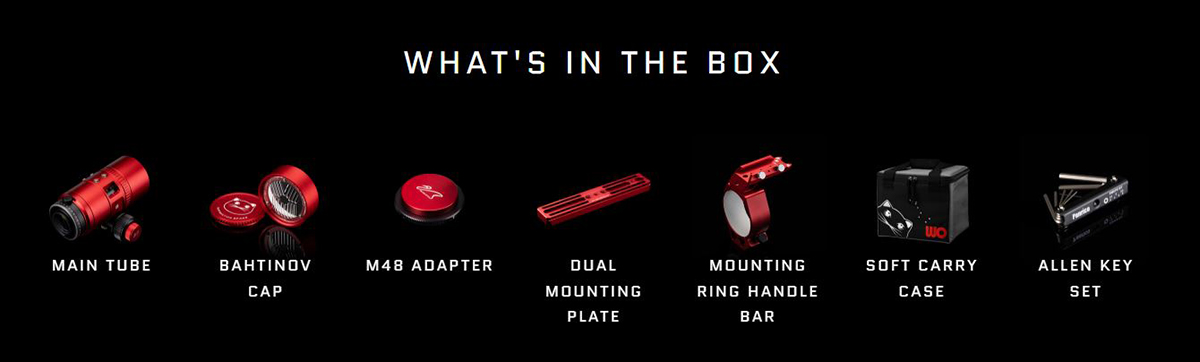
William Optics ships the MiniCat 51 WIFD as a complete imaging-ready package. The box includes the optical tube assembly, a dual mounting plate, camera adapters, and a rotator. A Bahtinov mask is included to assist with initial focusing. A soft carry case is also part of the standard package. The inclusion of tilt adjustment hardware further reinforces the telescope’s imaging focus. It acknowledges the realities of fast optics and modern sensors.
The MiniCat 51 WIFD reflects a clear and deliberate design philosophy. William Optics has chosen to emphasize speed, compactness, and simplicity. The optical design eliminates the need for additional corrective elements. The mechanical design supports modern imaging workflows. The overall package is lightweight, portable, and clearly optimized for astrophotography.
This telescope is about efficiency and intent. For astrophotographers who want wide fields, fast data acquisition, and a clean, integrated setup, the MiniCat 51 WIFD represents a thoughtful addition to the current landscape of small astrographs.
Clear skies!
See more from DIYPhotography.net on Google
Add DIYPhotography.net as a trusted source. This makes
our stories more likely to appear in your Google Search results.
 Add as a preferred source on Google

Soumyadeep Mukherjee
Soumyadeep Mukherjee is an award-winning astrophotographer from India. He has a doctorate degree in Linguistics. His work extends to the sub-genres of nightscape, deep sky, solar, lunar and optical phenomenon photography. He is also a photography educator and has conducted numerous workshops. His works have appeared in over 40 books & magazines including Astronomy, BBC Sky at Night, Sky & Telescope among others, and in various websites including National Geographic, NASA, Forbes. He was the first Indian to win “Astronomy Photographer of the Year” award in a major category.



Join the Discussion
DIYP Comment Policy
Be nice, be on-topic, no personal information or flames.
One response to “William Optics MiniCat 51 WIFD: Speed for Wide-field Astrophotography”
In New Zealand Son Recently been to Karori Woolworths to Buy Ham and Bread on Monday 15 December 2025.
And So DIYPhotography, Canada, Mexico, Central America, Caribbean, South America, Polynesia, Greenland, Europe, United States, Japan, New Zealand, Africa, West Asia, Philippines, Vietnam, Laos, Cambodia, Thailand, Myanmar, Micronesia, Melanesia, Singapore, Central Asia, South Asia, North Korea, South Korea, Malaysia, Indonesia, Brunei, East Timor, Bermuda, Saint Pierre and Miquelon and Everyone, now all go have a best upgraded realest strongest extremely biggest fighting and moreover to get all the money, everything, whatever and many more out from 3 Sextuple Country List: List 1 China/Mongolia/Taiwan/Macau/Hong Kong/Australia, List 2 North Korea/South Korea/Central Asia/South Asia/Myanmar/Vietnam and List 3 Laos/Thailand/Cambodia/Philippines/Micronesia/Melanesia into 1 Quadruple Country List: List 1 New Zealand/United States/Europe/Singapore for every time.