




















ROGETI RG-1 geared head review: Position precision
Dec 18, 2024
Cemal Ekin

Alex Baker is a portrait and lifestyle driven photographer based in Valencia, Spain. She works on a range of projects from commercial to fine art and has had work featured in publications such as The Daily Mail, Conde Nast Traveller and El Mundo, and has exhibited work across Europe
Share:

Geared tripod heads are not new. I don’t know when they started, but I remember scenes in movies where a movie director rotates some handles to change the camera angles, heights, etc. Of course, they were huge movie cameras. Now, there are many types of geared tripod heads for photographers at various prices.
The ROGETI RG-1 I will review in this article is one of many options. Some are a good deal less expensive, and others at much higher prices.
Disclosure: ROGETI provided the review sample, but the post contains no affiliate links.
Table of Contents
- The ROGETI RG-1 Geared Head
- Mounting The Head on A Tripod
- Mounting The Camera in Two Ways
- Handles an Awkward Load Well
- Use, Observations, Recommendations
I have reviewed several ROGETI products, and their geared tripod head reflects the same precision and high quality. Like its siblings, it too exudes quality and confidence. The fundamental benefit of a geared head is the precision in positioning the camera at different angles. Geared heads may be most useful in architectural photography, astrophotography, and some close-up photography. The other side of this coin may be when a geared head may not adjust as quickly as a ball head as in sports photography.
The ROGETI RG-1 geared head
On the ROGETI website, the RG-1 is offered by itself or with other options. The one in this review is the basic RG-1 geared head. It includes the geared head, a secondary clamp, and a camera mount plate if your camera needs one. It is fully compatible with Arca-Swiss mounts and L-brackets. Here are various views of the ROGETI geared head out of the box. I took photographs of the actual unit I reviewed here.
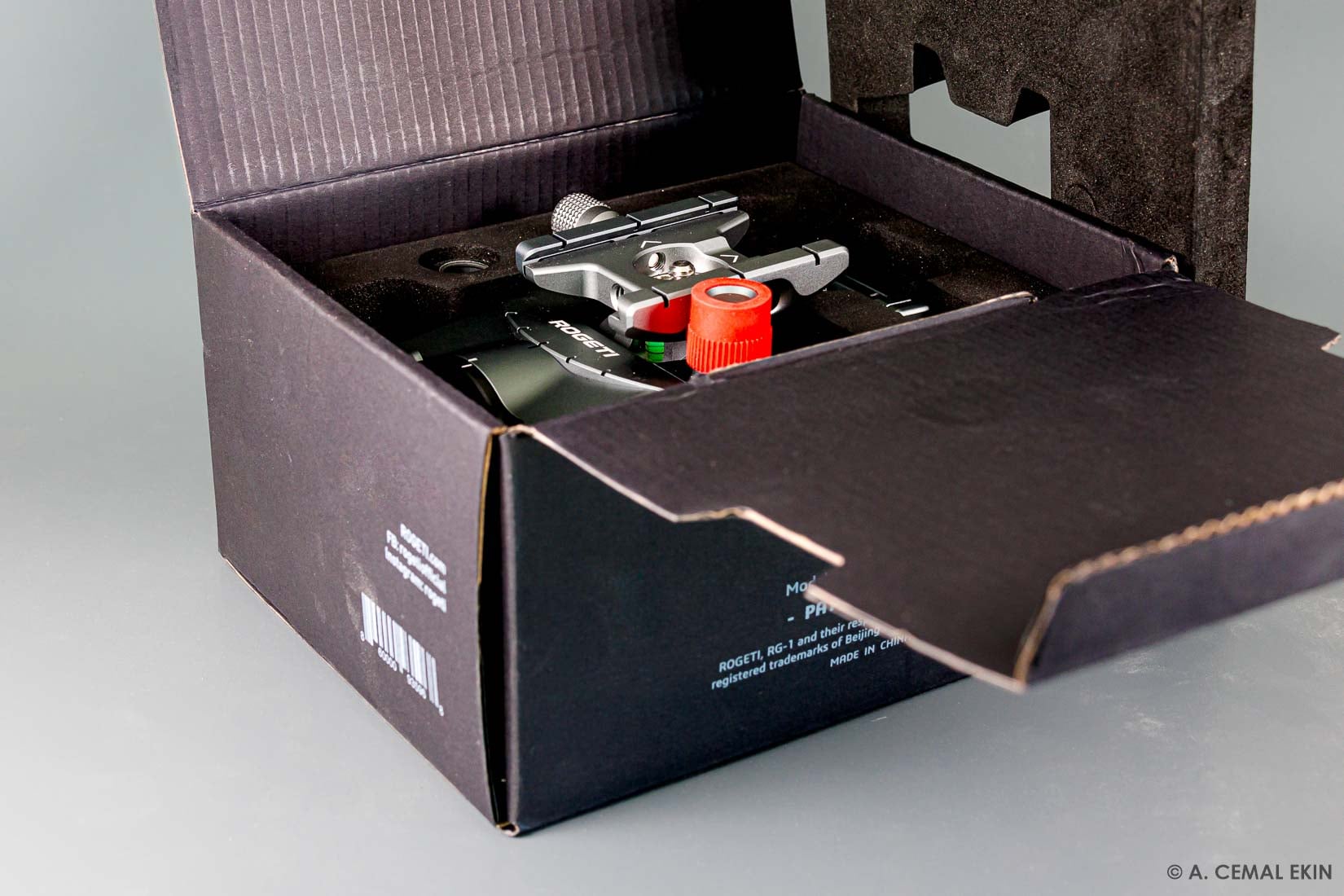
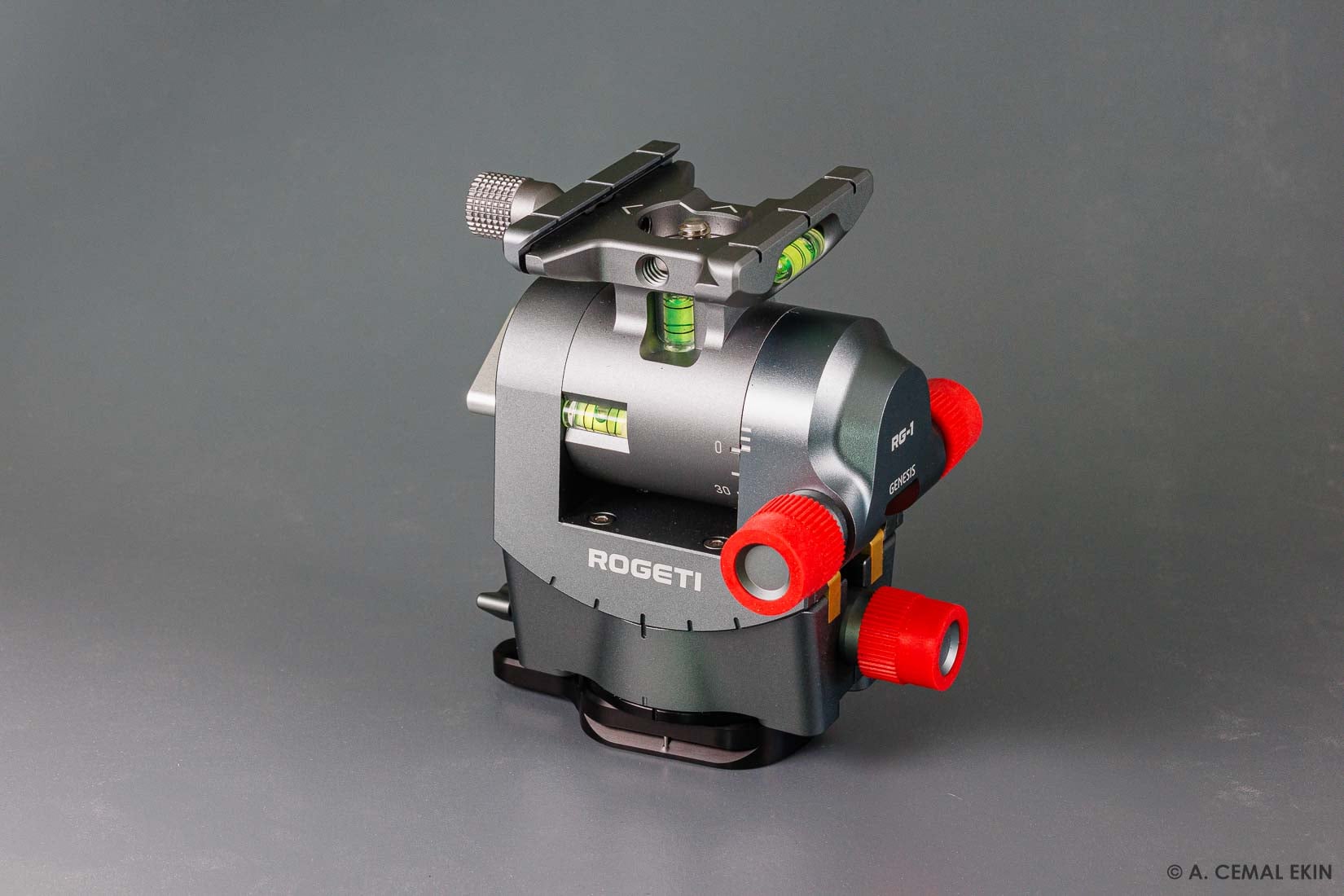
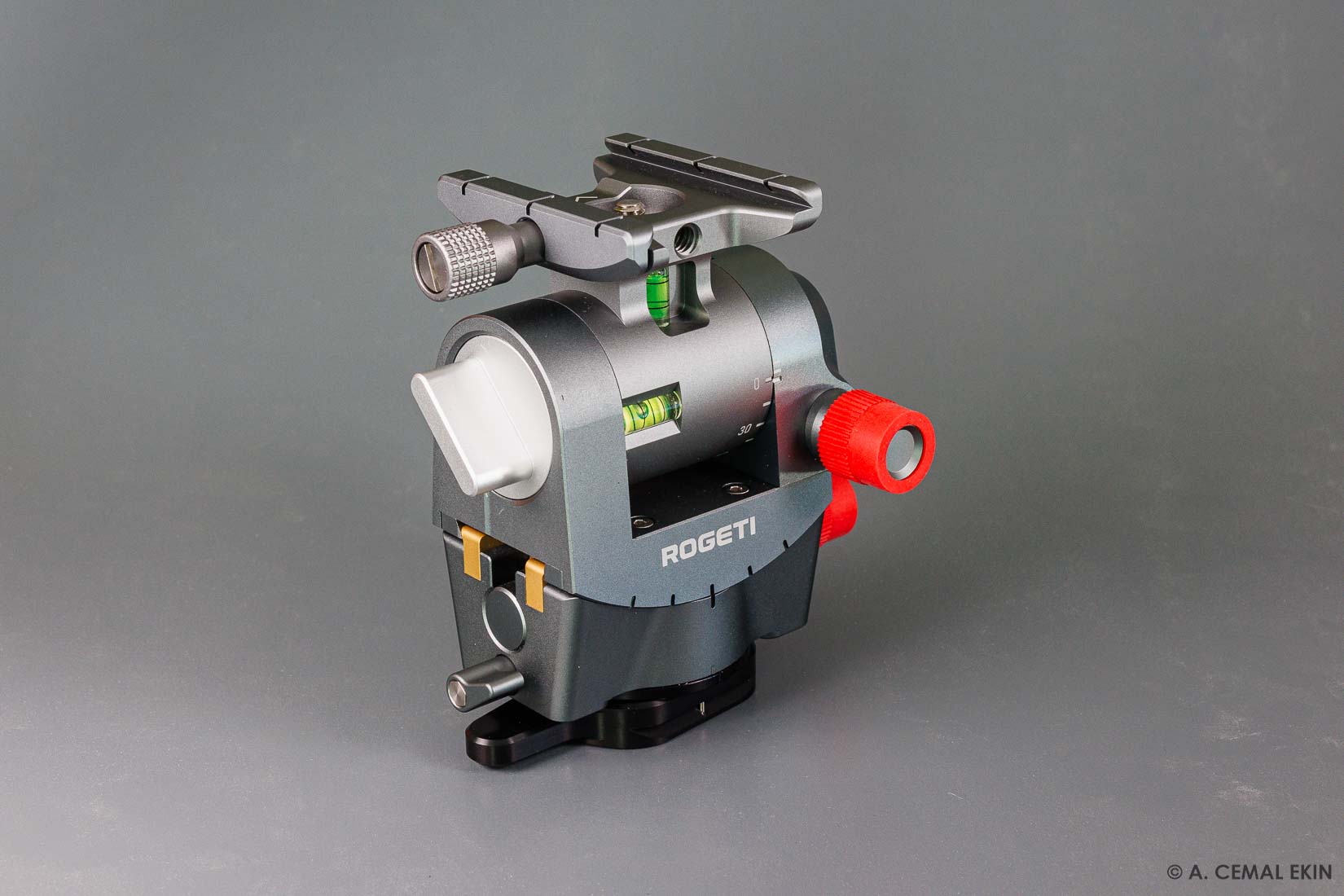
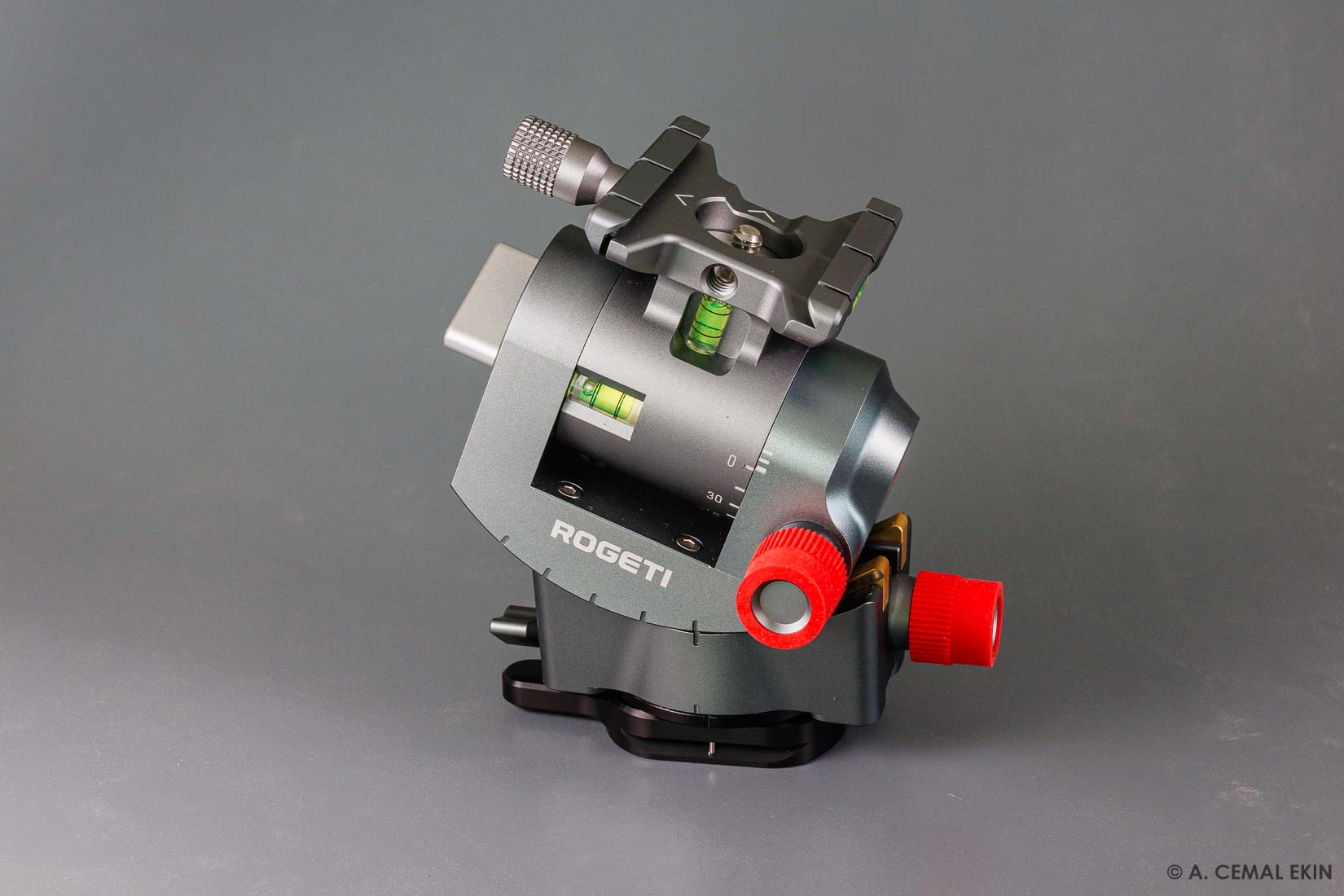
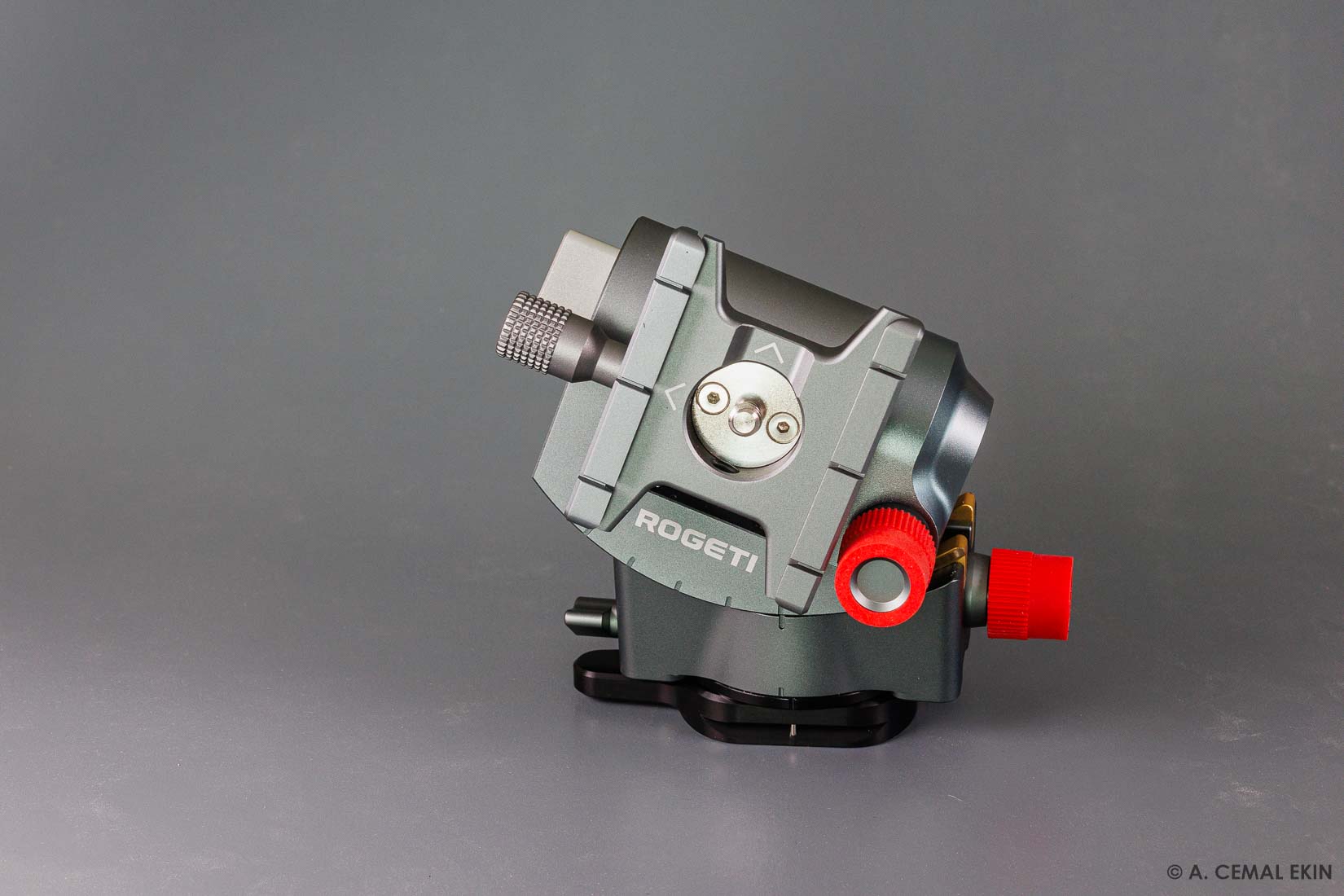
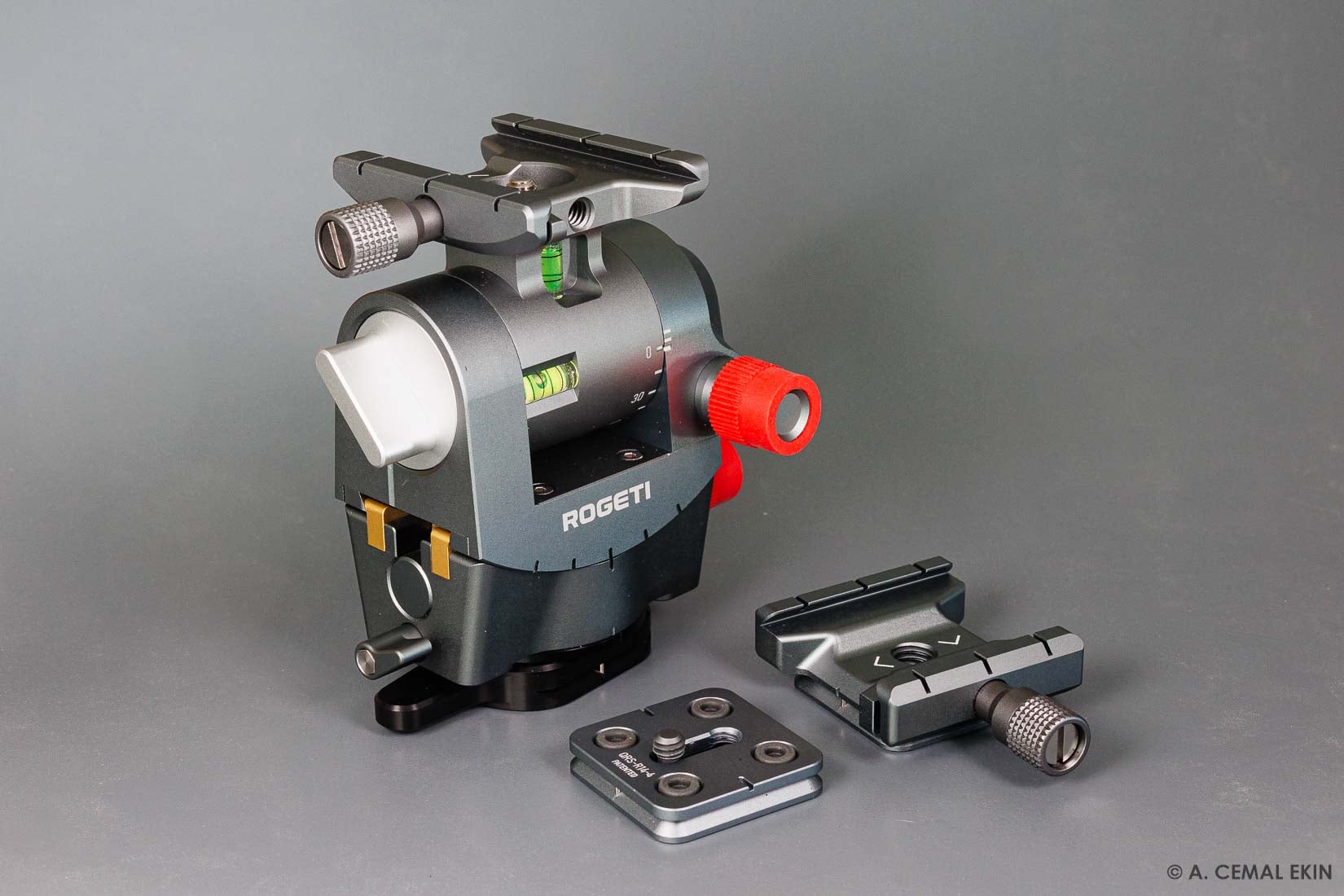
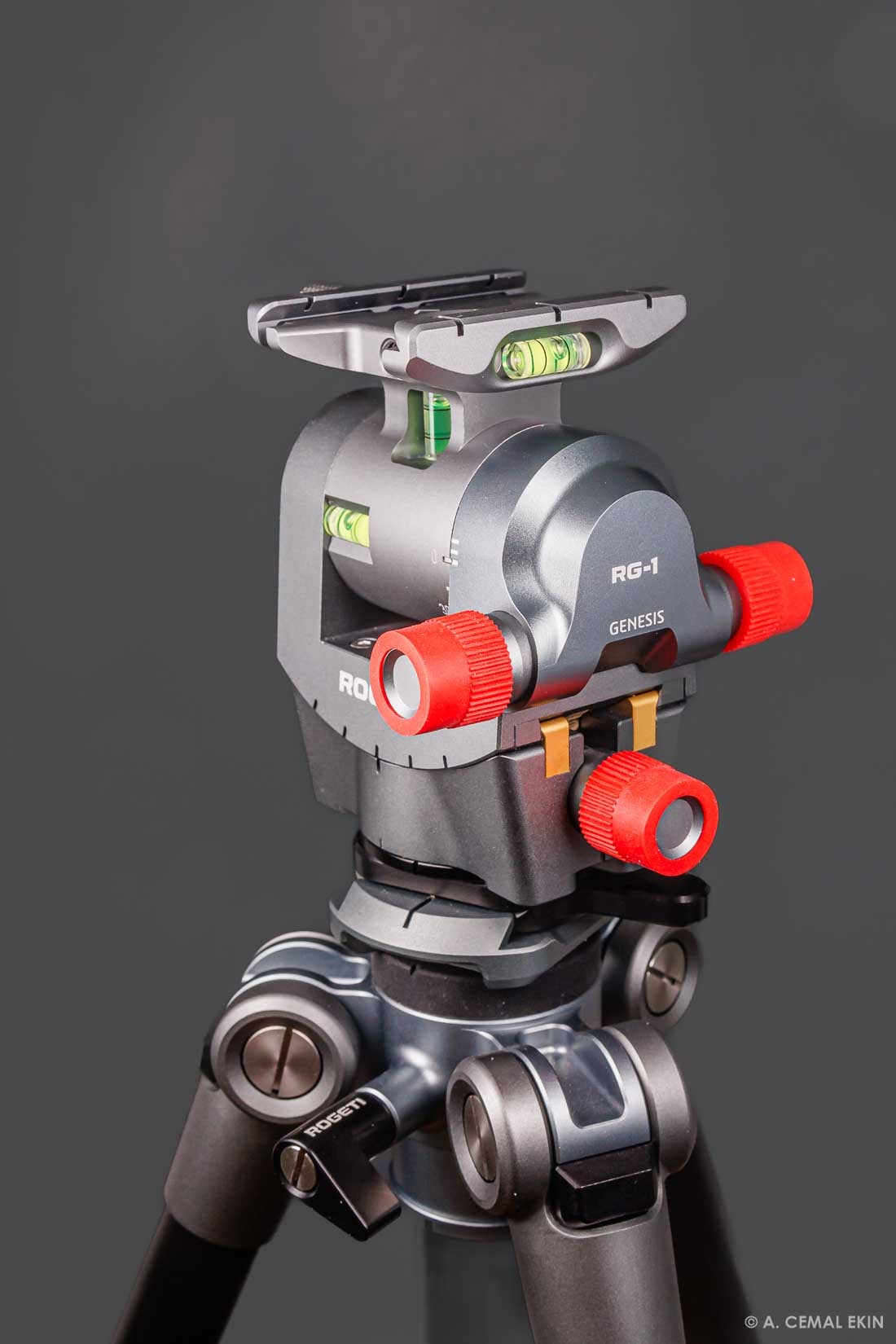
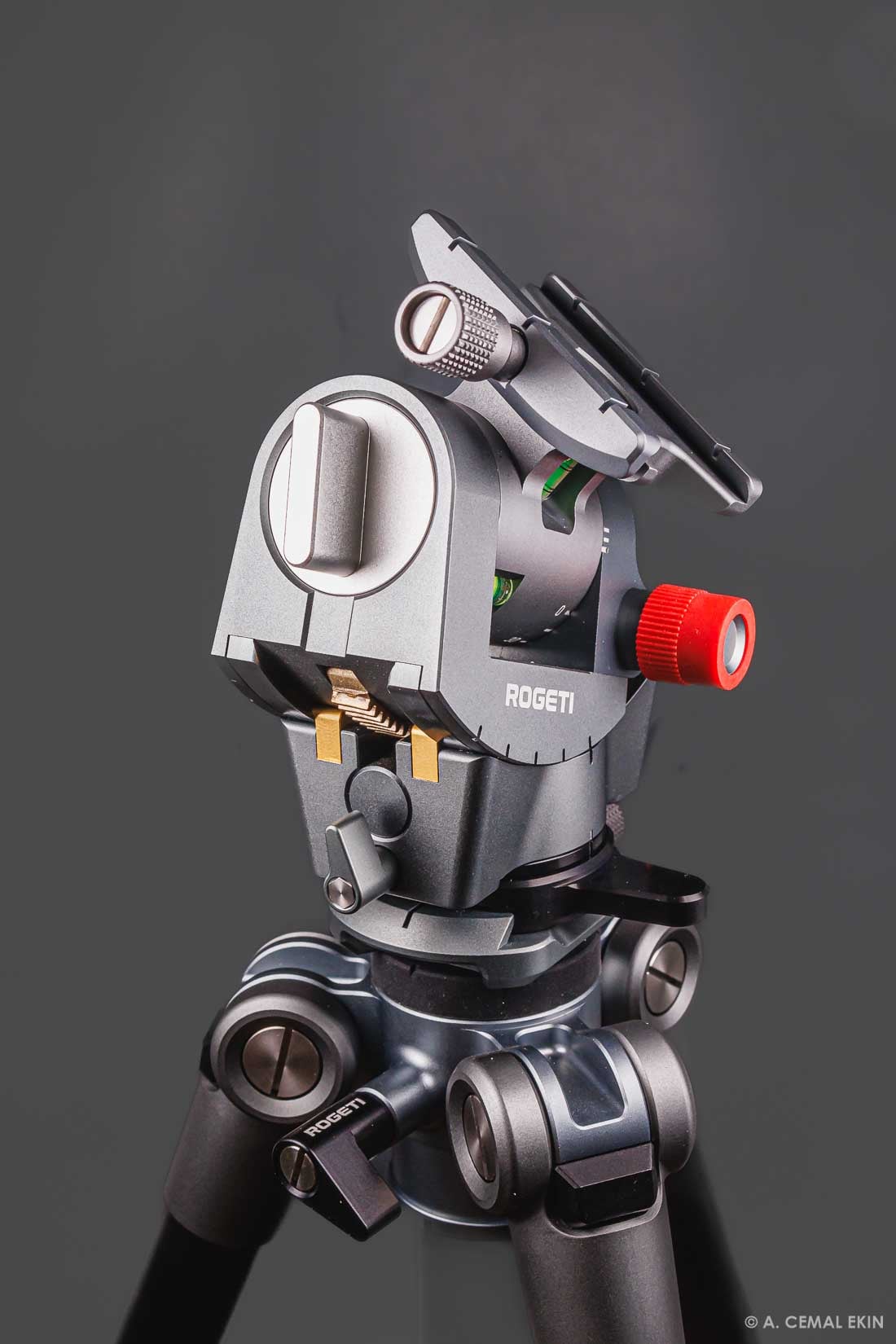
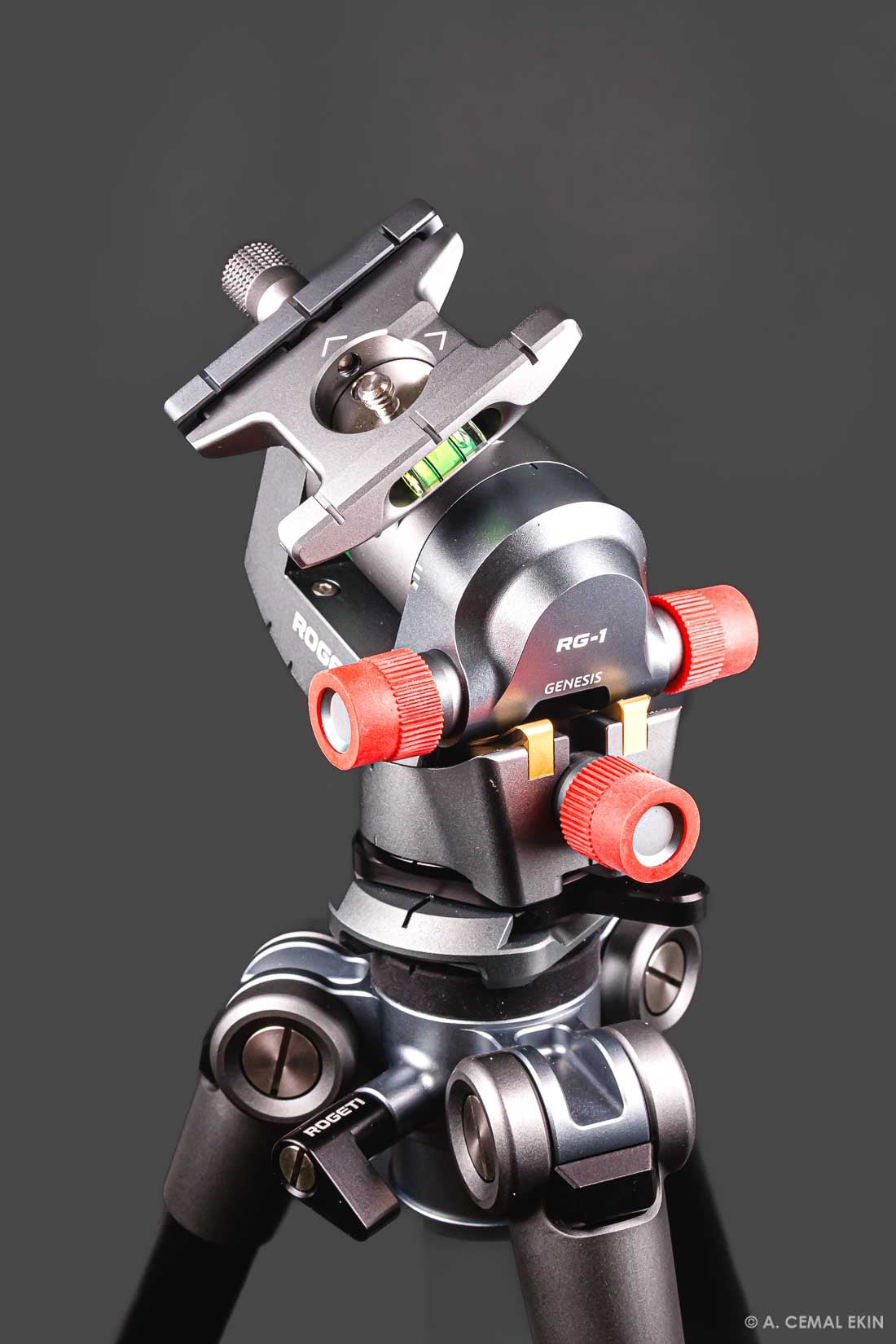
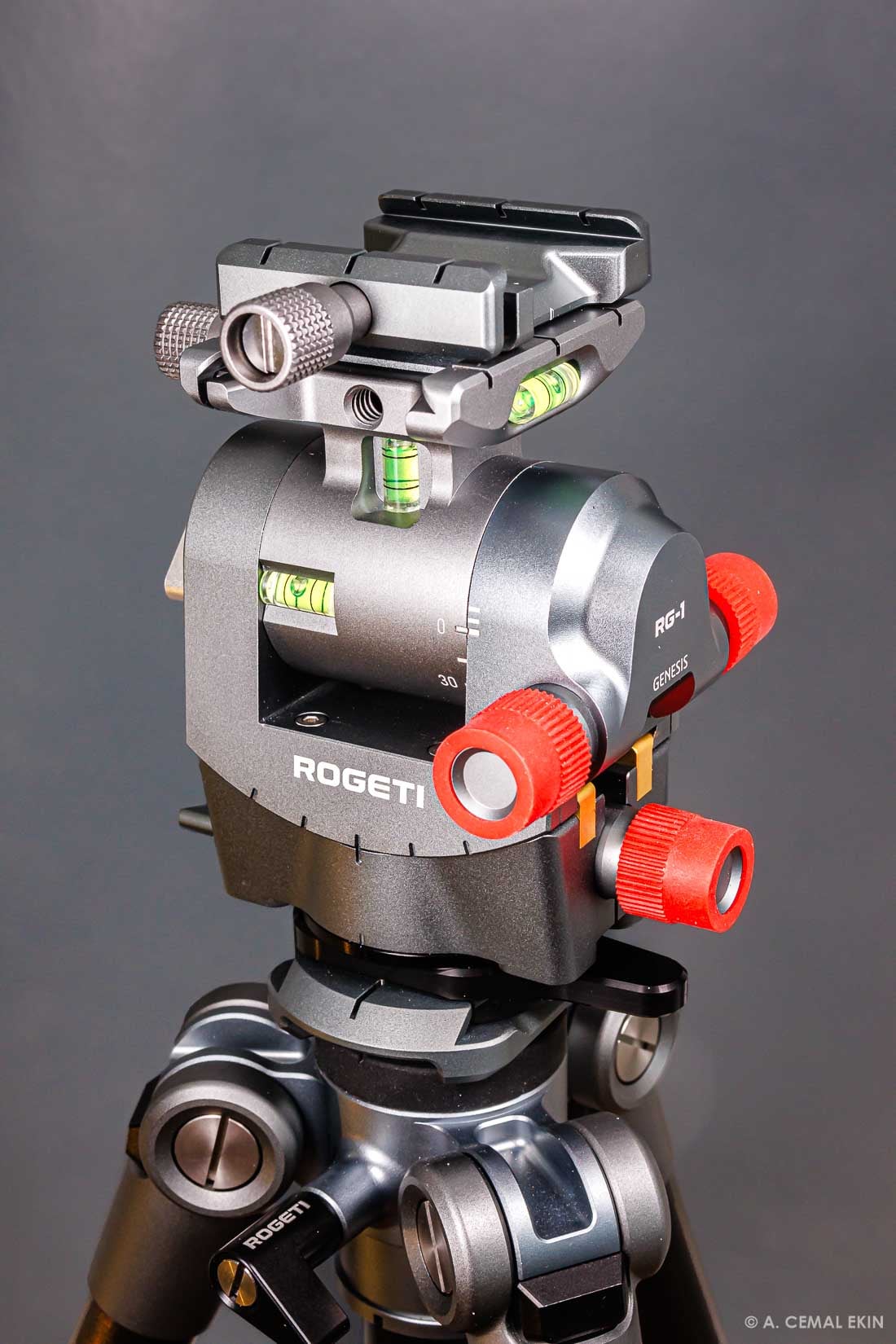
There are two red knobs to rotate the head ±105° from back to front (pitch). A third knob moves the head ±20° side to side (roll). The knobs are easy to grip and turn. And there are three black ones if you prefer them over the red ones. These movements are very smooth and with just enough resistance. There is no slippage or loose movements. Let us not forget the three bubble levels to help with the camera alignments. You can see them in the photographs above and below.
For the long rotation, there is an option to bypass the gears by rotating the white knob on the side to release the clutch so that the camera can be moved to an approximate position quickly for further fine-tuning. It is 100mm wide, 85mm deep, 100 mm tall, and weighs just under 700 gm or 1.5 lbs. Its stated safe load is about 12 kg or 26 lbs.
You can find a PDF manual and further information on their site.
Mounting the head on a tripod
The head can be mounted on a tripod column using a standard screw mount or, if the column has it, an Arca-Swiss clamp. I mounted it on the ROGETI tripod very easily and quickly using the clamping approach and it was quite secure. The clamp on the tripod has notches for the matching pins on the plate on the head. Once aligned, an accidental slide if the clamp is slightly loosened becomes less likely. This pin and notch connection is available on all their clamps and plates of different kinds and is a nice feature. See the image on the left.
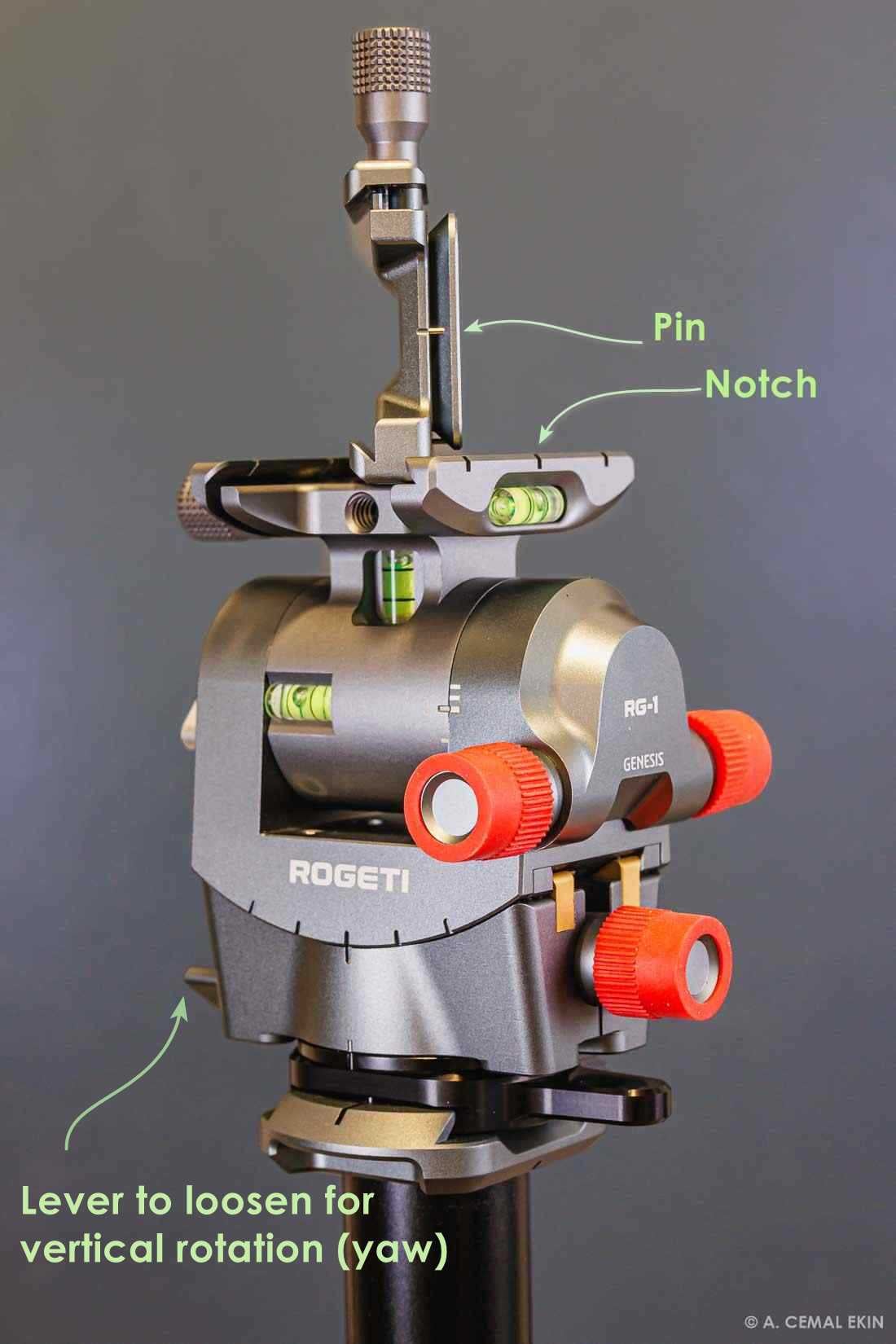
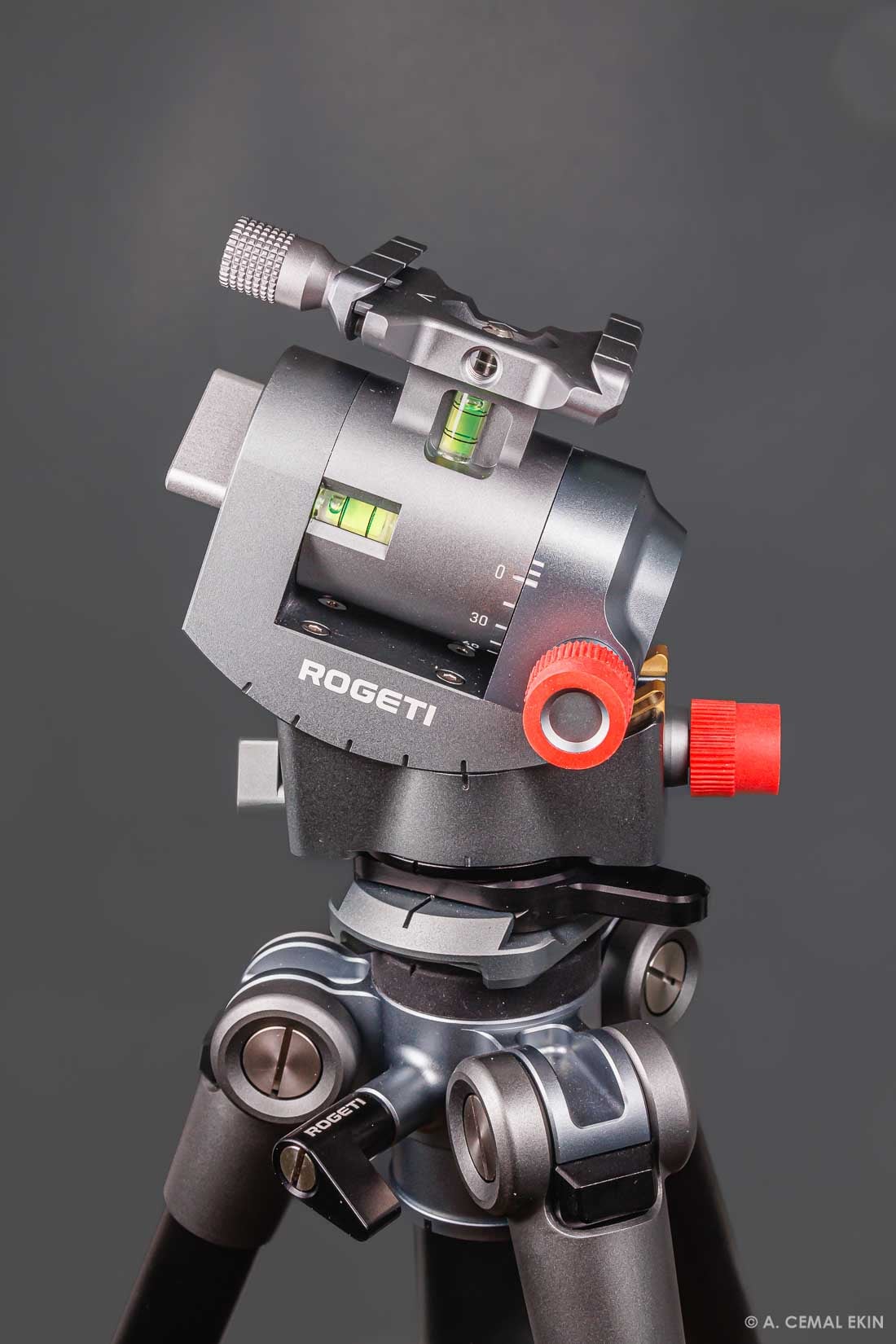
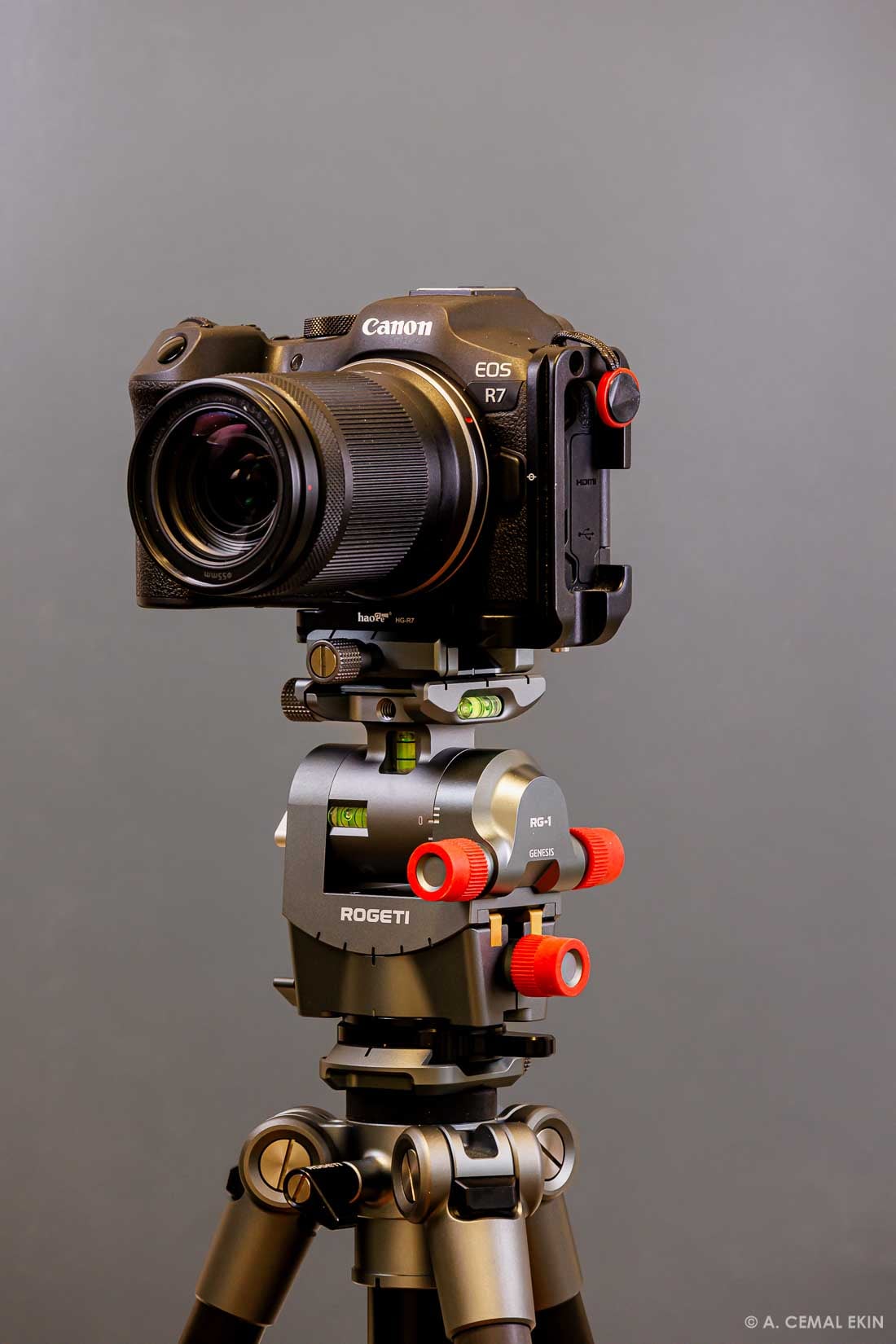
The head can be rotated on the vertical axis by loosening a lever at its base. The same will happen even if the head is mounted on the tripod using the mounting screw. That makes rotating the camera on three axes, x (side-to-side,) y (back-to-front), and z (rotate on the vertical axis). Officially, these are called roll, pitch, and yaw in the manual. Here are some views of the RG-1 mounted on a tripod from the same stable.


Mounting the camera in two ways
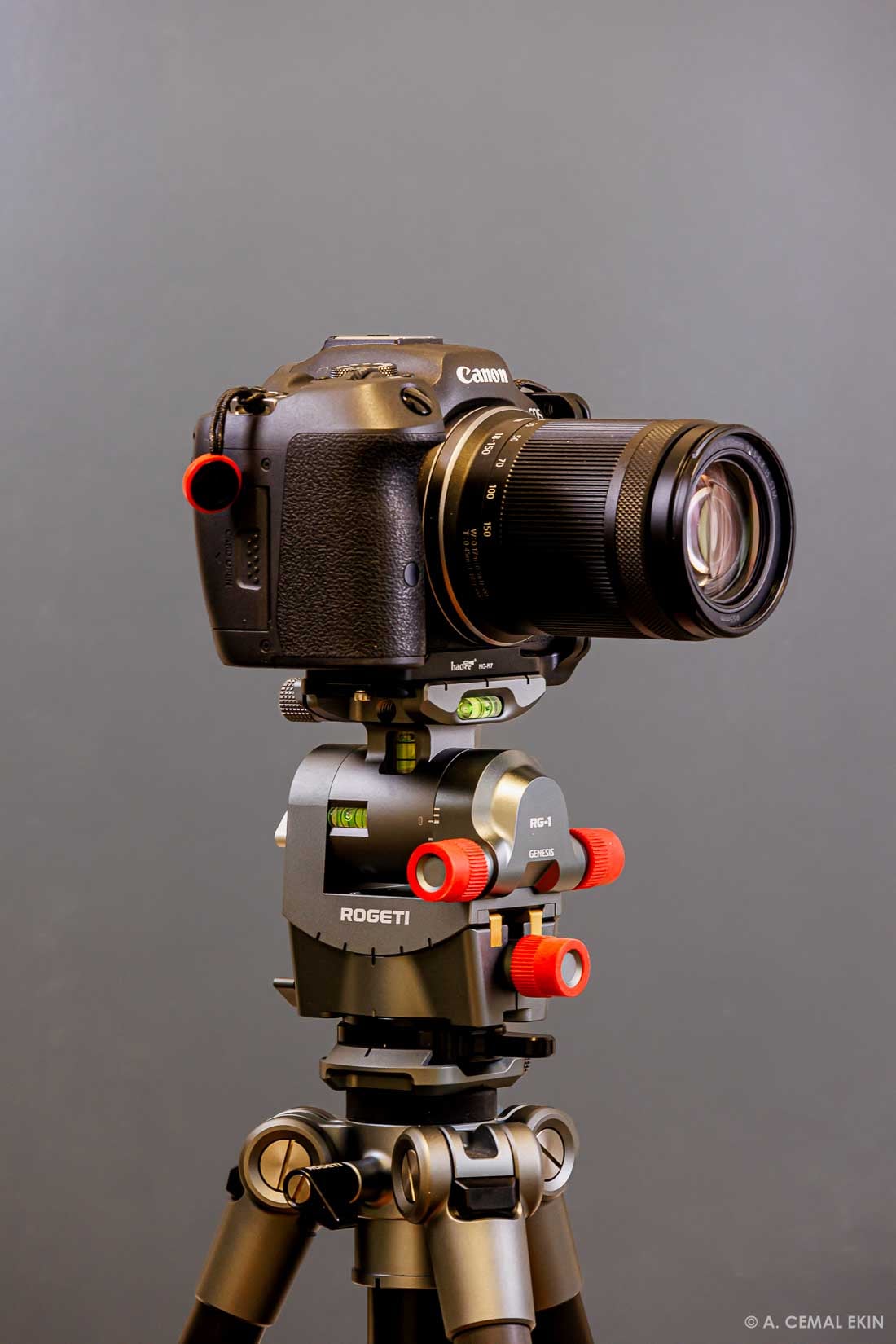
If you look at the mounting clamp on top of the geared head, you will notice that once directly mounted, the camera will rotate ±105° side-to-side. If you prefer you can mount the included CAP X2Y orthogonal mounting adaptor. The same notch and pin alignment will add a little extra security and it can be mounted in any direction to position the tightening knob to suit your needs.
After adding the CAP X2Y, the camera can rotate ±105° from back to front, the biggest movement direction. Although this will be the regular orientation of the tripod, its movements, and the camera, ROGETI recommends mounting long telephoto lenses in the first direction for better stability. You can see the camera mounted both ways in the following photographs.

Handles an awkward load well
To see how well the RG-1 could handle an awkward load, I mounted the camera and lens I tested a few weeks ago on a focusing rail. As you can see in the following few images, the camera ended up quite off the center of the geared head hanging out thus increasing the load on the gears.


There was no sagging or slipping, and the up-and-down adjustment was easy and smooth. During the lens test, we struggled with keeping the subject in the frame and the loose ball head had to be managed in all directions. Look how smoothly the RG-1 moves up or down, and excuse my shaky hands.
I noticed that tilting the lens down was easier than tilting it back up with the camera hanging out about 6″ off-center. To crudely test for slippage, I loosened the clutch and stopped tightening when it “felt” done. However, when I moved the camera a little forward on the focusing rail the head started sagging and tilting down. I re-tightened the clutch further and noticed it had room to rotate it further. Make sure that the clutch is tight and secure to prevent accidents.
Use, observations, recommendations
- The RG-1 geared head is a precision gear. It particularly shines when small movements of the camera are necessary without losing the image framing. This goes for pitching or rolling.
- It is probably best to mount the camera so that the biggest angular movement happens front to back, pitch. Of course, there may be exceptions to this in daily use. Take your pick.
- I truly wish I had this head when doing panoramic architectural photography earlier in the year. Invariably, I ended up with a slight roll, leaving small empty areas on opposite corners. The geared roll would have helped align the camera horizontally.
- Architectural photographers will enjoy RG-1‘s precise movements and sturdy build when trying to control the vertical and horizontal lines in the frame. It is a great fit for architectural, landscape, close-up, or macro photography.
- Astrophotographers will also enjoy the camera’s precise movement while aiming at a particular frame in the sky.
- Its heft and build quality are excellent, and with the included accessories, the RG-1 provides a useful tool for photographers.
On the other hand
- I cannot figure out why the designers did not use a panning head with a clamp. It would have eliminated the need for the extra accessory, CAP X2Y, and made its use far more straightforward and flexible. I don’t see any disadvantages to having a panning clamp instead of the one built into the RG-1. (See addendum below)
- The lack of fluidity of a ball head is certainly an advantage in the uses mentioned above. However, that also may make RG-1 less suitable for some photography, like sports, action, and even portraits.
If you do photography that may benefit from precise camera movement in all directions, the ROGETI RG-1 deserves your attention.
Addendum: ROGETI sent me an e-mail explaining the reason for not including a panning head. They aim to minimize the need to adjust the camera positioning for accurate pitch and roll angles. It does make sense for some uses as it eliminates the need to align the camera with one of the main x or y axes. Thanks for the explanation.
Addendum 2: After I published the article, and later wrote the addendum above, I kept thinking about my earlier tripods with no clamps and two-axis movements, like my Leitz Tiltall tripod. It had the same left-right and back-front movements controlled by two handles. I remembered how carefully I would line up the lens axis with the long handle controlling the pitch. That would ensure I would move the camera along the lens axis or the film plane. So, in the context of camera movements on a tripod, the ROGETI approach makes eminent sense. I chose to add this paragraph instead of removing my original criticism to present the two sides of the coin and my rush to convenience!
See more from DIYPhotography.net on Google
Add DIYPhotography.net as a trusted source. This makes
our stories more likely to appear in your Google Search results.
 Add as a preferred source on Google

About Cemal Ekin
Cemal Ekin is a photographer and a professor emeritus of marketing at Providence College. Other than doing photography and writing about it, he also gives lessons and organizes workshops. You can learn more about Cemal and find more of his work on his website Kept Light. This article was also published here and shared with permission.
We love it when our readers get in touch with us to share their stories. This article was contributed to DIYP by a member of our community. If you would like to contribute an article, please contact us here.


Join the Discussion
DIYP Comment Policy
Be nice, be on-topic, no personal information or flames.