


















Five Bizarre Photo Experiments that Shocked the World
Mar 24, 2026
Dunja Đuđić Kalinin
Dunja Djudjic is a multi-talented artist based in Novi Sad, Serbia. With 15 years of experience as a photographer, she specializes in capturing the beauty of nature, travel, concerts, and fine art. In addition to her photography, Dunja also expresses her creativity through writing, embroidery, and jewelry making.
Share:
If you’re into weird photo experiments, this one’s right up your alley. In his latest video, Mathieu Stern walks us through five unsettling, bizarre, and even downright disturbing photographic experiments in history.
These experiments weren’t just odd artistic choices, although ethically, most of these were questionable, to say the least. But they were also moments where science and ambition collided with the cutting edge of camera technology. What Mathieu shares isn’t just shock value, but also a look at how far people were willing to go to push the boundaries of what a photograph could capture.
Electrocuting a Man to Study Emotion
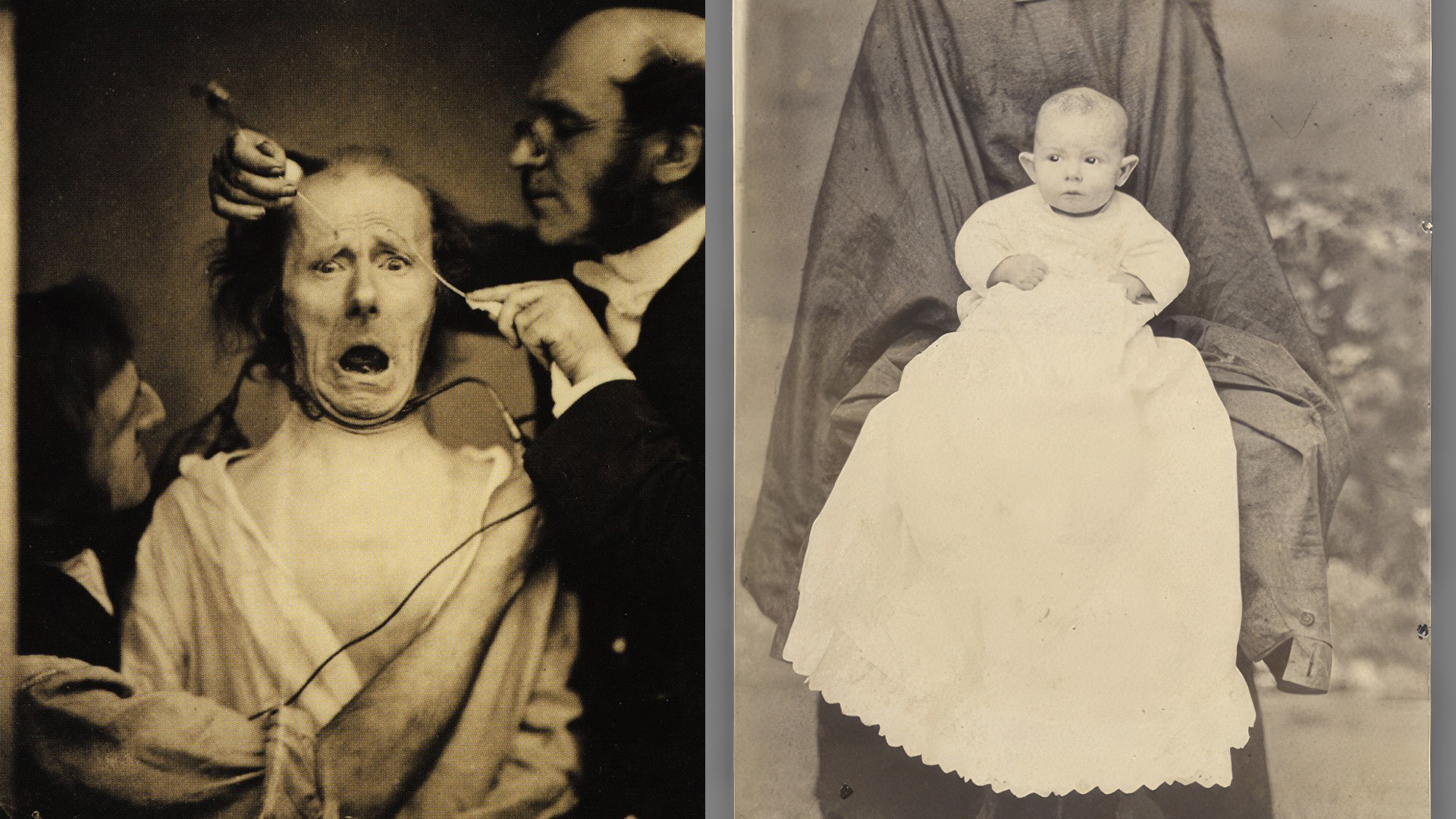
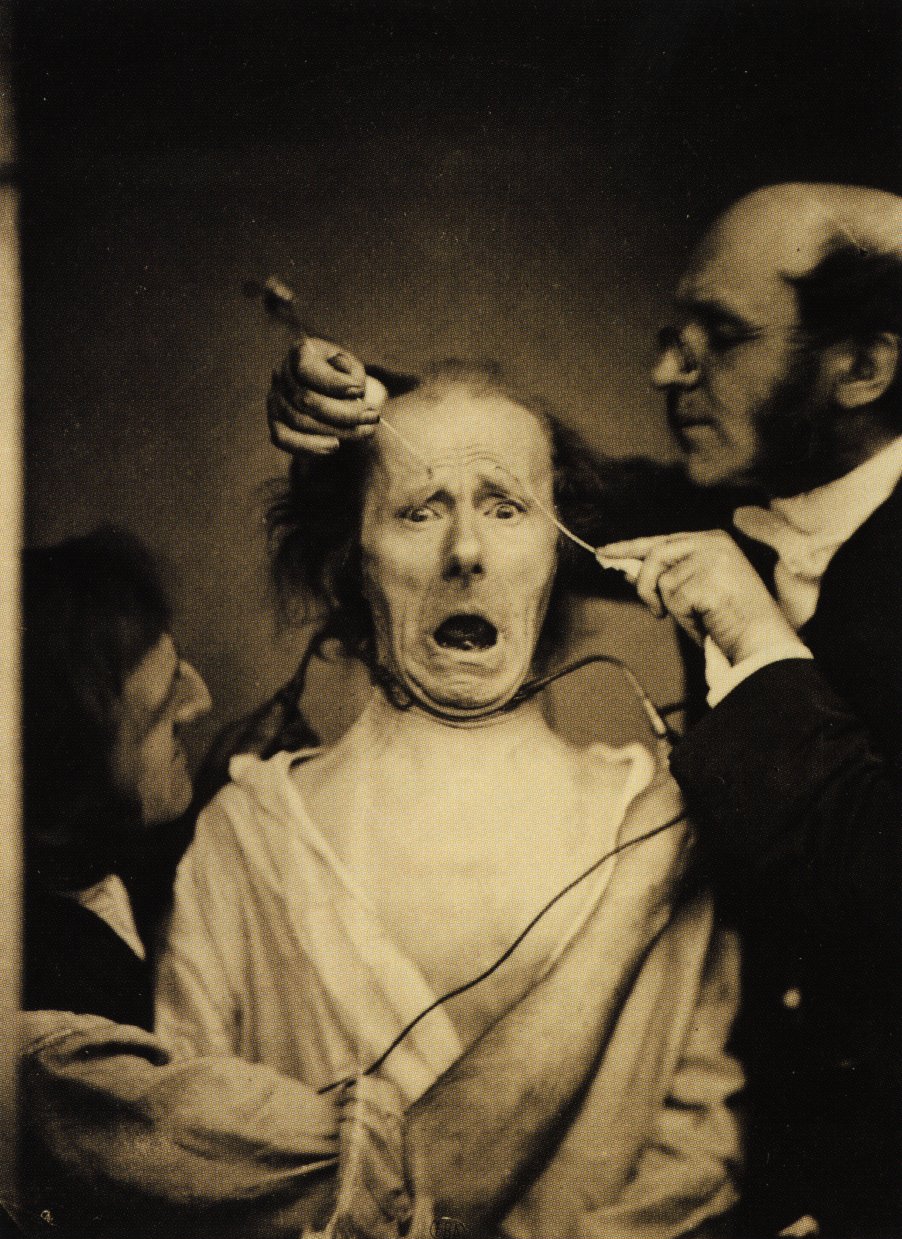
Mathieu opens up with an experiment I first encountered in the book Photo Icons. 50 Landmark Photographs and Their Stories. In 19th-century Paris, a young French portrait photographer was hired by Dr. Duchenne de Boulogne to document something deeply strange. The doctor brought the photographer into a psychiatric asylum, where an elderly, toothless man sat next to a machine. Duchenne held two metallic probes connected to an electric current, and when he pressed them into the man’s face, his muscles contorted into expressions of terror, pain, but also joy that he definitely wasn’t actually feeling.
You can see Duchenne’s hands in many of the photographs, holding the probes like a puppeteer manipulating strings. He experimented on six different patients, creating what he believed to be the first scientific study of the physiology of emotions. Duchenne claimed the shocks were painless, though the images tell a different story. The resulting book of photographs became famous worldwide and was even referenced by Charles Darwin in The Origin of Species to show that certain facial expressions are universal across cultures. In addition to its scientific value, Duchenne “hoped the work would serve as a reference to help artists reproduce emotions and expressions more faithfully,” according to Mashable.
Capturing the First Milliseconds of a Nuclear Blast
Harold Edgerton (1903-1990) developed the Rapatronic camera between the 1940s and 1950s. This high-speed device was capable of capturing an image with an exposure time of just 10 nanoseconds. Standard mechanical shutters were useless for something that fast. Instead, the Rapatronic used an electro-optical shutter that turned black when hit with electricity.
This camera was first used to photograph nuclear detonations in the first few milliseconds of the blast, long before the mushroom cloud formed. The fireball appears grotesque and organic, like a flying sphere of fire. Because each camera could only take one shot, scientists deployed arrays of up to 12 cameras at once, timed to fire in rapid succession. The result was the first slow-motion documentation of an atomic explosion.
Mathieu also mentions Edgerton’s other iconic work, like the photograph of a single drop of milk captured at the exact moment of impact, or a bullet frozen mid-flight as it pierces through an apple.
[Related Reading: These photos of nuclear explosions were taken one ten-millionth of a second after detonation]
The “Hidden Mother” Portraits
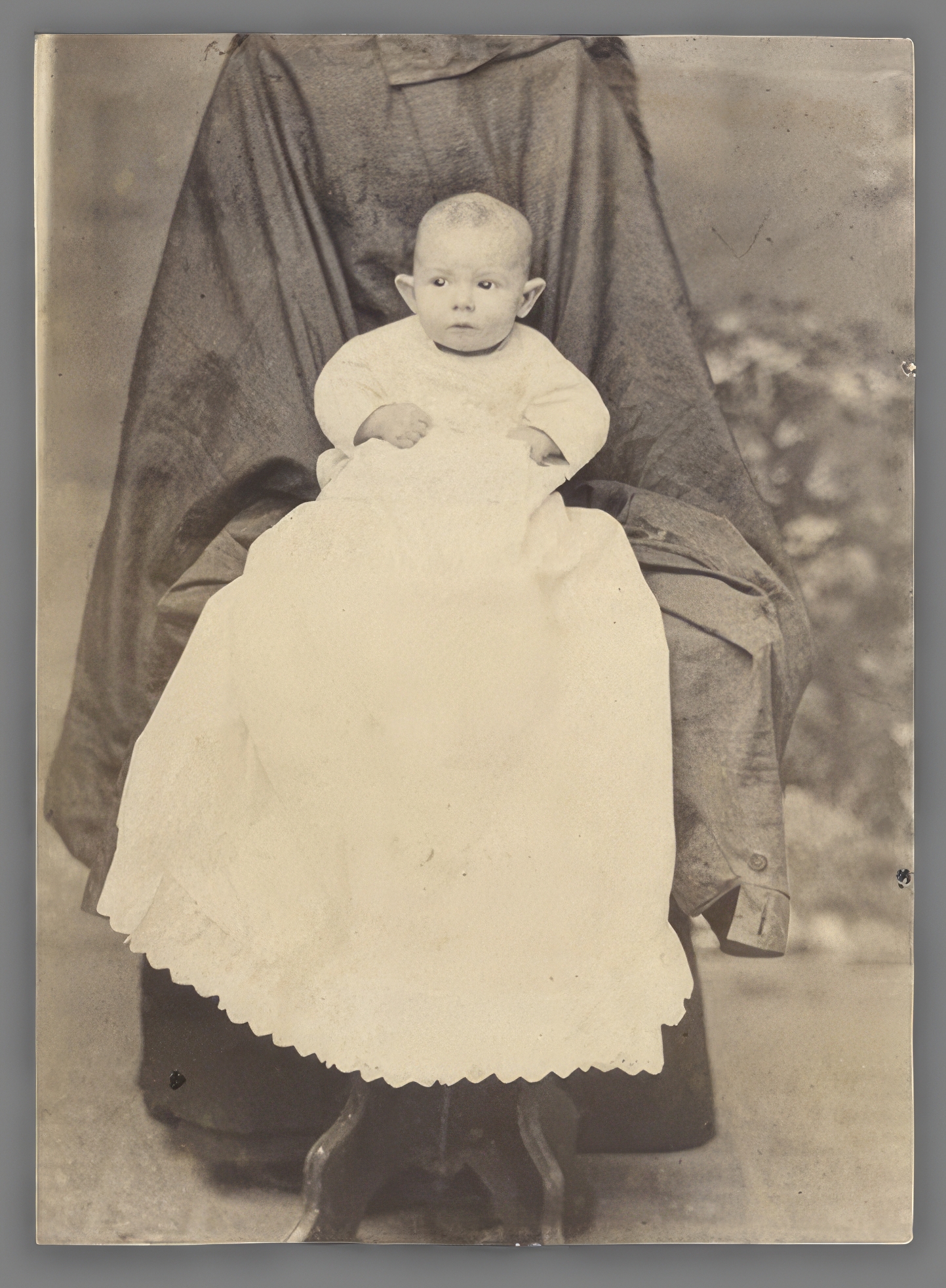
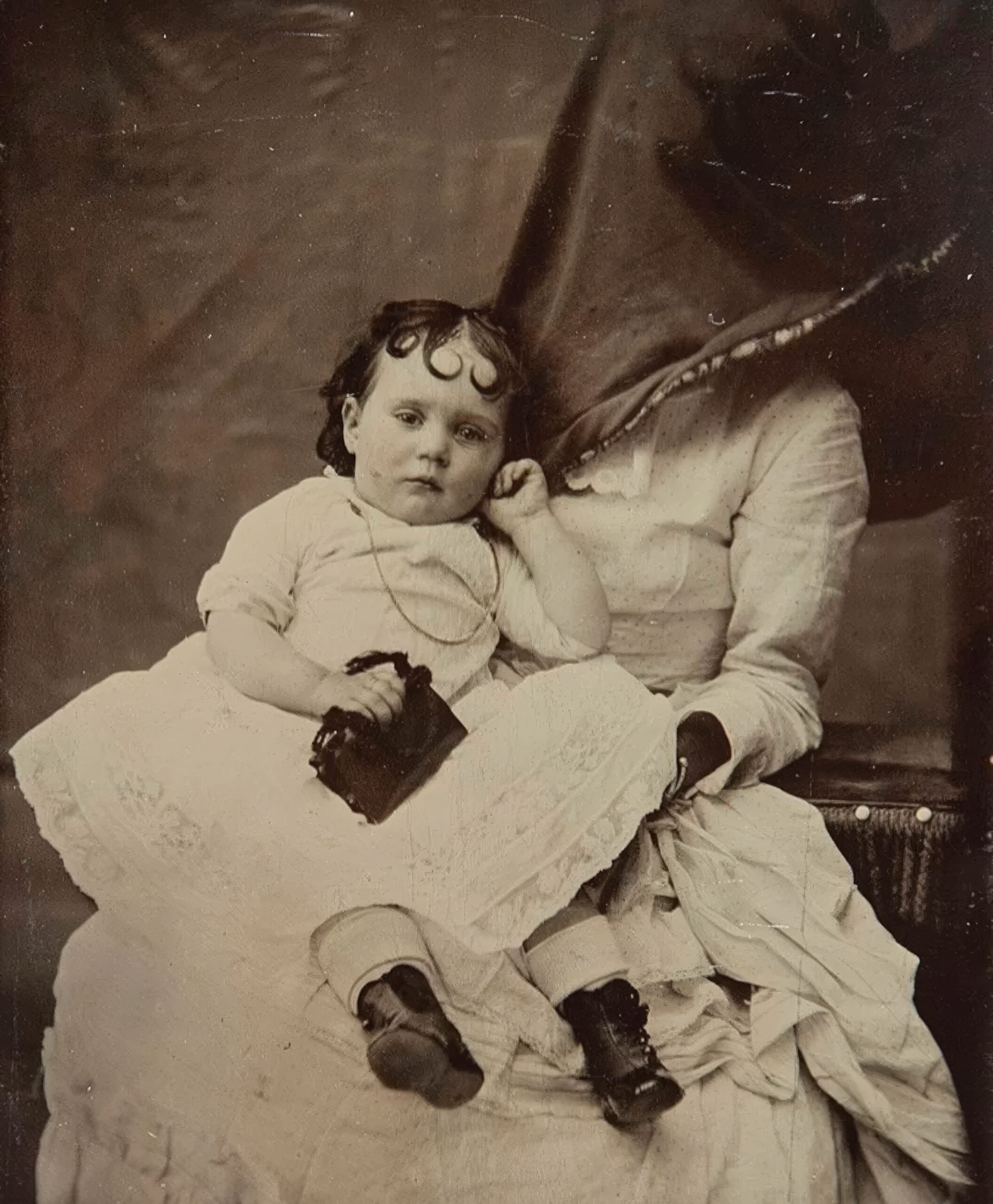
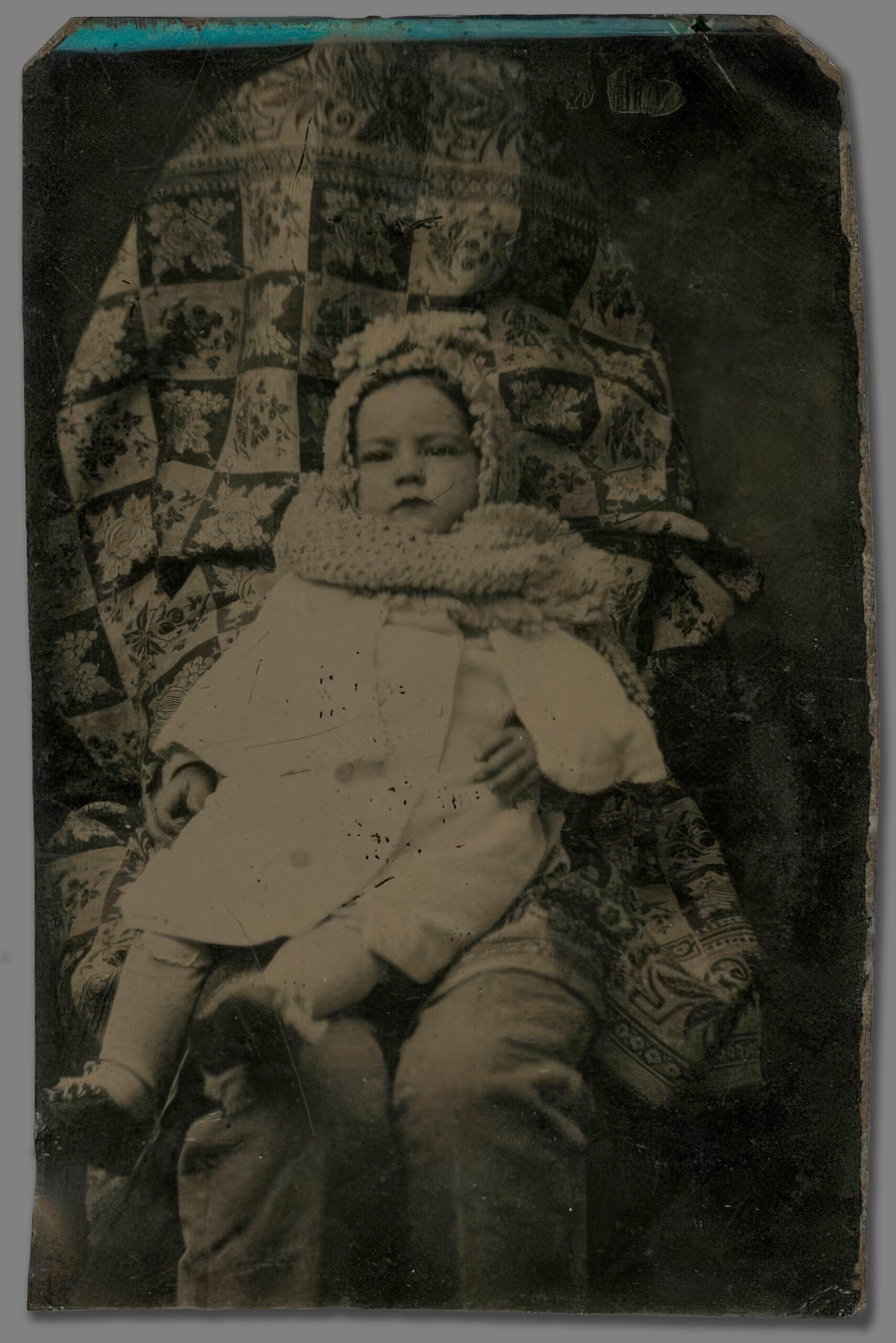
In the 19th century, exposure times were so long that subjects had to remain perfectly still. That worked fine for adults, but as you can imagine, the babies weren’t exactly thrilled to sit still. Some photographers thought of a “brilliant” idea to give infants doses of opium to keep them still and unconscious. As you can imagine, most parents weren’t thrilled about drugging their children.
So photographers came up with the “hidden mother” method, you may have already heard about. The mother would hold the baby to keep them calm and motionless, but she’d be draped in a black cloth or positioned behind the child so she’d be invisible in the final image. The goal was to crop her out or block her with a photo frame. But when you look at the uncropped negatives, the effect is either funny or unsettling. Some of these babies sit on the laps of what look like black-draped figures, almost like tiny grim reapers.
[Related Reading: The Victorian death portrait: a family photo guaranteed to send shivers up your spine]
The Man Who Implanted a Camera in His Skull
It gets weirder, folks. In 2010, visual artist and professor Wafaa Bilal took surveillance art to a whole new level. He had a camera surgically implanted into the back of his head as part of a project called The 3rd I. The 10-megapixel camera was mounted on three titanium plates inserted under his skin, and it was programmed to take a photo every minute, 24 hours a day, for an entire year. The images streamed live to a website and a museum installation.
The project was meant to explore themes of surveillance, internet addiction, and information saturation. But Bilal ran into problems almost immediately. He couldn’t sleep because of the implant. He had to cover the lens while teaching photography at NYU to protect his students’ privacy. And just two months in, his body started rejecting the implant. A persistent infection forced him to undergo surgery to remove part of the camera. For the rest of the year, he continued the project with the camera strapped to the back of his neck instead.
You can still browse the archives of his photos online. Most of them are blurry or mundane, but that was kind of the point. It’s a reflection on how much visual information we consume without really seeing it. Although, I can’t help but think this could have been done with that camera strapped onto his body without going through surgeries and infections. In my opinion, this one’s more about the shock value than anything else, but hey, that’s just, like, my opinion, man.
The Mule and the Dynamite
And now for the most shocking experiment Mathieu covers. Mr. Van Sothen, a photographer for the United States School of Submarine Engineers, was tasked with capturing the exact moment of an explosive charge detonating. He chose a living animal as his subject: an old mule he described as “worthless” and already destined to be destroyed (oh how angry this makes me).
Van Sothen attached a pound of dynamite to the mule’s head and connected the fuse to a specialized electric shutter of his own design. The resulting photograph is downright disturbing. The mule stands calmly on all four legs, its body seemingly unaffected. But its head is gone, replaced by a cloud of debris. The camera captured the animal in a state of impossible transition.
The image was published worldwide and was called one of the most incredible photographs ever taken. Today, it’s hard to look at without feeling deeply uncomfortable. But at the time, it was seen as a triumph of technical achievement.
All of these experiments sit at the intersection of genius and horror. They pushed the boundaries of what photography could do, but often at a steep ethical cost. Mathieu’s video is a reminder that the history of photography isn’t just about beautiful landscapes and iconic portraits. It’s also about the strange, the extreme, and the disturbing choices people made in the name of progress.
Here’s Mathieu’s video, but please be aware of the graphic images and watch with caution.
[5 PHOTO EXPERIMENTS That Shocked The World | Mathieu Stern]
See more from DIYPhotography.net on Google
Add DIYPhotography.net as a trusted source. This makes
our stories more likely to appear in your Google Search results.
 Add as a preferred source on Google

Dunja Đuđić Kalinin
Dunja Djudjic is a multi-talented artist based in Novi Sad, Serbia. With 15 years of experience as a photographer, she specializes in capturing the beauty of nature, travel, concerts, and fine art. In addition to her photography, Dunja also expresses her creativity through writing, embroidery, and jewelry making.




Join the Discussion
DIYP Comment Policy
Be nice, be on-topic, no personal information or flames.