










Don’t upgrade your camera unless it’s limiting you
Feb 24, 2021
Joey J.

We love it when our readers get in touch with us to share their stories. This article was contributed to DIYP by a member of our community. If you would like to contribute an article, please contact us here.
Share:

In a photography forum, I’ve recently come across an interesting comment made by a participant.
You should only upgrade your camera only if it’s limiting you, not just because you have the money to.
In fact, this explains how I’ve grown out of my first body and kit lens, but also the reason why I haven’t upgraded my body for the past 7+ years since moving full-frame.
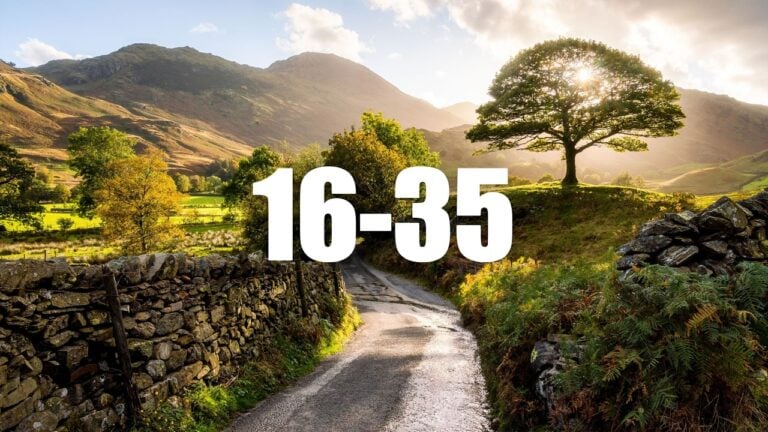
Back in 2008, I started photography with upper-entry Nikon D60 (APS-C body) with a kit lens. As I grew my interest in cityscape photography, I wanted to shoot wider by using a quality wide-angle lens, which led me to move up to Nikon D610 (full-frame body) in 2014 (so that there is no more “crop factor”) and shoot with “true 18mm” using Nikon 18-35mm (f/3.5-4.5) .

I believe we all have such stories of upgrading our gear due to limitations posed. For example, you may have stepped up to a fast prime lens to shoot portraits with nice bokeh in the background or a long telephoto lens to shoot birds, none of which is possible with the kit lens.
If Everyone Thought This Way, Camera Stores Wouldn’t Be Able to Survive
Since upgrading to full-frame D610, though, I’ve stopped upgrading my gear for the past 7+ years. Admittedly, D610 + 18-35mm aren’t the top-of-the-range combo in the market, but they’re decent enough, and I’m fairly satisfied with the image quality. In a way, I’m not “limited” by my gear, hence not feeling any serious need to upgrade.

That said, there is a concern here. While the aforementioned comment resonates with me, if everyone thought this way, camera stores wouldn’t be able to survive, especially in the time of COVID-19 pandemic when they were ordered to close during lockdown as being “non-essential” services.
Minimalism
When I saw this comment, one thing came up to my mind, which is “minimalism”. It has become quite popular in recent years by the likes of Marie Kondo, Joshua Fields Millburn and Ryan Nicodemus (the duo known as The Minimalists ) who promote a minimalist lifestyle.
According to Joshua and Ryan, minimalism is “a tool to eliminate life’s excess, focus on the essentials, and find happiness, fulfillment, and freedom”.
Why do I know? Because I own their books, listen to The Minimalists Podcast and even watched a documentary film “Minimalism: A Documentary About the Important Things”. Probably I’m a bit of a fanboy!
In fact, I’ve been a minimalist since my teenage years, owning very few items (partly because I’ve migrated twice and more may come, so always wanted to keep my belongings light).
Minimalism surely helps simplify your life, but if everyone becomes a minimalist, our economic system will probably collapse, just like COVID-19 affecting those “non-essential” businesses badly.
Minimalism Isn’t about Money
By the way, some people may perceive minimalism as being stingy, but minimalism isn’t about money.
A minimalist typically lives with less stuff but of a decent quality that he or she has deliberately chosen. If they buy (or don’t buy) something, that’s because it adds (or doesn’t add) value to their lives, not because it’s cheap or expensive.
Do You Agree with the Comment?
Let’s get back to the main topic. My Nikon D610 was purchased more than 7 years ago, and I’m sure that new cameras today come with a number of features that are lacking in my model.
That said, none of those features (e.g. touch screen, flip screen, WIFI, better video, etc.) is enticing to me. As a cityscape photography enthusiast, the only thing that I’m interested in is shooting sharper photos. If upgrading my gear visibly improves the sharpness, that’s the time to upgrade.


What do you think about the aforementioned comment of “You should only upgrade your camera only if it’s limiting you, not just because you have the money to.”? Do you agree or not quite? Feel free to share in the comments below!
About the Author
Joey J. is a photography enthusiast, avid traveler, and casual web designer and developer based in Singapore. You can find more of his work on his website, Tumblr, Flickr, and Twitter. This article was also published here and shared with permission.

We love it when our readers get in touch with us to share their stories. This article was contributed to DIYP by a member of our community. If you would like to contribute an article, please contact us here.




Join the Discussion
DIYP Comment Policy
Be nice, be on-topic, no personal information or flames.
4 responses to “Don’t upgrade your camera unless it’s limiting you”
Well… It’s hard to believe that ANY decent camera built in the 2010’s or 2020’s would be limiting the photographer. There’s plenty of great examples of great photographers showing what they can do with even the crappier cameras.
I still use my 8 year-old Nikon with just 16mp.
Inheriting a Canon 5D “classic” from a family member who’d had it on the shelf for years, researching it online a couple of years ago I came across a Youtube by a successful and well-regarded UK wedding photographer who’s completely committed to that camera for a particular visual style it produces. He bought but has not been able to replicate his work with later models. All the promotion of his work displays output from the 5D, and clients have that expectation in contracting with him. He says he buys used for a song, but would do what it takes to keep them in hand for his business (as well as personal preference).
It’s the question I always ask: What can’t I do with my current equipment that the new equipment would provide? I ought to know what picture I’m going to rush out to take as soon as I get the new gear…I should have been champing at the bit to take that picture.
Or, from a business perspective, how is it going to make me money or save me money? Will it reduce quantifiable waste? Will it give me a new product to offer?
Back in 1972, I bought a Yashicamat 124G, an upgrade from 35mm that, at the time, allowed me to shoot weddings on medium format. The camera paid for itself the first time I used it.
Back in 2005, I bought a Canon 5D that allowed me to retire my Mamiya RZ65 cameras. That allowed me to offer large prints to customers that I would not have gone to the work and expense of using the bulky and expensive Mamiya to shoot. The camera paid for itself within two months.
Although I’ve owned many other cameras, and I’m shooting mirrorless now, those were probably the two biggest leaps of productivity that camera purchases have brought me.