
























Adobe wants to be the Apple of creative, and it’s awesome. And dead scary
Nov 6, 2025
Udi Tirosh
Udi Tirosh is an entrepreneur, photography inventor, journalist, educator, and writer based in Israel. With over 25 years of experience in the photo-video industry, Udi has built and sold several photography-related brands. Udi has a double degree in mass media communications and computer science.
Share:
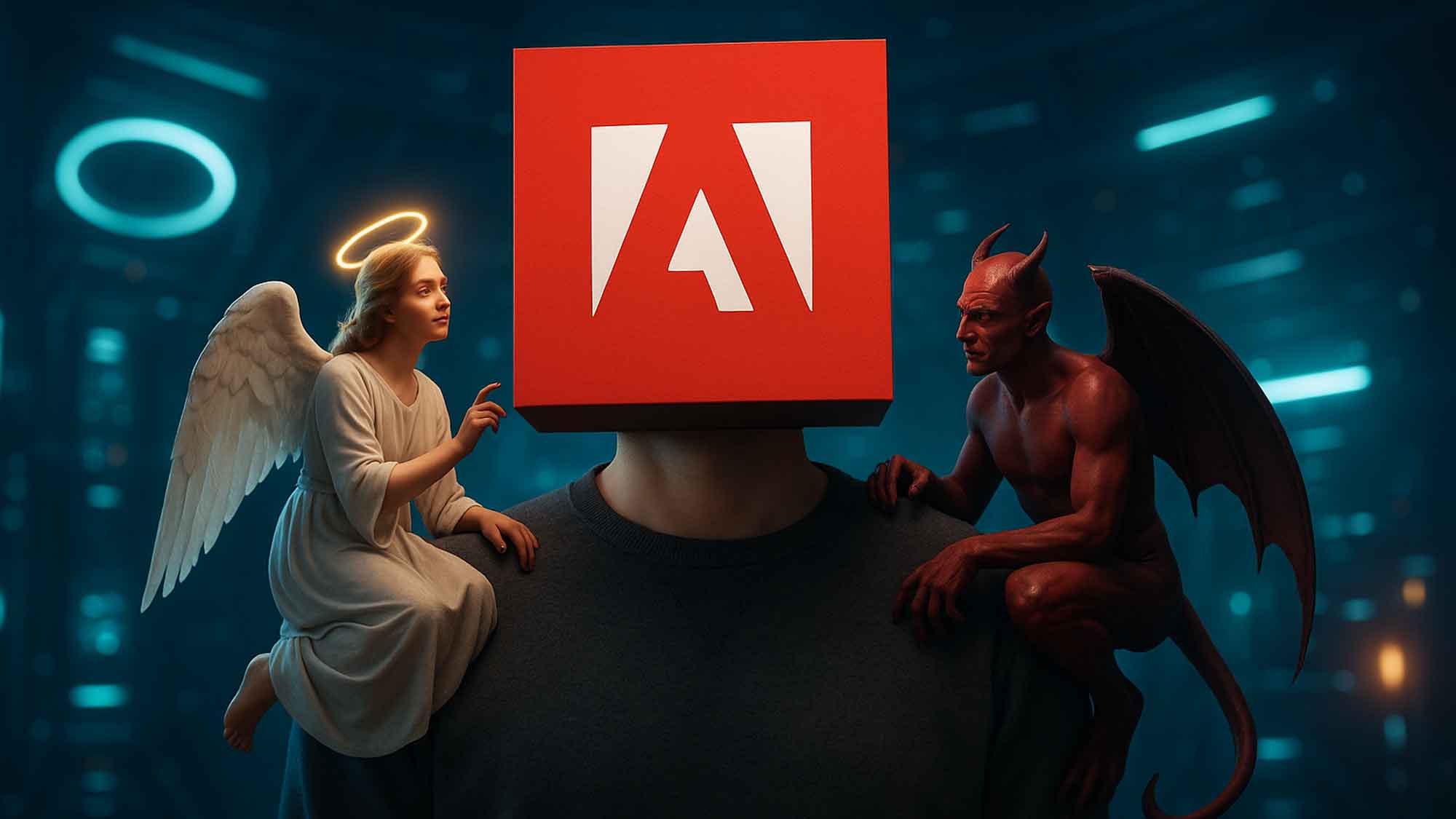
I was at Adobe MAX last week in LA, and witnessed a literal Tour De Force from the company. Aside from sharing a space with the 10,000 creatives who attended the event, watching an AI transformation unfolding was both exhilarating and sobering. AdoPremorebe introduced over one hundred new Creative Cloud features, including groundbreaking capabilities powered by Adobe Firefly. But what struck me most wasn’t just the individual innovations—it was the strategic pivot happening right before our eyes.
First, the good! And there is plenty of it.
Here are some standout innovations that caught my attention:
Firefly Video Model and Image Model 5: The enhancement to Adobe’s Firefly model now supports generative AI video creation (sadly still in Beta*), marking Adobe’s entry into AI video generation with sound effects right out of the door. FireFly Image Model 5 (in Preview*) can now generate images at native 4MP resolution without upscaling. (take that Nano Banana!). The details, realism, and creative “decisions” by the model are mindblowing.
Lightroom has a new Culling feature (early access*) – that helps you efficiently organize large photo collections by identifying top images, automatically rejecting low-quality ones, and allowing manual adjustments to selections. If you are familiar with Aftershoot and Imagen.ai, you know how helpful those features are. They also added AI dust removal and color variance. (Infinite tools, Say hi).
*What’s with all the you can’t get it yet names? Adobe, let us have it in production, please :)
And on Premiere Pro, they now have a new masking tool that takes rotoscoping to the next level (also AI-assisted). From seeing it live, it is almost like magic. You select a subject (kinda like the Select Subject tool in Photoshop), and the AI tracks it precisely throughout an entire clip. They are also bringing Adobe Premiere to mobile (Finally!, Capcup kicked the butt out of Rush for far too long – get your mobile Premiere here).
If you have some time to spare, watch the keynote:
If you have a few more minutes, watch the Sneaks preview as well. Those are just Adobe Engineers playing with what may (or may not) be the next version’s features. This is my favorite one, but you should probably watch the entire Adobe Sneaks list.
All of this is great if what you want is an entire suite of tools at the tips of your fingers. But I also see some darker side in this play.
The Platform Play: opening the gates to everyone (while holding the keys)
One of the most prominent shifts is Adobe’s embrace of third-party AI models. You can now generate assets not only FireFly, but also using models from Google (including Nano Banana), Luma, OpenAI, Pika, Flux.ai, Ideogram, Runway, and others. Want Veo 3 for videos? It’s there. Like Sora? Built in. Prefer Nano Banana? Right there next to Firefly 5.
This is awesome for creators – you get the best of all worlds without having to jump between platforms. But here’s where it gets interesting: Adobe is moving from being a creative service to becoming the Platform.
Project Graph: The workflow revolution (and control center)
Let’s talk about Project Graph for a second. Project Graph (at the end of the keynote) is a node-based workflow builder that allows users to create, share, and remix composable creative workflows. This tool enables mixing various creative tools and AI models into reusable “capsules” that can be shared across teams. In the demo, Adobe showed how users could build workflows from multiple apps, including Photoshop, Illustrator, Nano Banan, and Firefly.
Think of it as n8n-ing Adobe – creating automated workflows from the tools from different Adobe apps. And here’s my suspicion: this will eventually allow other software makers to integrate with this ecosystem as well. On the one hand, this is amazing for users. You can have your entire workflow in a single place, automating complex multi-app processes that would typically require opening multiple applications. On the other hand, it gives Adobe enormous power.
The Gatekeeper Economy
Between Project Graph and the open model approach, Adobe is positioning itself as the gatekeeper for the entire creative flow. Here’s what this means:
- On the good side, you get all your tools in one place. Adobe now gives creators access to the industry’s top AI models across its best creative tools—including its own Firefly Models and models from industry partners such as Google, OpenAI, and Runway. It’s convenient, integrated, and powerful.
- But here’s the catch: Adobe becomes a participant in every transaction. Every time you render something with Nano Banana or generate a video with Luma’s Ray 3, Adobe is likely taking a cut from the transaction (though they haven’t disclosed the exact business model). So now, Adobe can decide what’s available and what’s not, depending on how much they make.
- I think the days when a software company developed plugins and you and said company decided on a price will soon be over. Adobe is becoming the App Store of creative tools.
The data advantage: Knowing what you need before you do
The other thing is that, as a platform, Adobe knows exactly how creatives are using its software. They know what they should develop and where they can gain the most.
Look, for example, at the culling features introduced in Lightroom. The AI-powered Assisted Culling feature in Lightroom Classic lets you efficiently organize photo collections and folders by identifying the best images, rejecting low-quality photos, and making editing adjustments. It will also make slight editing adjustments to those it selects.
These features are probably coming as a direct blow to companies like Imagen.ai and AfterShoot, who have been providing AI culling services as third-party solutions. Adobe watched, learned, and then built it directly into Lightroom. And now that every edit, Mouse click, and software interaction sends analytics data to Adobe(or is straight up inside Project graph), I am concerned for any small company bringing meaningful innovation.
The creative monopoly question
Adobe is creating what I’d call a “benevolent monopoly” of creative tools. They’re providing incredible value (Adobe Firefly offers the only platform to use top AI models within the best creative tools for video, audio, imaging, and design) all in one place, at one (very reasonable) price. The integration is seamless, the tools are powerful, and for many creatives, it’s becoming harder to imagine working outside this ecosystem.
But this concentration of power raises questions.
- What happens when Adobe decides certain models aren’t profitable enough?
- How will independent tool developers compete when Adobe can see exactly what features users want most?
- Are we trading innovation diversity for convenience?
So, what do you think?
Is having all your tools in one place worth Adobe having so much control? The convenience is undeniable: being able to access Gemini, OpenAI, Runway, and Adobe’s own models all within your familiar Creative Cloud apps is powerful. Project Graph could revolutionize how we approach complex creative workflows.
But we’re also giving Adobe unprecedented visibility into our creative process and the power to shape the entire industry’s direction. They’re not just making tools anymore; they’re building the infrastructure that all creative tools will need to plug into.
As I left Adobe MAX, I couldn’t shake the feeling that we’re witnessing a fundamental shift in the creative industry. Adobe isn’t just competing with other software companies anymore—they’re building the operating system for creativity itself. And like Apple with iOS, that gives them enormous power to shape our creative future.
The question isn’t whether this transformation will succeed—it already is. The question is whether we’re comfortable with one company having this much influence over how we create. What’s your take? Let me know in the comments.
See more from DIYPhotography.net on Google
Add DIYPhotography.net as a trusted source. This makes
our stories more likely to appear in your Google Search results.
 Add as a preferred source on Google

Udi Tirosh
Udi Tirosh is an entrepreneur, photography inventor, journalist, educator, and writer based in Israel. With over 25 years of experience in the photo-video industry, Udi has built and sold several photography-related brands. Udi has a double degree in mass media communications and computer science.




Join the Discussion
DIYP Comment Policy
Be nice, be on-topic, no personal information or flames.