

















A Wildlife Photographer in a Tesco Car Park
Mar 25, 2026
Tom Zelinsky

Dunja Djudjic is a multi-talented artist based in Novi Sad, Serbia. With 15 years of experience as a photographer, she specializes in capturing the beauty of nature, travel, concerts, and fine art. In addition to her photography, Dunja also expresses her creativity through writing, embroidery, and jewelry making.
Share:
There are weddings where nothing happens. And I mean absolutely nothing.
You stand somewhere at the edge of a room, camera ready, everything technically perfect. The light is fine. The settings are right. You’re prepared for whatever might unfold, and yet nothing does. Guests sit quietly, politely. Someone checks their phone under the table, someone else stares into the distance as if trying to remember why they came. A speech is happening, but it drifts without direction, stretching time in a way that makes you aware of every passing second.
And at some point, a very simple thought appears — not dramatically, just honestly:
What exactly am I photographing here?
What Documentary Wedding Photography Really Means
I don’t direct weddings. I don’t stage anything. I don’t tell people where to stand or how to feel. That’s the whole idea behind documentary wedding photography and candid wedding photography.
So when nothing happens, I document exactly that — a quiet wedding, a still room, a day that moves slowly and carefully, without ever breaking its own rhythm. And sometimes, it really does feel like being a wildlife photographer in a Tesco car park — ready for an encounter with an elephant, and instead watching an earthworm slowly emerging from beneath a car tyre. If it’s been raining.
You’re ready for instinct, movement, unpredictability. You’re tuned into the smallest signals, waiting for something to shift, but the environment simply doesn’t produce it.
A Short Digression
A quick note — wedding photographers, especially the male ones, are kindly asked not to take this too personally.
What’s the difference between a wildlife photographer and a wedding photographer?
The wildlife photographer has a bigger one.
(The lens, obviously.)
You Can’t Photograph Energy That Isn’t There
It took me a while to fully accept this, but it changes everything once you do. You can’t photograph energy that isn’t there.
It doesn’t matter how experienced you are. It doesn’t matter how good your timing is, or how fast you react. If the day is built around control, stillness and politeness, then that’s exactly what your photographs will reflect. And no technique in the world will turn that into chaos.
When People Create the Moment
The best moments I photograph come from people.
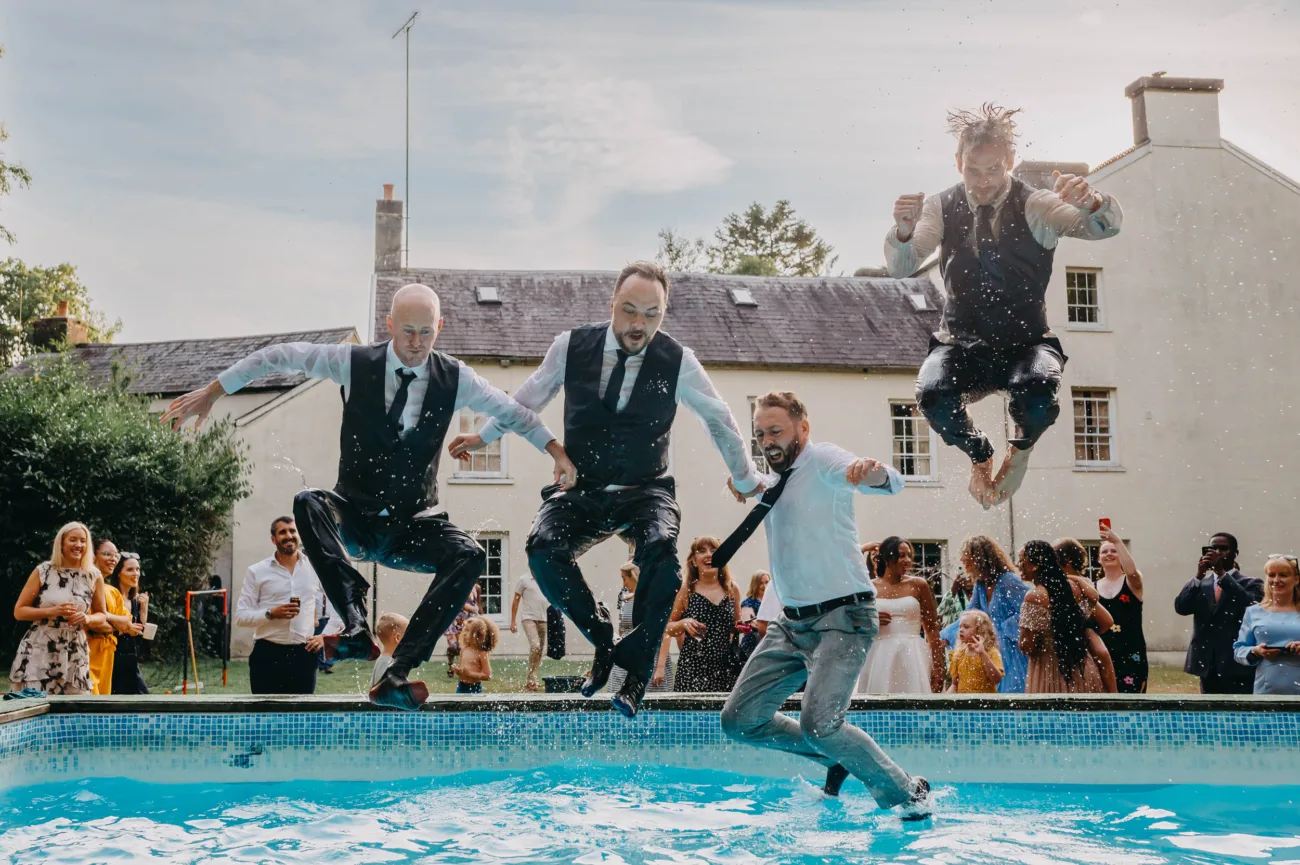
At one wedding, the day was calm. Too calm, if I’m being honest. Everything ran smoothly, almost suspiciously so — speeches, dinner, polite laughter, the kind that fills space rather than expresses anything real. Then one of the groomsmen came up to me. He didn’t explain much, just said: “Be ready when I finish.”
That was it.
A few minutes later, his speech ended — and before anyone had time to process what was happening, he started dragging people towards the pool. One by one at first, then faster, until it turned into something unstoppable. Within seconds, everything changed.
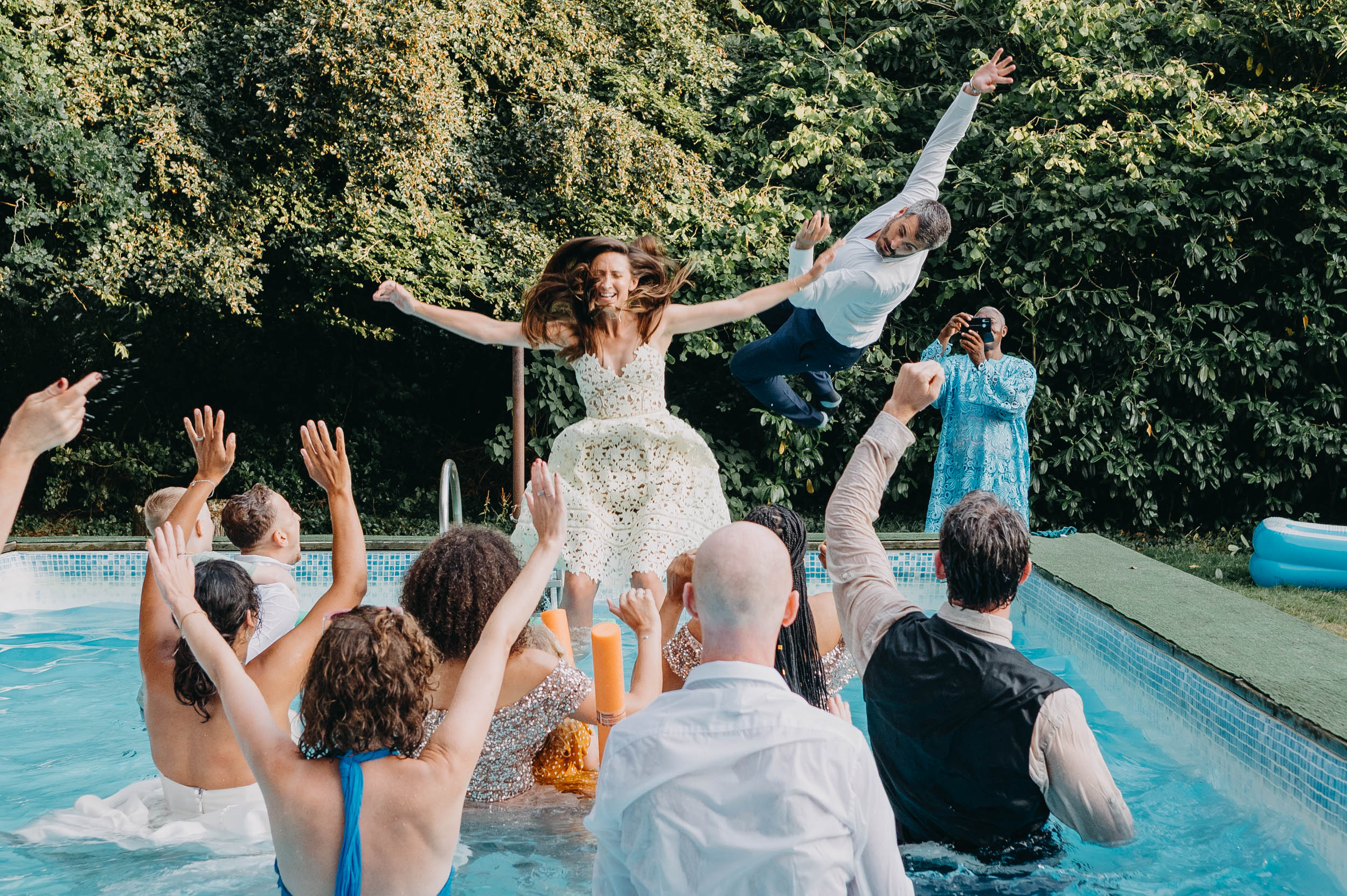
People were laughing, shouting, trying to escape and failing spectacularly. Shoes came off, dresses were lifted, and the whole carefully structured day collapsed into something real.
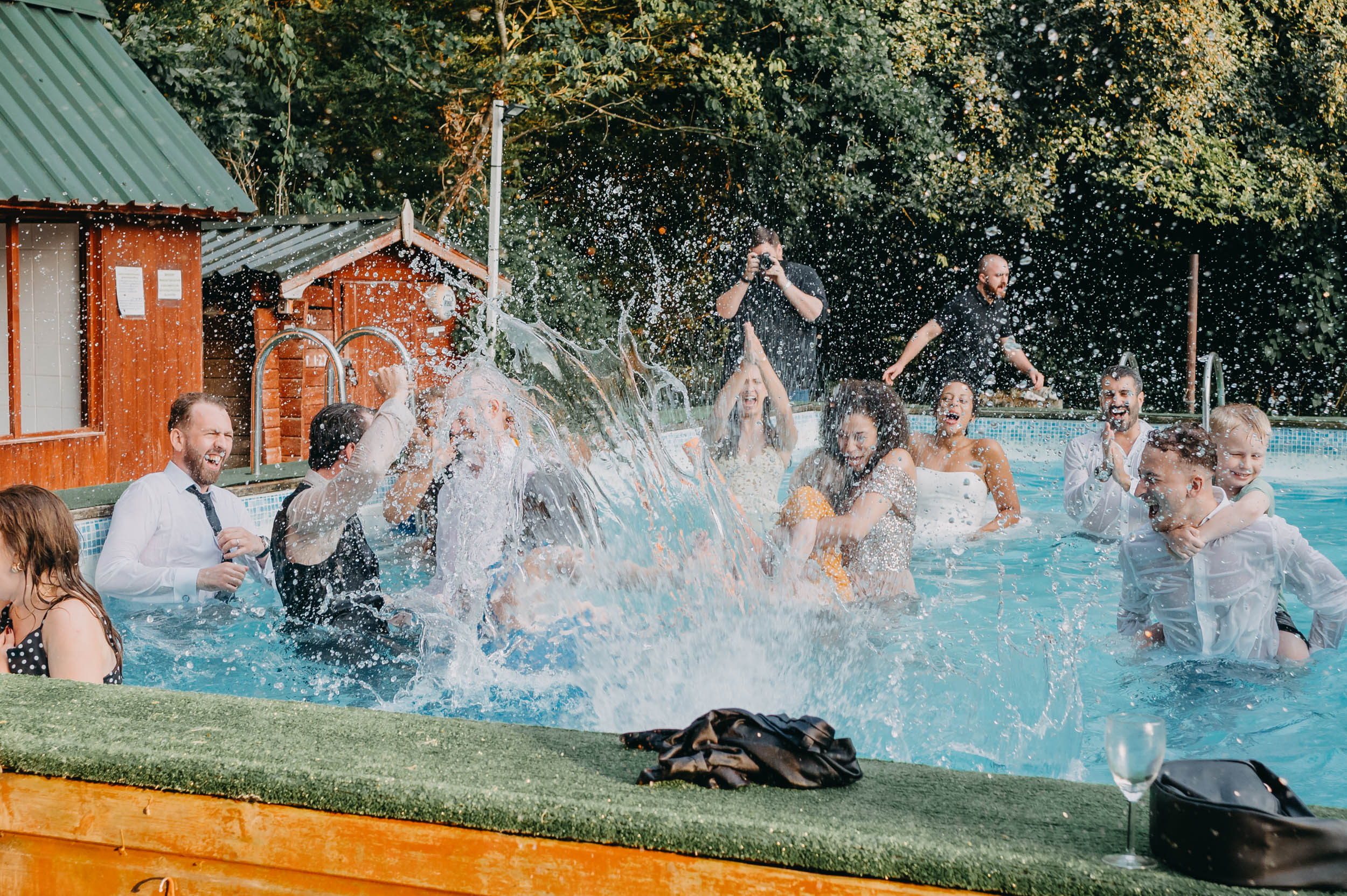
I don’t create moments. I didn’t even see it coming. But I was there when it happened.
Freedom Changes the Frame
Another wedding I photographed in Cardiff — another kind of shift.
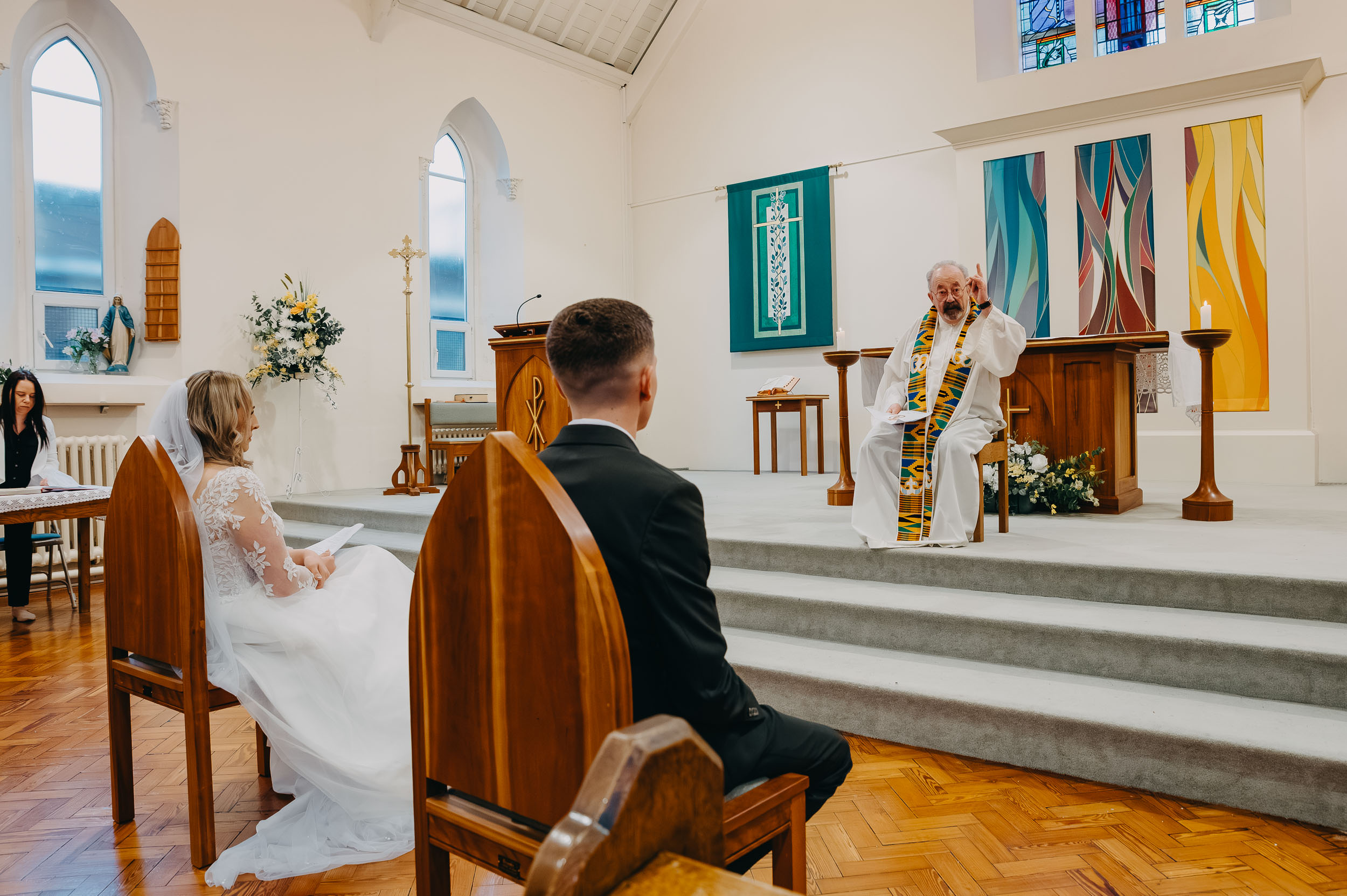
A church ceremony usually means structure, rules, and a certain distance you’re expected to keep. You move carefully, you stay out of the way, you respect the boundaries. Those boundaries are often strict — no flash, limited movement, sometimes no photography at all.
This time, the priest was wearing sandals. Sandals. No socks.
At some point, he looked at me and said, almost casually, “Do what you want.”
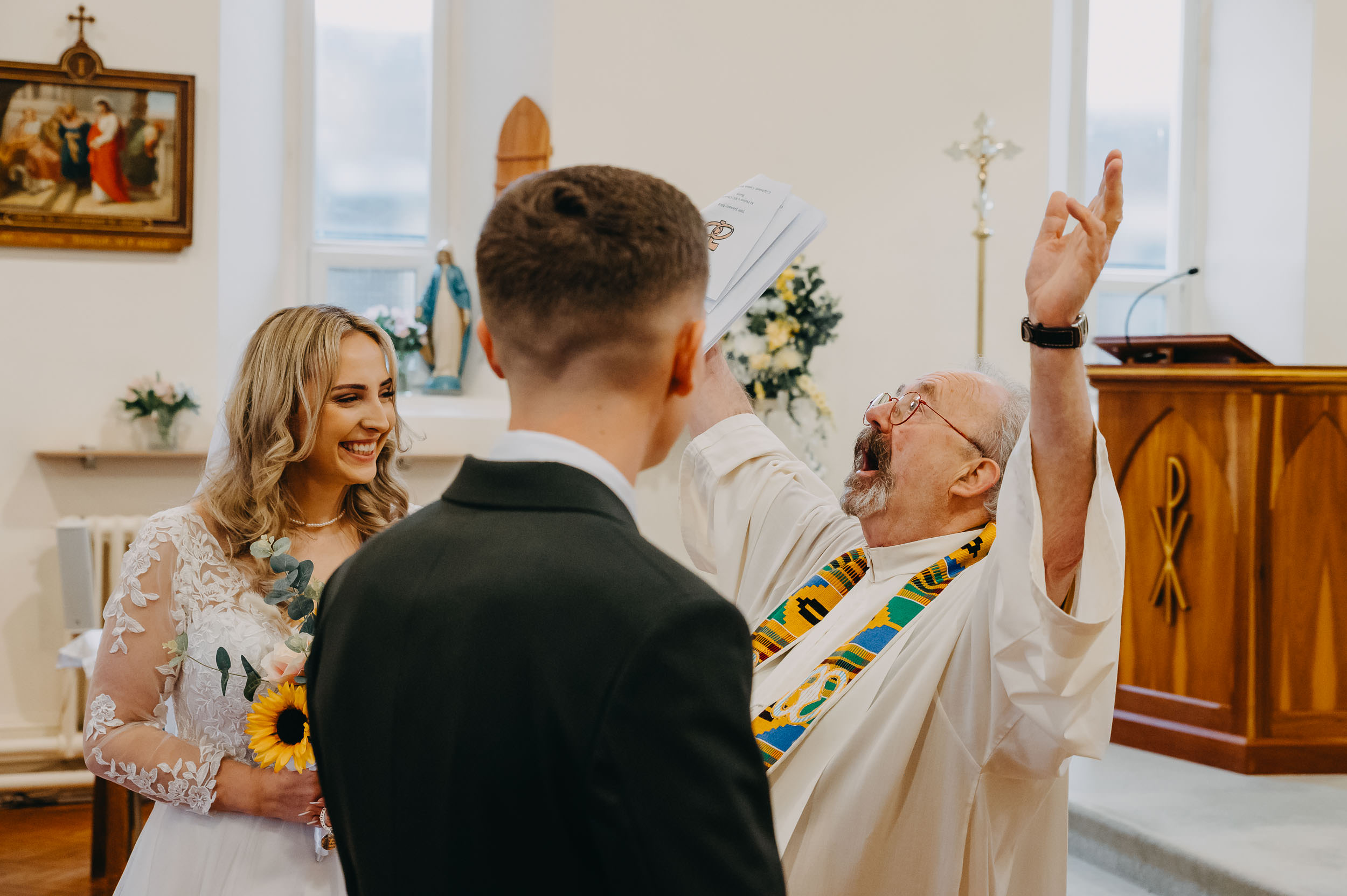
And just like that, the entire space changed. Nothing dramatic happened on the surface — the ceremony continued as planned — but the tension disappeared. The invisible wall between me and the moment was gone. I could move, get closer, respond instead of waiting.
For the first time that day, it didn’t feel like I was observing from the outside. I was inside it.
Then there was a festival wedding.
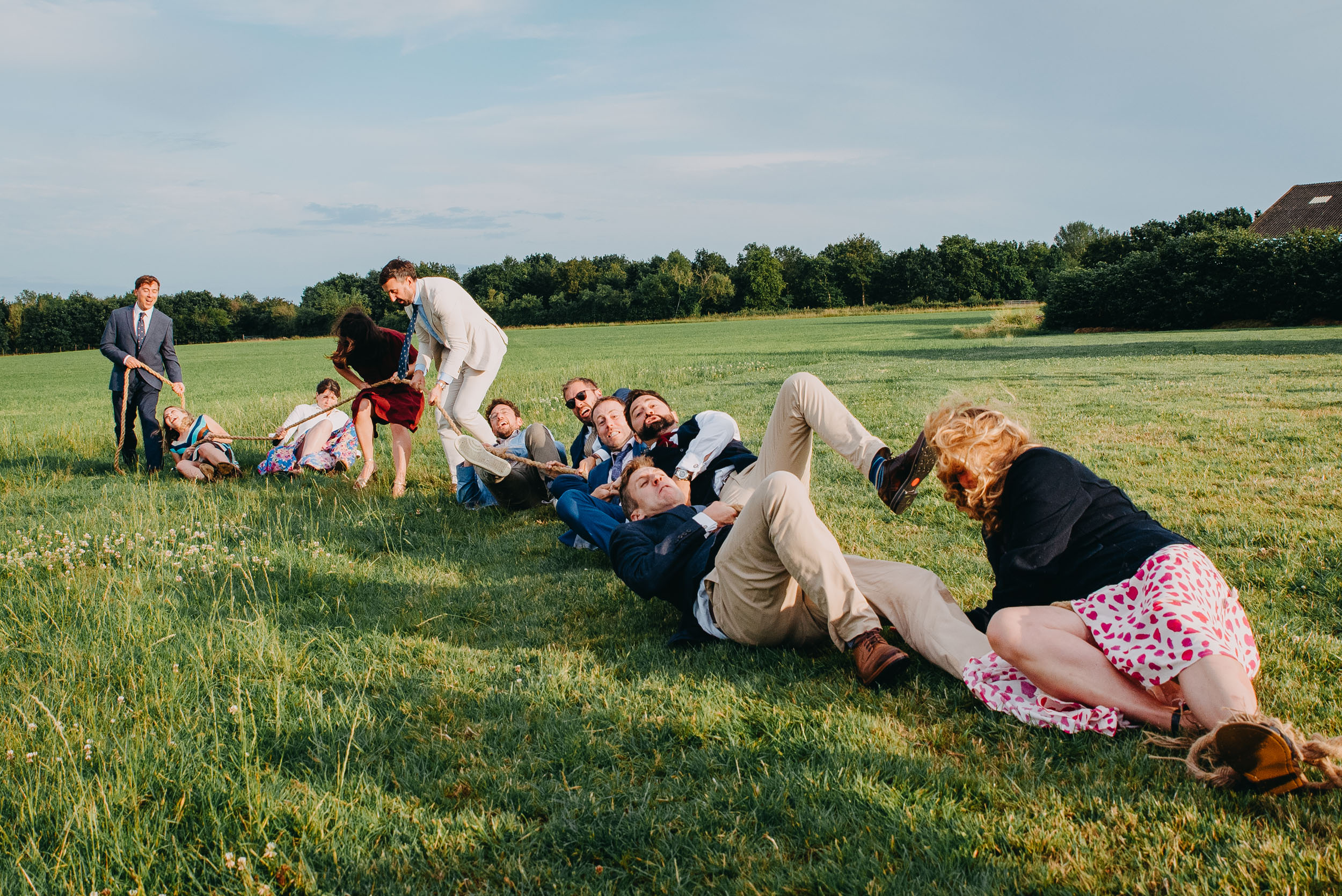
The couple themselves were quite reserved — calm, present, but not explosive. The guests, on the other hand, were something else entirely. They ran, they played, they climbed on things they probably shouldn’t have. At one point, someone sprinted straight towards me, laughing, completely absorbed in the moment. Someone else fell over — properly, not gracefully.
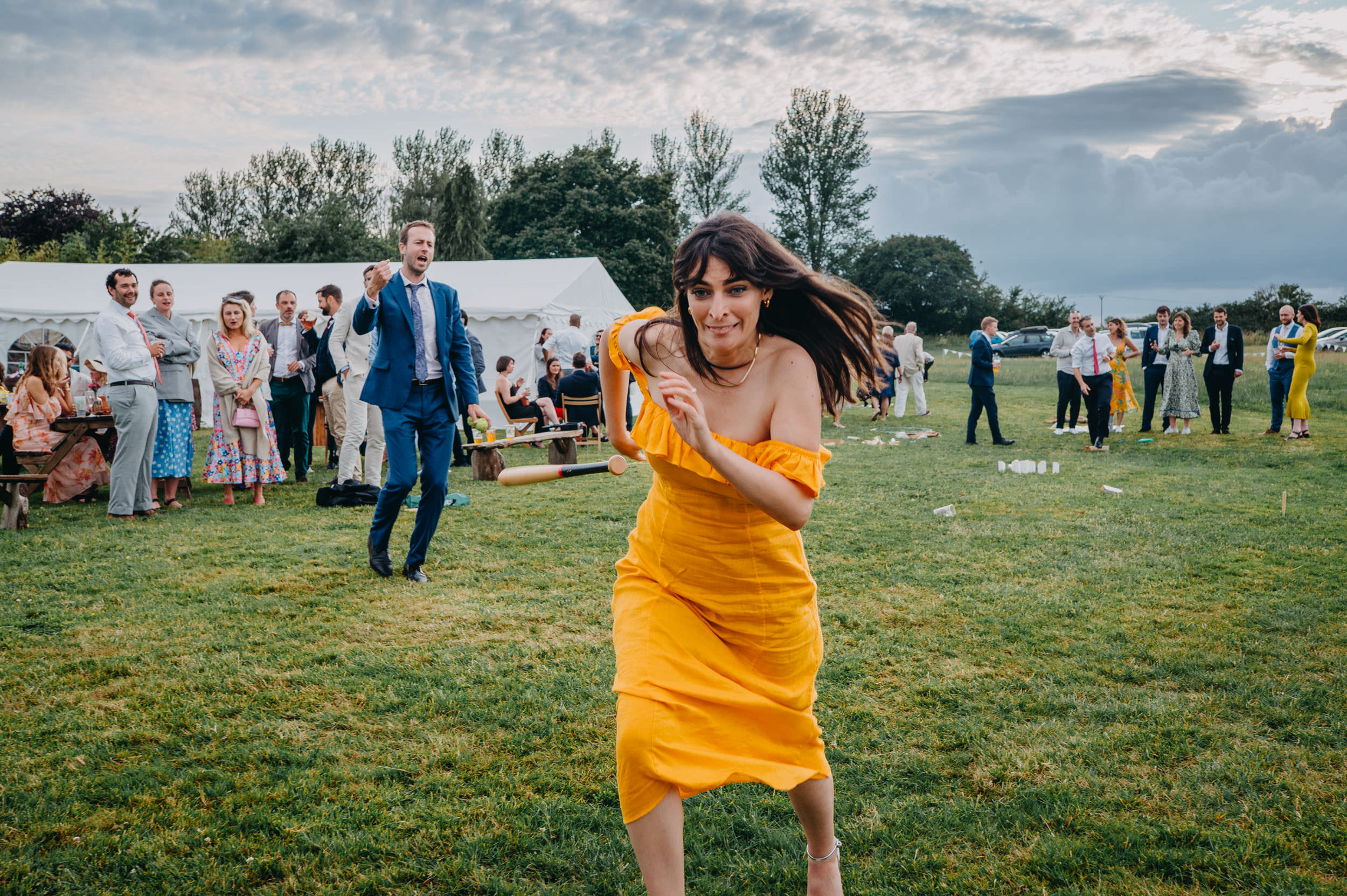
No one stopped. No one apologised. They just carried on.
That’s where the story lived. Not in the formal parts of the day, not in the expected moments, but in the people who actually did something.
I Don’t Stand by the Wall
There’s something else that matters just as much as the people in front of the camera — the way I work.
I’m not the kind of photographer who stands by the wall and waits. I move constantly, one moment here, the next somewhere else entirely. Sometimes it probably looks like I’m in two places at once. I don’t wait for moments. I hunt them.
And when I find one, I go all in.
If that moment happens to be a child crawling across the floor, then I’m on the floor too — at their level, because that’s where the photograph actually exists. There’s no hesitation, no thinking about clean clothes or how it might look.
You move. You follow. You get closer.
Because the moment won’t wait.
[Related Reading: The Photography Skill Nobody Teaches You: Feel the Moment, Then Shoot It]
The Cost of Being Close
The side effect of that way of working is simple.
Clothes don’t survive weddings very well. Shirts get stained, trousers get torn, sometimes there’s even a bit of blood involved — usually from not noticing a sharp edge while focusing on something happening right in front of you. Kids don’t have boundaries, and if you follow their energy, you stop noticing yours.
You don’t even realise when you’ve hit something or cut yourself. You only notice later, when the moment is already gone — or captured.
I Photograph Energy, Not Stillness
At the core of all this is one simple thing: the energy of the people you photograph — that’s the essence. These are not “bad weddings” or “boring days”; they are weddings without energy to photograph. Some weddings are quiet. That doesn’t make them worse — just different. When people are closed off, controlling themselves, not initiating anything, when no one “starts the day”, there is simply nothing to catch. You can’t photograph energy that isn’t there.
My best images don’t come from situations — they come from people who create situations. A groomsman dragging everyone into a pool, guests turning a festival wedding into chaos, a priest removing tension and giving space — there is always someone who brings energy into the day. And that defines everything.
I’m not a photographer of stillness; I’m a photographer of energy. That’s why I struggle with long hours at tables, with speeches that go nowhere — because I’m not looking for better moments, I’m looking for better environments for moments.
I Don’t Create Moments
I don’t create moments. I don’t orchestrate them or push them into existence, but I recognise them — sometimes a second before they happen, sometimes exactly when they unfold.
And I stay close to the people who are likely to start them.
Because in the end, it’s not about the timeline, the venue, or how carefully the day was planned.
It’s about people.
And whatever they decide to do with it.
See more from DIYPhotography.net on Google
Add DIYPhotography.net as a trusted source. This makes
our stories more likely to appear in your Google Search results.
 Add as a preferred source on Google

About Tom Zelinsky
Tom Zelinsky is a photographer whose journey began when he was just a child, taking his first black and white photo with a film camera. That early fascination grew into a lifelong passion. Over the years, he photographed everything from food and real estate to remote landscapes in the Himalayas and Siberia. Eventually, a chance opportunity to shoot a wedding led him to discover his true calling. Today, Tom works as a full-time wedding photographer, known for his natural, unposed documentary style. Whether capturing joyful chaos or quiet emotion, he aims to preserve authentic moments with honesty and warmth. His camera follows him everywhere — from icy Baikal to sunlit wedding aisles — always ready to tell a visual story.
You’ll find more of Tom’s work on his website and read his adventurous stories on his blog. This article was also published here and shared with permission.
We love it when our readers get in touch with us to share their stories. This article was contributed to DIYP by a member of our community. If you would like to contribute an article, please contact us here.



Join the Discussion
DIYP Comment Policy
Be nice, be on-topic, no personal information or flames.