

















Is It Hard to Learn Photography? What Beginners Really Need to Know
Aug 24, 2026
Leonard Skapp
Alex Baker is a portrait and lifestyle driven photographer based in Valencia, Spain. She works on a range of projects from commercial to fine art and has had work featured in publications such as The Daily Mail, Conde Nast Traveller and El Mundo, and has exhibited work across Europe
Share:
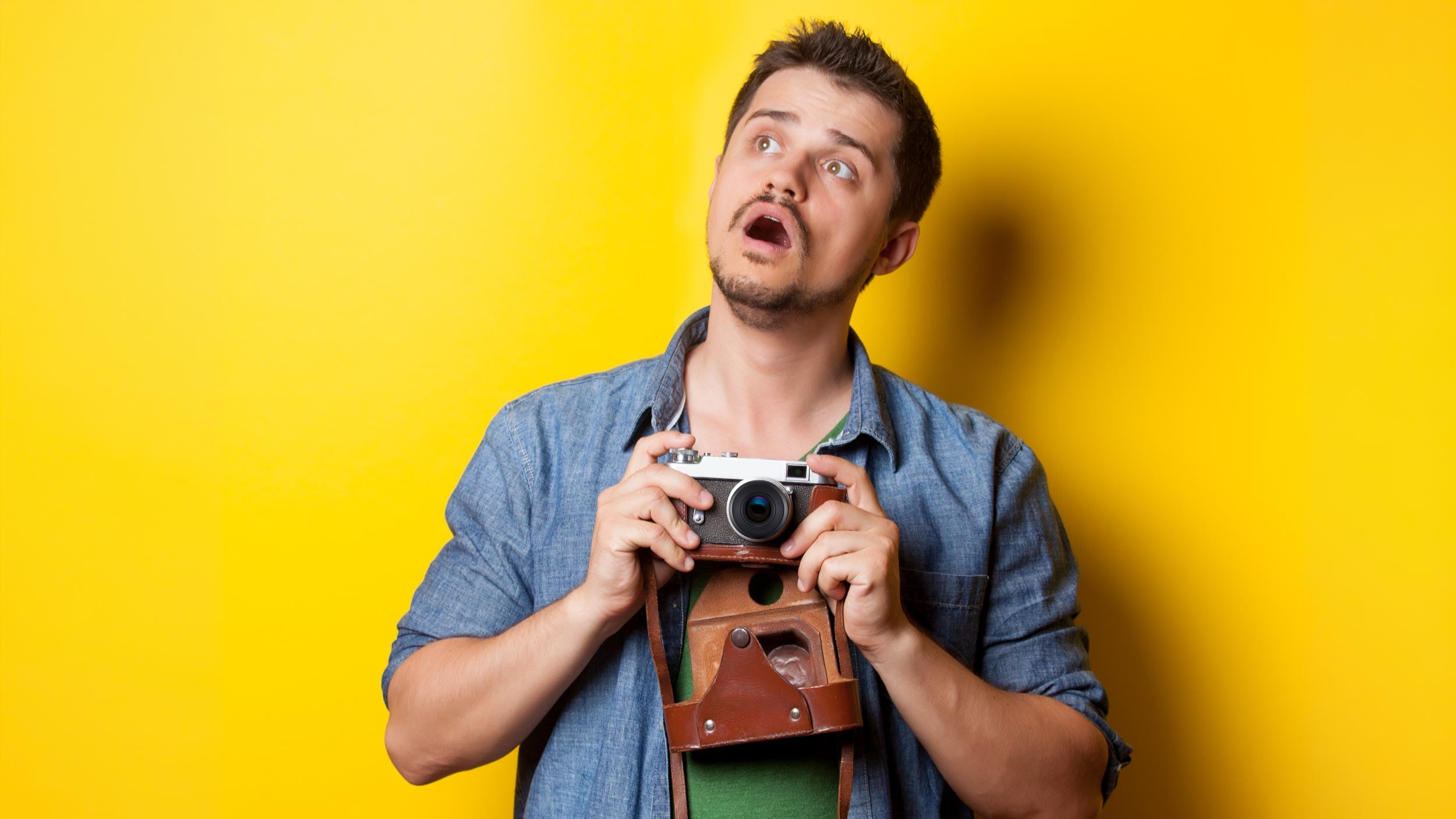
Is photography hard to learn? The good news is that the basics are actually pretty easy. The slightly less good news is that becoming really good at photography is a much bigger undertaking.
You can learn what aperture, shutter speed and ISO do in an afternoon. You can understand the basics of composition in a few weeks. You can probably get your camera off Auto mode without too much trauma. The difficult part is learning how to make good decisions consistently and developing the eye to know why one photograph works while another doesn’t.
How hard is it to learn the basics?
The technical foundations of photography aren’t particularly complicated. Once you understand the relationship between aperture, shutter speed and ISO, you have the basic tools needed to control exposure.
Modern cameras make things even easier because they can handle autofocus, exposure and white balance automatically. You can take perfectly usable photographs without understanding much about how the camera works.
But “technically correct” and “good” are two very different things. Your camera can produce a perfectly exposed photograph of a completely boring subject with terrible composition. Unfortunately, there isn’t an Auto mode for having a good idea.
The exposure triangle isn’t as scary as it sounds
Aperture, shutter speed and ISO are often presented as if they’re some kind of photographic initiation ritual, but they’re really just three ways of controlling the image.
Aperture affects how much light enters the lens and influences depth of field. Shutter speed controls how long the sensor or film is exposed to light and therefore affects motion blur. ISO controls the camera’s sensitivity to light, although increasing it also generally introduces more image noise.
Once you understand what each one does and how changing one affects the others, the whole thing starts to make considerably more sense.
The harder part is learning to see
This is where photography gets much more difficult. Learning how to operate a camera is one thing. Learning how to recognise good light, find interesting compositions, anticipate a moment and tell a story in a single frame takes much longer.
You can give the same camera to ten people and get ten completely different sets of photographs. The equipment isn’t making those creative decisions for them.
This is why buying a more expensive camera doesn’t necessarily make someone a better photographer. A £5,000 camera pointed in the wrong direction is still pointed in the wrong direction.
You have to practise
Like any practical skill, photography gets easier when you do it regularly. Take photographs in different lighting conditions and experiment with different focal lengths, shutter speeds and apertures. Photograph subjects you wouldn’t normally choose and deliberately put yourself in situations where you don’t already know what you’re doing.
It’s also useful to look critically at your own photographs afterwards. Don’t just keep the ones you like. Work out why the others failed and what you could have done differently. That process of shooting, reviewing and trying again is where a lot of the learning happens.
You don’t need to understand everything at once
One of the easiest ways to make photography feel difficult is to try to learn everything simultaneously. You don’t need to understand flash photography, colour management, advanced autofocus settings, RAW processing, studio lighting and astrophotography on your first day.
Start with the fundamentals. Learn how exposure works, understand basic composition and become comfortable with your camera. Then gradually add more techniques as you need them.
Photography is a remarkably deep subject, which is great if you enjoy learning. It also means there’s always something else to obsess over.
Don’t let your gear distract you
There is an enormous photography industry dedicated to convincing you that the reason your photographs aren’t good enough is because you don’t own the right lens.
Sometimes equipment really does matter. A wildlife photographer needs a suitable telephoto lens, for example, and a studio photographer needs appropriate lighting equipment.
But most beginners would benefit considerably more from spending time practising than from spending £3,000 on a new camera.
If you can make an interesting photograph with the equipment you already have, you’ll be in a much better position to understand what equipment you actually need later.
How long does it take to learn photography?
You can learn the technical basics within days or weeks, but becoming genuinely skilled takes much longer. With regular practice, most people can become comfortable with their camera within a few months. Developing a strong visual style and consistently producing photographs you’re proud of can take years.
That’s not a reason to be discouraged. You don’t need to wait years before you start enjoying photography or producing good photographs.
In fact, one of the best things about photography is that you can make a great photograph surprisingly early in your learning journey. You just become increasingly capable of doing it deliberately rather than accidentally.
So, is photography hard to learn?
Photography isn’t particularly hard to learn, but it can be very difficult to master. The basic controls are straightforward, and modern cameras make it possible to get good technical results with relatively little knowledge. The real challenge is developing your visual judgement and learning how to use the camera deliberately to create the images you want.
The good news is that you don’t need to be naturally talented to improve. Photography rewards curiosity, experimentation and practice. So pick up your camera, learn the basics and start taking pictures. You can worry about becoming an expert after you’ve taken the first few thousand.
Key takeaways
Photography is relatively easy to learn at a basic level, particularly with a modern camera. Understanding exposure, focus and composition gives you a solid foundation, and you can build on that knowledge over time.
The difficult part isn’t memorising camera settings. It’s developing the ability to see good light, recognise interesting compositions, anticipate moments and communicate something through a photograph.
You don’t need expensive equipment or years of experience to get started. You just need a camera, something worth photographing and a willingness to make a few terrible photographs along the way.
See more from DIYPhotography.net on Google
Add DIYPhotography.net as a trusted source. This makes
our stories more likely to appear in your Google Search results.
 Add as a preferred source on Google

About Leonard Skapp
Leonard “Len” Skapp is a photographer with a particular interest in cameras, lenses, accessories, camera bags, lens filters, tripods, camera straps, and, on rare occasions, photography itself. Equal parts reviewer and enthusiast, he enjoys digging into the technical details behind the latest gear and translating them into plain English for fellow photographers. He maintains that every purchase is a carefully considered investment, although his bank account and overflowing camera cupboard continue to dispute this claim.
We love it when our readers get in touch with us to share their stories. This article was contributed to DIYP by a member of our community. If you would like to contribute an article, please contact us here.



Join the Discussion
DIYP Comment Policy
Be nice, be on-topic, no personal information or flames.