


























Trail Cameras Capture First Cougar Cubs in Minnesota in Over a Century
May 6, 2026
Alysa Gavilan
Alysa Gavilan has spent years exploring photography through photojournalism and street scenes. She enjoys working with both film and mirrorless cameras, and her fascination with the craft has grown over the decades. Inspired by Vivian Maier, she is drawn to capturing everyday moments that often go unnoticed.
Share:
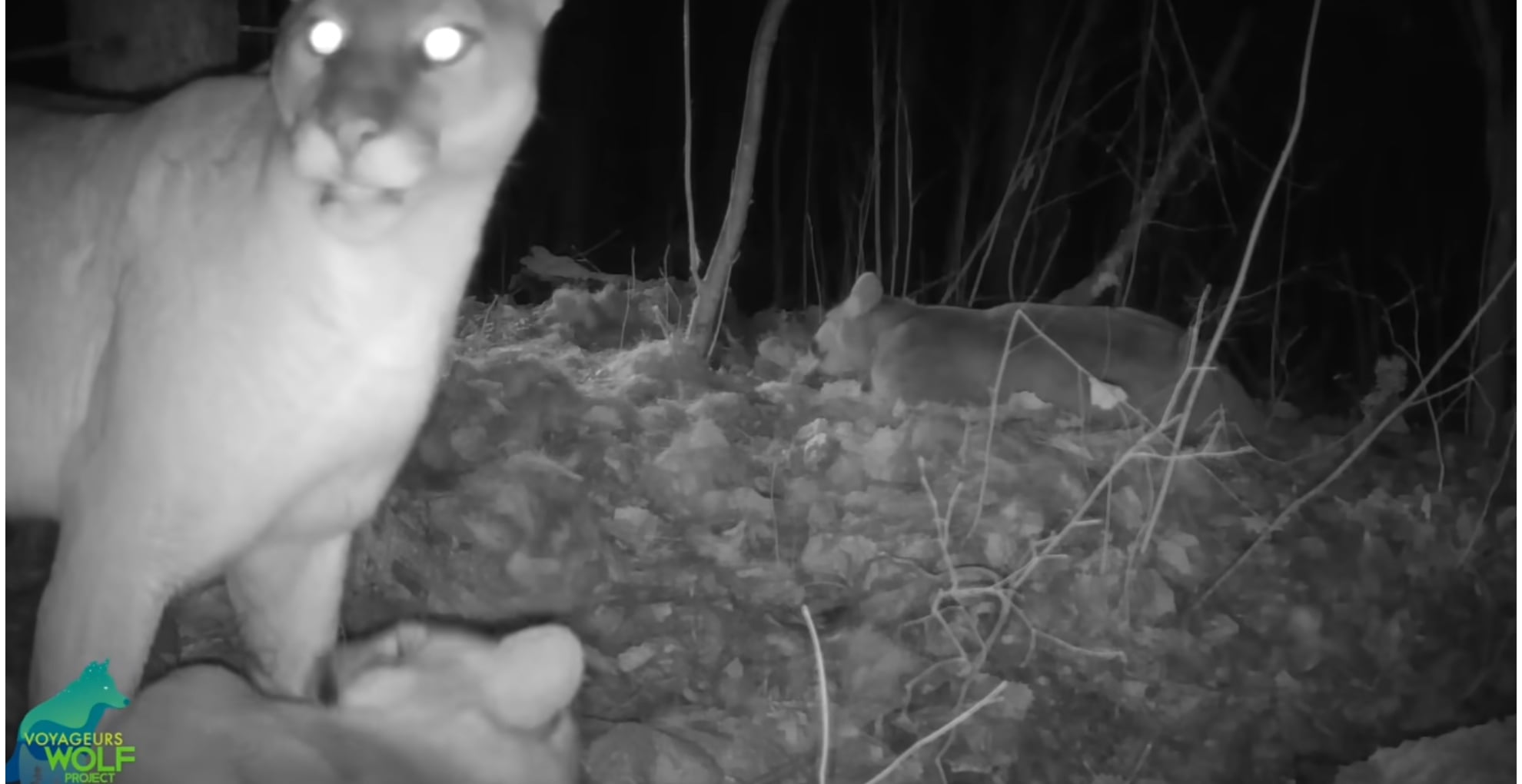
Trail cameras deployed for wolf research in northern Minnesota have captured something far more unexpected: a female cougar with three kittens, marking the first documented evidence of cougar reproduction in the state in more than 100 years.
The footage, recorded south of Voyageurs National Park and shared with the Minnesota Department of Natural Resources, offers rare visual confirmation that cougars may be returning to a landscape where they were once considered locally extinct.
Cameras Reveal A Hidden Wildlife Moment
The video shows the cougar family feeding at a deer kill, with the kittens appearing to be several months old and interacting closely with the adult female. Researchers said the moment unfolded across roughly four hours of recorded footage.
“Looking at the footage was and still is surreal. We never anticipated seeing four cougars together in northern Minnesota,” said Thomas Gable, project lead of the Voyageurs Wolf Project.
The footage shows grooming behavior, vocalizations, and social interaction between the animals, offering a detailed look at a species that is rarely seen in the region.
John Erb, a research biologist with the Minnesota DNR, estimated the kittens to be around seven to nine months old based on visible traits in the video. Previous confirmed sightings of cougar kittens in Minnesota were linked to escaped captive animals in the early 2000s.
Why Cameras Matter In Wildlife Tracking
This discovery highlights how modern camera technology has changed wildlife research. Trail cameras allow researchers to monitor remote areas continuously without human presence, capturing behavior that would otherwise go unseen.
In this case, the footage was only obtained because researchers placed cameras near a GPS-collared deer suspected to have been killed by a predator. Without that targeted setup, the interaction between the cougar family and the kill site would likely have gone undocumented.
Camera traps are now widely used in ecological studies because they reduce disturbance while increasing the chance of capturing rare or nocturnal activity. They also provide time-stamped visual evidence that can be reviewed and verified, which is critical when tracking elusive species like cougars.
A Possible Turning Point For Cougars In The Midwest
Cougars were historically native to Minnesota but were eliminated from the region over a century ago due to hunting and habitat loss. Since then, sightings have mostly involved solitary males traveling long distances from western states.
According to the Minnesota Department of Natural Resources, cougars can travel more than 40 miles in a day, and most confirmed animals in the region appear to be transient individuals from states such as South Dakota, North Dakota, or Nebraska.
The presence of kittens changes that pattern. It suggests not only arrival but potential reproduction in the wild, although researchers caution that survival is uncertain. Kittens face threats from predators, vehicles, and environmental pressures.
Uncertain Future For A Returning Predator
“Although this is an important starting point for potential population establishment in Minnesota, predicting the future is extremely difficult,” Erb said.
He added that while this may signal early stages of recolonization, long term establishment is not guaranteed.
Even in regions with established populations, cougars remain highly elusive and rarely encountered by people. The Minnesota Department of Natural Resources continues to monitor sightings and advises caution in the rare event of an encounter.
As camera technology continues to expand into wildlife research, more unexpected moments like this may surface in places where you least expect them. What other species might be quietly returning without us noticing?
See more from DIYPhotography.net on Google
Add DIYPhotography.net as a trusted source. This makes
our stories more likely to appear in your Google Search results.
 Add as a preferred source on Google

Alysa Gavilan
Alysa Gavilan has spent years exploring photography through photojournalism and street scenes. She enjoys working with both film and mirrorless cameras, and her fascination with the craft has grown over the decades. Inspired by Vivian Maier, she is drawn to capturing everyday moments that often go unnoticed.
Related Posts
 Trail cam captures wolf running off with trail cam
 Photographer uses a 19th-century technique to capture haunting portraits of children
 Minnesota Lawmakers Move to Ban AI Apps That Turn Photos into Fake Adult Content
 Don’t be this guy: Tourist gets dangerously close to momma bear and her cubs for a photo
Join the Discussion
DIYP Comment Policy
Be nice, be on-topic, no personal information or flames.