




















A Dark Cloud of Creation: Circinus West Revealed by DECam
Aug 28, 2025
Soumyadeep Mukherjee
Soumyadeep Mukherjee is an award-winning astrophotographer from India. He has a doctorate degree in Linguistics. His work extends to the sub-genres of nightscape, deep sky, solar, lunar and optical phenomenon photography. He is also a photography educator and has conducted numerous workshops. His works have appeared in over 40 books & magazines including Astronomy, BBC Sky at Night, Sky & Telescope among others, and in various websites including National Geographic, NASA, Forbes. He was the first Indian to win “Astronomy Photographer of the Year” award in a major category.
Share:
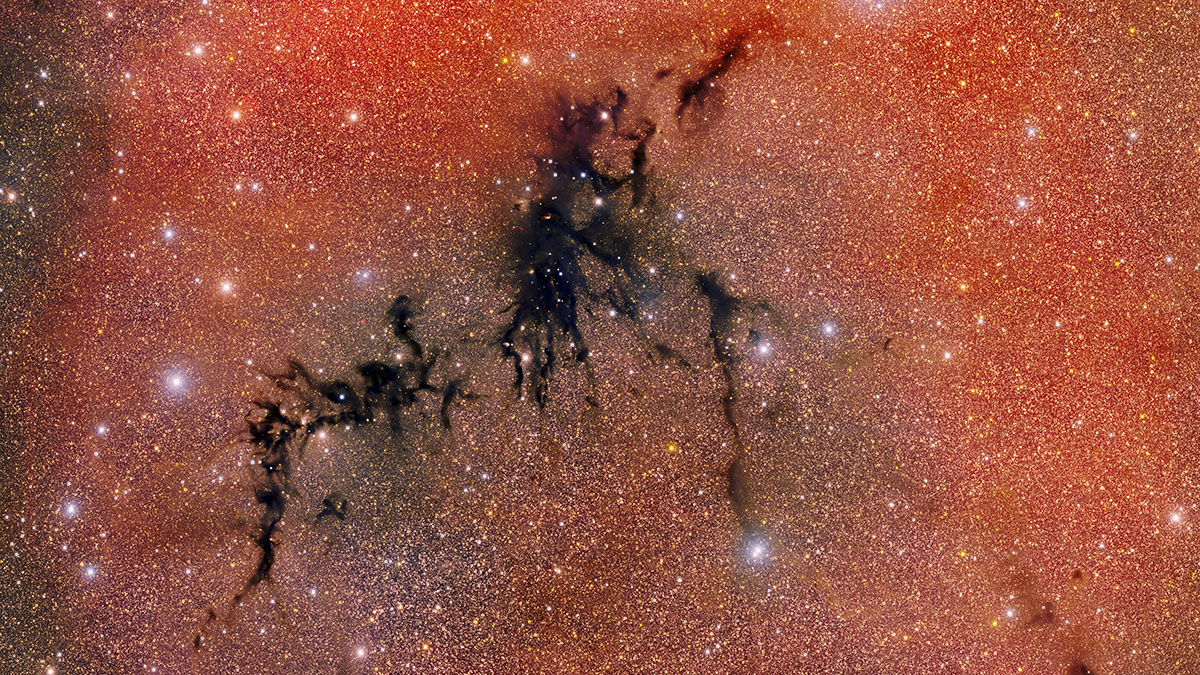
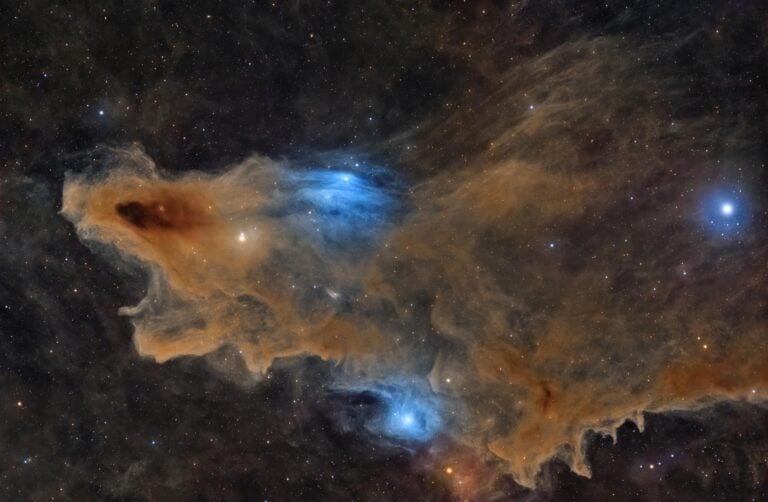
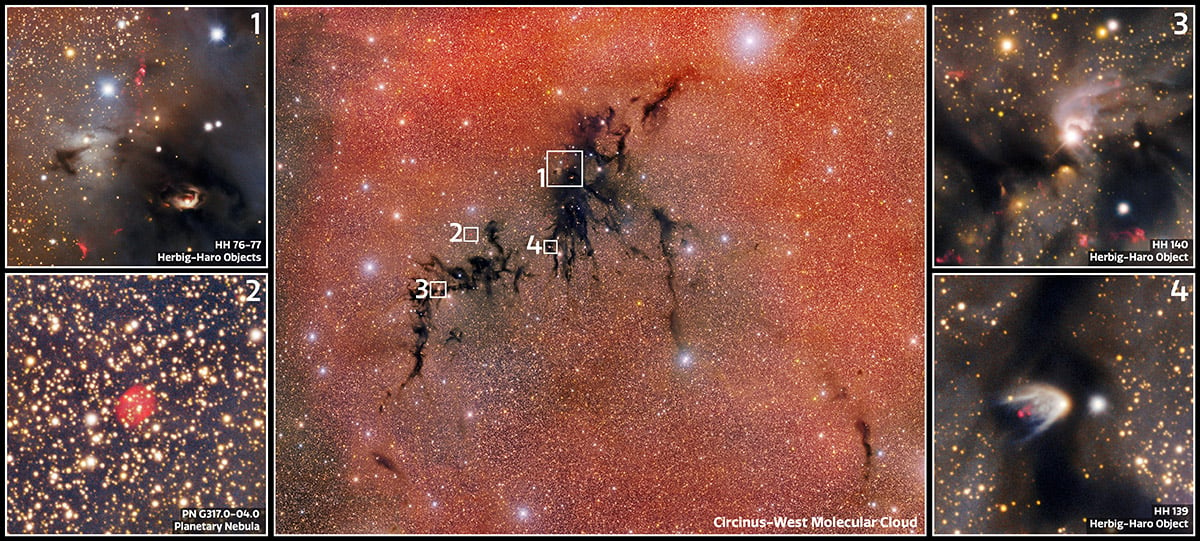
In the southern sky, tucked away in the constellation Circinus, lies a vast stretch of darkness. To the naked eye, it appears as an empty patch, a region where stars seem to vanish. But modern instruments have shown that this darkness is far from empty. It is a molecular cloud called Circinus West, a dense collection of cold gas and dust where new stars are quietly forming. The latest images of Circinus West come from the Dark Energy Camera (DECam), one of the most advanced wide-field cameras in existence. Mounted on the Víctor M. Blanco 4-meter Telescope at Cerro Tololo Inter-American Observatory in Chile, DECam has revealed the cloud in exceptional detail.
DECam’s image
The Dark Energy Camera was originally designed to study distant galaxies and investigate the nature of dark energy. With a resolution of 570 megapixels, it can capture vast portions of the sky in a single frame while preserving the finest details. Its sensitivity to faint light makes it equally well suited to exploring star-forming regions within our own galaxy.
In the case of Circinus West, DECam’s capabilities bring out the delicate structures of the cloud. Dense filaments of dust appear as inky streaks blocking background starlight. Embedded within those filaments are glowing knots and patches. These are not random features but the signatures of young stars and their powerful activity.
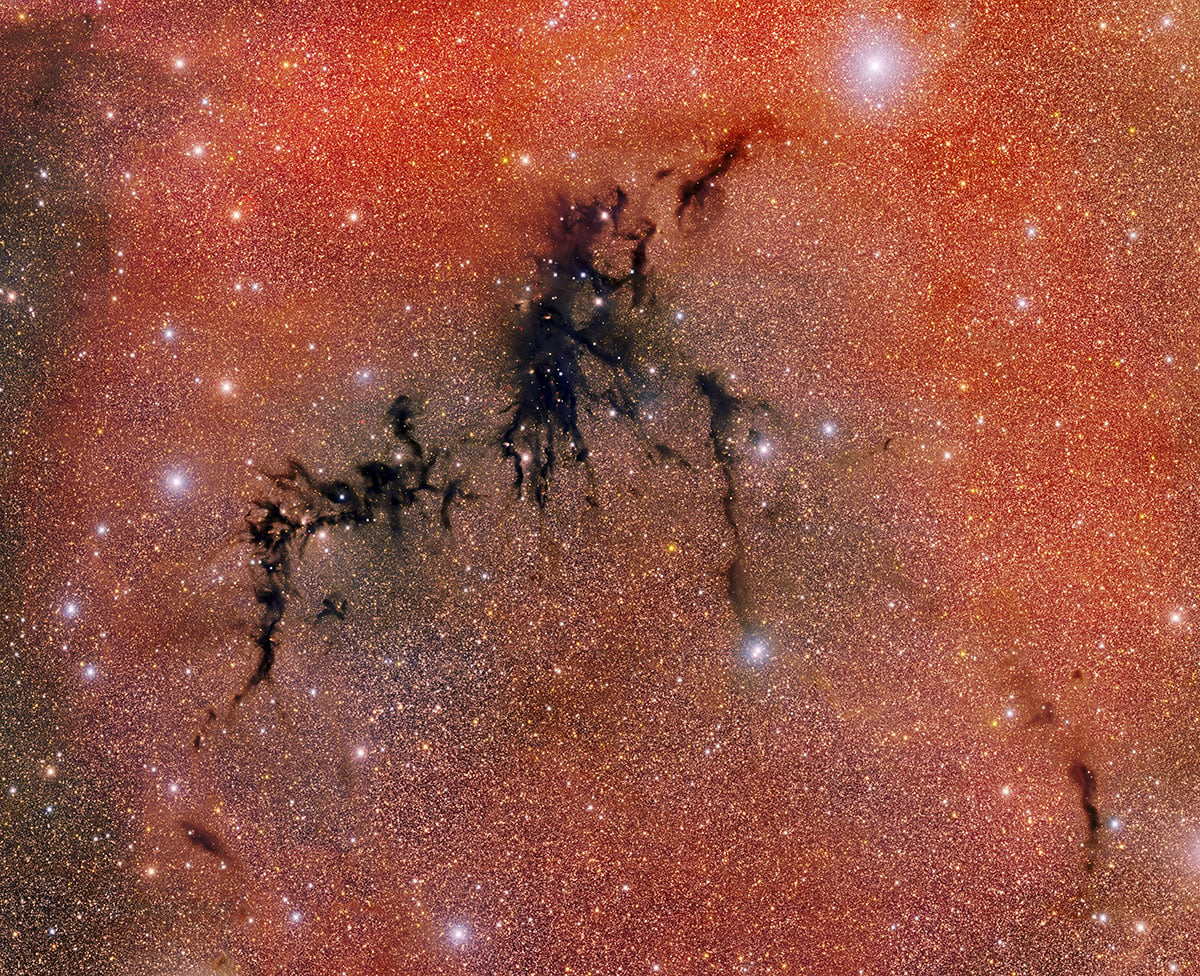
Without such instruments, these processes would remain hidden. Optical telescopes alone cannot penetrate the dark veils of molecular clouds. But DECam’s imaging power allows astronomers to capture the faint emissions from jets, shockwaves, and heated gas, giving a clear picture of what is happening inside.
Birth of stars inside the cloud
Star formation begins deep inside cold molecular clouds. Gravity pulls together pockets of gas and dust until they collapse into compact cores. As these cores grow denser, they form protostars, young stellar objects that have not yet reached full maturity.
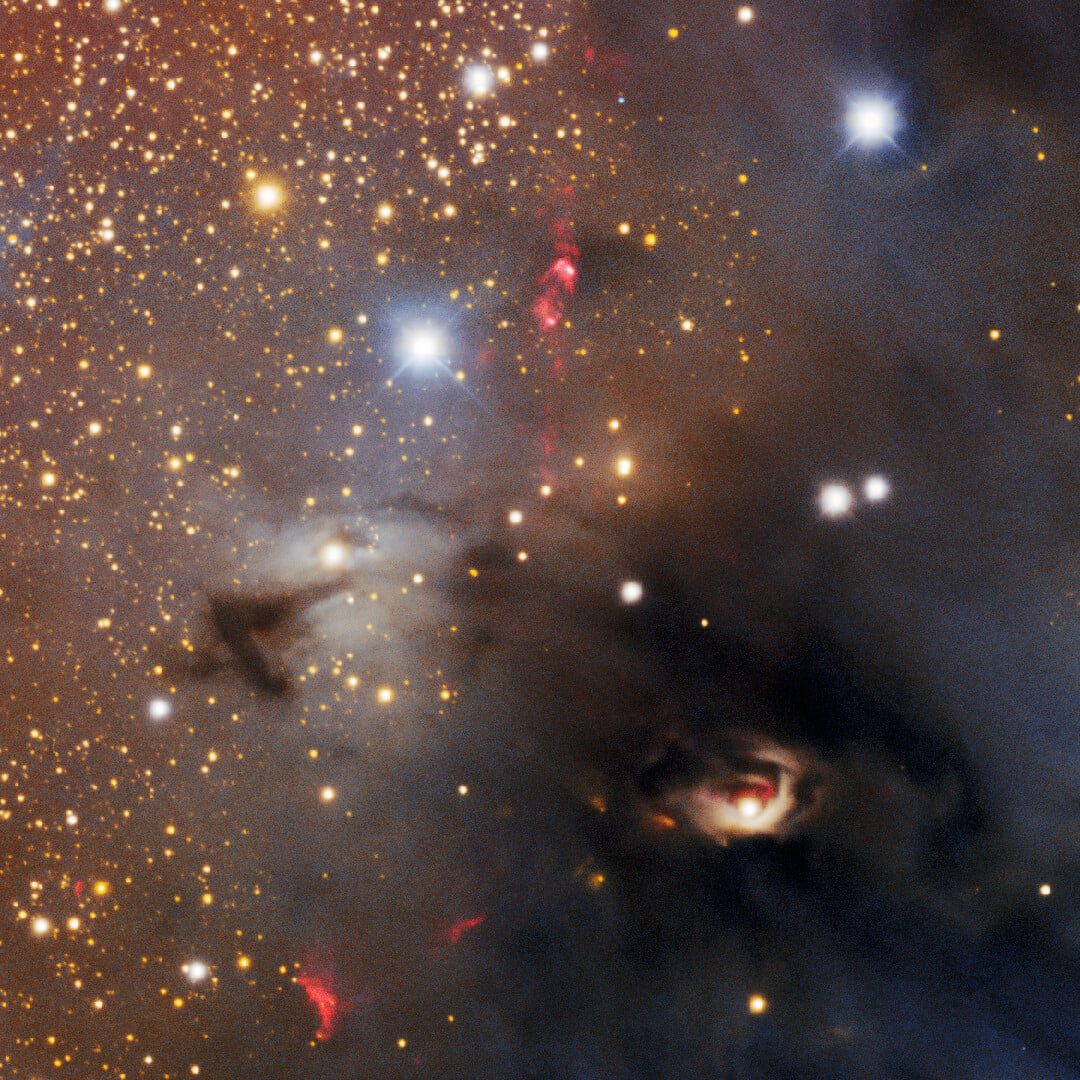
The DECam images show many such newborn stars within Circinus West. They are not visible in the way mature stars are. Instead, their presence is revealed by their interaction with the surrounding material. Protostars often eject narrow streams of gas at high speeds. When these jets collide with the slower-moving gas of the cloud, they create luminous shock fronts. Astronomers call these features Herbig-Haro (HH) objects.
In Circinus West, several HH objects are visible as glowing red patches. Each one marks the site of a protostar actively shaping its environment. Some jets carve cavities in the surrounding dust, opening up windows into the cloud. Others light up the gas with bright emission, making the otherwise invisible regions stand out.
Signs of death among new life
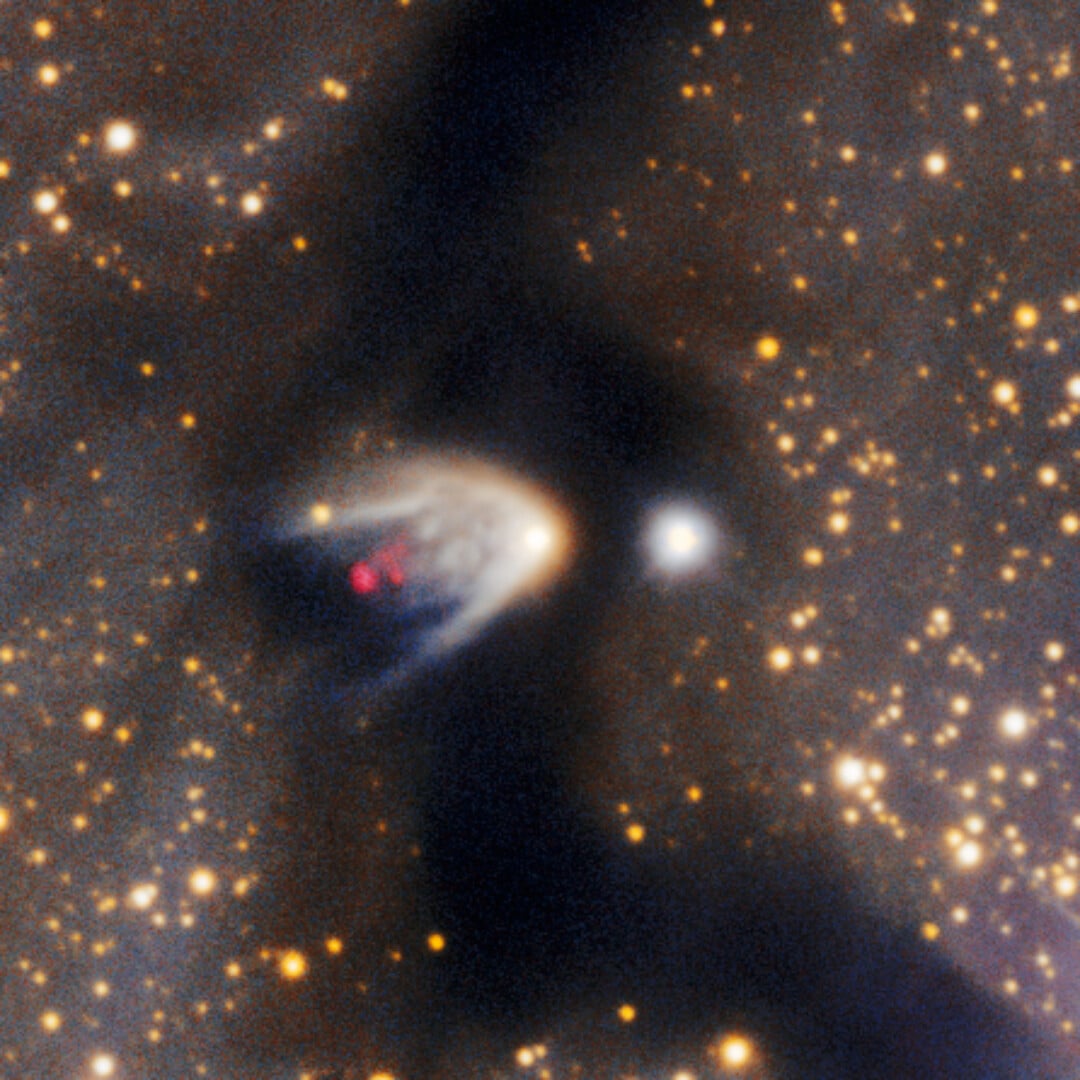
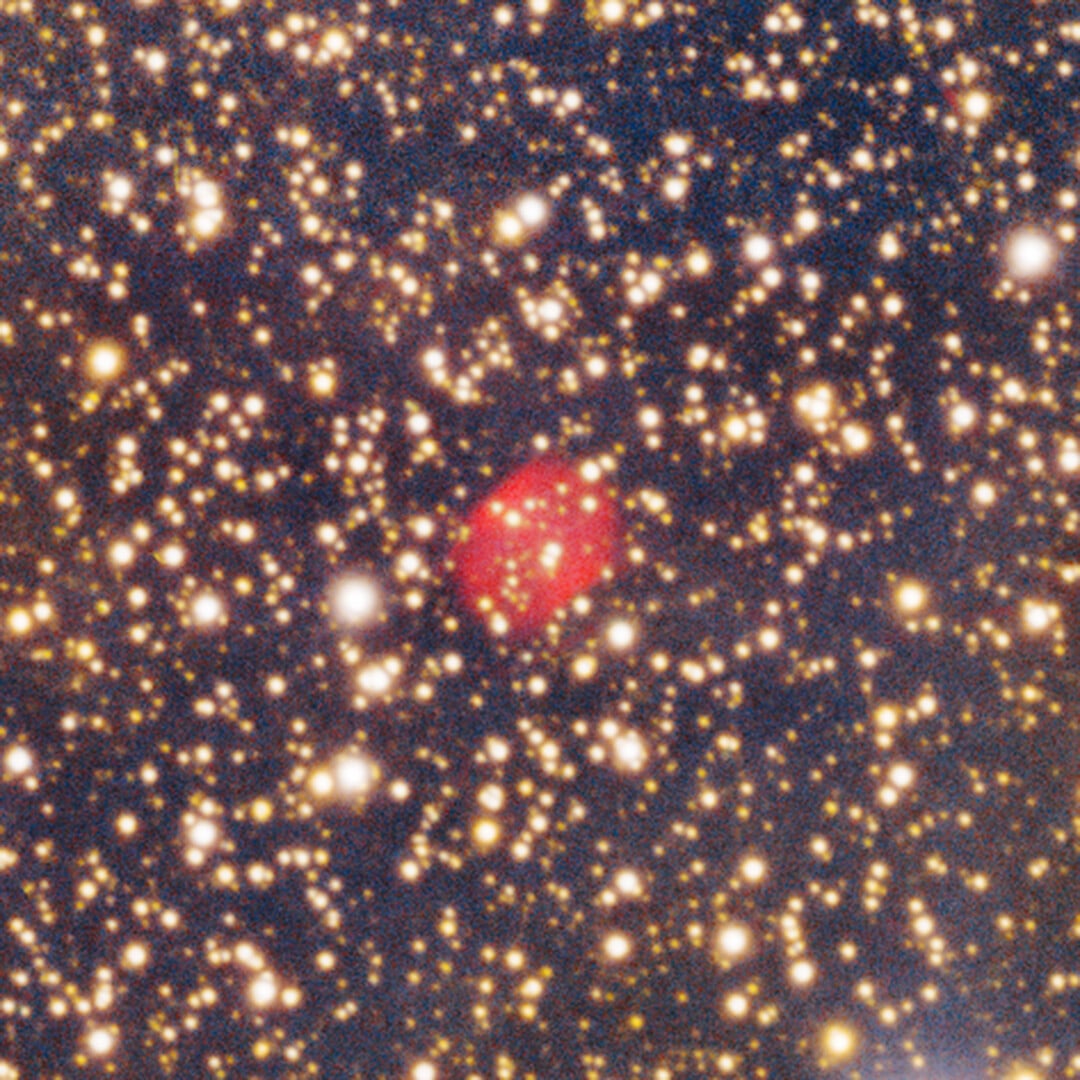
Star formation dominates the view of Circinus West, but the cloud also contains evidence of stars nearing the end of their lives. Astronomers have identified at least one planetary nebula within the region. These nebulae form when a Sun-like star exhausts its fuel and expels its outer layers into space. What remains is a hot stellar core, surrounded by glowing shells of gas.
The presence of a planetary nebula in Circinus West is striking. It means that within the same field of view, we see both the earliest and latest phases of stellar evolution. Young protostars are just beginning their lives, while an older star has already cast off its final layers. This juxtaposition emphasizes how dynamic and diverse a single region of space can be.
Why Circinus West?
Studying molecular clouds like Circinus West is crucial for understanding how stars form and evolve. The Sun itself was once born in a similar environment about 4.6 billion years ago. By observing regions like this, astronomers gain insights into the processes that shaped our own solar system.
The DECam images show how protostars regulate their own growth. By ejecting material through jets and winds, they limit how much gas they can accrete. At the same time, these outflows reshape the surrounding cloud, influencing where other stars may form. This feedback is essential for understanding the balance of star formation in galaxies.
Clear skies!
See more from DIYPhotography.net on Google
Add DIYPhotography.net as a trusted source. This makes
our stories more likely to appear in your Google Search results.
 Add as a preferred source on Google

Soumyadeep Mukherjee
Soumyadeep Mukherjee is an award-winning astrophotographer from India. He has a doctorate degree in Linguistics. His work extends to the sub-genres of nightscape, deep sky, solar, lunar and optical phenomenon photography. He is also a photography educator and has conducted numerous workshops. His works have appeared in over 40 books & magazines including Astronomy, BBC Sky at Night, Sky & Telescope among others, and in various websites including National Geographic, NASA, Forbes. He was the first Indian to win “Astronomy Photographer of the Year” award in a major category.
Related Posts
 Dark Matter and Cosmic Collisions: DECam “Bites” the Bullet Cluster
 Euclid Captures Orion’s Dark Cloud, Revealing a Hidden Stellar Nursery
 Enjoy The World’s Disappearing Dark Skies With These Spectacular Winning Shots from Capture The Dark 2025
 Astronaut snaps stunning aerial view of Key West from International Space Station
Join the Discussion
DIYP Comment Policy
Be nice, be on-topic, no personal information or flames.