















SharpStar Mark III Harmonic GEM: A New Generation of Equatorial Mounts
Aug 22, 2025
Soumyadeep Mukherjee
Soumyadeep Mukherjee is an award-winning astrophotographer from India. He has a doctorate degree in Linguistics. His work extends to the sub-genres of nightscape, deep sky, solar, lunar and optical phenomenon photography. He is also a photography educator and has conducted numerous workshops. His works have appeared in over 40 books & magazines including Astronomy, BBC Sky at Night, Sky & Telescope among others, and in various websites including National Geographic, NASA, Forbes. He was the first Indian to win “Astronomy Photographer of the Year” award in a major category.
Share:
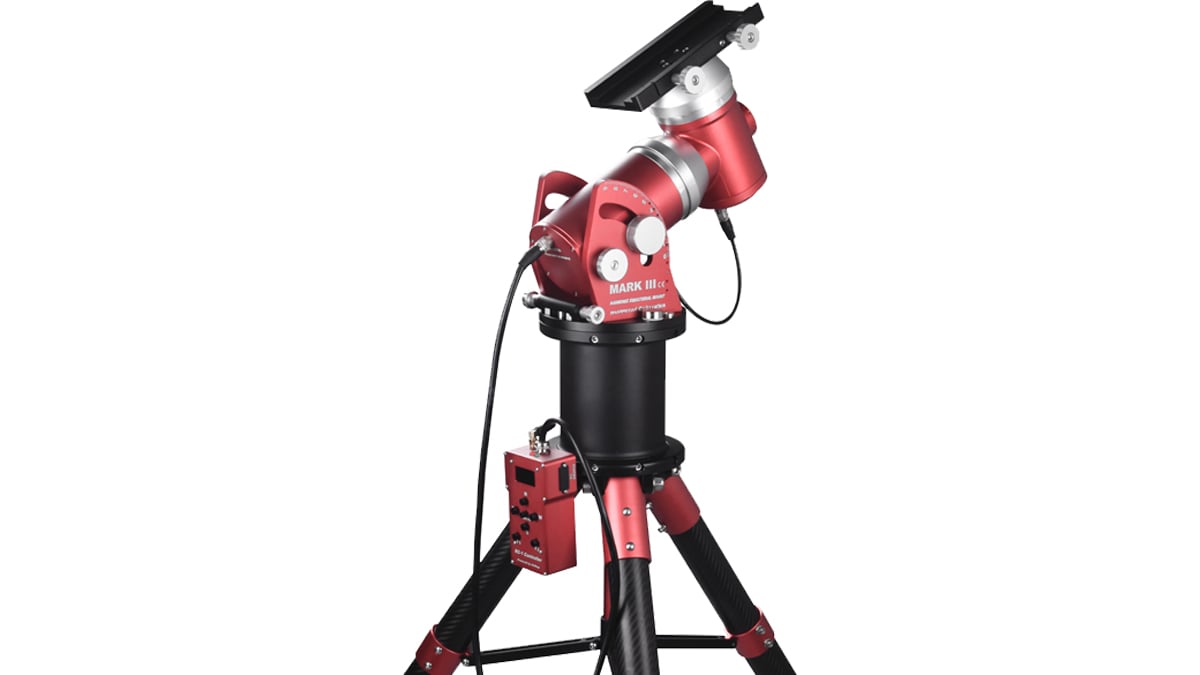
In the world of astrophotography, a mount is the silent partner that makes every image possible. Without smooth tracking and stable support, even the best telescope and camera will fall short. The SharpStar Mark III Harmonic German Equatorial Mount is one of those designs that promise both portability and precision. It is the kind of tool that changes how and where astronomers work. The mount blends the traditional German equatorial form with modern harmonic drive technology. This combination provides a high payload capacity without the bulk and complexity of conventional worm-gear mounts. For astrophotographers who want to travel light but shoot big, this is a compelling option. The Mark III is built for demanding users; it handles heavy instruments but remains light enough to carry into the field. It offers advanced GOTO functions, precise tracking, and compatibility with the most popular astronomy control systems.
Power without the weight
One of the first things we notice is the weight, or rather, the lack of it. The mount head itself weighs just 7.65 kg. Pair it with the dedicated carbon-fiber tripod, and the complete setup comes to about 12.6 kg. That includes the extension tube for comfortable viewing and imaging. The result is a genuinely portable system, even for solo observers hiking to dark sites. Yet the light frame hides a surprising strength. Without counterweights, the Mark III can carry up to 22 kg of gear. With counterweights, it can support as much as 28 kg, provided the telescope’s center of mass is within 150 mm of the mount’s axis. That is enough to carry a mid-size refractor, a Schmidt-Cassegrain, or a fully equipped astrograph with cameras, filter wheels, and guiding systems. For many astrophotographers, that means one mount can handle almost every instrument they own.
This high capacity in a small package is no accident. It comes from the use of harmonic drive technology, a system that delivers high torque and stability without the mass of conventional gearing. For observers who have struggled with the heavy, counterweight-laden mounts of the past, the Mark III offers a very different experience.
The harmonic advantage
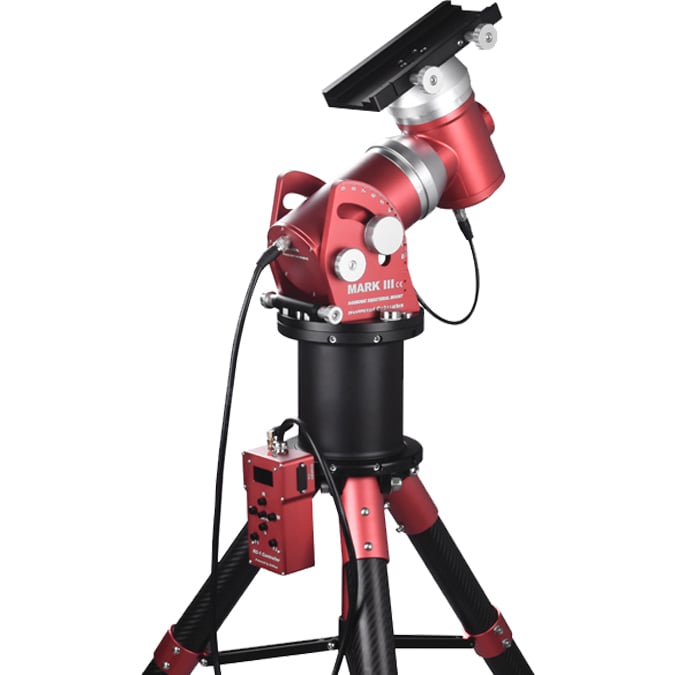
At the heart of the Mark III are two precision harmonic reducers, one for the right ascension axis and one for declination. Each is a 20 mm unit with a gear ratio of 1:1000. Unlike traditional worm drives, harmonic systems use a flex-spline mechanism that eliminates most mechanical backlash. The result is smooth motion and accurate positioning. The advantage is clear during long-exposure imaging. Harmonic drives keep tracking stable, even under shifting loads from cameras or changing balance as the telescope moves. The Mark III’s periodic error stays under ±20 arcseconds over a 432-second cycle, which is excellent for unguided performance and easily refined with autoguiding.
Harmonic mounts also have fewer moving parts exposed to wear. That means less maintenance and longer service intervals. For travelling astronomers, it is reassuring to know the mount can handle a night in the cold, a long drive, or a dusty field without losing precision. The design is quiet, too. The stepper motors driving each axis operate smoothly, producing only a low hum at maximum slew speed. In the field, this means you can image in silence, surrounded only by the natural sounds of the night.

Smart control and open compatibility
A mount this advanced demands equally modern control options, and SharpStar delivers. The Mark III runs on an open-source OnStep controller. This means it benefits from frequent software updates and a wide range of community-driven enhancements. It also makes the mount compatible with a broad spectrum of control systems. Users can connect via Wi-Fi or USB. The mount works with ASCOM and INDI platforms, ensuring integration with Windows, Mac, and Linux systems. It also pairs smoothly with mobile devices and is compatible with ASIAIR for wireless operation in the field.
A CNC-machined hand controller comes standard. It features a built-in celestial database, allowing quick GOTO slews to thousands of objects. The controller supports up to nine-star alignment routines, increasing pointing accuracy across the sky. An electrical home-position sensor ensures the mount always knows its reference point. For polar alignment, there is a dedicated scope port with a quick-release fitting.

Designed for the field
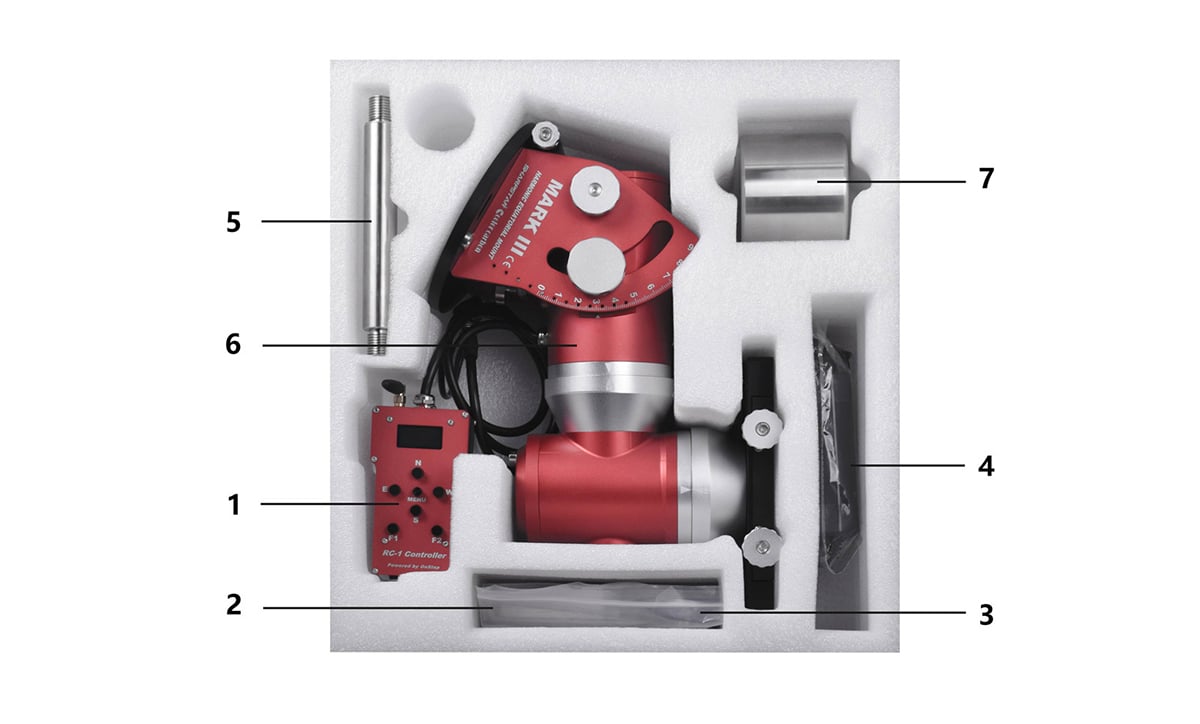
SharpStar supplies the Mark III with everything needed to get started: the mount head, tripod, extension tube, hand controller, power converter, counterweight bar, a 5 kg counterweight, and the necessary tools and cables. The carbon-fiber tripod is sturdy but light, with adjustable legs and a leveling bubble for quick setup. Small touches, like the ability to adjust tripod height by ±2.5 cm, make a difference when working on uneven ground.
The Mark III is fast when it needs to be. It can slew at up to 4° per second, though the default is 2°/s for safety and accuracy. When guiding, speeds range from 2× sidereal to 950×, offering fine control for every imaging style. Whether you are tracking a planet at high magnification or following a faint nebula across the sky, the mount’s response remains smooth. Latitude adjustments cover 15° to 90°, meaning it can operate almost anywhere in the world. Azimuth fine-tuning allows ±4° adjustments for accurate polar alignment. Once aligned, the mount’s tracking remains steady for hours.
Price and availability
The SharpStar Mark III Harmonic German Equatorial Mount is priced at $3,690 and is available via online retailers.

This mount represents a shift in what astrophotographers can expect from portable mounts. It brings high payload capacity, precision tracking, and advanced control into a package light enough to carry into the field. Its harmonic drive system offers the stability and low maintenance that travelling astronomers value. Its open-source control and broad compatibility mean it will fit into almost any workflow. And its thoughtful design shows an understanding of what observers face when working far from home.
Clear skies!

Soumyadeep Mukherjee
Soumyadeep Mukherjee is an award-winning astrophotographer from India. He has a doctorate degree in Linguistics. His work extends to the sub-genres of nightscape, deep sky, solar, lunar and optical phenomenon photography. He is also a photography educator and has conducted numerous workshops. His works have appeared in over 40 books & magazines including Astronomy, BBC Sky at Night, Sky & Telescope among others, and in various websites including National Geographic, NASA, Forbes. He was the first Indian to win “Astronomy Photographer of the Year” award in a major category.


Join the Discussion
DIYP Comment Policy
Be nice, be on-topic, no personal information or flames.