























Star Photographed with “Boring” Disc: MP Mus Surprises Astronomers
Jul 29, 2025
Soumyadeep Mukherjee
Soumyadeep Mukherjee is an award-winning astrophotographer from India. He has a doctorate degree in Linguistics. His work extends to the sub-genres of nightscape, deep sky, solar, lunar and optical phenomenon photography. He is also a photography educator and has conducted numerous workshops. His works have appeared in over 40 books & magazines including Astronomy, BBC Sky at Night, Sky & Telescope among others, and in various websites including National Geographic, NASA, Forbes. He was the first Indian to win “Astronomy Photographer of the Year” award in a major category.
Share:
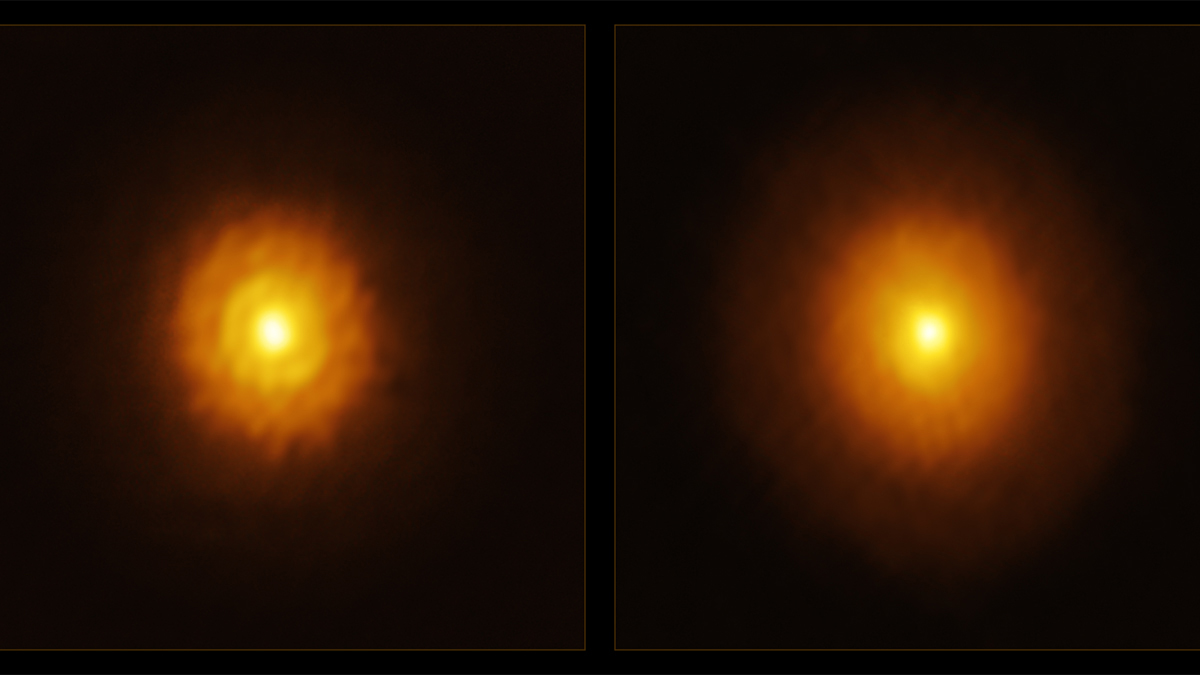
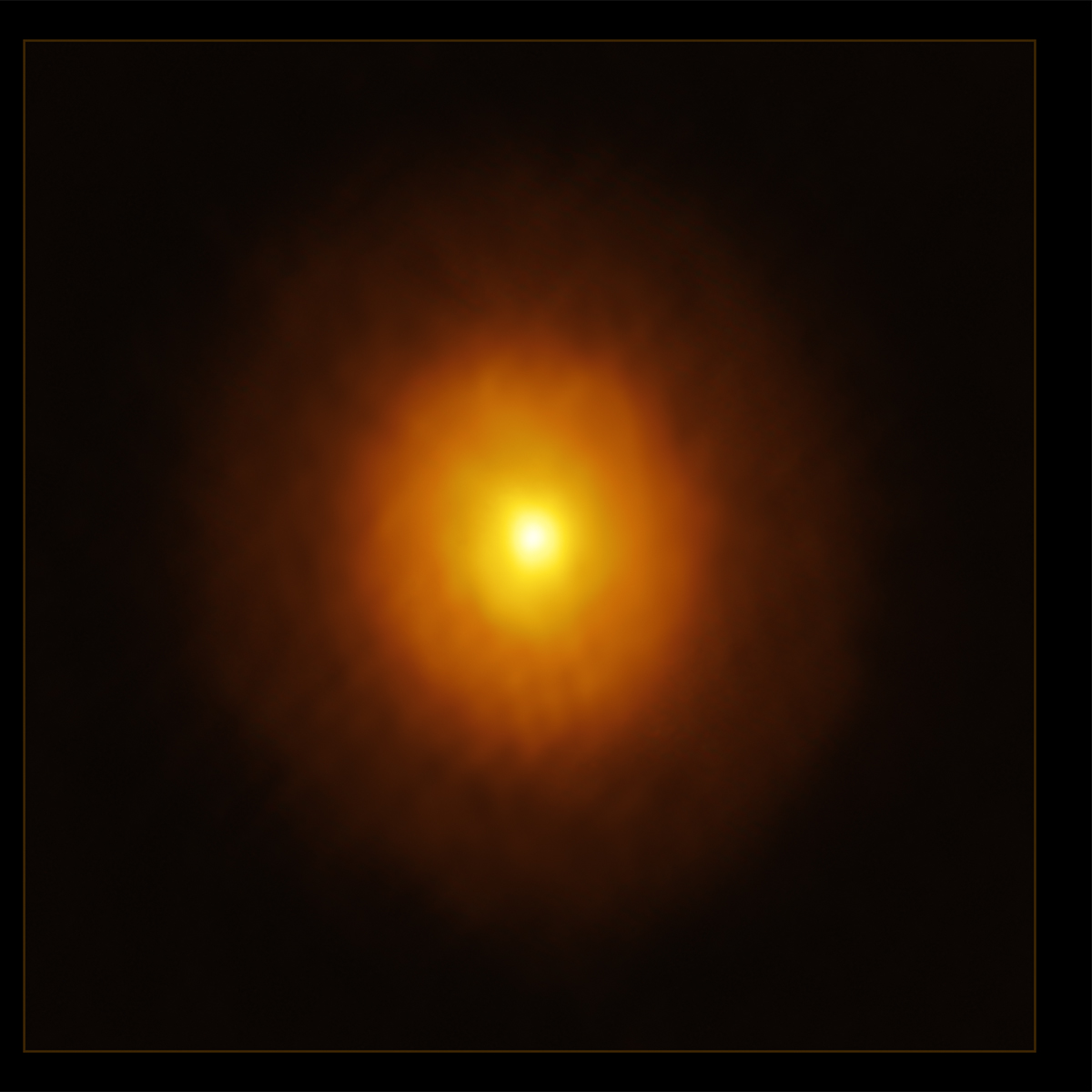
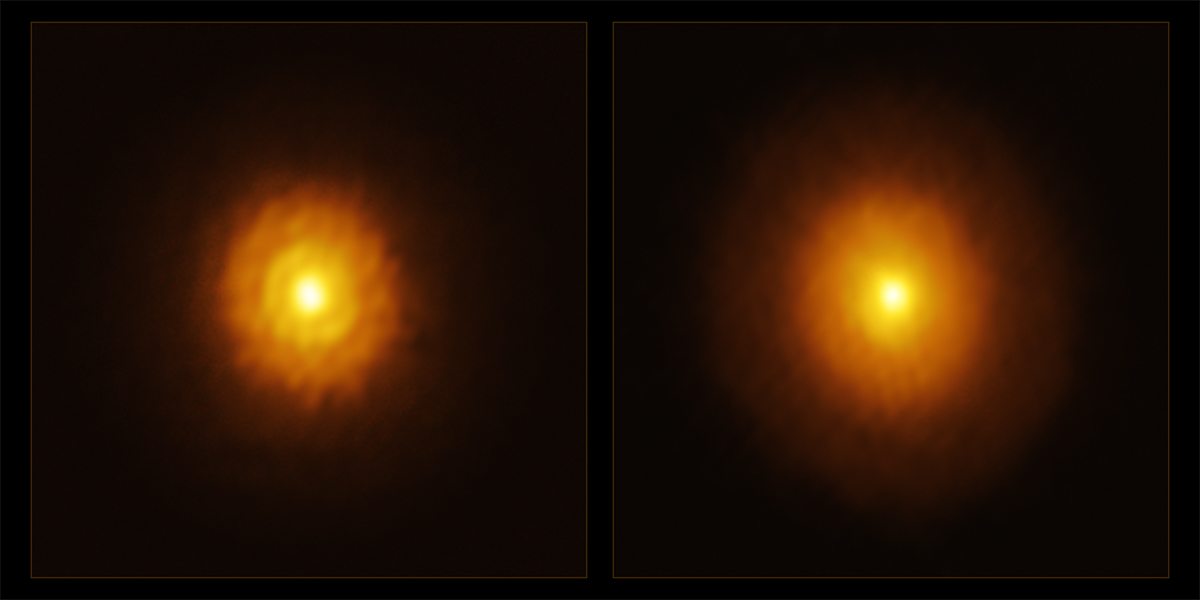
Astronomers love to study young stars surrounded by dusty discs. These discs are the birthplaces of planets. One such star is MP Muscae, also known as MP Mus or PDS 66. It lies about 160 light-years away in the southern constellation Musca, the Fly. MP Mus is only 7–10 million years old, still in its early stages of life. In 2017, scientists used the Atacama Large Millimeter/submillimeter Array (ALMA) to observe the disc around MP Mus. The image showed a smooth, featureless disc. No gaps, no rings, no spiral arms. It looked empty. So, astronomers assumed it had no planets. After all, forming planets usually carve out gaps or create rings in the disc. But with new images, everything changed.
A closer look at the disc
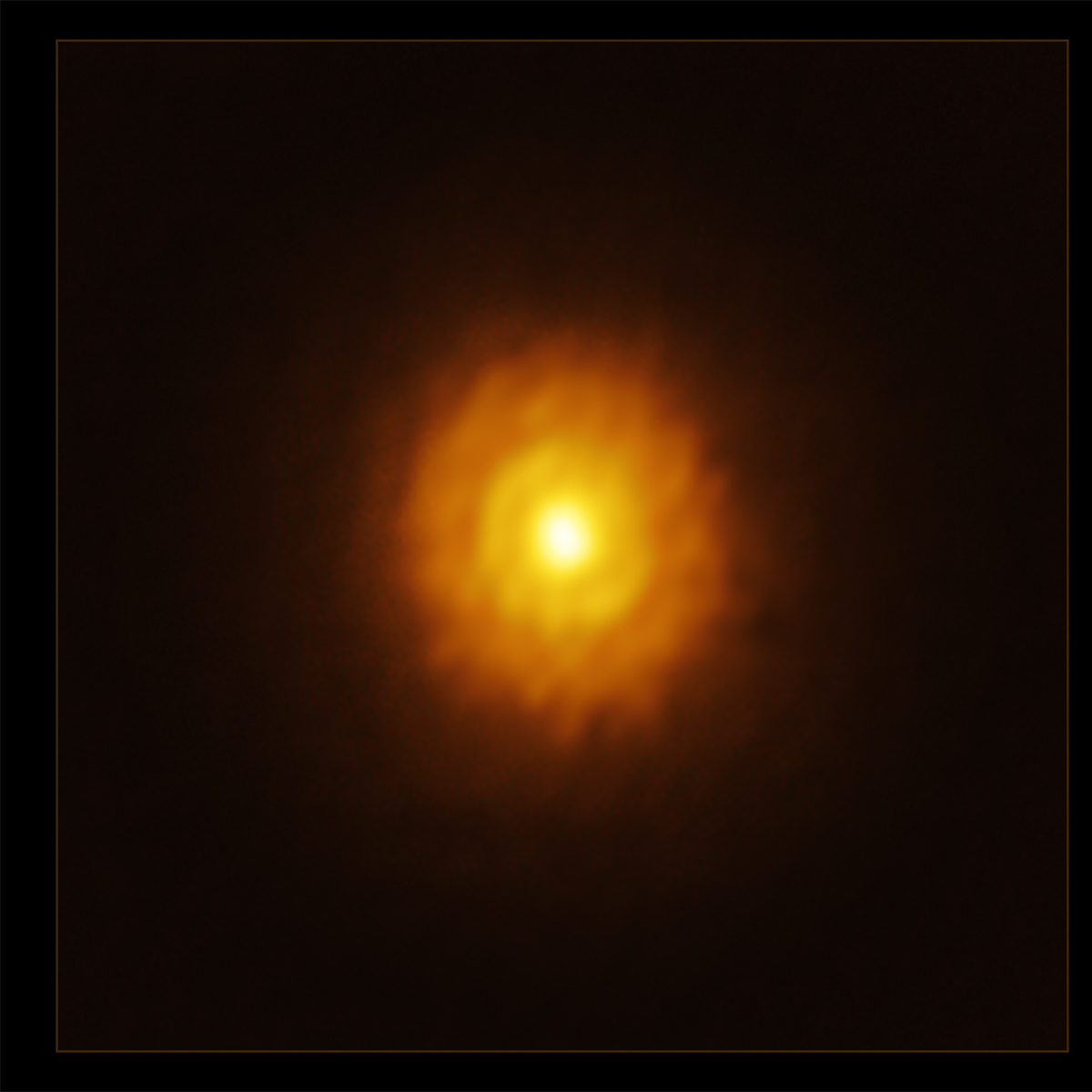
Astronomers revisited MP Mus using longer wavelengths with ALMA. Longer wavelengths help detect larger dust grains. This time, the image revealed a surprise. A clear ring and a gap appeared in the disc. These features usually suggest the presence of a forming or fully formed planet. This new image, released as ESO’s Picture of the Week, shows two panels side by side. The right panel shows the 2017 image. It looks smooth and bland. The left panel shows the 2025 image. A bright ring with a dark gap stands out clearly. This was a game-changer.
Disc structures and planet formation
Protoplanetary discs are made of gas and dust. Over time, the dust clumps together to form planets. When planets form, they can disturb the material around them. These disturbances often create structures in the disc. Rings, gaps, and spirals are all signs of this interaction. So, when astronomers saw the ring and gap in the new image, they had a strong clue. Something massive was shaping the disc. Probably a planet. But imaging alone wasn’t enough. They needed more evidence.
Enter Gaia: The star’s wobble
At the same time, another dataset added more intrigue. The Gaia space observatory had been observing MP Mus for years. Gaia precisely tracks the position and motion of stars. It noticed something odd. MP Mus wasn’t moving in a straight line. It was wobbling slightly, as if something was tugging at it. This wobble is a well-known sign of a planet. When a planet orbits a star, it doesn’t just move around the star. The star also moves slightly in response to the planet’s gravity. This effect is called astrometric wobble. Gaia detected this wobble in MP Mus. The data matched what you’d expect from a massive gas giant orbiting the star.
A planet hidden in plain sight
The combination of ALMA and Gaia data sealed the deal. The 2025 study concluded that MP Mus likely hosts at least one large planet. The planet is probably responsible for the ring and gap seen in the disc. It also explains the star’s wobble. This finding was published in Nature Astronomy in July 2025. The authors pointed out a major lesson. A smooth-looking disc doesn’t always mean it’s empty. Sometimes, the instruments aren’t tuned to the right settings. Observing at different wavelengths can reveal hidden details.
MP Mus: A solar system in the making
The discovery around MP Mus is not just exciting, it’s essential. MP Mus is a T Tauri star, meaning it’s a very young, low-mass star. Our own Sun may have looked like this in its youth. So, MP Mus gives us a chance to study what our early Solar System might have looked like. With a gas giant forming (or already formed), MP Mus could be building a planetary system. Other smaller planets might also be forming, hidden in the disc. Over the next few million years, the disc will likely clear out. Then, the full system will emerge.
MP Mus reminds us of a key truth in science: appearances can be deceptive. What looked like a boring disc turned out to host a giant planet. All it took was the right wavelength and a little patience. This discovery shows how powerful our modern instruments have become. With telescopes like ALMA and missions like Gaia, we are uncovering the secrets of planet formation. One dusty disc at a time.
Clear skies!
See more from DIYPhotography.net on Google
Add DIYPhotography.net as a trusted source. This makes
our stories more likely to appear in your Google Search results.
 Add as a preferred source on Google

Soumyadeep Mukherjee
Soumyadeep Mukherjee is an award-winning astrophotographer from India. He has a doctorate degree in Linguistics. His work extends to the sub-genres of nightscape, deep sky, solar, lunar and optical phenomenon photography. He is also a photography educator and has conducted numerous workshops. His works have appeared in over 40 books & magazines including Astronomy, BBC Sky at Night, Sky & Telescope among others, and in various websites including National Geographic, NASA, Forbes. He was the first Indian to win “Astronomy Photographer of the Year” award in a major category.



Join the Discussion
DIYP Comment Policy
Be nice, be on-topic, no personal information or flames.