






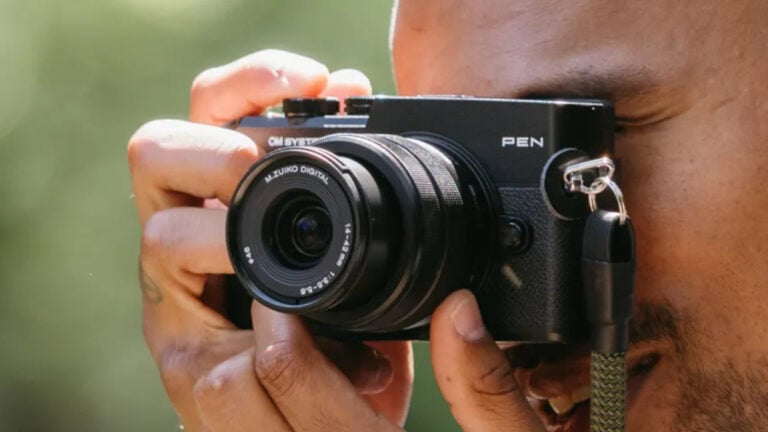

















Canon lends a helping hand to hardware hackers
Sep 1, 2024
David Prochnow
Our resident “how-to” project editor, David Prochnow, lives on the Gulf Coast of the United States in Ocean Springs, Mississippi. He brings his expertise at making our photography projects accessible to everyone, from a lengthy stint acting as the Contributing How-To Editor with Popular Science magazine. While you don’t have to actually build each of his projects, reading about these adventures will contribute to your continued overall appreciation of do-it-yourself photography. A collection of David’s best Popular Science projects can be found in the book, “The Big Book of Hacks,” Edited by Doug Cantor.
Share:

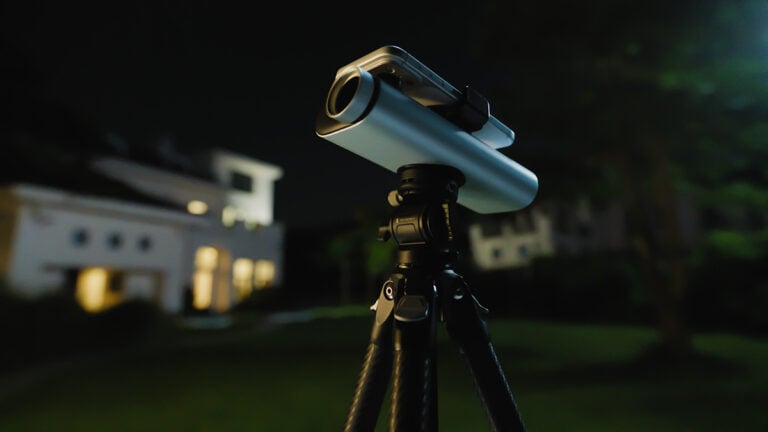
A round of applause goes to Canon, Inc. for innocently providing hardware hackers with disassembly instructions, accompanied by step-by-step illustrations, for the Canon Zoom monocular camera. Yes, that’s right; located at the end of the “Advanced User Guide” (see Figure 1) for this quirky camera, Canon has deliberately diagrammed these helpful bits of information under the innocuous heading, “Before Disposal.” But, why would they do that, you ask? The answer can be traced back to 2006 and the European Union (EU).
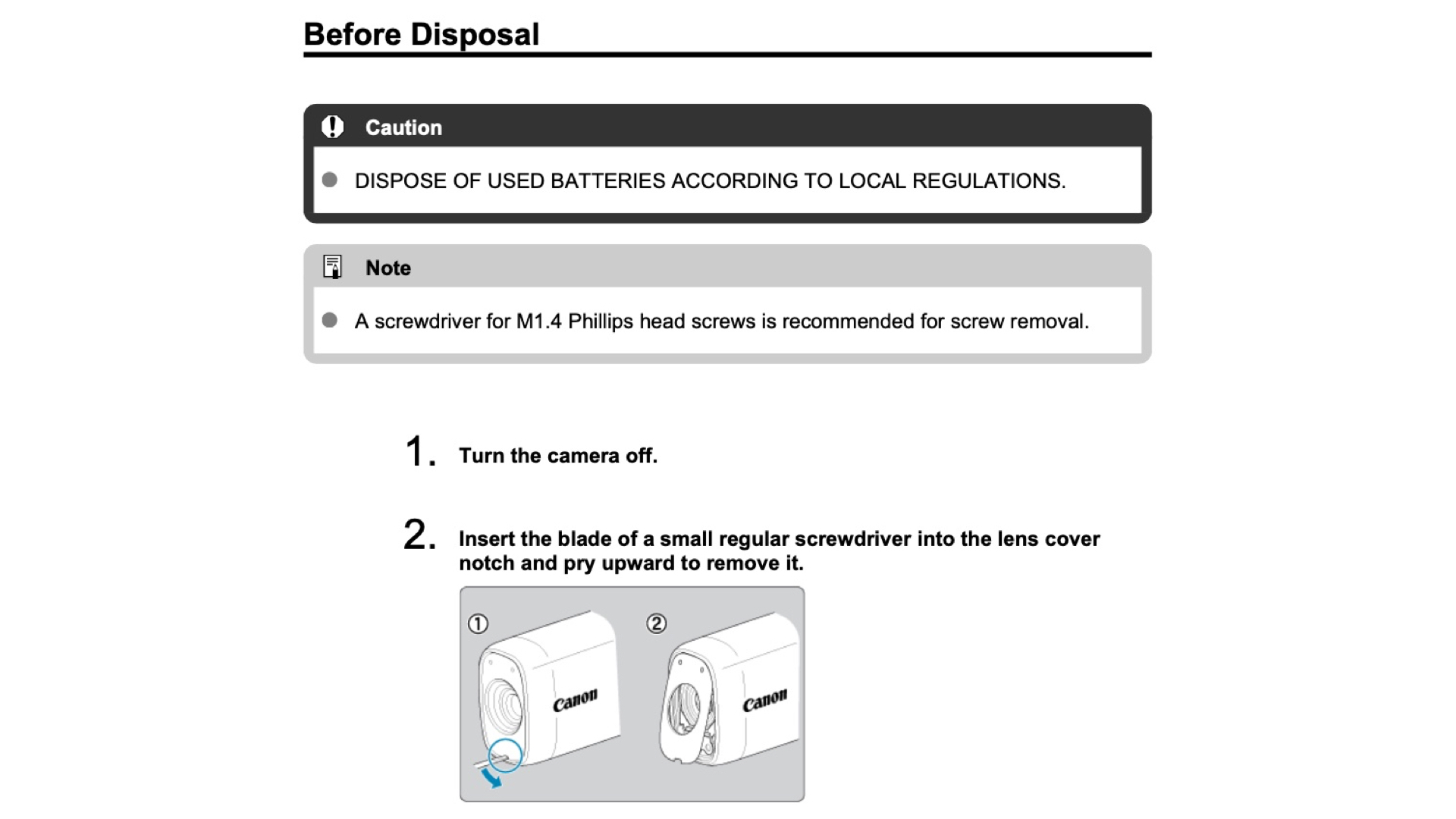
At that time, the EU was modernizing their directive regarding the handling of battery waste. In this lengthy document, Article 11 defines the parameters for dealing with battery disposal in consumer electronics. Some of the fine print reads:
Member States shall ensure that manufacturers design appliances in such a way that waste batteries and accumulators can be readily removed. Appliances into which batteries and accumulators are incorporated shall be accompanied by instructions showing how they can be removed safely and, where appropriate, informing the end-user of the type of the incorporated batteries and accumulators. These provisions shall not apply where, for safety, performance, medical or data integrity reasons, continuity of power supply is necessary and requires a permanent connection between the appliance and the battery or accumulator.
Article 11 – Removal of waste batteries and accumulators
You can read the entire directive as European Union Document 32006L0066 – Directive 2006/66/EC of the European Parliament and of the Council of 6 September 2006 on batteries and accumulators and waste batteries and accumulators and repealing Directive 91/157/EEC.
Therefore, in compliance with this directive Canon has begun appending this helpful, completely unintentional, hardware hacking information into all of their consumer electronics that feature embedded battery systems (e.g., including the Canon PowerShot Pick PTZ). You will not find this type of information, however, inside product manuals with user removable batteries. Sorry, Canon EOS R6 Mark II Mirrorless Camera owners. This same manual omission is true for ALL other camera makes/models with user removable/changeable batteries.
Now, you might be wondering if other manufacturers are including this type of “before disposal” information inside their manuals. Well, you’re kinda right and you’re kinda wrong.
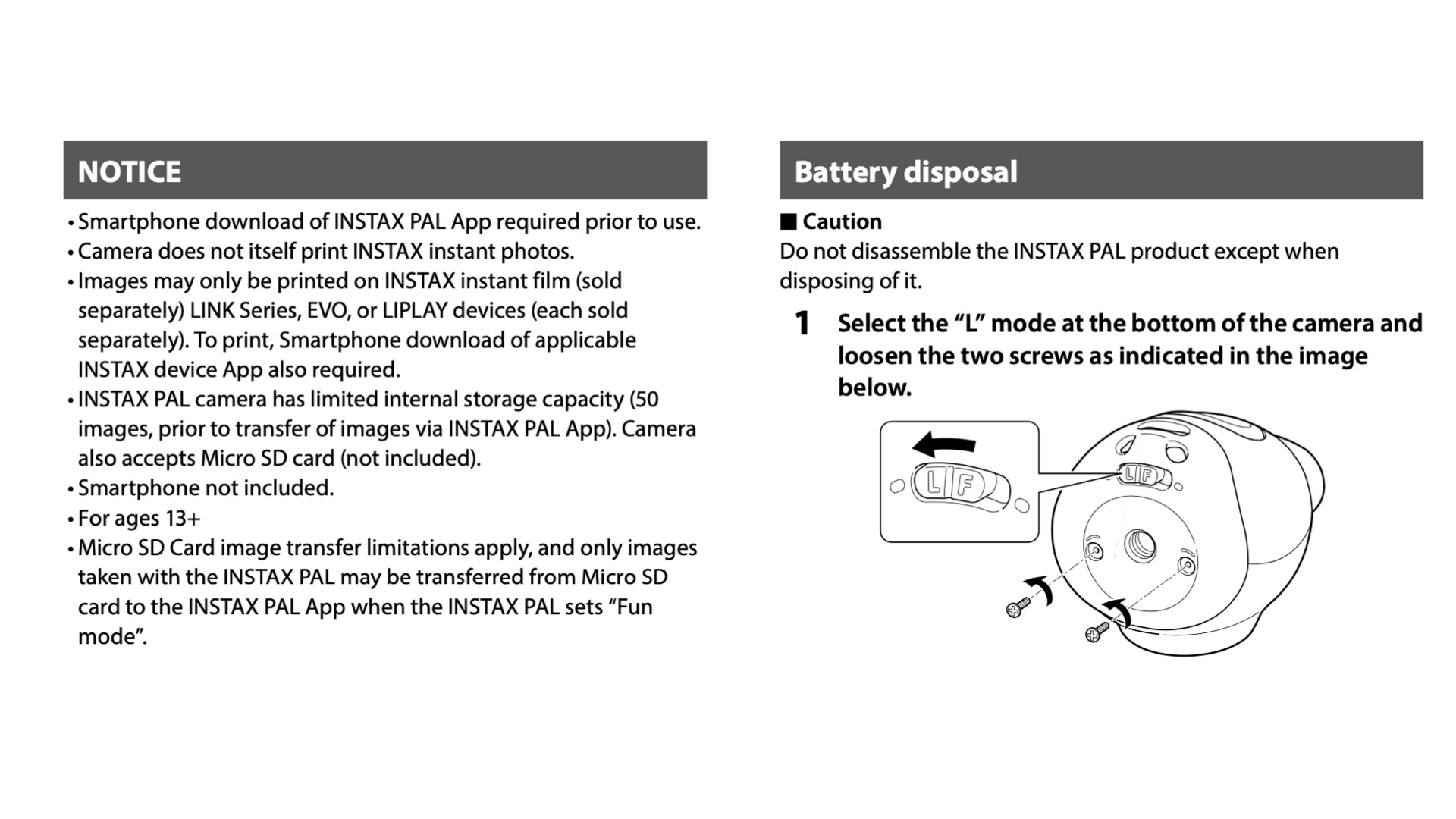
Yes, some manufacturers are following the same illustrative technique used by Canon. For example, Fujifilm has provided a “Battery Disposal” section inside their User’s Guide (Full Version) (see Figure 2) for the perky Instax Pal camera.
Whereas, other manufacturers, like Bose, have no idea how to handle this directive, as reflected in the battery removal instructions (PDF link) for the SoundLink Color II (see:):
Excerpted here:
“The page below contains instructions regarding removal of batteries required for compliance with EU Directive 2006/66/EC as amended.
“The instructions below describe a battery that should not be removed by a customer.”
Huh?
Regardless, hackers are safe in using the Canon document for guidance in gaining physical access inside the Canon PowerShot Zoom camera. Other manufacturers aren’t as benevolent.
Unfortunately, Panasonic feels compelled to threaten you for using battery removal information as a springboard to other hardware activity. For example, be prepared to retire your soldering iron after reading the battery replacement instructions at the online gateway for their line of Shavers and Grooming tools (see: https://help.na.panasonic.com/answers/how-to-replace-the-battery-shaving-and-grooming):
“How to replace the battery. – Shaving and Grooming
“…please note that this is for the recycling/disposal of the storage battery and is not intended as an explanation of disassembly for repair. If the user replaces the battery, a breakdown could result and safety cannot be ensured.”
Thanks, Panasonic.
Enjoy.
See more from DIYPhotography.net on Google
Add DIYPhotography.net as a trusted source. This makes
our stories more likely to appear in your Google Search results.
 Add as a preferred source on Google

David Prochnow
Our resident “how-to” project editor, David Prochnow, lives on the Gulf Coast of the United States in Ocean Springs, Mississippi. He brings his expertise at making our photography projects accessible to everyone, from a lengthy stint acting as the Contributing How-To Editor with Popular Science magazine. While you don’t have to actually build each of his projects, reading about these adventures will contribute to your continued overall appreciation of do-it-yourself photography. A collection of David’s best Popular Science projects can be found in the book, “The Big Book of Hacks,” Edited by Doug Cantor.



Join the Discussion
DIYP Comment Policy
Be nice, be on-topic, no personal information or flames.
One response to “Canon lends a helping hand to hardware hackers”
hooray! Yeah, I’d expect there to be a good load of old phone and camera cameras ready to toss on a RasPi’s camera interface. MIPI CSI-2 15 and 22 pin interfaces, FFP connectors or such.