


















Create Wonderful Digital Pinhole Pictures Using a Tobacco Box

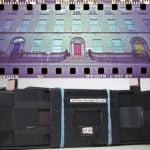
ph012 (by Matt (MattDevlinPhotography))Digital pinhole uses the same principles as a "regular pinhole" i.e. a small hole instead of lens, but as all digital cameras, it provides a way to instantly view your image and "change film" with less hustle.

Photographer Matt Devlin posted this awesome digital pinhole guide on DIYP flickr group. I thought it is worth to repost it here (with permission) to help everyone see it. Thanks Matt.

Step 1 - Get The Parts You Need

I used a Tobacco tin [Altoids will work too, if you don't care about the squareness - ut]), old body cap, double sided tape, nail, pin, hammer.
(now you could use different stuff that is what I had around the house, I am not going to list all the alternatives but a drink can would be fine and your nest best bet as your hole)

ph003 (by Matt (MattDevlinPhotography))

Step 2 - Put It All Together

Next I put the tape on the cap. A few things here: I used tape because I don’t have any spare caps at the moment I will pick some up next time I am in the city. They are cheap and real handy for DIY, this big holed one is to fit my old film lenses to the canon!

And yes, a lot of the work was done for me with the hole already in the cap, but this is not hard to do yourself. Just drill out a hole in the middle of a body cap. It has to be big-ish, give yourself some room say a 10mm-15mm drill.

Also you might need to pill the canon logo off it sits high I think that would get in the way. And lastly I would glue the tin on if it was a long-term fix but I need the cap back that big hole was hard to do

ph004 (by Matt (MattDevlinPhotography))

Step 3 - The Hole

The next step is the hole, now a tin is too hard for a pin to go through so I taped it with a nail first. Not all the way though, just till there was a dent on the other side of the tin. You only want a small hole. The smaller the better; the rounder the better too but we will see how we go.

ph005 (by Matt (MattDevlinPhotography))

The pin was next I just pushed it through with my thumb and pointer finger touching the tin as support, so I only let the tip of the pin through.

If the hole is small: higher aperture, sharper photos, bigger depth of field. A bigger hole will be faster but not as sharp.

ph006 (by Matt (MattDevlinPhotography))

The Hole

ph007 (by Matt (MattDevlinPhotography))

Stick the cap on the back of the tin as centered as you can. You can do this by eye, and if you miss a bit it is not the end of the world

ph009 (by Matt (MattDevlinPhotography))

And this is it all ready to go!

ph002 (by Matt (MattDevlinPhotography))

Added benefit of the tobacco tin it comes with a free lens cap!!

ph001 (by Matt (MattDevlinPhotography))

First Shot & Results

ph010 (by Matt<br />
(MattDevlinPhotography))

An advantage with digital is that you can still use the light meter so a lot of the hard work (or skill if you like) is done.

The bottle is actually my DIY blower it’s an old squeeze sauce bottle cleaned out and works a treat as a camera blower. (Wow two DIY projects in the one thread good value if I ever seen it!)

ph012 (by Matt (MattDevlinPhotography))

Well there you have it. I hope you got something out of it, and if you have any ways to improve on, it or want to share your design I would love to see it.

Get the DIYP greatness via RSS, newsletter and Twitter
Connect with the community:Facebook Page, Discussions, Readers Projects
Share Ideas, Setups, Images and Projects on DIYP's Flickr, visit Readers Photos

Comments

interesting

this is a very interesting project i must say.

I always wonder how do you control the focus with this awesome lens? :)

pinhole focus

  • May 28, 2010
  • Tim Shropshire

As Ansel Adams said about marvelous pinholes, "Everything is in focus, Nothing is sharp". It's the mantra for pinhole photographers. You get pretty much infinite depth of field, but your sharpness depends on the size of your pinhole.

My only "improvement" to this rig would be to pierce your pinholes in .003 inch brake shim brass with sewing needles. Poke a larger hole in the jar lid, then black tape your 1 inch brass square over that larger hole. You can find a pack a sewing needles that have the diameter of the shafts printed on the package, thus it is easy to figure out your f/stop.

Good little tutorial.  One

  • May 25, 2010
  • ClearImage

Good little tutorial.  One question though.  As with digital cameras, the shutter going off creates a relatively large amount of static electricity pulling dirt in from the environment.  Is this a problem with this pinhole method? or is the whole just to plain small?

Canon

  • May 25, 2010
  • Evan

Hi there!  May be a dumb question, given you've got test shots posted. 

I'm wondering though, does the camera throw a fit when you turn it on w/no REAL lens attached?  There would essentially be zero electronic connections between this pinhole lens and the camera body, so I'm wondering if it gets angry about the incomplete circuits.  Apparently this is a non issue??

Thanks, looks fun!  I'm slowly playing with a 35mm pinhole, but this may speed up my progress!

my case.

I have tried this with my canon 50D, a body cap and a thin piece of aluminium from a soda can. So it´s very similar to this, they work in the same way.

There´s no focus control with the pinhole although you can control the deep of field -size of the hole- and focal distance -the hole distance to the focal plane- 

I haven´t had any problems for "the incomplete circuits", my cam just doesn´t show the F info, and that´s it. In my case the camera exposure meter is not accurate when I use the pinhole cap.

I have a question also, I did a very very small and flat hole in order to try to get a very sharp image but I´m still getting soft focus images, I have seen sharper images made from can´s pinholes and b/w photo paper or 35mm film, does anyone know why is this? is because of the small size of the CCD sensor in relation with a bigger piece of paper/film or could be because the distance between the hole and the focal plane? 

Thanks to everybody!


Answers

  • May 26, 2010
  • Anonymous

@MLEONV

Yes, it's because of the small sensor size. To get sharp images with a dslr, you would need a much smaller pinhole.

@CLEARIMAGE:

You don't need to worry about the dust. Changing the lens causes much more dust to get in than leaving the pinhole lens on for even a few hours.

Neato!

  • May 26, 2010
  • Sha

This is by far the easiest digital pinhole tutorial I have come across to date. I can't wait to try it.

One suggestion, though. I used to make pinhole cameras back in the day and every piece of literature I read about it recommended sanding the pinhole with fine grit sandpaper. This gets rid of the burr (cleaner hole) and makes the metal less thick at the hole (less difraction off the metal - you "don't want a pinhole that is like a tunnel".) This worked great when using tin from a soda can or a disposeable baking pan from the grocery store. Dunno how viable it would be with a tobaco tin or the like.

Just a suggestion. Obviously your mod works fine without it. :) Thanks for posting your idea!


Thanks, I just did it myself

  • May 27, 2010
  • teehoi

Thanks, I just did it myself and I couldn't figure out why I was getting such hazy shots.  I'm going to sand it down now.


Thanks

You still will likely get hazy shots

  • May 27, 2010
  • Anonymous

The sensors of DSLRs (most of them, at least) are so much smaller than a single frame of 35mm (or larger) film. Thus, while pinholes made with a pin can produce sharp images with film, they will often produce blurry images with a DSLR. One would need to have a factory-made pinhole to achieve optimal results with a DSLR that has a small sensor size (consumer and prosumer dslrs).

How Do I get a Hole in the Lens Cap??

Any suggestion one how one who does not really have access to any tools other than a screw driver and a hammer manage to get a hole in a lens cap... I so want to try this, but I'm not sure how to get a hole in that lens cap.

Thanks!

re: tools

  • May 27, 2010
  • udijw

Hi Wendy,

Well, with a screw driver adn a hammer you can try punching the cap , thought I am not sure this will work out well in the end :)

another option is to use a drill. If you dont have one, you could try a local workshop

Putting hole in lens cap

Thank you so much! I'll try the drill. I have one of those.

Wendy

Lens Cap Pinhole

I've been shooting digital pinhole for years using the same pinhole I used with my film camera.  Use a drill to put a hole in the lens cap.  No need to buy a pinhole, just make your own.  You'll find complete instructions at http://glsmyth.com/Pinhole/Articles/FAQ/pin_faq.htm#BM3

I don't want dust to get onto my camera's sensor, so to prevent this from happening I used the glass from a slide holder that held transparencies flat.  Since slide film is used less and less these days, finding slide holders could be a problem, but keep your eye open for the ones that are glass.

Crisp pinholes

  • May 27, 2010
  • Paul Guncheon

One can purchase pre-made pnholes for example:

http://www.lenoxlaser.com

When I wanted to create a crisp edge hole back when I was doing pinhole photography, I used several double edge razor blades. I broke them in half (lengthwise) and taped them in such a position to create a tiny hole. I didn't notice any difference between using 3 edges or 4 to create the hole. I did however notice that the images were much sharper using the razor blades than any pinhole I could make by piercing metal.


aluminium foil hole

  • May 30, 2010
  • Anonymous

you can make a large hole on your support.

Then take a small piece of aluminium foil (it's so thin you don't need to make it thinner!), make a small hole on it with a needle, then cover the large hole on your support with it. An easy way to get small holes.

cheers

bodycap pinhole variation

  • July 28, 2010
  • Gj Sonke

perhaps a useful tip for those interested: to get a wider angle, get the pinhole closer to the sensor. I glued a cocacola bottle top (with an tin foil pinhole) backwards inside the body cap bringing the pinhole deep into the camera. It works great. I am not too impressed with the sharpness (hole is too big I think) but having fun none-the-less :D

Post new comment

The content of this field is kept private and will not be shown publicly.
CAPTCHA
This question is for testing whether you are a human visitor and to prevent automated spam submissions. It is not case sensitive
6 + 5 =
Solve this simple math problem and enter the result. E.g. for 1+3, enter 4.