


















Why Modern Street Photography No Longer Captures Real Emotion
Nov 26, 2025
Anzalna Siddiqui
A psychology major in her third year of Bachelor’s, Anzalna Siddiqui has endless curiosity for the human mind and a deep love for storytelling – both through words and visuals. Though she hasn’t taken up photography as a profession, her Instagram is where her passion finds its home. In addition to this, she’s a travel enthusiast who never travels without her camera because every place has a story waiting to be captured.
Share:

Every photographer needs to discuss this topic. Let’s put aside debates about gear and sensor types for a moment. A significant shift is underway in photography, particularly in documentary and modern street photography, and we need to bring it to the forefront. The shift brought on by digital technology has empowered us, but it has also transformed the subjects we capture, potentially for good.
This change, highlighted by Ruth Guest in her video, centers on surveillance and observation in our increasingly connected world. While we aim to capture genuine moments, the people we photograph are increasingly anxious about being themselves.
I think this anxiety poses a significant challenge for street and documentary photographers today. It affects the authenticity of our work. I wonder if we are honestly documenting reality, or merely the era of fear?
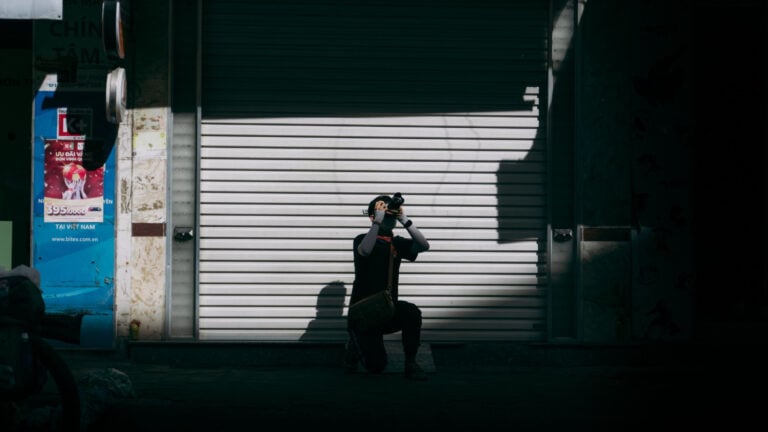
If you take pictures, you might already sense this change. When you lift your camera, the mood shifts instantly. People might freeze, look away, or even react defensively. There’s a noticeable tension in the air that wasn’t there before.
The Raw Emotion of Classic Street Photography
Have you ever seen those timeless photography books? You know, the ones that take you to another era? One great example mentioned by Ruth is “Love on the Left Bank” by Ed van der Elsken. This book is packed with stunning images from the 1950s and shares fascinating stories.
She highlights a series of photos of a woman who learns about her partner’s cheating. The woman is said to be overwhelmed with intense emotion and energy. You can feel the rawness just by looking at her face. It’s almost like you can hear the moment happening.
This brings up an interesting question in my mind: could you capture a moment like that today?
Ruth points out that the difference in how people act has changed a lot. In the 1950s, taking someone’s picture meant you were either a professional photographer or someone who enjoyed photography. People might have felt a bit curious or honored, but there wasn’t a widespread fear. Back then, people didn’t worry about their private, emotional moments being shared all over the internet.
It seems to me that the connection between the photographer and the subject was much easier. It was just a moment shared between two people. Nowadays, though, that exact moment includes you, the person being photographed, and a whole world waiting to see it on the other side of the camera.
The Age of the iPhone and Our Digital Paranoia
We live in an era where almost everyone has a phone and a camera, making information readily available. Just type in someone’s name, and you can quickly see bits of their life, or at least a polished version of it.
Ruth suggests that people today are really focused on their appearance and how others see them. They argue that there’s a lot of fear and anxiety about losing privacy, and honestly, it’s hard to blame them.
In a world where you might be captured in a friend’s picture, a tourist’s shot, or even on a city’s surveillance cameras, it feels like you’re constantly being watched. This constant awareness creates a sort of defense mechanism among people.
You might wonder how a woman from the 1950s would respond if she discovered infidelity today, in this age of smartphones.
Ruth argues she would likely keep her feelings to herself. The fear of making a scene is too much because people would whip out their phones to film. That video could impact her job, her reputation, or even turn her into an internet meme.
I think Ruth is spot on. The stakes are much higher now. An emotional reaction that once would have been private can now become public and last forever.
When Viral Consequences Suppress True Emotion
The conversation isn’t just about modern street photography ideas. We have all witnessed the real effects. Ruth shares a story from the early days of social media, specifically about a girl who was filmed misbehaving. She was apparently drunk and mentioned that her dad worked for a big company.
Ruth isn’t sure about the details, but she heard that the dad might have lost his job because the video became popular.
The accuracy of that particular story isn’t the main issue. What’s important is how people perceive it. This kind of story, even if it’s just a rumor, adds to the public’s fear of going viral for the wrong reasons. It creates a real danger: if you express yourself or act out, you could face severe public embarrassment and damage to your career.
Due to this ongoing fear, people often hold back their emotions when they’re out in public. They’ve learned to act calmly and avoid offending.
So, if you’re capturing everyday life on the streets, but everyone is putting on a show to prevent negative consequences, can we really say modern street photography reflects their true selves?
The Photographer’s Frustration: The Search for Authenticity
As photographers, what’s our goal? We aim to blend into the background and capture genuine, authentic moments that reflect the human experience. That’s why we started this journey.
Ruth shares a standard tip for modern street photography. Look away after taking a photo, perhaps gazing into the distance, so it appears as though you’re focusing on something else. It may be a bit sneaky, she admits, but it helps keep that sense of being invisible.
But this approach can be frustrating. You shouldn’t need to rely on tricks to document reality. People act differently the moment they spot a camera. They start thinking about their appearance, how they’ll be perceived, and where that photo might end up.
It’s ironic when you think about it. Your image is already everywhere! You appear in friends’ vacation photos, wild night outs, and on city security cameras. In today’s online world, your image is hard to contain. Yet, as soon as a photographer raises a non-phone camera, everyone starts to panic.
As the photographer, you’re often just trying to seize a genuine and beautiful moment. Ruth mentions that most of the time, you want to capture the real person, not the polished version people show on Instagram.
The True Price of Control in Photography
The core of the paranoia, according to Ruth, lies in the conflict between having control and losing it.
Think about how you use your phone’s camera. When you take a selfie or snap a picture of a friend, you have total control over that image. You can edit it, apply filters, and make sure your hair looks just the way you want. You’re in charge of how you present yourself online. It’s a carefully curated image, and you’re the one controlling it.
The issue comes up when a stranger with a larger camera takes your photo. In that moment, the photographer has the power to shape how you appear. You lose all control over that image and what you seem to be in it.
This anxiety increases if the photographer is using film. The person being photographed can’t see the image or request that it be deleted. They have no say because it’s a film. This total lack of control over how they are represented can lead people to have negative feelings toward photographers.
Ruth also highlights a disconnect in perceptions: how someone is perceived vs. how they wish to be seen. Many people view a camera as a threat to their identity and perceive the photographer as someone who can visually define them.
The Worsening Backlash and the Invisible Cloak
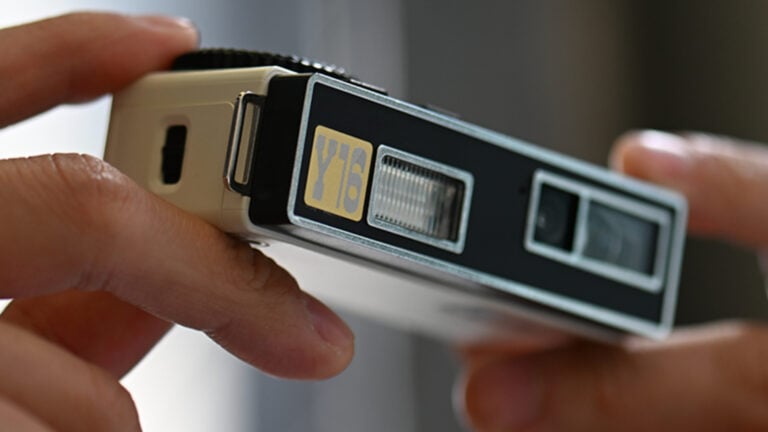
Ruth discusses the growing negativity towards photographers. She shares her experience from 2021, when she worked on a project called “Rise of the Streets,” using a small Fuji camera with a flash.
This little camera was nice because it resembled a toy, making people more open to it. It felt fun and lighthearted. However, using the flash can be pretty intense and sometimes upsetting. While some people reacted positively, asking questions like, “What was that?” there were also instances where grown men confronted her aggressively just for taking their picture.
It’s surprising, really! You’re just trying to capture the world around you, yet some people respond with hostility simply because you have a camera. She often tried to explain politely, saying things like, “I’m just a photographer, and you look great,” but usually it didn’t help.
I wish I had an invisible cloak like Harry Potter’s. Sometimes I want to take photos without drawing attention to myself. It might sound a bit sneaky, but it’s really about wanting to show reality without any interruptions or fear.
Are We Documenting History Accurately?
Are we truly capturing history accurately if our fear of being watched prevents us from showing our authentic selves?
On the one hand, Ruth acknowledges that we are accurately documenting history, given that we live in the age of smartphones. This reflects how people behave today, fearful and cautious. That’s the reality we face.
However, there’s a deeper issue at play. Ruth argues that this fear of being observed stops people from showing their authentic selves when they go out. If we can’t be genuine due to this anxiety, how can our photos represent history in the same way great photographers did in the past?
I think that the images we’re creating now highlight a culture of restraint, performance, and watchfulness. The rise of social media has led to a society that monitors itself, and our photos are capturing this significant change in how we live.
As a photographer, your challenge is to find a way to overcome this barrier in modern street photography or perhaps to document it itself. This shift is significant and worth discussing.
[The shift in photography nobody talks about I Ruth Guest; Image Credits: Envato]
See more from DIYPhotography.net on Google
Add DIYPhotography.net as a trusted source. This makes
our stories more likely to appear in your Google Search results.
 Add as a preferred source on Google

Anzalna Siddiqui
A psychology major in her third year of Bachelor’s, Anzalna Siddiqui has endless curiosity for the human mind and a deep love for storytelling – both through words and visuals. Though she hasn’t taken up photography as a profession, her Instagram is where her passion finds its home. In addition to this, she’s a travel enthusiast who never travels without her camera because every place has a story waiting to be captured.


Join the Discussion
DIYP Comment Policy
Be nice, be on-topic, no personal information or flames.
One response to “Why Modern Street Photography No Longer Captures Real Emotion”
For some people, the paranoia is simply embarrassment, but for others, there is a valid concern over what is done with the image, who sees it, what context is it presented in. When you have employers who unabashedly “spy” on their employees if their social media accounts are known, being out in public is a minefield. You add to that the increase in criminal acts like stalking and swatting. People are justifiably concerned about their picture being taken, especially if it’s by someone unknown to them. The instant gratification of the entirety of the digital world has brought us some really great things, but it’s also brought us things that require some degree of caution.