

















Welcome to the world of extreme camera modding
Oct 12, 2016
John Aldred
John Aldred is a photographer with over 25 years of experience in the portrait and commercial worlds. He is based in Scotland and has been an early adopter – and occasional beta tester – of almost every digital imaging technology in that time. As well as his creative visual work, John uses 3D printing, electronics and programming to create his own photography and filmmaking tools and consults for a number of brands across the industry.
Share:

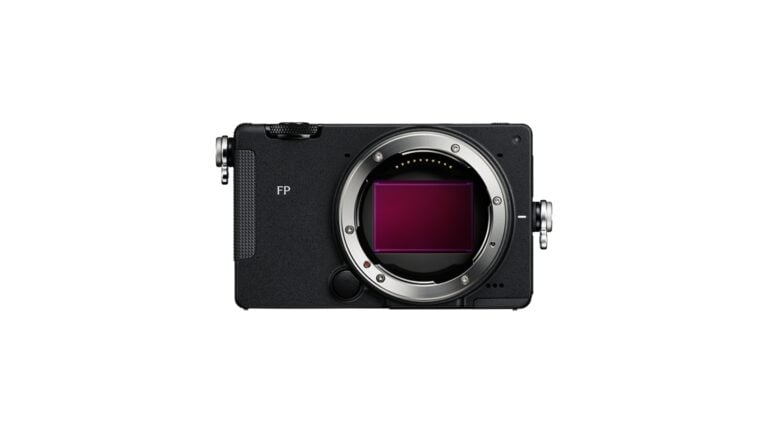
A lot of us modify our gear to make things better suit the tasks we need them to perform. Sometimes we do it just to speed up workflow a little. Rarely, however, are the modifications quite as extreme as the Nikon D5500a from Primaluce Lab. Based on a Nikon D5500 this camera has had the stock CMOS sensor switched out for a CCD. They also added a pretty hardcore cooling system.
The reason for this is astrophotography. It’s a pretty common fact that CCD sensors tend to do much better than CMOS sensors for this type of photography. But, the big problem with CCD sensors for long exposures is the build up of noise over time due to heat. I used to see this in my old Nikon D100 bodies which used CCD sensors. Anything exposures over about 10-15 seconds were packed full of noise.

The cooler pretty much triples the depth of the camera, before adding a lens. It kinda makes seeing through the viewfinder a little tricky. I don’t imagine this will be too much of an issue, though, as it’s not really designed to be used handheld anyway.
Astrophotography is typically long to very long exposures. So, it’s going to be mounted on a tripod, or a rig that counters the rotation of the earth to keep a constant fix on the skies. The live view screen will likely be much easier to use than an optical viewfinder ever could be anyway.
It’s an interesting, if slightly unusual, Frankenstein of technology. One would think that it would be easier to simply build your own camera housing to go around the sensor and other technology. Modifying a commercial camera to such an extreme amount can’t have been an easy task. But, the D5500 comes with a lot of cool hardware already built in, with a nice compact design.

Along with switching out the sensor, they also swapped out the filter that sits over the sensor, to help increase its sensitivity to red light. This helps for astrophotography where much of the light is towards the red end of the spectrum.
An “anti-dewing system” has also been added to help reduce humidity build up on long exposures. With a cooler that can keep the sensor at a chilly 27°C below ambient, you can see why this was required.
You can find out more about the D5500A over on the Primaluce Lab website. It costs €2,190 and is available to order now. For comparison, a stock Nikon D5500 costs around $897.
Now, if only we can get Sony to do something similar with their cameras to let them shoot 4K video for more than 10 minutes.
I can’t ever imagine myself needing a camera like this, but I’m curious what the astrophotographers think. Is this crazy awesome? Or is it a bit too over-engineered, and you’re just fine with your Nikon D810A? At a little over half the price of the D810A, is it even a little bit tempting? Have you done any extreme modding with your camera? What did you do? Give us your thoughts and show off your hacks and astrophotography in the comments.
[via Nikon Rumors]
See more from DIYPhotography.net on Google
Add DIYPhotography.net as a trusted source. This makes
our stories more likely to appear in your Google Search results.
 Add as a preferred source on Google

John Aldred
John Aldred is a photographer with over 25 years of experience in the portrait and commercial worlds. He is based in Scotland and has been an early adopter – and occasional beta tester – of almost every digital imaging technology in that time. As well as his creative visual work, John uses 3D printing, electronics and programming to create his own photography and filmmaking tools and consults for a number of brands across the industry.



Join the Discussion
DIYP Comment Policy
Be nice, be on-topic, no personal information or flames.
6 responses to “Welcome to the world of extreme camera modding”
Cool
It is not uncommon for astrophotograpers to use red dot sights, like the ones used for weapon, because they have minimal lightloss and are a lot brighter than The viewer or lcd.
Ccd swapped I with a peltier cooler attached. I imaging getting the focal distance set would be somewhat of a challenge, but more interestingly, I wonder how they power it.
“A lot of us modify our to make things better suit the tasks we need them to perform.”
Come on guys, sentence clarity please. And proof read.
Thank you for politely and non-condescendingly informing us of this typo. It has been fixed. :)
Sorry it came across rude. I usually leave my OCD out of it when reading your site, but this was the *first* sentence. :) And I’ve offered Udi proof reading services in the past, but was told it wasn’t necessary. :P