


















Urban Beavers Photo Wins GDT’s 2026 Rewilding Europe Award
Oct 6, 2026
Dunja Đuđić Kalinin
Dunja Djudjic is a multi-talented artist based in Novi Sad, Serbia. With 15 years of experience as a photographer, she specializes in capturing the beauty of nature, travel, concerts, and fine art. In addition to her photography, Dunja also expresses her creativity through writing, embroidery, and jewelry making.
Share:
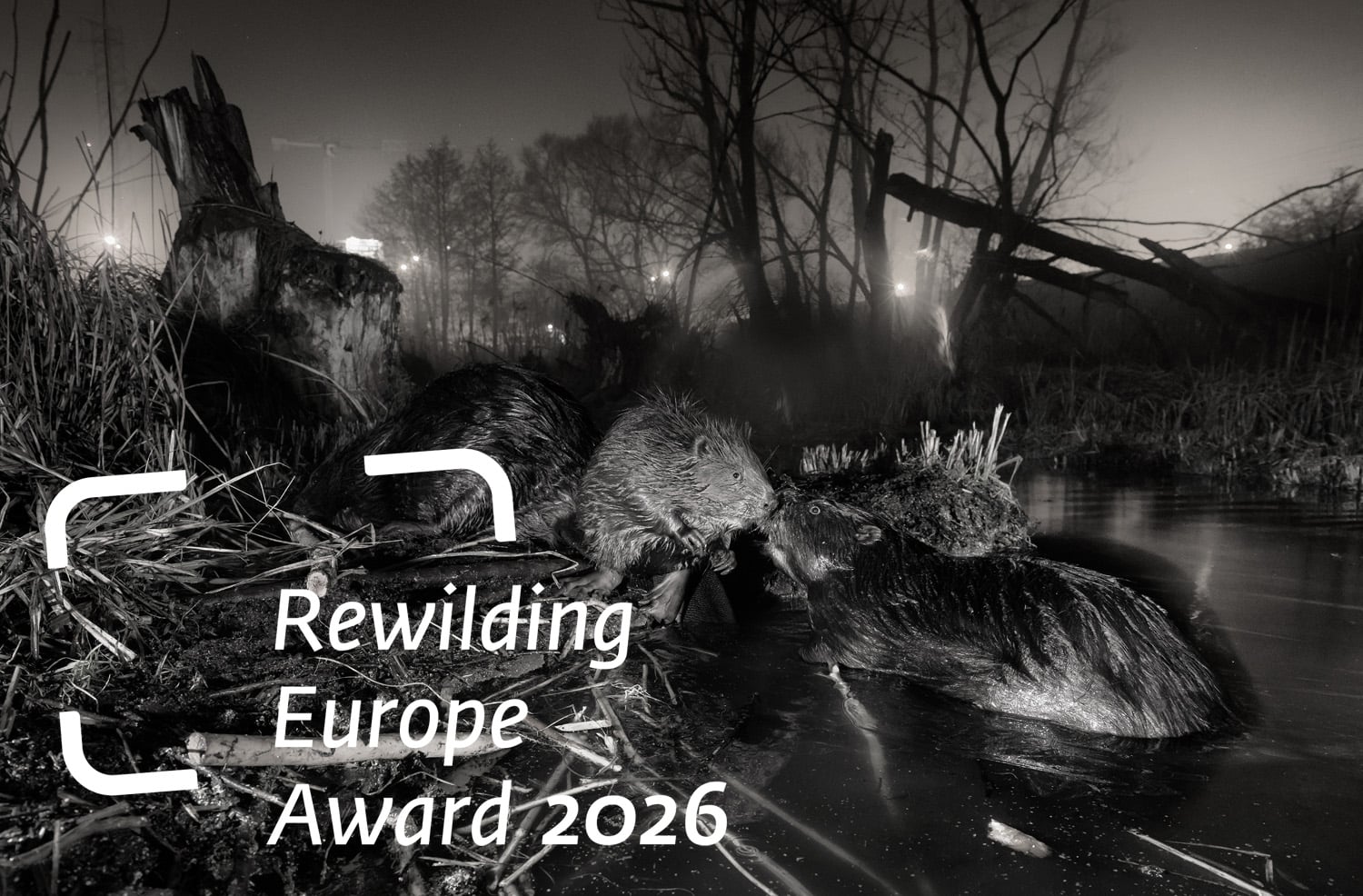
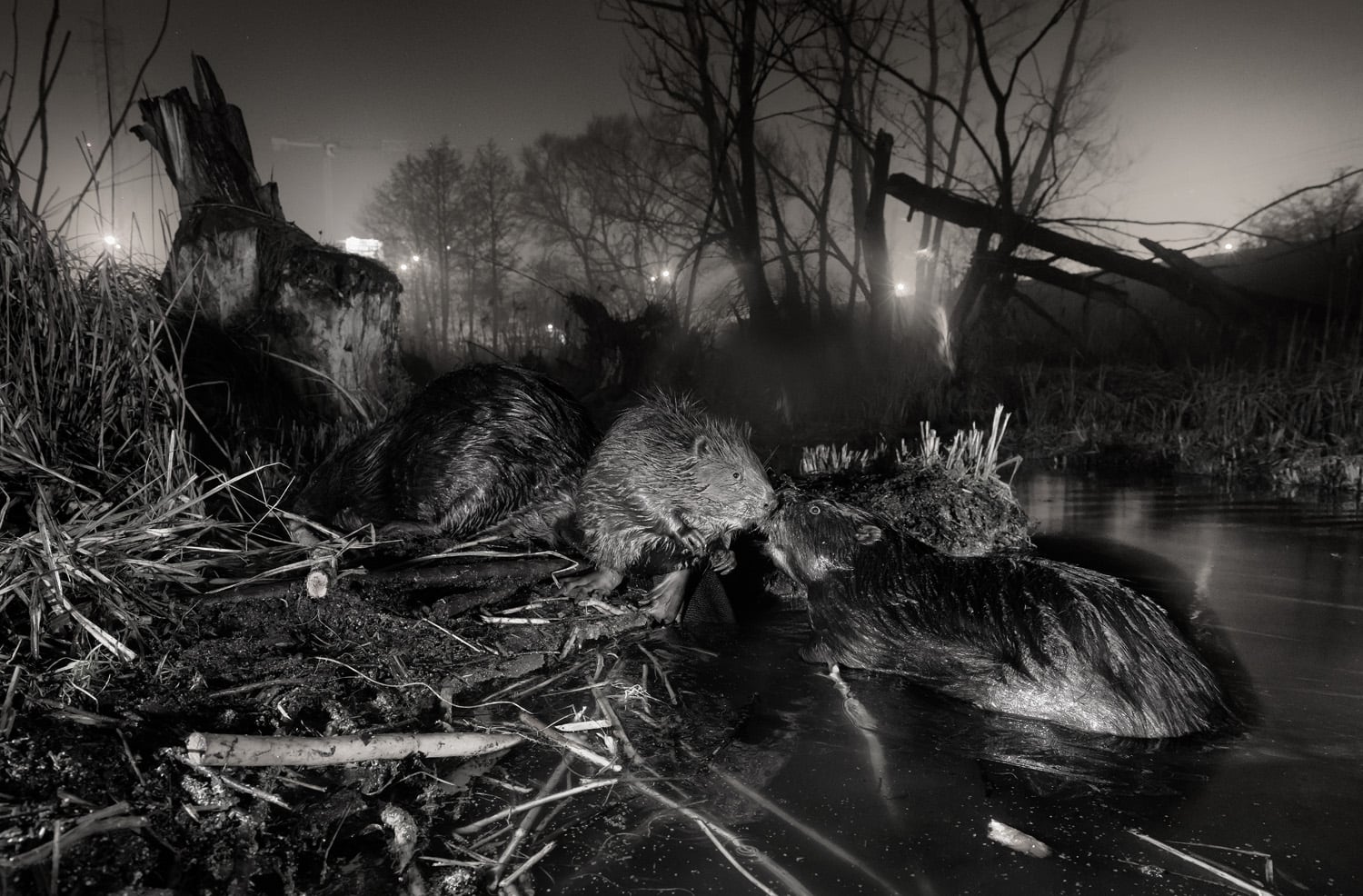
Jan Wieczorek from Poland has won the 2026 Rewilding Europe Award with a nighttime photograph of urban beavers living alongside apartment blocks in Olsztyn., a city in northeastern Poland. Quite an unusual mix, but this is where a beaver colony lives alongside people, reshaping the local landscape for years.
These beavers live alongside people, in something I personally wouldn’t call harmony. Roads cross their territory, railway lines cut through it, and new apartment blocks are going up nearby. But still, thanks to the support of residents and the city authorities, the beavers seem to be doing fine. And local people are doing better because of them. Their dams have improved local water quality, restored the water balance, and turned a stretch of urban river into a functioning wetland that supports a whole community of wildlife. In case you needed a reminder why animals are important and why we need to do our best to protect them.
Jan has been watching these animals for around 15 years, and he framed his night shot deliberately. The housing development sits in the background, the wetland in the foreground, two worlds sharing the same image the same way they share the same city.
“The story behind the photograph shows that nature doesn’t always exist somewhere far away,” Jan said. “It can thrive right next to our homes, beneath our bridges, and in the centres of our cities. By framing the housing development alongside the wetland created by the beavers, I wanted to show that it is possible for humans and wildlife to share space.”
Judge Viktoria Pezzei described the photograph as one that tells an entire story in a single frame. “The winning and commended images capture the essence of how humans and wildlife can live side by side,” she said. “Photography like this translates the complex relationships between humans and wildlife, ultimately helping us understand them better.”
Runner-Ups and Highly Commended
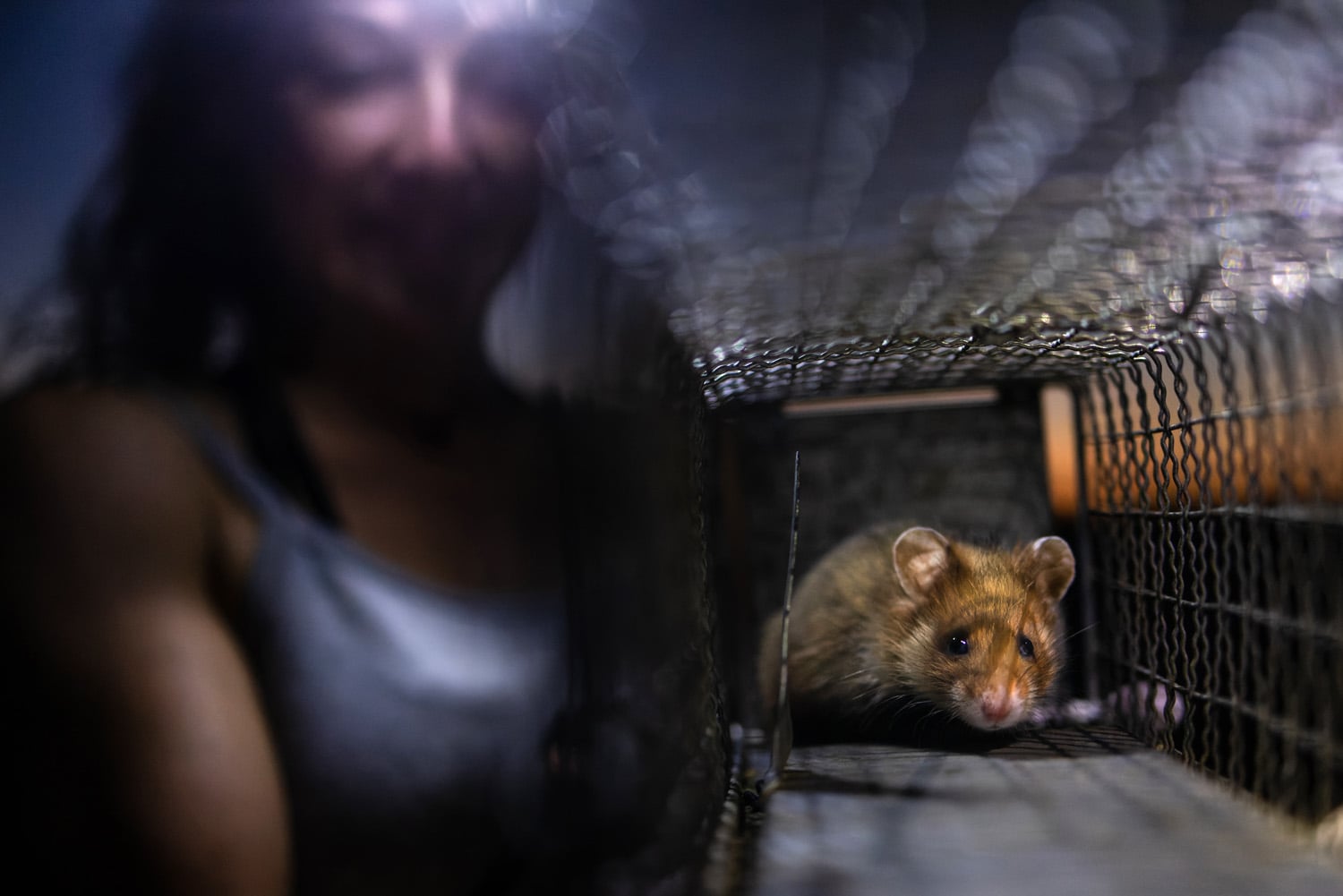
The runner-up tells a very different kind of comeback story. Christoph Kaula’s Managed revival is an intimate close-up of a young European hamster being handled by researchers as part of a coordinated conservation effort in Germany. Captive breeding, genetic sampling, and habitat restoration are all part of the picture, along with farmers and volunteers who make the work possible.
“Bringing a species back is never the work of a single organisation or individual – it’s a collective effort,” Kaula said. “And that also means raising awareness and communicating the importance of conservation to a much wider audience.”
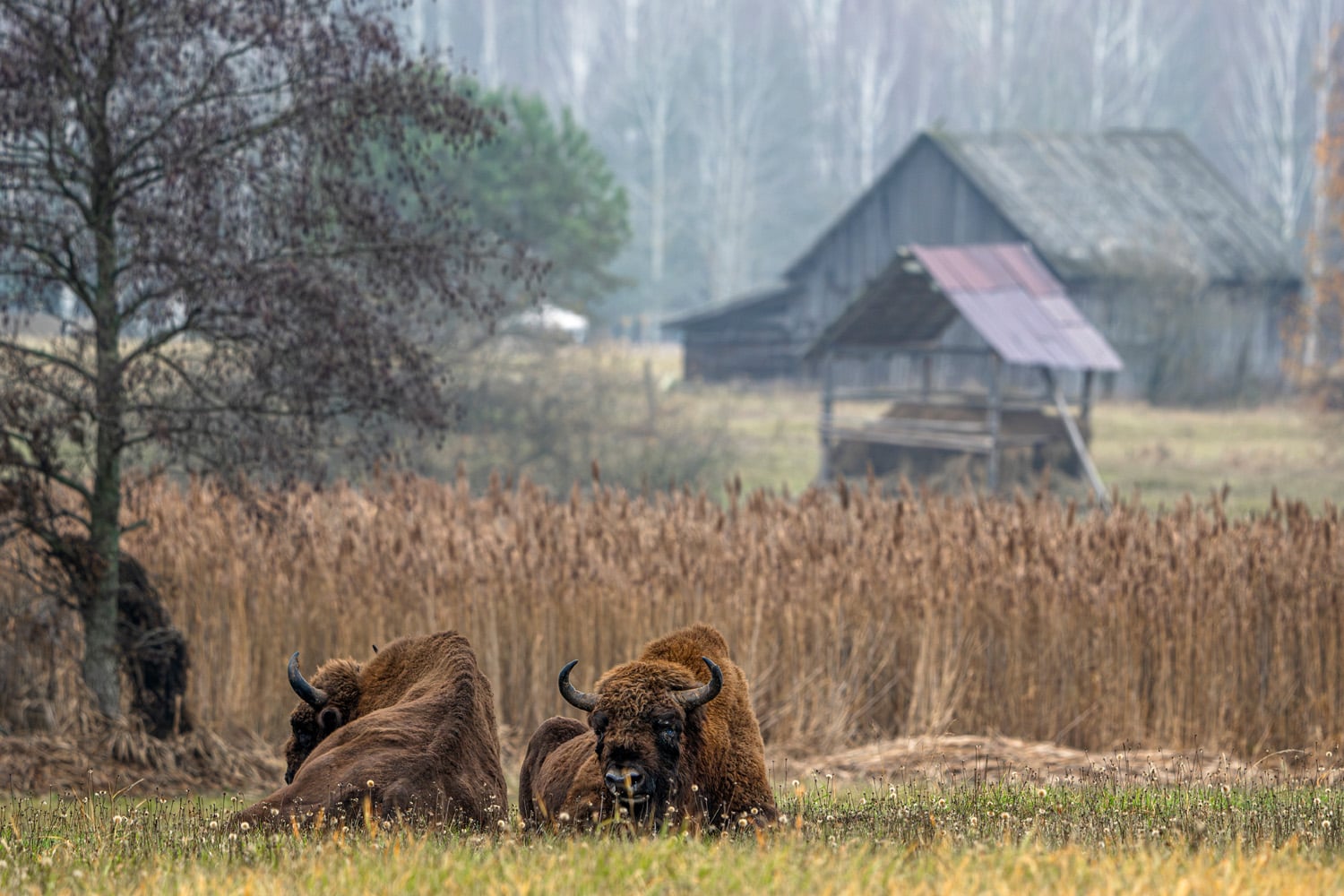
Three photos received highly commended honors. Fabian Thorand’s Peaceful European bison shows two massive animals resting in a meadow on the edge of a Polish village near Białowieża National Park. A species that was once extinct is in the wild again and has now recovered to more than 10,000 free-roaming individuals across Europe. “I hope to show how beautiful and peaceful coexistence with animals can be, even with such large ones,” Thorand said. “Bison play a really important ecological role, but people have to learn how to live alongside them.”
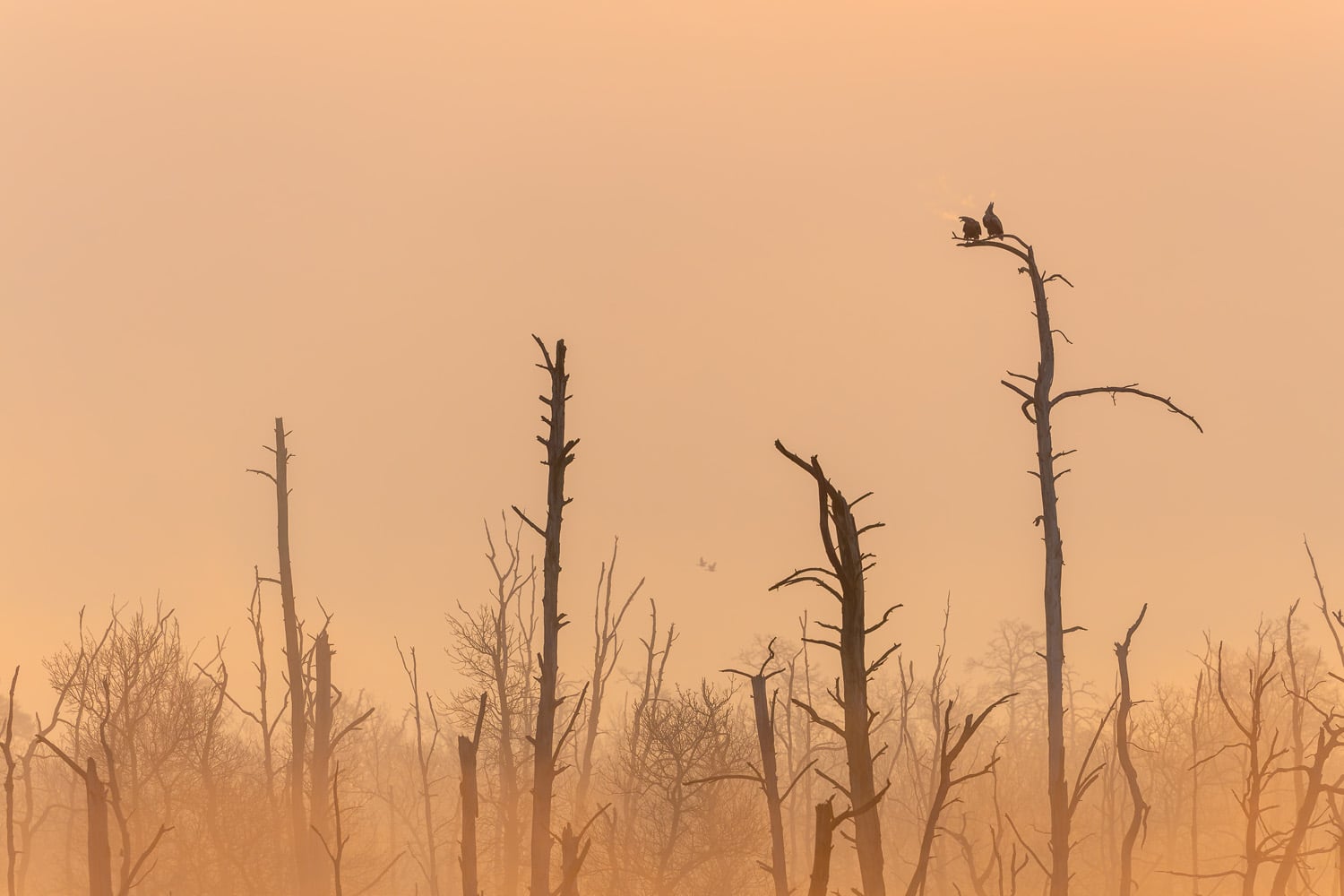
Silke Hüttche’s The call of the eagles takes us to Anklamer Stadtbruch in northeastern Germany, to a 2,000-hectare area that flooded after a storm surge in 1995 and has since become one of the country’s largest wilderness areas. It now holds more breeding pairs of white-tailed eagles than anywhere else in Germany. “I have seen how the natural processes at work in Anklamer Stadtbruch have boosted the abundance and diversity of species found there,” Hüttche said. “Today I know how incredibly important such new wilderness is.”
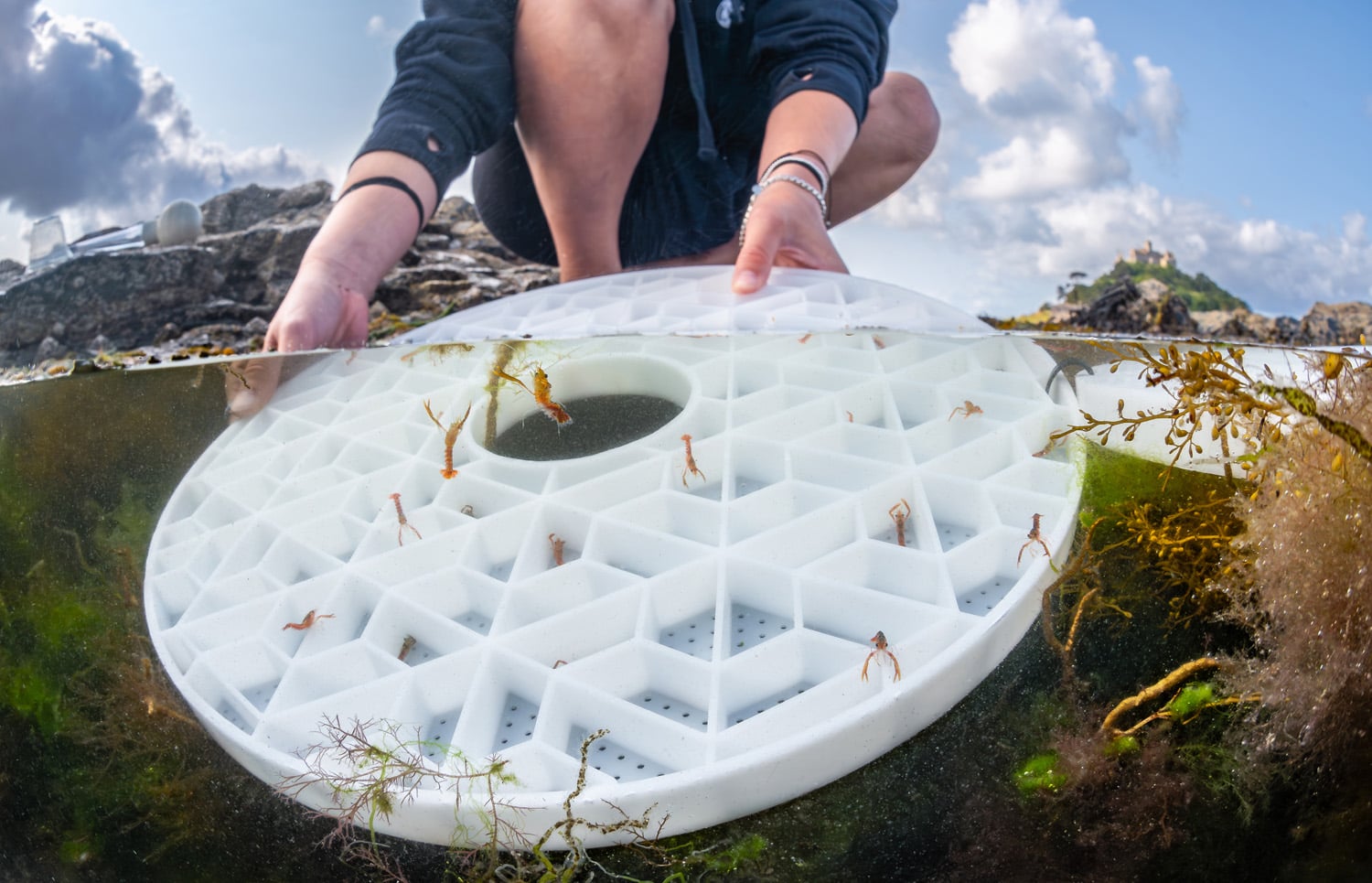
The final commended image goes underwater (well, partially). Lewis Jefferies’ A new generation shows a National Lobster Hatchery staff member releasing juvenile European lobsters into a Cornish tidal pool, with St Michael’s Mount visible just above the waterline. The hatchery breeds young lobsters through their most vulnerable early stages before releasing them, supporting both marine ecosystems and the coastal fishing communities that depend on healthy lobster populations. “I really hope this image will help spark interest in marine wildlife and conservation and raise awareness of the incredible conservation work being done in Cornwall to save species and habitats,” Jefferies said.
About the Award
The Rewilding Europe Award is a special category within the European Wildlife Photographer of the Year competition. The contest is organized by the German Society for Nature Photography (GDT) in partnership with Rewilding Europe. It recognizes images that document wildlife comeback across the continent and the evolving relationship between people and recovering nature.
“Rewilding in Europe doesn’t have one single face. It can mean bringing back a species that disappeared, restoring natural processes, or simply giving nature enough space and time to recover on its own,” says Jon A. Juarez, last year’s winner and this year’s contest judge. “But increasingly, it is also about learning how to share landscapes with wildlife.”
Taken together, these five images cover a lot of ground. From city rivers to rewetted peatlands to the seafloor off Cornwall. This range is kind of the point: wildlife recovery needs the space, and more often than not, it needs a hand.
The 2026 winners will be honored at the official award ceremony of the European Wildlife Photographer of the Year competition, held at the International Nature Photography Festival on October 23, 2026.
See more from DIYPhotography.net on Google
Add DIYPhotography.net as a trusted source. This makes
our stories more likely to appear in your Google Search results.
 Add as a preferred source on Google

Dunja Đuđić Kalinin
Dunja Djudjic is a multi-talented artist based in Novi Sad, Serbia. With 15 years of experience as a photographer, she specializes in capturing the beauty of nature, travel, concerts, and fine art. In addition to her photography, Dunja also expresses her creativity through writing, embroidery, and jewelry making.
Related Posts
 Rewilding Europe Award 2025 Celebrates Nature’s Revival with Breathtaking Photos
 Charming photo of kids escaping the heat wins URBAN Photo Awards 2023
 Painterly photo of a woman playing cards wins CEWE Photo Award 2023
 Saving the planet one photo at a time: Thomas P. Peschak wins NatGeo’s 2025 Eliza Scidmore Award
Join the Discussion
DIYP Comment Policy
Be nice, be on-topic, no personal information or flames.