
























NASA’s Lunar Orbiter Spots a “Once-in-a-Century” Moon Crater
Sep 18, 2026
Soumyadeep Mukherjee
Soumyadeep Mukherjee is an award-winning astrophotographer from India. He has a doctorate degree in Linguistics. His work extends to the sub-genres of nightscape, deep sky, solar, lunar and optical phenomenon photography. He is also a photography educator and has conducted numerous workshops. His works have appeared in over 40 books & magazines including Astronomy, BBC Sky at Night, Sky & Telescope among others, and in various websites including National Geographic, NASA, Forbes. He was the first Indian to win “Astronomy Photographer of the Year” award in a major category.
Share:
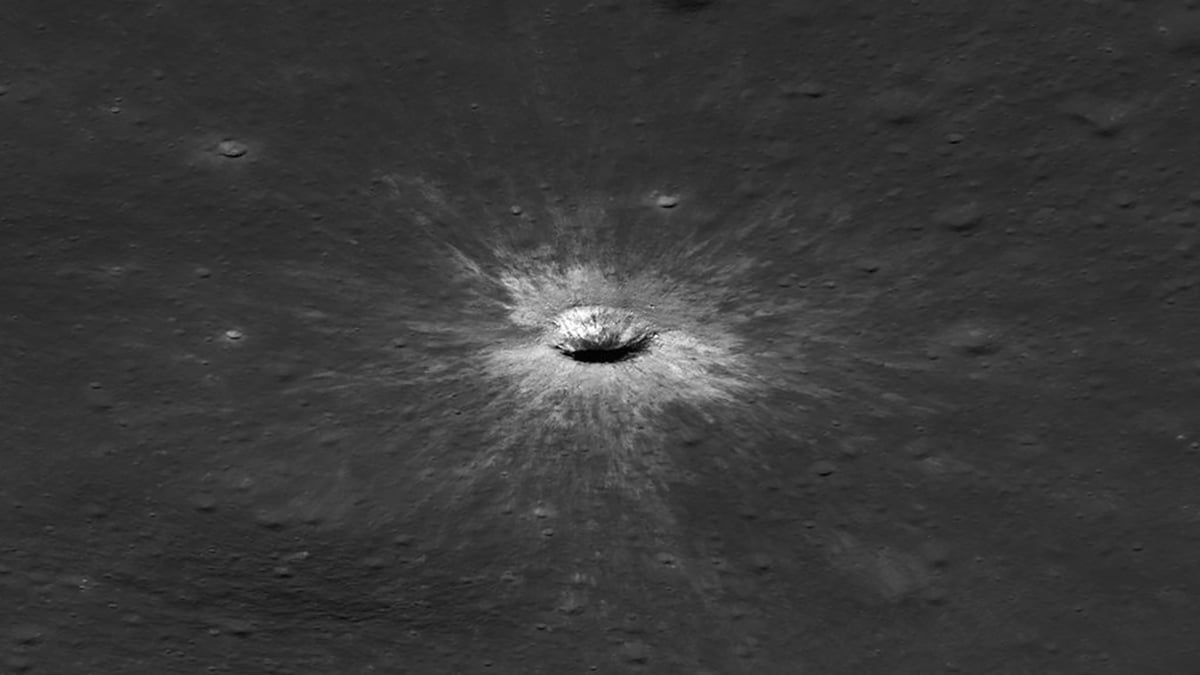
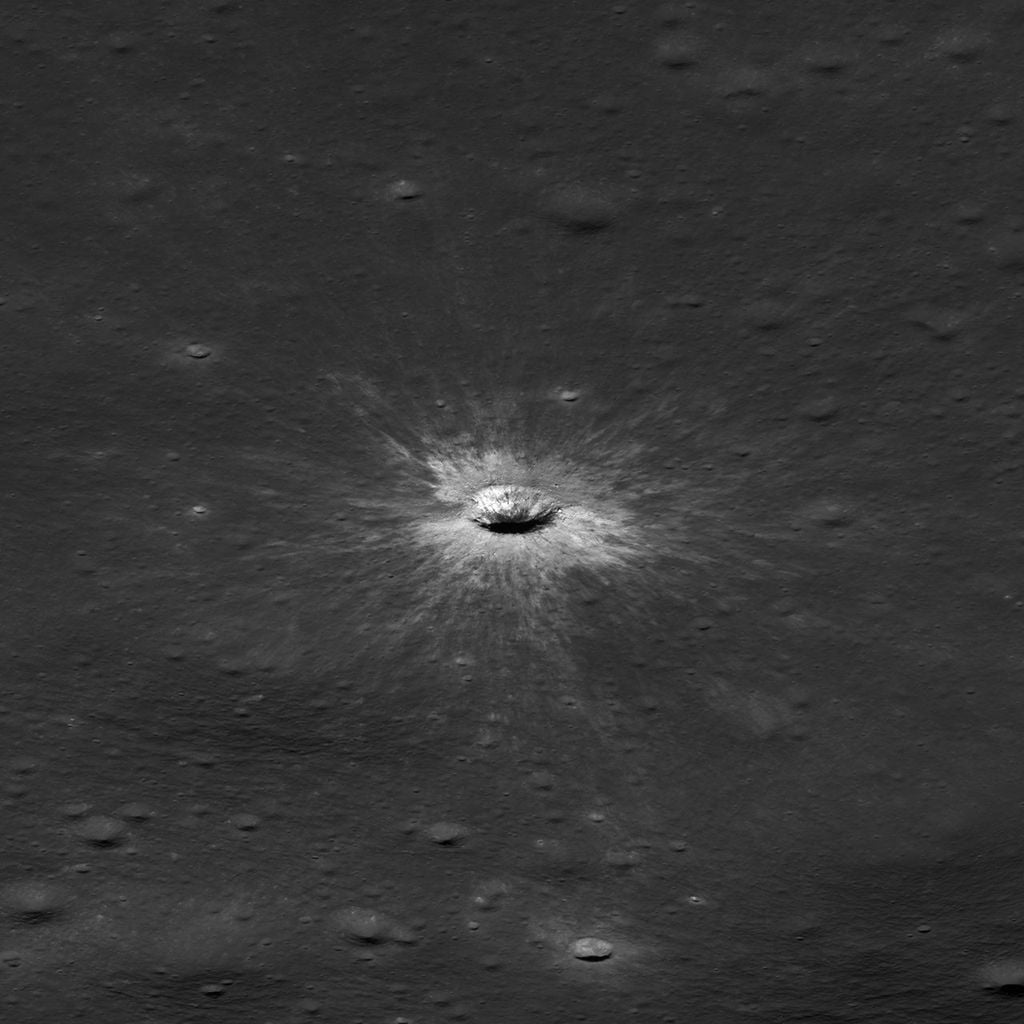
NASA has discovered a new impact crater on the Moon that formed between April 11 and May 22, 2024. The crater, named after Thomas McGetchin, a scientist who studied the Moon and other planetary bodies, is about 222 meters wide and 43 meters deep. Scientists found it by comparing images taken by NASA’s Lunar Reconnaissance Orbiter before and after the impact.
The impactor was likely a fragment of an asteroid or comet. Scientists estimate that an impact capable of creating a crater this large occurs on the Moon roughly once every century. The new observations show that the collision disturbed the lunar surface several kilometers around the crater. Robert Wagner, a scientist with NASA’s Lunar Reconnaissance Orbiter (LRO), first spotted the crater.
The crater was hiding in plain sight
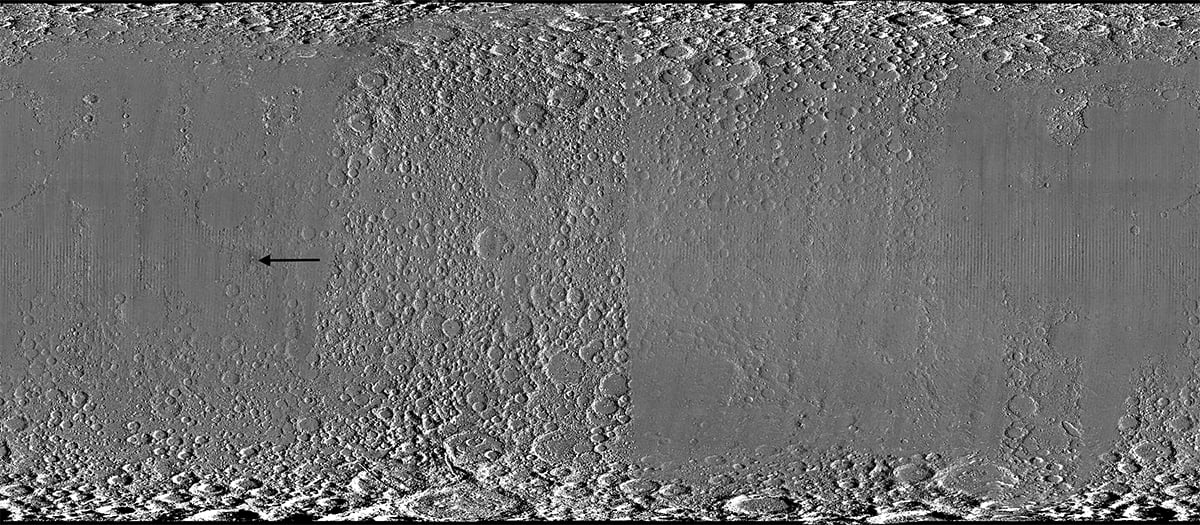
The first clue did not look like the crater most people would expect to see in a lunar photograph. Wagner found a bright area surrounded by a dark ring while examining a large map of the Moon on October 24, 2025.
“I just stopped, dropped everything, and started looking into what that spot was.”
-Robert Wagner, NASA LRO Scientist
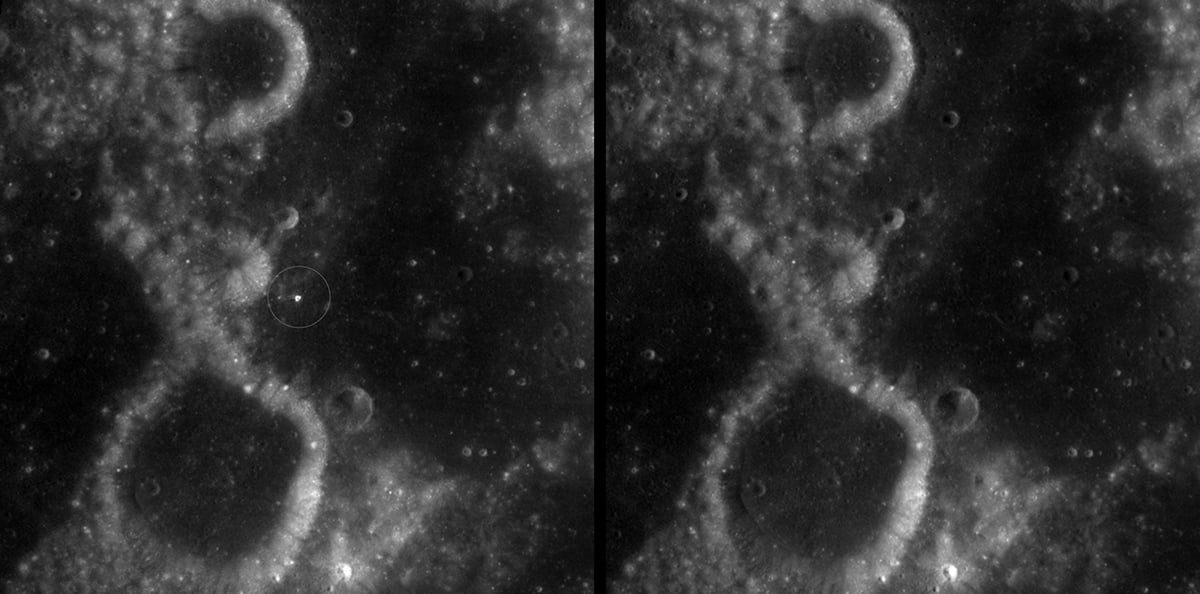
The map came from hundreds of images taken by LRO’s Wide-Angle Camera. Wagner used software that could compare images from different periods and bring surface changes to the foreground. Areas that remained the same appeared grey, while changes showed up as bright or dark patches.
That method produces plenty of things that need checking. The Moon’s changing illumination can create differences between images, even when the ground itself has not changed. Shadows can also move across the landscape. Wagner had to determine whether the unusual patch represented a real alteration to the surface.
The LROC team then turned to its Narrow-Angle Cameras. These instruments could resolve the site at far greater detail, allowing researchers to measure the new crater and examine its surroundings.
A 222-meter crater on the Moon
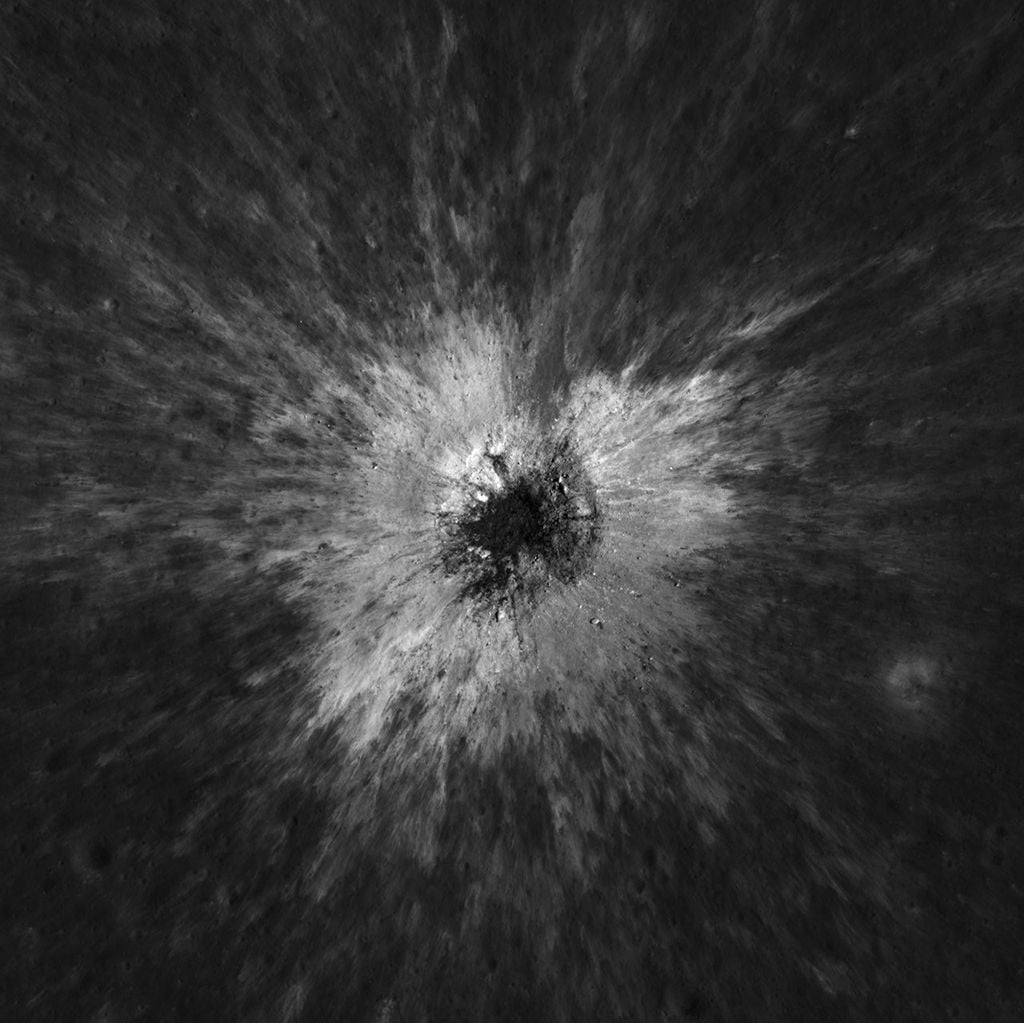
The sharper images revealed a crater about 222 meters in diameter, with an average depth of roughly 43 meters. That makes it about twice the length of an American football field.
McGetchin lies near the eastern edge of the Moon, close to a boundary between rugged, heavily cratered highlands and a broad, relatively flat mare. The surrounding terrain already contains many impact scars, but the fresh ejecta makes the new crater easy to pick out.
A close-up image taken by LRO’s Narrow-Angle Camera on December 5, 2025, shows the crater from above. Another image from March 3, 2026, looks across the site at an angle of about 55 degrees from vertical.
The impact disturbed the ground beyond the crater
The upper layer of the Moon consists of regolith, a mixture of dust, broken rock, and fragments created by countless impacts. The surface has taken billions of years of bombardment, and each collision breaks, moves, and mixes the material.
A large impact can disturb a wide area. Scientists found evidence of that disturbance with another instrument aboard LRO. Diviner measures the temperature of the lunar surface, and its observations revealed an unusual thermal pattern around McGetchin.
The affected region stretches about four miles, or seven kilometers, across. During the lunar night, the area becomes about 16 degrees Fahrenheit, or 9 degrees Celsius, colder than the surrounding terrain.
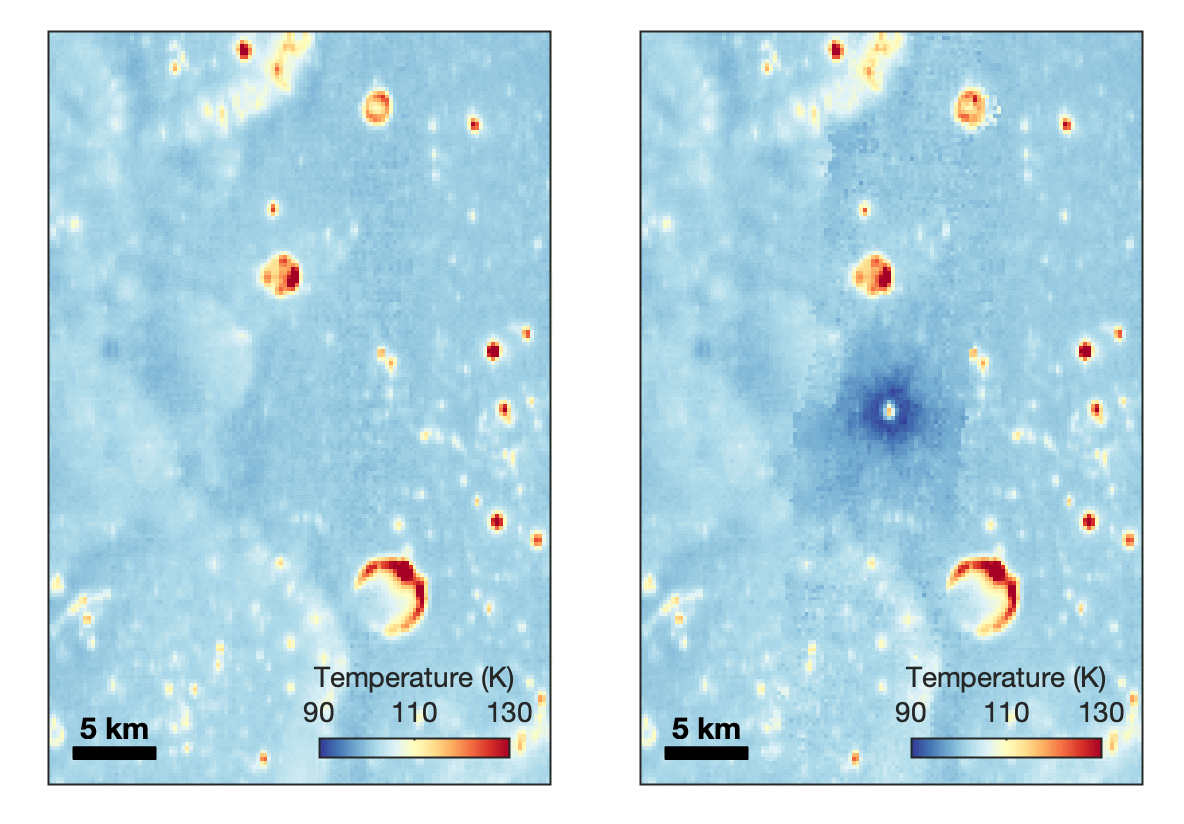
The collision loosened and disturbed the upper layer. That altered the material’s physical properties and changed the way it stores and releases heat. The disturbed ground now cools differently from the surrounding surface. Diviner observed this thermal difference between November 15, 2025, and February 18, 2026, after LROC had already identified the crater.
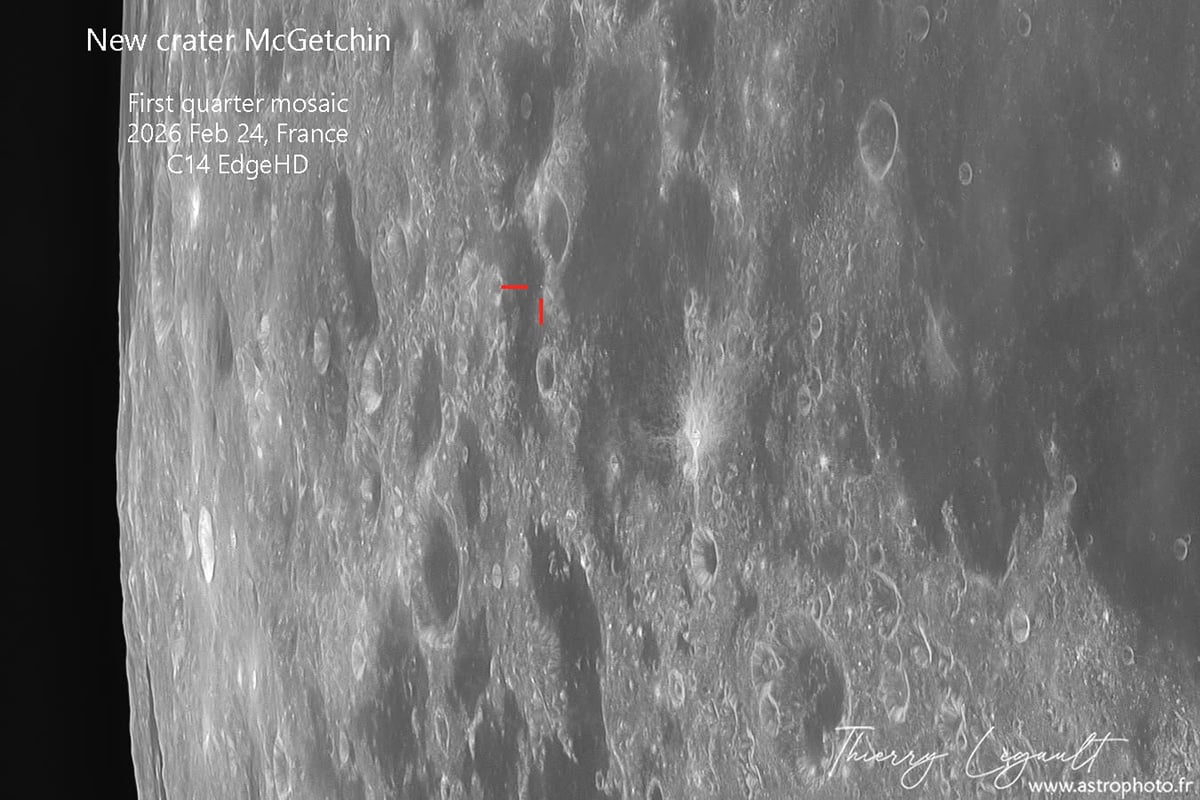
Surprisingly enough, the McGetchin crater has also been photographed from Earth. French astrophotographer Thierry Legault found that the crater appears in one of the lunar mosaic images that he captured in February 2026. He used a 14-inch telescope for his image.
“I spotted the new lunar crater McGetchin on my lunar quarter mosaic of February… The crater is small but very bright, and its high contrast helps a lot.”
-Thierry Legault, Astrophotographer
Clear skies!
See more from DIYPhotography.net on Google
Add DIYPhotography.net as a trusted source. This makes
our stories more likely to appear in your Google Search results.
 Add as a preferred source on Google

Soumyadeep Mukherjee
Soumyadeep Mukherjee is an award-winning astrophotographer from India. He has a doctorate degree in Linguistics. His work extends to the sub-genres of nightscape, deep sky, solar, lunar and optical phenomenon photography. He is also a photography educator and has conducted numerous workshops. His works have appeared in over 40 books & magazines including Astronomy, BBC Sky at Night, Sky & Telescope among others, and in various websites including National Geographic, NASA, Forbes. He was the first Indian to win “Astronomy Photographer of the Year” award in a major category.

Join the Discussion
DIYP Comment Policy
Be nice, be on-topic, no personal information or flames.