



















Amateur Astronomer Discovers Impact Crater from a Satellite Map
Sep 15, 2026
Soumyadeep Mukherjee
Soumyadeep Mukherjee is an award-winning astrophotographer from India. He has a doctorate degree in Linguistics. His work extends to the sub-genres of nightscape, deep sky, solar, lunar and optical phenomenon photography. He is also a photography educator and has conducted numerous workshops. His works have appeared in over 40 books & magazines including Astronomy, BBC Sky at Night, Sky & Telescope among others, and in various websites including National Geographic, NASA, Forbes. He was the first Indian to win “Astronomy Photographer of the Year” award in a major category.
Share:
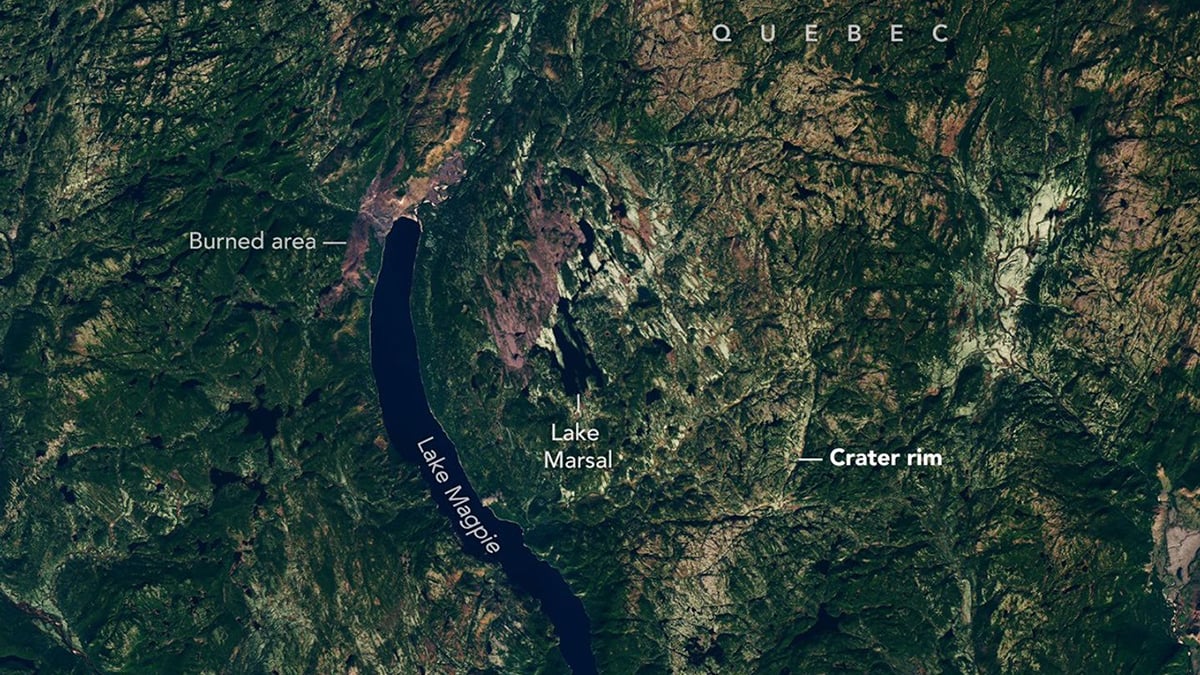
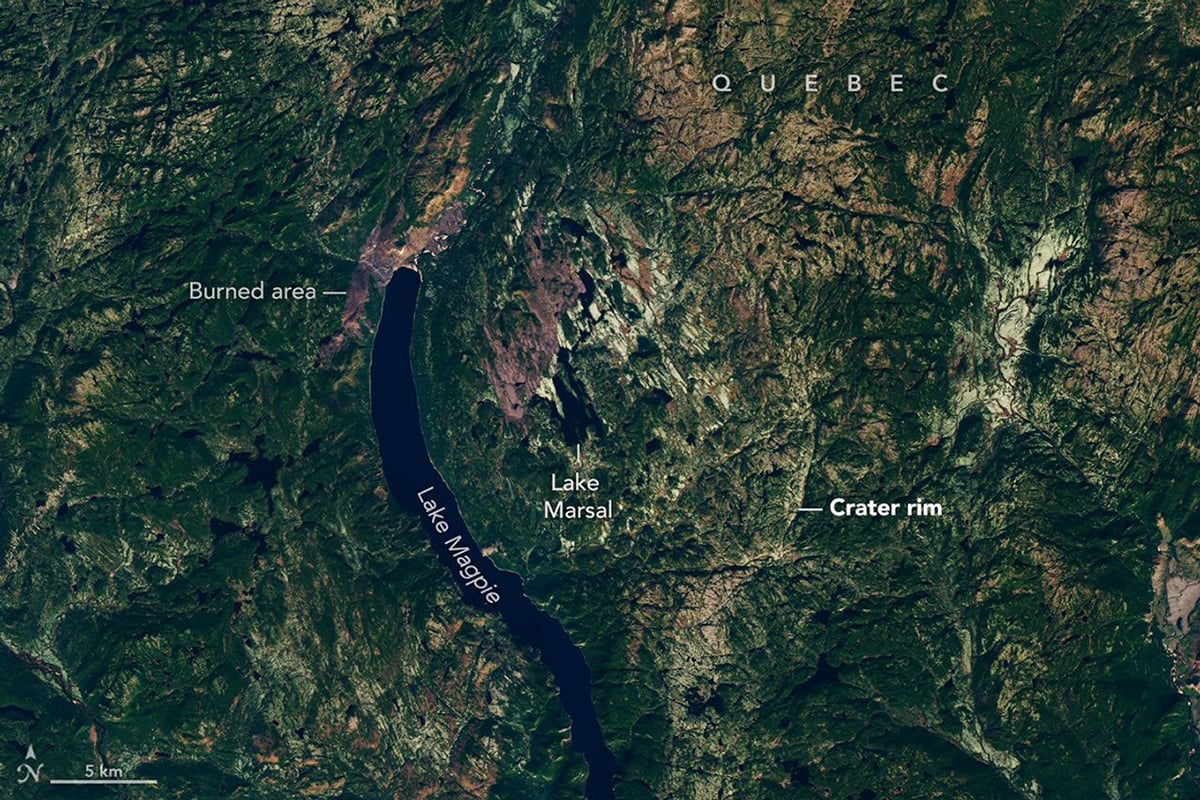
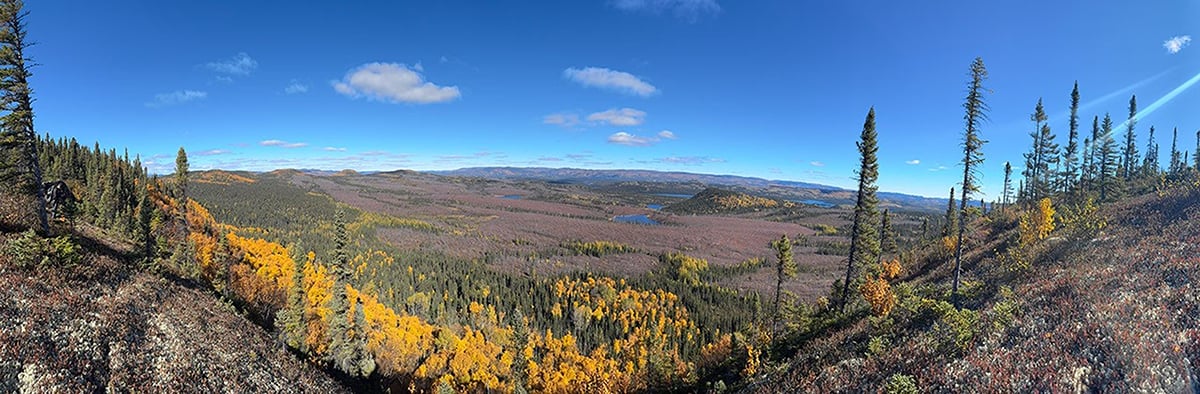
Joël Lapointe was looking at satellite maps for a campsite when he noticed something unusual in northern Quebec. The feature sat around Lake Marsal, in the Côte-Nord region. Lapointe wondered if he was looking at the remains of an ancient meteorite impact. This observation eventually led geologists to one of the largest impact craters known in Canada. NASA Earth Observatory has published a Landsat 8 image showing the feature from space.
A strange shape on the map
Lapointe discovered the feature while preparing for a camping trip. Of course, he was not searching for impact craters, and he had no particular reason to expect one in the region. He was just using satellite maps to inspect potential camping areas.
The landscape around Lake Marsal contains forests, lakes, and rugged terrain. From ground level, the individual features dominate the view. From above, however, the lakes and surrounding terrain form a much larger pattern. And this pattern caught Lapointe’s eye.
He suspected that the broad depression might mark an ancient impact, but he did not treat the idea as a discovery. He contacted experts and shared what he had seen. Researchers then began examining the area more closely.
French researchers presented Lake Marsal as a possible impact structure at a 2024 meeting of the Meteoritical Society. The proposal eventually brought the site to the attention of Gordon Osinski, a planetary geologist at Western University and director of the Impact Earth database.
The journey to Lake Marsal
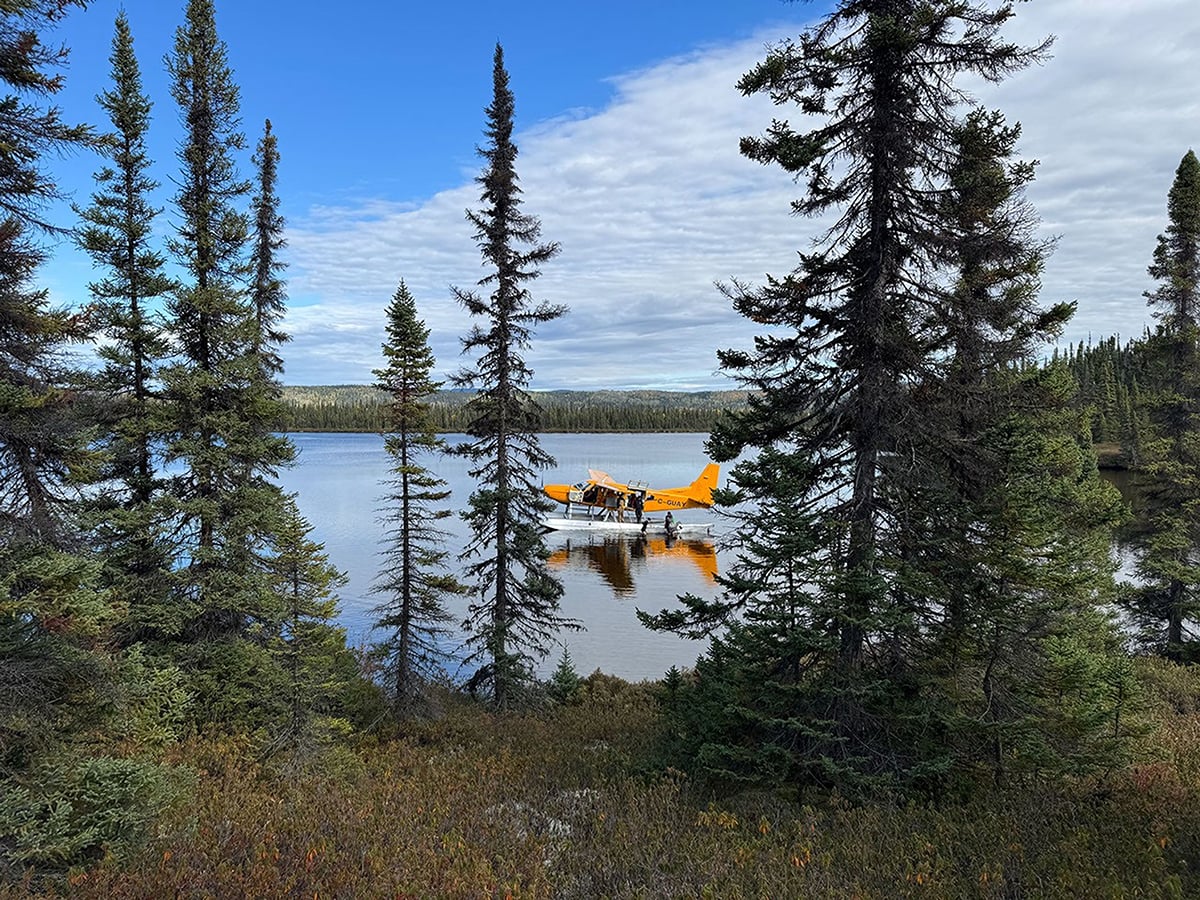
Osinski and his colleagues travelled to the site in October 2025. They flew to Lake Marsal in a floatplane, but the aircraft could not take them all the way to shore. The researchers had to wade through about 50 metres (165 feet) of water while carrying their equipment.
The conditions became tougher once they reached land. The team faced rugged ground, swamps, insects and dense vegetation. Osinski had already carried out geological fieldwork on six continents, yet he described this expedition as one of his most difficult.
Earlier geological mapping had identified breccia in the region. Breccia contains fragments of broken rock that have become cemented together. Previous work had linked these rocks to a volcanic structure called a diatreme, which can form when explosive volcanic activity forces fragmented material through the ground.
A meteorite created a 25-kilometre structure`
The evidence indicates that the Uhackatik impact occurred about 390 million years ago. The impact created a complex structure about 25 kilometres across. Researchers also found a central uplift and tall cliffs with columnar jointing, features that help reconstruct the structure of the ancient impact.
The original crater would have looked very different from the landscape seen today. Almost four hundred million years of erosion have removed or altered much of the evidence near the surface. Vegetation now covers large parts of the region, while lakes occupy parts of the structure.
The size of Uhackatik also gives an indication of the scale of the original collision. An object capable of producing a 25-kilometre impact structure would release enormous energy. Osinski said a similar event in Quebec today would cause regional devastation, destroy major cities and produce effects capable of influencing the global climate.
Clear skies!
See more from DIYPhotography.net on Google
Add DIYPhotography.net as a trusted source. This makes
our stories more likely to appear in your Google Search results.
 Add as a preferred source on Google

Soumyadeep Mukherjee
Soumyadeep Mukherjee is an award-winning astrophotographer from India. He has a doctorate degree in Linguistics. His work extends to the sub-genres of nightscape, deep sky, solar, lunar and optical phenomenon photography. He is also a photography educator and has conducted numerous workshops. His works have appeared in over 40 books & magazines including Astronomy, BBC Sky at Night, Sky & Telescope among others, and in various websites including National Geographic, NASA, Forbes. He was the first Indian to win “Astronomy Photographer of the Year” award in a major category.

Join the Discussion
DIYP Comment Policy
Be nice, be on-topic, no personal information or flames.