
























Exclusive DIYP report: phone fakes a Hasselblad lens
Nov 13, 2024
David Prochnow
Our resident “how-to” project editor, David Prochnow, lives on the Gulf Coast of the United States in Ocean Springs, Mississippi. He brings his expertise at making our photography projects accessible to everyone, from a lengthy stint acting as the Contributing How-To Editor with Popular Science magazine. While you don’t have to actually build each of his projects, reading about these adventures will contribute to your continued overall appreciation of do-it-yourself photography. A collection of David’s best Popular Science projects can be found in the book, “The Big Book of Hacks,” Edited by Doug Cantor.
Share:

If you are in the market for a Hasselblad phone, you’ll probably end up with a OnePlus unit, as they have a long collaboration with Hassy. The latest flagship phone from OnePlus, the OnePlus12, will set you back over $850. Imagine my surprise when I found a “Hasselblad phone” on Amazon for only $124.99.
A recent accidental glimpse of a Chinese smartphone on Amazon quickly mushroomed into the pursuit, identification, and misuse of one of the most iconic and revered brands in photography: Hasselblad. And so began the tale of the “fake” Hasselblad-branded smartphone.
But Hasselblad wasn’t alone in this spurious labeling. Both OnePlus and Qualcomm have fake branding on this Chinese smartphone, too. In the case of OnePlus, if you go to Settings -> About phone you’ll see “Device Name-OnePlus 12” and “Model OnePlus 12” along with a virtually exact duplication of the subjective visual “look-and-feel” appearance of the OnePlus 12 smartphone.
Adding insult to injury, Qualcomm was indirectly cited as the chip maker for this phone. The listing Features and Details shows the Snapdragon8 Gen2 system-on-a-chip (SoC) that was “powering this smartphone”.
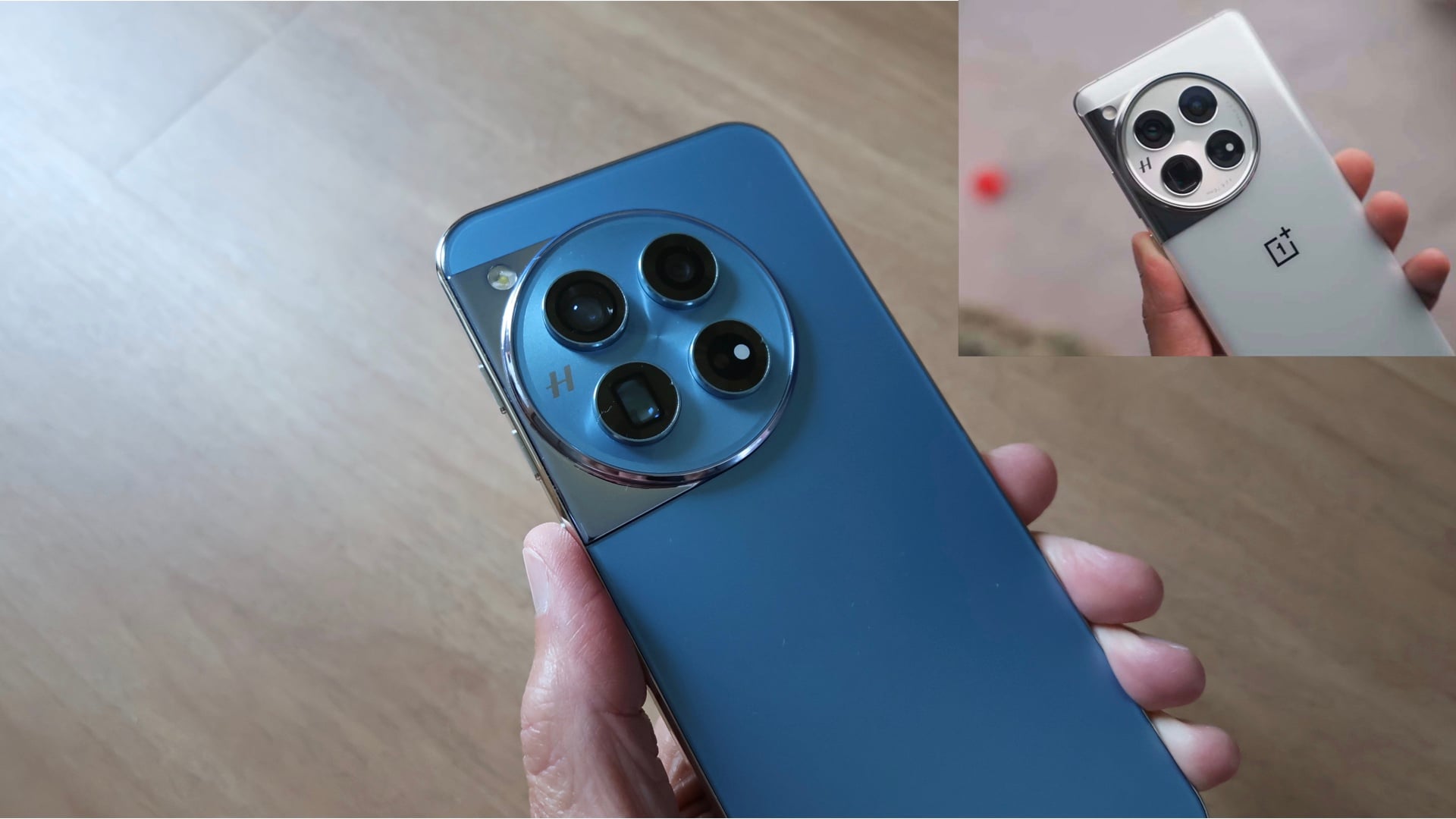
While the intellectual property (IP) misappropriation with these latter two prominent manufacturers was minor in its scope, the Hasselblad involvement was more egregious. In this case, the Hasselblad logo “H” was embedded inside the circular rear camera island on this smartphone. There was no mistaking this explicit Hasselblad branding nor was it dissimilar from the placement/appearance of the legitimate OnePlus 12 use of this logo.
A fake Hasselblad
So how did this happen? Where was this smartphone manufactured? What are Hasselblad, OnePlus, and Qualcomm doing about this perceived infringement?
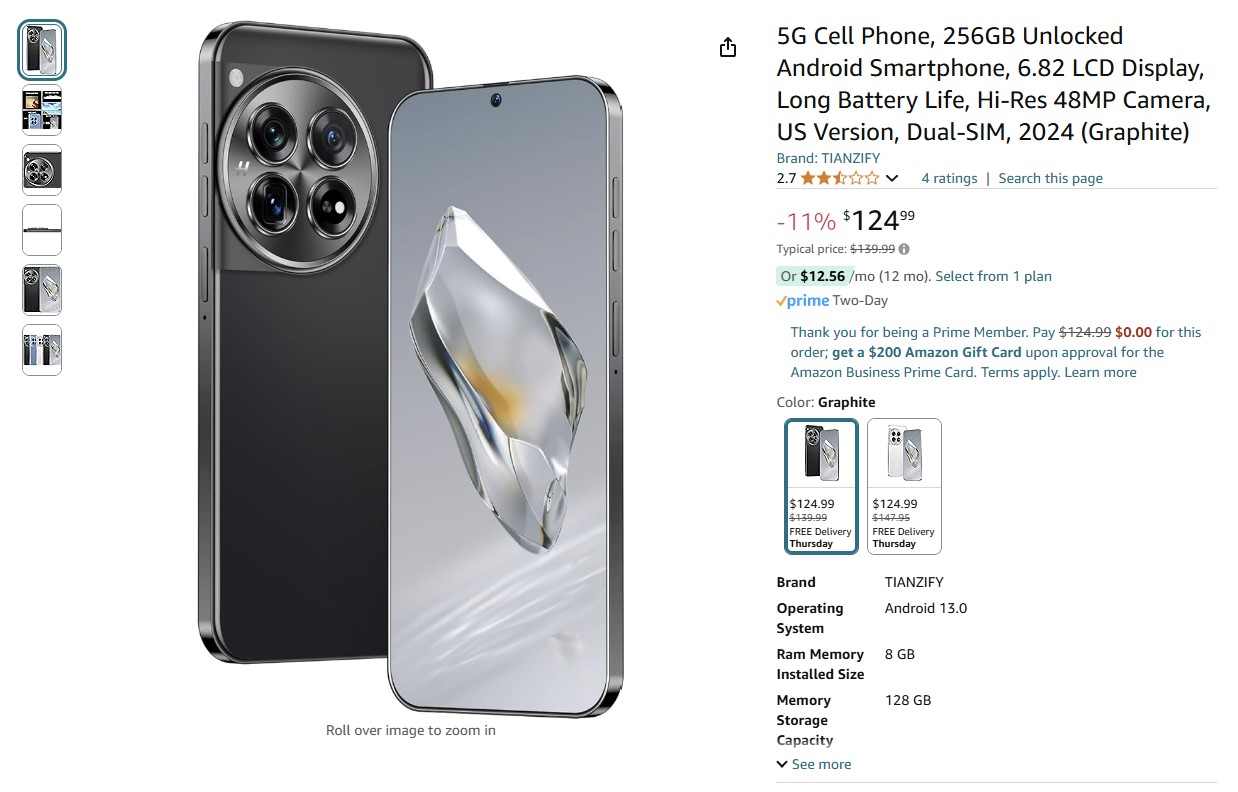
As it currently appears on Amazon, at the time of publication, the catalog statement for this smartphone reads:
TIANZIFY 5G Cell Phone, 256GB Unlocked Android Smartphone, 6.82 LCD Display, Long Battery Life, Hi-Res 48MP Camera, US Version, Dual-SIM, 2024
The price range is between $124.99 – $139.99. There are two color options: graphite and white.
Based on this description, it was clear that the brand name for the phone was TIANZIFY. A trademark search for this brand name indicated that they operated from this business address:
No. 3012, Huaqiang North Road, Licun Community, Huaqiang North Street, Futian District SEG Science and Technology Park, Building 2, 3A10 Shenzhen Guangdong, 518000, China
Furthermore, a trademark application was initiated on February 2, 2024 by a filing attorney named, Shuo Zhang. A subsequent search for this attorney could not find anyone using that name and representing TIANZIFY. As expected, the trademark application was never completed, and the application was suspended.
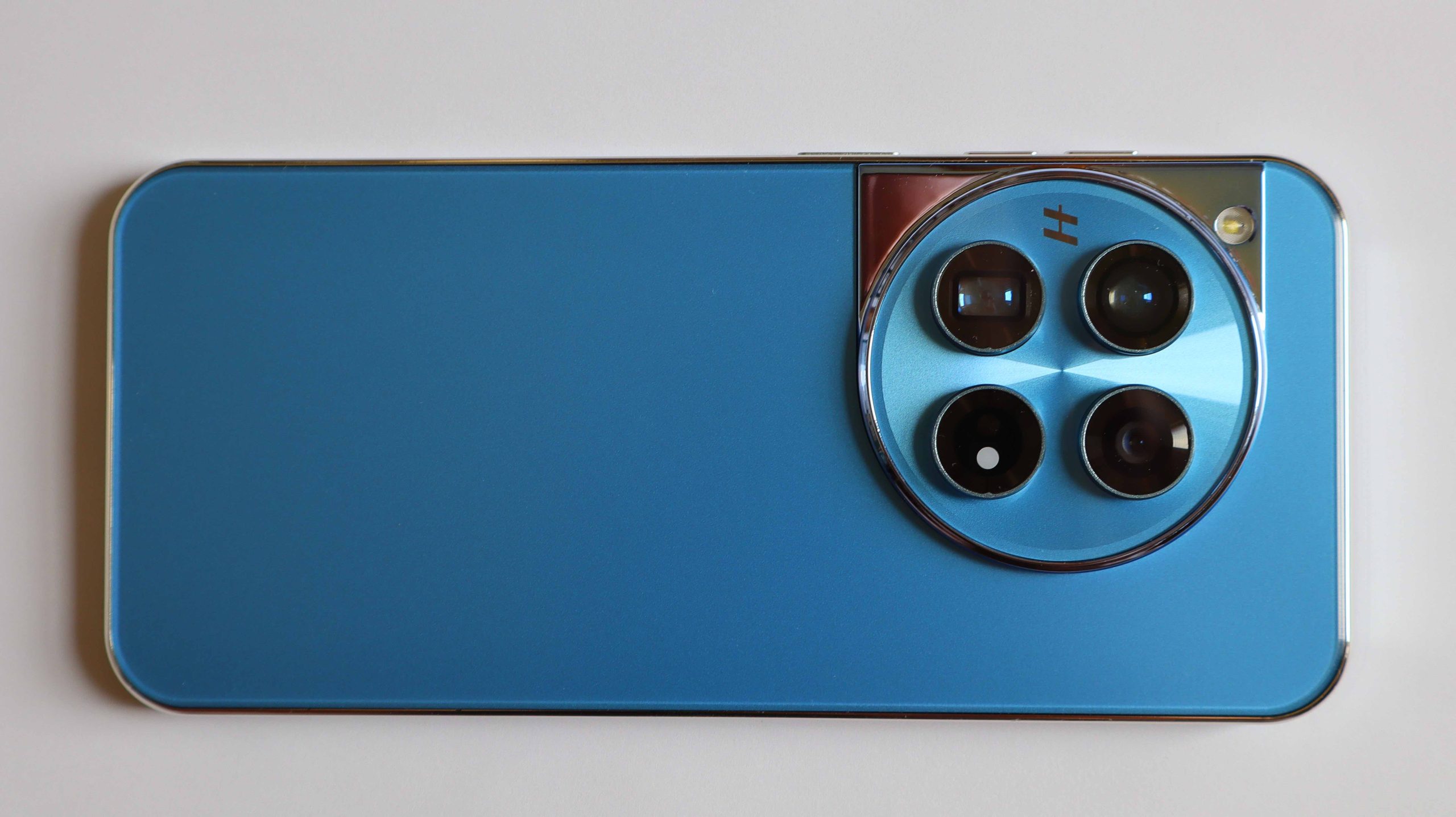
I attempted to contact TIANZIFY at their business address, but I was never acknowledged. Perceiving further direct contact with TIANZIFY as a dead end, I requested comments from Hasselblad, OnePlus, and Qualcomm via email. At the time of publication, no responses from these three manufacturers have been received.
As I was unable to receive acknowledgment of this counterfeit camera system being marketed by TIANZIFY, I made an unofficial attempt to request an IP infringement from Amazon. Unfortunately, as clearly stated in the Amazon guidelines for brand protection, only the manufacturers can make this type of request:
To submit a notice of IP infringement, you must be the Rights Owner who owns the IP being reported or an agent with permission from the Rights Owner to submit notices on his or her behalf.
At the time of publication, none of the Rights Owners in this case have made a known claim with Amazon. Although Amazon has an AI-driven procedure for spotting visual infringement as defined in Amazon’s latest Brand Protection Report: How we’re cracking down on counterfeit products, this system hasn’t spotted the fake Hasselblad yet. Specifically, these AI tools
…systematically detect many different types of infringement, including improving our ability to accurately detect complex visual intellectual-property infringements of logos, shapes, and patterns.” In order for these tools to work, however, each brand must be a registered member of the Amazon Brand Registry.
So I did what any reported would do and bought the phone. This is my gift to you, the readers; I bought this phone, so you don’t have to. After a 17-day delay, the device arrived. It was shipped inside a plain, white, generic-looking box with an embossed outline of the phone on the lid. The contents of this box included:
- The actual phone
- A 5V/2A charger
- A USB charging cable
- A set of wired USB-C earbuds
- A clear plastic phone case
- A screen protector
- A SIM tray ejection tool
- And a “User Guide.”
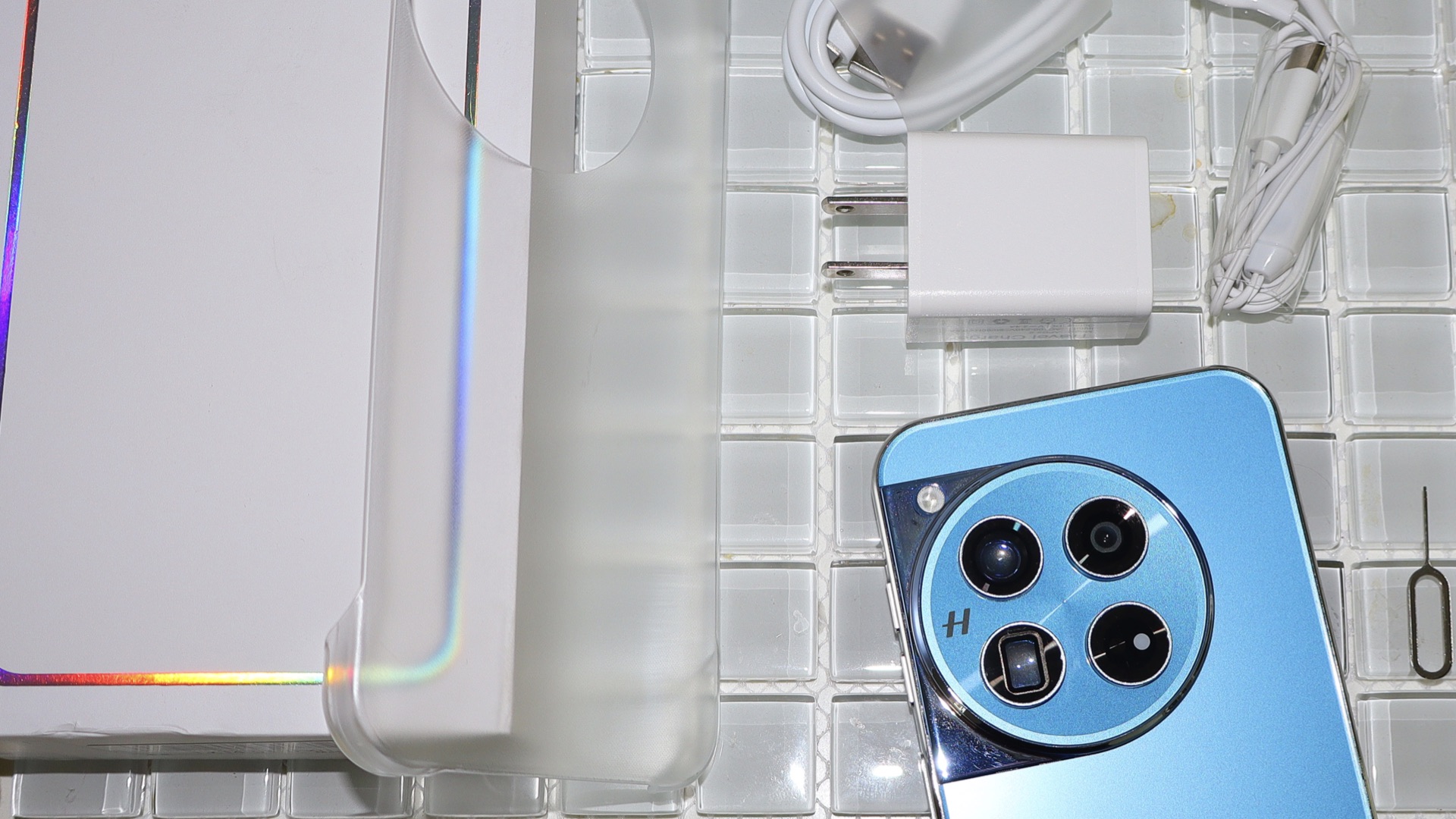
A closer look at a fake Hasselblad
The smartphone itself is composed of a plastic-like rear plate that features the aforementioned Hasselblad-branded circular quad-camera island.
Around the sides, the frame is a shiny metal with a power button/fingerprint sensor, a possible reset button, volume up/down, SIM tray, USB charging port, and ten circular openings along the bottom of this frame.
The front plate is a glass pane without any statement regarding its branding. Embedded near the top of this glass pane is a circular punch-hole-style camera (featuring a 3.8mm focal length with an 8MP sensor) and a discrete speaker grill fitted between the glass and the metal frame. One odd omission with the TIANZIFY was the common smartphone practice of adding plastic antenna banding into the surrounding metal frame.
There were two curious “features” with this device. Firstly, the battery arrived with a 91% charge. Secondly, and more interesting, was the inclusion of a pre-installed 128GB microSD card named “Untitled” that was pre-configured with an Android file system structure. This card was found in the dual SIM tray inside the smartphone.
After a brief charging time to reach 100%, the device was switched ON. The subsequent startup was brief, without any Google-based setup, and the home screen used a lower-resolution display with a clumsy-looking app layout. Searching inside the settings, it appeared that this smartphone was using a “Welcome” user interface dated 2017 on top of a purported Android 13 OS. The latest/last Android security update was in August 2023.
Confirmation was made on the About Phone settings page that the device’s model was clearly stated to be a OnePlus 12 featuring a Snapdragon8 Gen2 (sic) processor. Although, contrary to a real/verified OnePlus About Phone settings pane, there was no indication of the cameras used on the TIANZIFY device.
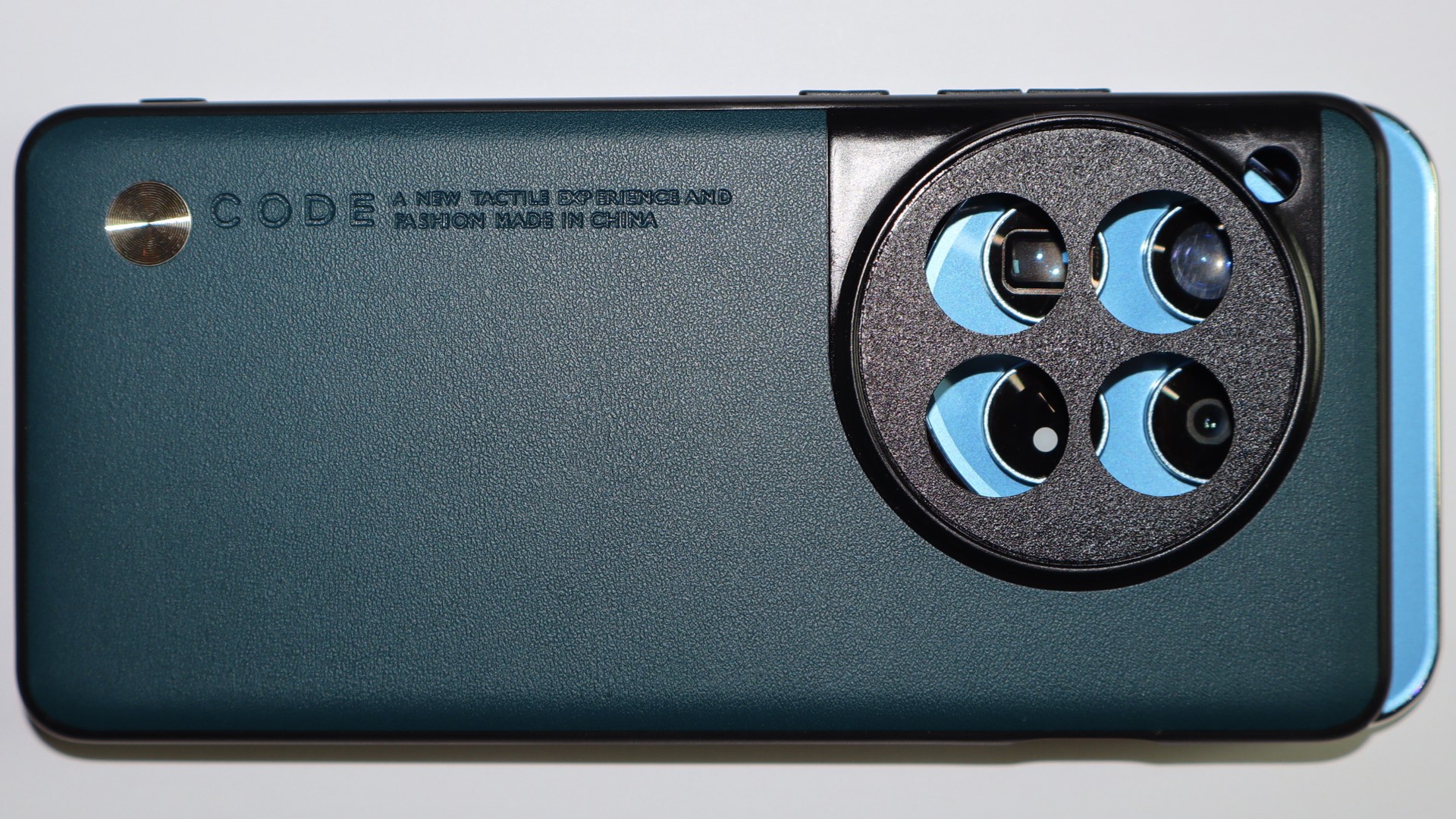
An examination of the smartphone’s rear quad-camera setup showed that three of the four “lens” mounts were empty. The plastic rear plate could be clearly seen through two of these “lenses,” while the third fake lens was covered by black plastic [Please note: there is no visible/technical suggestion that this might be a depth sensor.]. An unknown-brand, traditional-looking camera lens, however, could be seen underneath the fourth lens mount.
The TIANZIFY camera interface is distinctly not inspired by nor copying the Hasselblad Camera System for Mobile employed by the OnePlus 12. In fact, it is a spartan interface featuring a limited suite of flash, HDR, anti-shake, and zero shutter delay toggles. Furthermore, there are menu selections for self-timer, aspect ratio, white balance, and anti-flicker settings.
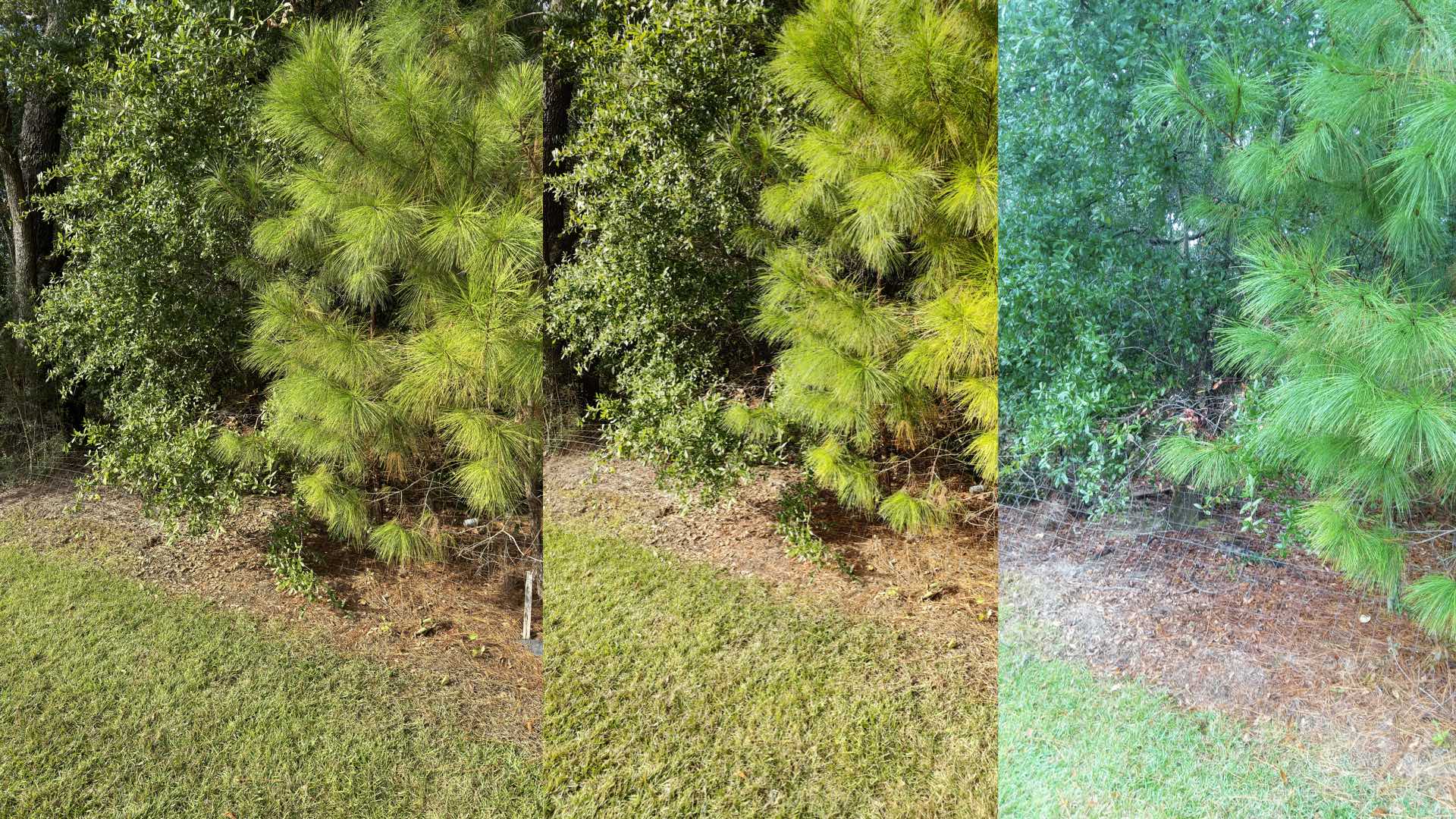
By studying the metadata attached to photographs taken with the solo rear camera, it was determined that this lens has a 5mm focal length and a fixed f/1.8 aperture. The shutter speed, however, is variable and automatically controlled by the device. Finally, the camera uses a 15-16MP sensor.
Technical details of a fake Hasselblad
Two methods were used for discovering the device’s system specifications. First, the true identity of the manufacturer’s smartphone model name was exposed with Bluetooth pairing. During Bluetooth transfer of images, the TIANZIFY smartphone was specifically identified as “OnePlus 12.”
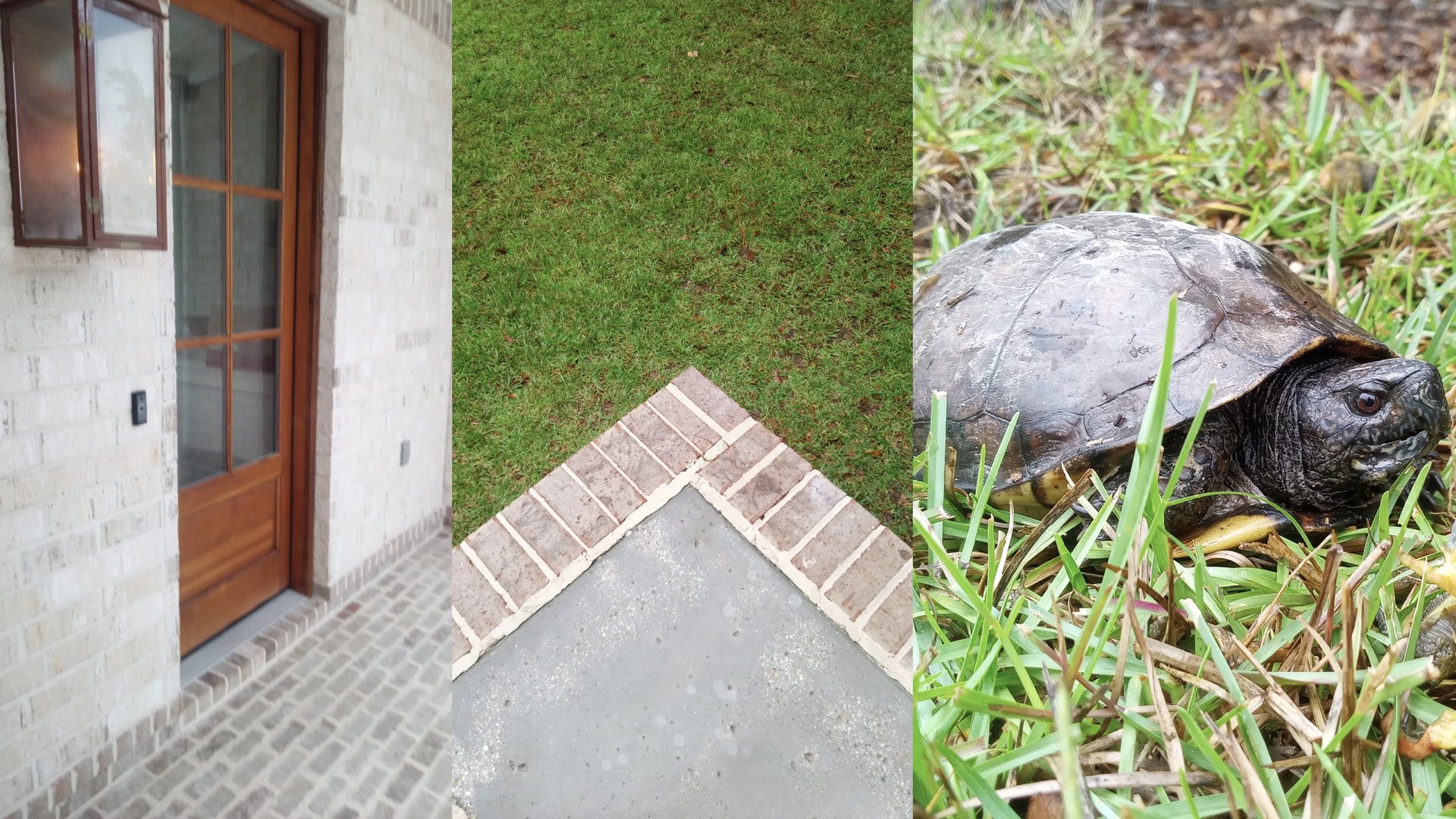
The second discovery method was performed by installing the Android app, CPU-Z. Installing any app from the Google Play Store on this smartphone, however, was “blocked” by the device. This blockage was superficially limited to a warning displayed on the LCD, while the actual app DID download/install without any indication of its progress. After a brief delay, the app surprisingly appeared on the Home Screen.

After running CPU-Z, independent verification of the TIANZIFY system specifications was made. The results showed the SOC as a MediaTek 2.00 GHz Snapdragon8 Gen2V/WB, the device model is OnePlus 12, the screen size is 6.8-inches at a resolution of 1440×3040 pixels, the operating system is Android 13 with an August 2023 security patch, and the device manufacturer is listed as “Welcome” and not TIANZIFY.
What exactly do all of these specifications, test results, and photographic samples mean? Clearly, the TIANZIFY smartphone is masquerading as something that it is not. Are any of these IP violations worth litigation by Hasselblad, OnePlus, and Qualcomm? At this point in time, following email contact, no comment has been officially received by any of the aggrieved manufacturers. In conclusion, you might say that a fake Hasselblad-branded smartphone was discovered, but the world shrugged.
P.S. If somehow, this was not clear yet, it is not a Hassy. To see what Hasselblad is really about, check the 907X CFV 100C system.
P.P.S. This is not the first time we are seeing sketchy practices from phone makers, like Samsung faking a DSLR photo as a phone photo.
See more from DIYPhotography.net on Google
Add DIYPhotography.net as a trusted source. This makes
our stories more likely to appear in your Google Search results.
 Add as a preferred source on Google

David Prochnow
Our resident “how-to” project editor, David Prochnow, lives on the Gulf Coast of the United States in Ocean Springs, Mississippi. He brings his expertise at making our photography projects accessible to everyone, from a lengthy stint acting as the Contributing How-To Editor with Popular Science magazine. While you don’t have to actually build each of his projects, reading about these adventures will contribute to your continued overall appreciation of do-it-yourself photography. A collection of David’s best Popular Science projects can be found in the book, “The Big Book of Hacks,” Edited by Doug Cantor.



Join the Discussion
DIYP Comment Policy
Be nice, be on-topic, no personal information or flames.
One response to “Exclusive DIYP report: phone fakes a Hasselblad lens”
Smartphone price too good to be true by a factor of almost 10. Buys it nevertheless. For the sake of science. And to the benefit of fraudulent seller.