



















This is the painter every photographer should know
May 14, 2024
Dunja Đuđić Kalinin
Dunja Djudjic is a multi-talented artist based in Novi Sad, Serbia. With 15 years of experience as a photographer, she specializes in capturing the beauty of nature, travel, concerts, and fine art. In addition to her photography, Dunja also expresses her creativity through writing, embroidery, and jewelry making.
Share:
As photographers, we often find inspiration in different works of art: painting, sculpture, movies, and even music and dance, to name just a few. Still, visual arts are the closest to our hearts, and there are some painters we can’t skip on this journey to inspiration and knowledge. In her latest video, Tatiana Hopper discusses why Caravaggio is one of the most important ones, and why every photographer should know his work.
About Michelangelo Caravaggio
Born in 1571 in Milan, Caravaggio was an Italian painter active in Rome for most of his artistic life. By the age of 20, Caravaggio had lost both his father and grandfather to the plague on the same day in 1577, had been raised in extreme poverty, and had numerous quarrels with artists he was training with or under. Caravaggio’s experiences fueled his intense, passionate, and often aggressive artistic vision despite these hardships.
Caravaggio’s arrival in Rome coincided with a high demand for artworks to fill the many churches, palaces, and magnificent buildings being built in the city. The Catholic Church, seeking to reinforce its influence amid the rise of Protestantism, required art that could help Christians reconnect with their faith. This environment provided Caravaggio with ample opportunities and influential patrons who appreciated his unique style.
One of Caravaggio’s most notable contributions to art is his use of chiaroscuro—a technique that employs strong contrasts between light and shadow. While chiaroscuro was not unique to Caravaggio, his dramatic and pronounced use of this technique evolved into a style known as tenebrism, characterized by its somber, obscure, and sometimes sinister quality. This technique not only created a striking visual effect, but also conveyed profound emotional and narrative depth.
Why Caravaggio matters to photographers
Caravaggio’s mastery of light and shadow is highly relevant to photographers. Like painters, we use light to capture beauty, communicate ideas, and convey emotions. Light is the essence of photography: without light, there is no photography. And by studying Caravaggio’s work, you can gain valuable insights into the power of light and its role in storytelling.
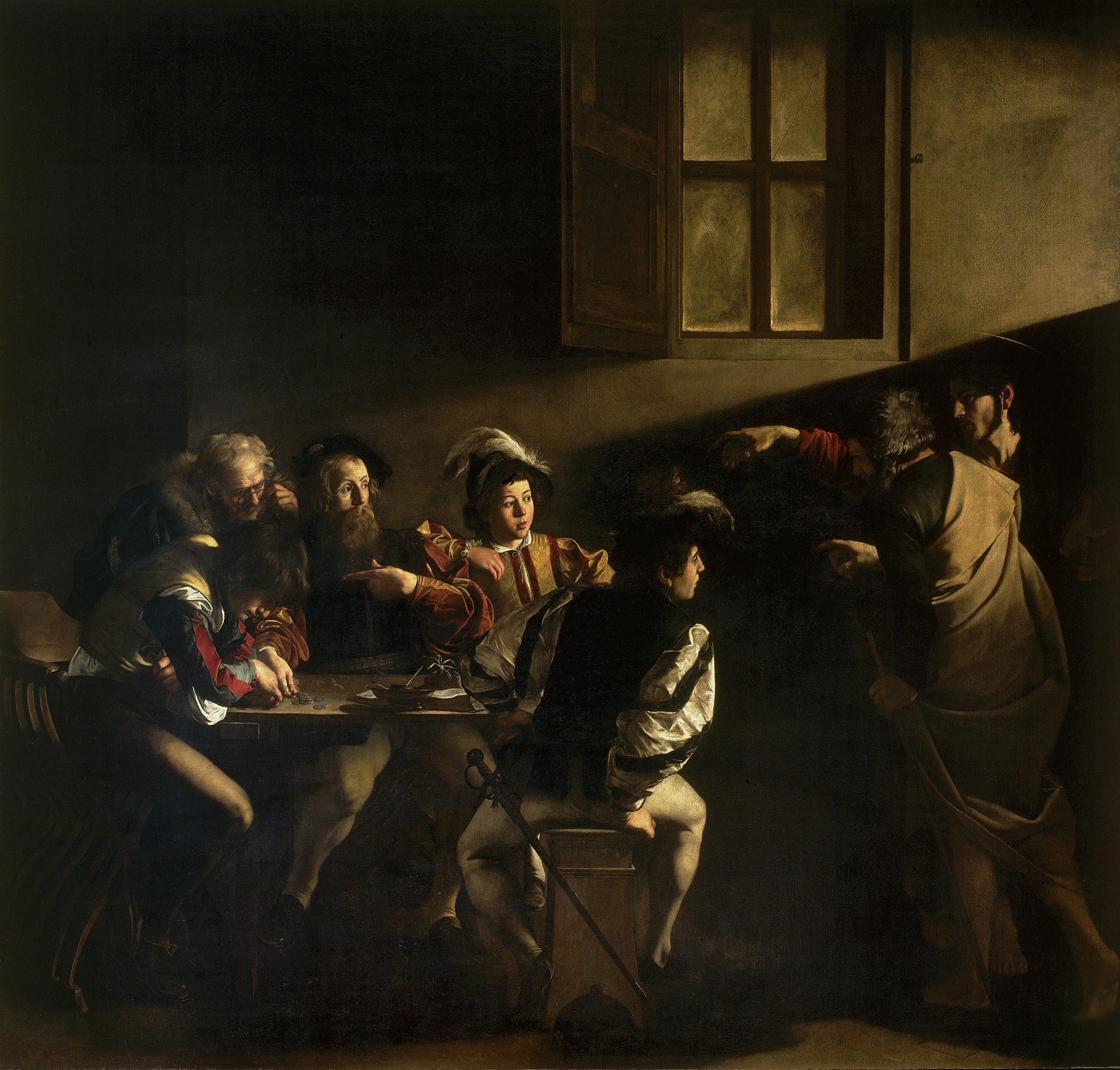
Tatiana points out Caravaggio’s painting, The Calling of St. Matthew (1599-1600). It perfectly illustrates his skillful use of light to enhance narrative. The painting depicts Jesus calling Matthew to follow him, a moment illuminated by a directional light that brings the characters to life.
The precise use of light highlights details and expressions and emphasizes the transformation taking place—Matthew’s shift from materialism to spiritual awakening. This dramatic contrast serves as a metaphor for the victory of light over darkness, a concept that can inspire photographers to use light to convey deeper meanings in their work.
For photographers, studying Caravaggio’s work involves more than just appreciating his artistry. You need to observe, experience, and analyze his use of light. By closely examining how Caravaggio manipulates light to enhance his compositions and convey emotions, you can learn to apply similar techniques in your work.
- Observation: Pay attention to how light interacts with subjects in various environments. Notice the direction, intensity, and quality of light, and how it affects the mood and perception of a scene.
- Experience: Experiment with different lighting setups and techniques. Practice using natural and artificial light to create desired effects, and explore how shadows and highlights can add depth and dimension to your photographs.
- Analysis: Study Caravaggio’s paintings and other artworks that utilize chiaroscuro. Analyze how light is used to guide the viewer’s eye, emphasize certain elements, and convey emotional and narrative depth.
By incorporating these techniques, you can harness the transformative power of light to elevate your visual storytelling… Just like Caravaggio did in his time.
[The Painter Every Photographer Should Know. | Tatiana Hopper]
See more from DIYPhotography.net on Google
Add DIYPhotography.net as a trusted source. This makes
our stories more likely to appear in your Google Search results.
 Add as a preferred source on Google

Dunja Đuđić Kalinin
Dunja Djudjic is a multi-talented artist based in Novi Sad, Serbia. With 15 years of experience as a photographer, she specializes in capturing the beauty of nature, travel, concerts, and fine art. In addition to her photography, Dunja also expresses her creativity through writing, embroidery, and jewelry making.
Related Posts
 Painter Found Guilty Of Plagiarism For Painting A Photo. Claims Format And Color Contrasts Are Different
 Photographer Spotlight: Q&A With Willie Dalton – Outdoor Lifestyle Photographer
 Photographer Spotlight: Q&A with Nick Bondarev – Northern Culture and Travel Photographer
 Photographer Spotlight: Q&A With Magdalena M – Editorial and Commercial Portraiture Photographer
Join the Discussion
DIYP Comment Policy
Be nice, be on-topic, no personal information or flames.
5 responses to “This is the painter every photographer should know”
Thank you, Dunja. Very nice presentation of Tatiana’s work regarding how helpful Caravaggio can be to seeing light and shadow.
I learned about Caravaggio from my friend Kana while we were taking art classes. Really helped influence my work.
Excellent article. Photographers can learn much from classical painters. Jean Simeon Chardin and Henri Horace Rolande-Delaporte are great sources of inspiration for still life photographers too.
Georges de la Tour was a great one too.
Outstanding video. Thank you very much! Would love to see more like this–especially examples of photographs that have been processed to emphasize the principles being taught–e.g., Ansel Adams’ Moonlight over Hernandez which was originally presented with relatively little contrast, then ultimately evolved to be a masterpiece of chiaroscuro.