







Five reasons why you need vintage lenses in 2020
Jan 24, 2020
Dunja Đuđić Kalinin
Dunja Djudjic is a multi-talented artist based in Novi Sad, Serbia. With 15 years of experience as a photographer, she specializes in capturing the beauty of nature, travel, concerts, and fine art. In addition to her photography, Dunja also expresses her creativity through writing, embroidery, and jewelry making.
Share:
Photography gear is getting more and more advanced, and it seems that new lenses are being announced every few weeks. But even with all these fancy new lenses, there are still reasons to use vintage ones.
Mark Holtze says that there are as many as 100 reasons to use vintage lenses in 2020, but “nobody is sitting through 90 minutes of this,” he adds jokingly. So, he limited himself to a 7-minute video and five big reasons to shoot with vintage glass even in 2020. And I’d say these will apply in the future, too.
1. Price/accessibility
As we all know, most modern lenses aren’t exactly cheap. If you want a fast lens, either prime or zoom, you’ll have to invest some serious cash into it. On the other hand, their vintage equivalents can be as much as ten times cheaper. This is especially good for people just starting out in photography and gearing up. But of course, it’s great for anyone who wants to buy a good lens and save some money.
2. Character
“Character” can be best described as the unique look a lens produces in your image. And vintage lenses certainly have a lot of character.
Mark compares vintage lenses with movie characters – the most interesting ones are those with flaws and imperfections. Well, just like movie characters, vintage lenses aren’t perfect, but they can render a really unique look compared to modern lenses.

3. Build quality
Vintage lenses are made almost entirely of metal and glass. They were built to last. After all, the best proof of their durability us that we still use them in 2020, right? Another plus is that they’re often a lot smaller than their modern counterparts because they’re manual focus lenses.
4. Good for both photo AND video
Whether you’re shooting stills or video, vintage lenses work for both mediums. Mark says that they’re even better suited for video because the manual focus is more often used there. Vintage lenses provide smooth focusing, and their clear distance markings make focus pulling much more convenient.
5. Education
Finding a unique and interesting vintage lens inspires you and gets you out to shoot more. And the experience is the best teacher. The more you shoot, the more you learn. The manual focus of these lenses challenges you to adapt and learn how to use it. And it’s a great feeling when you take the perfect shot and nail focus.

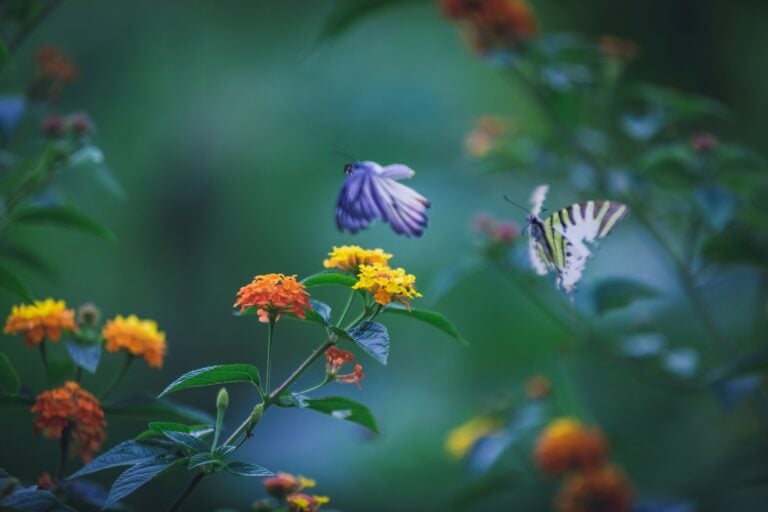
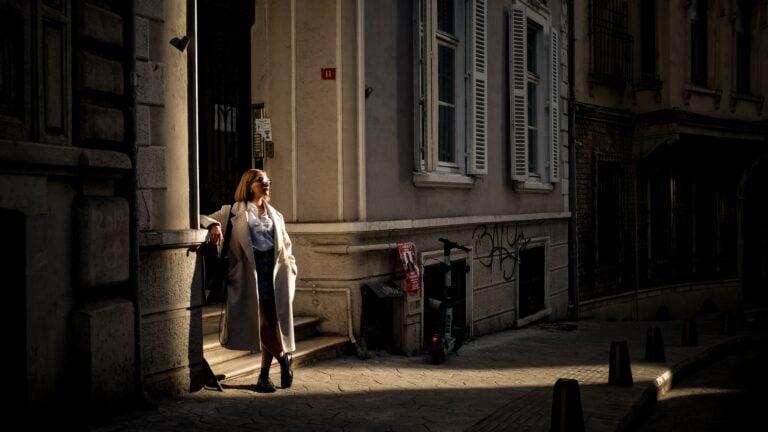
Personally, I own only one vintage lens, but I do love borrowing them and experimenting with them whenever I have a chance. The one I own is Helios 44M-4 2/58mm and I love its “character.” Both photos above were taken with it.
Do you shoot with vintage lenses? What’s your favorite one?
[5 REASONS WHY YOU NEED VINTAGE LENSES IN 2020 via ISO 1200]

Dunja Đuđić Kalinin
Dunja Djudjic is a multi-talented artist based in Novi Sad, Serbia. With 15 years of experience as a photographer, she specializes in capturing the beauty of nature, travel, concerts, and fine art. In addition to her photography, Dunja also expresses her creativity through writing, embroidery, and jewelry making.



Join the Discussion
DIYP Comment Policy
Be nice, be on-topic, no personal information or flames.
10 responses to “Five reasons why you need vintage lenses in 2020”
I have Helios 44-3 (bought brand new about 30 years ago) and few Konica lens: 50/1.7, 40/1.8, 135/3.2, 35/2.8. Konica is more better ;) It’s interesting experience, but tedious using. I need cheap AF-adapter (like LeicaM to SonyE)
I have a Zeiss Planar 1.4/85 T*.
Very creamy bokeh, when shot wide open, and due to the aperture blade design you get a “saw blade tooth” highlights when stepped a bit down: https://www.aperturized.com/essays/2015/02/a-surprising-discovery/
That must be the AEG or AEJ version of the 85? The MMJ version (i have that one) has clean blades. I have the AEG 50 and 35 1.4 though that give me that “saw blade” bokeh between F2 and F2.8.
I think it is the AEG version.
I only use m42 primes on a Sony a7. They’re really cheap and the pictures have a nice touch to them. For a quick shot I still got my phone that takes really nice pictures.
I like to pop my Helios 55-2 on from time to time, it’s great for portraits.
My Minolta rokkor 58mm f1.4 ?
Love those old slightly radioactive ones from the late 50’s n early 60’s. They’re great for monochrome as most if mine have yellowed over the years!
Nikkor 105mm F2.5 Still my favorite portrait lens. Use on D810 and D5. I also use a 28 mm F3.5 Nikkor Shift lens. Both AIS lenses.
I have several lens that I used with my Canon film cameras. I would like to upgrade to a Canon digital camera. I have been dragging my feet because I didn’t know if I could use my older lenses on a new camera body. I would appreciate feedback.