













Small Studio? No Problem, Use These Tips to Make a Big Impact in a Small Space
Aug 19, 2025
Alex Baker
Alex Baker is a portrait and lifestyle driven photographer based in Valencia, Spain. She works on a range of projects from commercial to fine art and has had work featured in publications such as The Daily Mail, Conde Nast Traveller and El Mundo, and has exhibited work across Europe
Share:
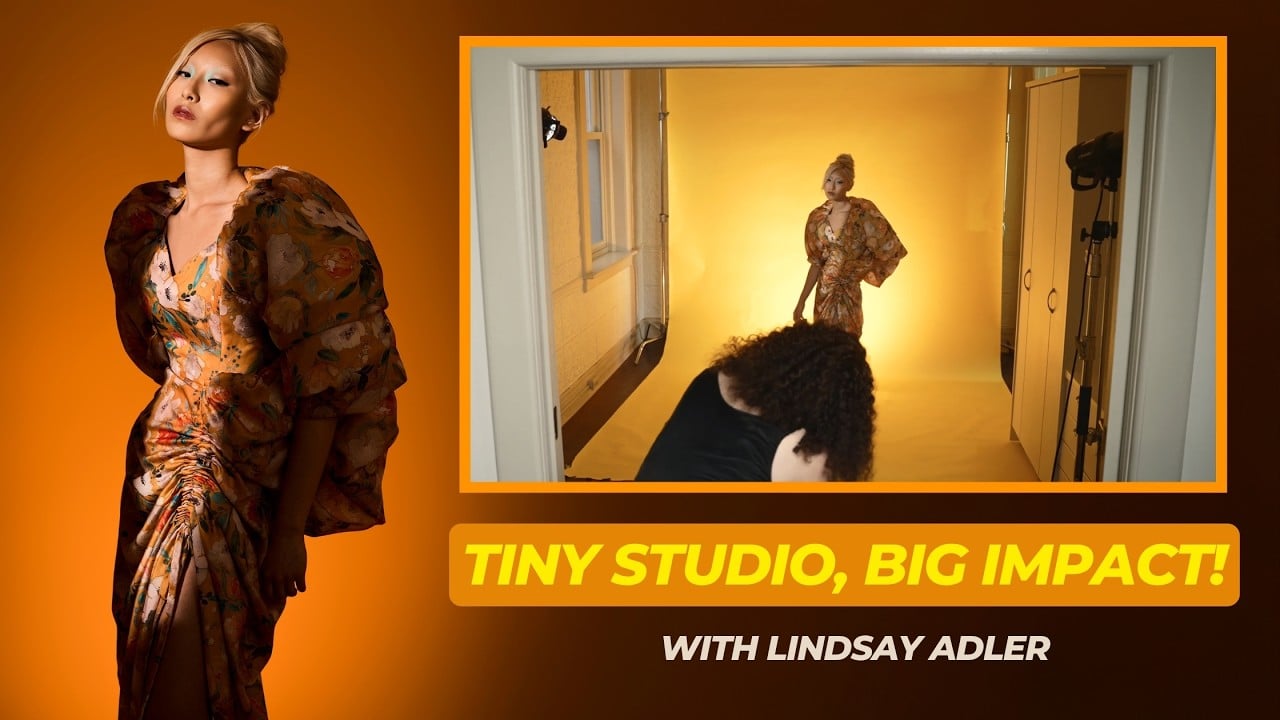
For many photographers, the dream is to have a huge, airy studio filled with natural light, space for props, and several backdrops. Bonus points if it’s in a trendy district and in a converted warehouse. But the reality is usually a little less glamorous. Most of us, especially at the start of our careers, have to contend with a corner of an office, a dining room table, or even a cramped spare bedroom.
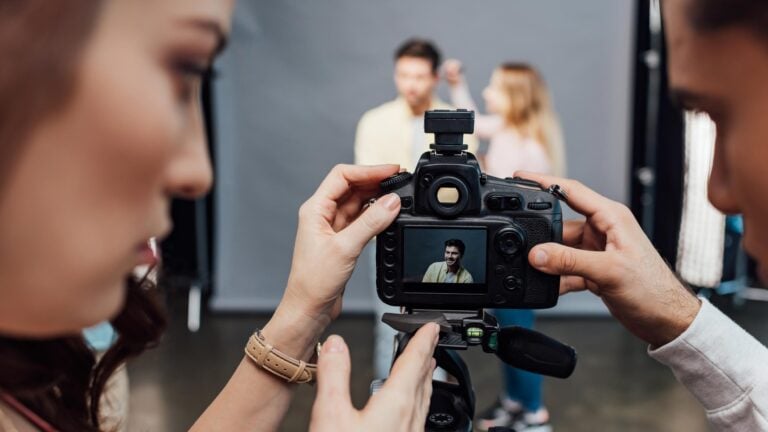
Reassuringly, fashion photographer Lindsay Adler can empathise, having shot in many less-than-ideal spaces herself. And yet, she still gets the shot. In this video for Adorama, Lindsay shares how you can shoot in tight spaces and still create epic images that have an impact.
Rethinking the “Too Small” Excuse
Lindsay says she often hears photographers say: “I can’t create because my space is too small.” Her answer is to stop letting space become the barrier. She regularly works in rooms that are 9 feet wide by 14 feet deep, with ceilings just over 7 feet. That’s hardly spacious, but she creates dramatically different looks within those constraints with a few strategies. You just need a little ingenuity, and to think out of the box. Literally!
Tip 1: Play with Angles and Distance
One of the biggest challenges in a small studio is not having enough room to back up. If Lindsay wants a full-body shot, she often steps outside the space to gain those extra feet, like into a hallway or another room. This allows her to zoom in, compress the background, and create a cleaner, more flattering look.
Angles matter just as much as distance. A slightly higher perspective can minimise clutter in the background, while shooting from lower down can make a subject feel more powerful and dramatic.
Tip 2: Adapt Your Lighting
Large modifiers like 5-foot octaboxes are a no-go in a tight studio. Instead, Lindsay suggests:
- Use smaller modifiers for drama. A grid or optical spot creates slices of light that sculpt the subject without spilling everywhere. Perfect when you want contrast and control.
- Bounce light for softness. If you want glowing, even light but don’t have room for a giant umbrella, aim your strobe into a white wall or ceiling. The room itself becomes your modifier.
- Hide lights in clever spots. In one setup, Lindsay tucked a small strobe directly behind her subject to create a glowing rim of light. The stand was hidden by the subject’s dress which is proof that even when space is limited, creativity can add depth.
Tip 3: Use What the Room Gives You
Small spaces come with quirks: low ceilings, colored walls, furniture you can’t move. Instead of fighting them, Lindsay works with them. White walls become bounce reflectors. Tight corners become natural light blockers. Even cabinets or doors can help frame a shot. She reminds photographers: all you need is a blank canvas, light will do the rest.
Tip 4: Keep Gear Simple
Working in a small space is easier when you’re not tripping over equipment. Lindsay recommends:
- One or two lights. Start small and layer additional lights only when necessary.
- Compact modifiers. Beauty dishes, grids, and reflectors take up far less space than giant softboxes.
- A sturdy tripod. Essential when you don’t have much room to manoeuvre.
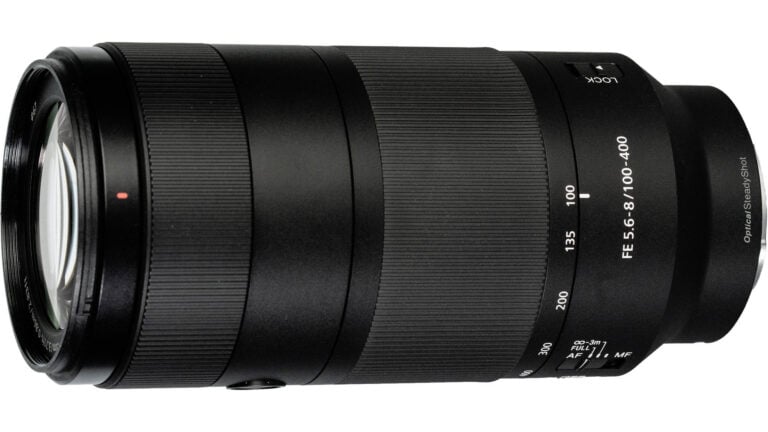
- Versatile lenses. A 50mm works beautifully in tight quarters, while a longer lens can be used if you can step back into another room for compression.
Tip 5: Embrace the Challenge
Perhaps the biggest takeaway from Lindsay’s approach is mindset. Small spaces are challenging, there’s no denying that. But she views those challenges as creative prompts. Every time she has to solve a lighting problem or adjust her angle to fit the room, she grows as a photographer. Her advice is to stop waiting for the “perfect” studio. Start creating whereever you are.
That’s a great mindset, honestly. Most of us aren’t in the place we’d most like to be in. But having had a larg-ish studio and then hardly ever using it, I can attest to the fact that a studio is not always a necessity and can often be a drain on finances. If you embrace the constraints, you’ll soon be creating, and when you do find yourself in a larger space, you’ll appreciate it even more!
See more from DIYPhotography.net on Google
Add DIYPhotography.net as a trusted source. This makes
our stories more likely to appear in your Google Search results.
 Add as a preferred source on Google
Alex Baker
Alex Baker is a portrait and lifestyle driven photographer based in Valencia, Spain. She works on a range of projects from commercial to fine art and has had work featured in publications such as The Daily Mail, Conde Nast Traveller and El Mundo, and has exhibited work across Europe


Join the Discussion
DIYP Comment Policy
Be nice, be on-topic, no personal information or flames.