


















AI Takes Control of a Professional Telescope for the First Time
Sep 21, 2026
Soumyadeep Mukherjee
Soumyadeep Mukherjee is an award-winning astrophotographer from India. He has a doctorate degree in Linguistics. His work extends to the sub-genres of nightscape, deep sky, solar, lunar and optical phenomenon photography. He is also a photography educator and has conducted numerous workshops. His works have appeared in over 40 books & magazines including Astronomy, BBC Sky at Night, Sky & Telescope among others, and in various websites including National Geographic, NASA, Forbes. He was the first Indian to win “Astronomy Photographer of the Year” award in a major category.
Share:
A telescope has to make hundreds of choices during a night of observing. Which target should it photograph next? Should it stay on the current target? Has the Moon become too bright? Is the atmosphere still good enough for a sharp image? Astronomers have traditionally made these decisions. Now, an artificial intelligence system is starting to make them.
The system comes from the NSF-Simons Foundation AI Institute for the Sky, or SkAI. Researchers from the University of Chicago, Northwestern University, and Fermilab developed it to handle the difficult job of telescope scheduling. They trained the system using 13 years of observations from the Dark Energy Survey before testing it on the real telescope.
Every night brings a new scheduling problem
A telescope cannot follow a list of targets from the beginning of the night to sunrise. Conditions do not stay the same for that long. The Moon changes position and brightness. Clouds can move over the observatory. Atmospheric turbulence can affect image quality. Targets also move across the sky, rising and setting at different times. All of these factors can change which observation makes the most sense at a particular moment.
There is another constraint that is just as important: telescope time is scarce. Large research telescopes serve astronomers from many institutions, and researchers can wait months for an observing opportunity. A few hours of poor decisions can leave a programme with data that do not meet its requirements.
The job becomes even harder when a new astronomical event appears. A survey telescope might detect a supernova or another transient object and trigger an alert. A follow-up telescope may already have a schedule for the night. Someone then has to decide whether the new target deserves a place in that schedule.
Astronomers have handled these decisions for years. They use experience, observational rules, and information about the conditions at the site. The SkAI researchers wanted to see whether a machine could learn the same process from past observations and make those decisions quickly enough for a working observatory.
The AI learned from 13 years of observations
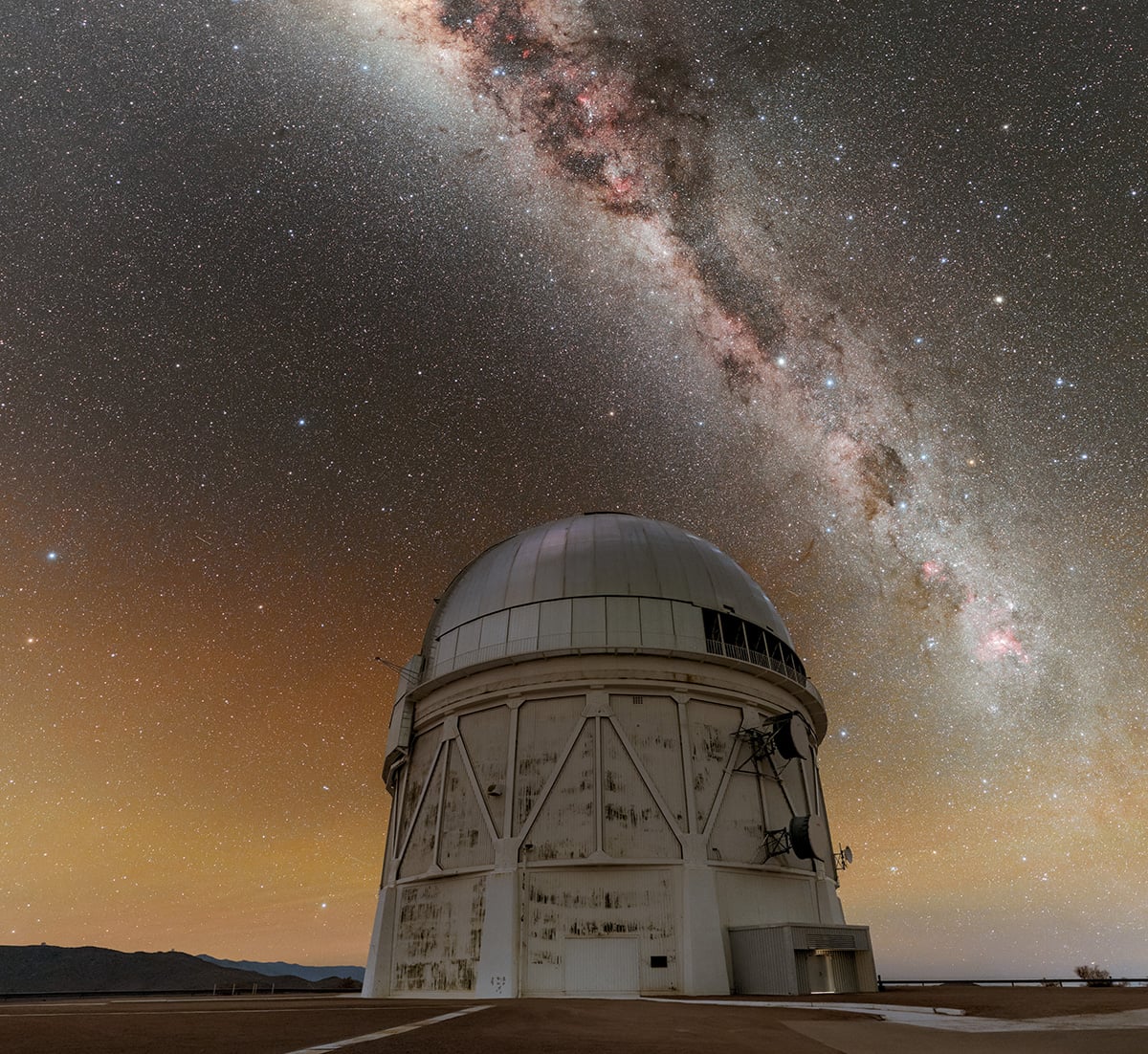
The training material came from the Dark Energy Survey, which used DECam on the Blanco Telescope. The survey spent years mapping the southern sky and produced a large record of the decisions astronomers made while carrying out their observations.
The computer could see what the telescope had been observing and what astronomers had chosen to do next. The researchers showed the model where the telescope was pointing at one moment and asked it to predict the next observation. They then compared its prediction with the choice made by human astronomers.
Gradually, the system began to pick up relationships within the observing data. It learned that moonlight, atmospheric conditions, and other factors affect which targets make sense at different times. The researchers did not have to spell out every one of those relationships as a separate instruction.
SkAI is also studying how AI can select targets from enormous astronomical surveys. Modern surveys can find millions of objects, but follow-up telescopes cannot study all of them. Researchers need ways to decide which objects deserve additional observations.
The AI has now worked with a real telescope
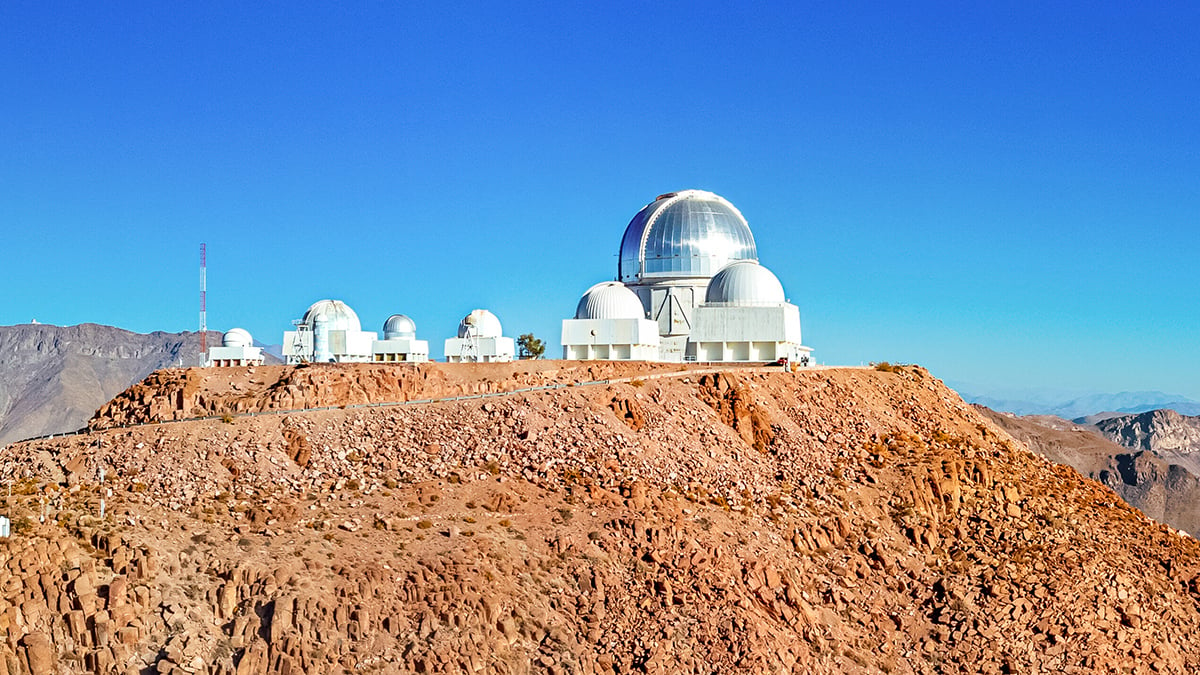
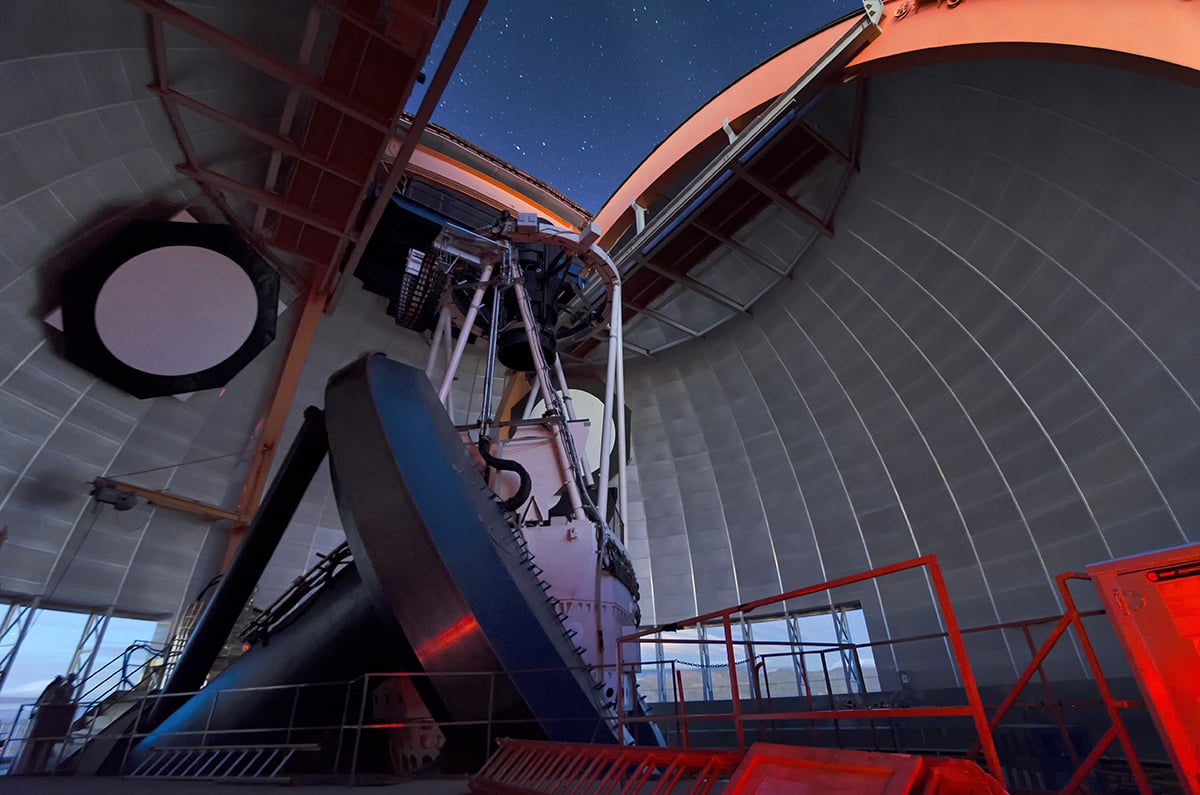
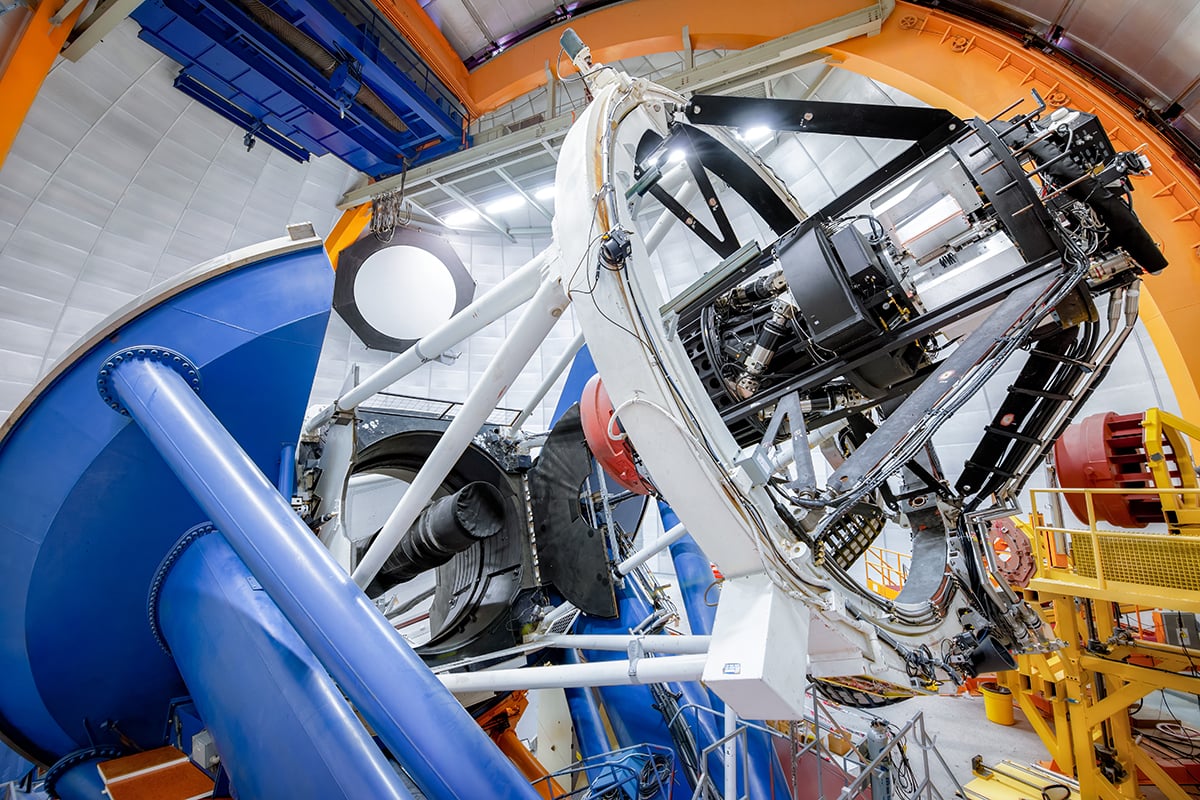
The Blanco is a 4-meter telescope and hosts DECam, a 570-megapixel camera built for wide-field astronomical surveys. The camera has a large field of view, allowing astronomers to cover substantial areas of the sky during survey observations.
The AI system completed two observing runs on the telescope during spring and summer 2026. It created observing plans and changed them as environmental conditions changed.
Calling this an “AI telescope”, however, can make the usage of AI sound broader than it is. The Blanco Telescope has not started choosing its own scientific questions, and it has not removed astronomers from the observing process.
The AI controls the schedule. Human researchers still decide which science programmes the telescope should support. They determine the observations that matter to their research. The AI then helps decide when those observations should happen.
Clear skies!
See more from DIYPhotography.net on Google
Add DIYPhotography.net as a trusted source. This makes
our stories more likely to appear in your Google Search results.
 Add as a preferred source on Google

Soumyadeep Mukherjee
Soumyadeep Mukherjee is an award-winning astrophotographer from India. He has a doctorate degree in Linguistics. His work extends to the sub-genres of nightscape, deep sky, solar, lunar and optical phenomenon photography. He is also a photography educator and has conducted numerous workshops. His works have appeared in over 40 books & magazines including Astronomy, BBC Sky at Night, Sky & Telescope among others, and in various websites including National Geographic, NASA, Forbes. He was the first Indian to win “Astronomy Photographer of the Year” award in a major category.
Related Posts
 NASA’s Roman Space Telescope Takes Its First Look at the Stars
 Now you don’t even have to be a professional photographer to be a certified professional photographer
 Hubble takes a stunning photo of two galaxies merging
 Stunning airplane photo takes center stage in Kolari Vision’s first solar eclipse contest
Join the Discussion
DIYP Comment Policy
Be nice, be on-topic, no personal information or flames.