


















6 Photography Lessons From a Combat Sniper
Mar 10, 2014
Allen Mowery
Allen Mowery is a Nationally-published Commercial & Editorial Photographer with over 20 years of experience. He has shot for major brands as well small clients. When not shooting client work or chasing overgrown wildlife from his yard, he loves to capture the stories of the people and culture around him.
Share:

We see them in movies, we watch History Channel specials about them, and they are the things of which legends are made. Surprisingly, no, I’m not referring to UFOs. We’re talking about combat snipers, those lethal ghosts in face paint shifting in the shadows.
I began contemplating the possible parallels between photographers and these men of mystery, and, as I have rarely ever fallen into a category that the military deems as useful for more than civilian life, I sat down one evening with a friend and former U.S. Army sniper to get the lowdown on what life as a precision shooter is really like. As we sat around a crackling campfire beneath a mesh camo canopy, I was intrigued and somewhat surprised as Andy (because heroes literally care that little about protecting their identity) recounted stories of combat missions in the mountains of Afghanistan. But, as we continued to talk, I began to see more and more the applicable parallels between these elusive soldiers and those of us in the metaphorical “trenches” of photography. (There’s really no comparison, I know…)
1. Know Your Equipment and Your Skills
This is paramount to being effective in your role — fully understanding the capabilities and limitations of your gear and knowing how your skills align with that. Having the most advanced camera system in the world does you nothing if you are not competent in using it. I have seen images from photographers who spent thousands on equipment that do not compare to those of an adept photographer with a glorified point-and-shoot. And, likewise, there are limitations to your effectiveness if the job requirements extend beyond the facility of your gear. I mean, let’s be real…you aren’t going to shoot high-speed “bullet time” images with a single Kodak Easyshare.
NOTE: If you can, we want to know about it! Strap the details to the back of a pigeon, and set it free!…if it comes back to you, it was probably hungry.
You need to be aware of the environmental limitations of your equipment as well. If there wasn’t a moon or at least stars shining in the mountains of Afghanistan, night vision optics were of no use and soldiers had to blindly feel their way along the rugged terrain. Sometimes, no amount of trying and finagling or DIY-ing will allow you to do what you want (although we still try our darndest, regardless). It’s okay…it happens… Just move on and adapt.

2. Observation Is As Important As Engagement
Contrary to the illusion many have from Hollywood of a sniper’s role, much of the time spent in the field is comprised of reconnaissance. So often we think of photography as being all about capturing the subject or documenting the moment, but, more often than not, we need to take the time to just observe what’s in front of us. Situational awareness is vital to not only understanding what we’re seeing but also calculating our plan of attack. Simply rushing in and opening fire like Rambo is not an effective method for exacting the results we want.
3. It’s a Waiting Game
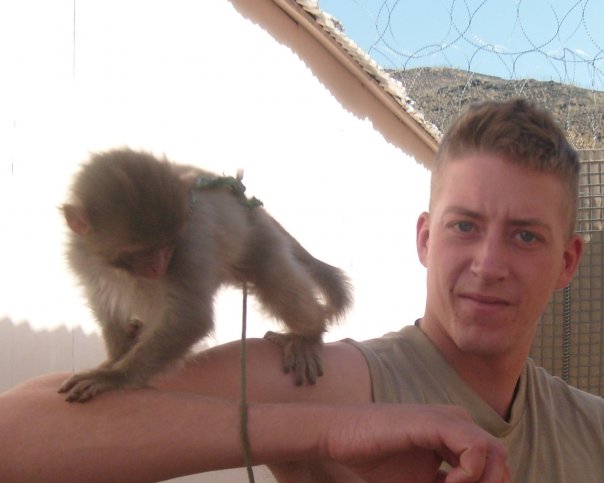
While most people would be jumping at the opportunity to join the elite ranks of sniperhood, Andy recounted how one of the snipers in his unit simply…quit…because it was so damn boring. In the same vein as calculated observation, photography is often a waiting game…exercising patience, as hard as it may be sometimes, lying in wait for that one, specific shot. Perhaps it’s waiting for the subject to come into frame to compose that once-in-a-lifetime image, or maybe it’s enduring while a scene unfolds in front of you to present the perfect opportunity or the sun to hit those trees at that specific angle. Whatever the case may be, patience is a virtue which few possess but one that will ultimately pay off.

4. Remain Calm and Focused
I am often guilty of becoming trigger-happy when unleashed on a photographic opportunity, whether it’s an in-studio client, a documentary subject, or my own kids running around the yard. I tend to go nuts sometimes, filling up half a memory card (more or less) without ever bagging anything really good. We photographers want to capture EVERYTHING, not missing a single opportunity, and while there are situations that absolutely call for “spraying-and-praying,” most of the time if we paused to take a breath and collect our thoughts, we would be able to capture a much more dynamic work. True photography is about quality, NOT quantity. Just imagine if Ansel Adams had tried to burn through slides as quickly as possible…do you really believe we would have the awe-inspiring, iconic images now synonymous with his name?
5. Choose the Right Gear For the Situation
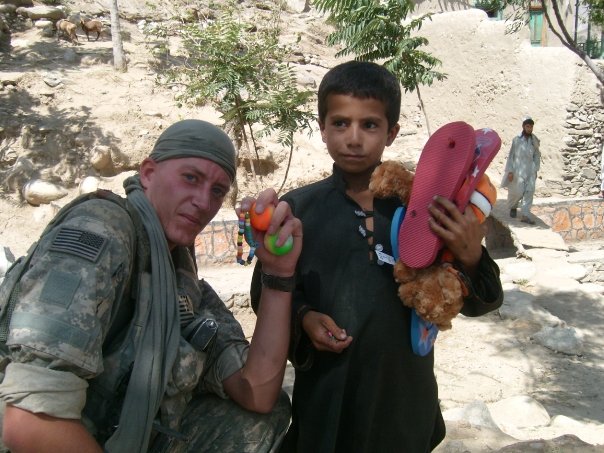
When heading into enemy territory, there were many things to take into consideration. Do you take a backup weapon in the event you find yourself in a firefight? Do you grab a SAW with a higher rate of fire but less reliability, or do you take an M4 with less capacity but fewer chances of error? There will be no resupply during the mission, so how much food and water do you lug around with you? How much will be consumed along the way?
Photographers are often faced with a similar dilemma: Do you weigh yourself down with a full-frame body and an array of lenses, or do you opt for a smaller body and single prime lens? Will you be moving around a lot, or does the situation call for a more stationary position? Street photographers, for instance, are notorious for keeping it simple, sticking with a typically-small body and prime lens, while a wedding may require a double-camera harness and zoom lenses, and a commercial shoot might require an entire set with medium-format cameras, lighting and assistants. Each scenario is different and should be treated individually. Make the best choice of gear to provide ample flexibility without incurring unnecessary encumberment.

6. Practice Builds Skill and Confidence
There’s no way around it: repetition builds perfection. A sniper spends countless hours at the practice range and on simulated missions to not only increase proficiency but to familiarize the soldier with their true capabilities and potential. There’s a difference between hoping you can make that headshot at 800 meters and knowing that you can, and that knowledge only comes through repeated successful execution of the drill. And, the practice does not simply end when you graduate from sniper school!
If we photographers took all the time and energy that we put into theory and talk and, instead, channeled it into hands-on application, is there really any limit to what we could create? Get out there and shoot! Give yourself challenges; set regular goals to keep yourself in regular practice. Because, if you’re not advancing, you’re regressing.
Looking for a place to start? Check out 25 Ways to Jump Start Photography Inspiration!

You are a well-trained, precision executor of visual art. (Hoorah!) There is no need to be otherwise. It’s not the biggest, the baddest, or the toughest who make it through sniper school; it’s those with determination, focus, and a sense of purpose who make it into the ranks of the elite.
(And you don’t even have a CO yelling at you to carry 150 lbs. of gear on a 30-mile march!)
*Photos courtesy of Andy Plank
See more from DIYPhotography.net on Google
Add DIYPhotography.net as a trusted source. This makes
our stories more likely to appear in your Google Search results.
 Add as a preferred source on Google

Allen Mowery
Allen Mowery is a Nationally-published Commercial & Editorial Photographer with over 20 years of experience. He has shot for major brands as well small clients. When not shooting client work or chasing overgrown wildlife from his yard, he loves to capture the stories of the people and culture around him.
Related Posts
 How to Combat Social Media Fatigue and Make it Work for You
 30 lessons Leonardo da Vinci has taught me about photography, art, and life
 Lessons on properly lighting dark-skinned actors from “Insecure” director of photography Ava Berkofsky
 Lessons I’ve learned after 250 assignments in documentary photography
Join the Discussion
DIYP Comment Policy
Be nice, be on-topic, no personal information or flames.
27 responses to “6 Photography Lessons From a Combat Sniper”
Thanks-HOOAH!
Nice article and thank you Andy for your service :)
sad work, poor guy
We all know that yankees are obsessed with war and guns, but come on … Celebrating someone who is paid to kill? Why?
He kiils to save lives. Freedom isn’t free.
Keep telling yourself that…. Total BS, he is just a plain killer with a licence.
Killing, not for sustenance is part of the human experience. Nothing to moan like a whore about.
well you could always write your own article, but just like everything you Redcoats do that isn’t Doctor Who or Top Gear…..No one cares
The reason for practice is to convert your knowledge into muscle memory. Teach your hands and fingers to do the picture taking. The goal is at the decisive moment you’ll just hear the shutter go off!
Sorry but I’ll not relate my activit as a photographer to something that is simply “kill people”! I’m gonna read something else….
Not everyone in the military “kills people”. If you read the article, it’s rather humorous and insightful.
Sorry, Cadaver, I read that
(again) and nothing changed…
Many ex military people get in to photography because of the similarities.
Nothing to do with photography. No place for this here.
This has everything to do with photography….Maybe some of the content stuck and nerve
Very cool Article, I like the attention and dedication of the author to discussing skill, training and learning the craft. I believe these are values lost on most who joined in the digital fire off 500 jpeg images on auto and get a bunch of “likes” on Facebook and flicker from their mom. Reemphasizing locking down the basics isn’t nearly discussed enough. Thanks Allen
While the digital era has opened up a wealth of possibilities and opportunities to a much broader base, I can’t help but frequently wonder how much its instantaneous and disposable nature has been a detriment to the foundations of the art.
Thanks for the feedback!
I liked it. I think that his points about patients and knowing your limits and environment were spot on. I will admit that I sold most of my rifles and used the money to fund photography equipment but that doesn’t mean I don’t get a little bit excited when I go target shooting or gopher hunting or watch a video of FPS Russia. Regardless of your views on the skills and function of a sniper, the disciplines of patience and practice apply to our craft of photography.
I love me some FPS Russia…and my Mosin :-)
Very true on your other comments… Thanks for reading!
That part about making a headshot at 800 meters is on behalf of the sniper right? ;-)
I was already thinking in sniper terms about my acting as a photographer especially during weddings, being low-profile, only staying in places for the minimum time needed, being totally prepared and dedicated, knowing my gear and capabilities and having my gear in perfect working condition.
I might not kill people, but I do shoot them. If you deny any similarities even with only the term shooting being used consquently by both professions you might be in a bit of self denial. At least the sniper serves a clear goal, most photographers take money from anyone to shoot people ;-)
Please open this page and get some money
http://thereferraljob.com/?refer=6320
First, thank you for your service Andy. I have been a hunter all my life. I keep my rifle in the rack now and enjoy the same rush with my camera. Lot of parallels here. Good article.
Perhaps it’s possible to map over sniper skills with those of photography–in fact, what field with technical gear that requires patience WOULDN’t map over with sniping? But the emotional/moral gravity of sniping, wherever your sympathies lie, make it a poor metaphor for photography. “Making a headshot at 800 meters…” ???!!! Did you expect that to just slide past while all of us considered our landscape options?
Yet another example of the uncritical glorification of all things military in the US. Yes, snipers are patient and prepare for missions. So do dozens of other professions. We should really look for role models in people who’s main purpose is not to kill people for questionable reasons.
If you think killing an armed man who kills unarmed civilians is killing for “questionable reasons” then you Sir are a moron.
The definition of a sniper is a long-range marksman who shoots people from a concealed position. Not “someone who kills armed men who kill unarmed civilians”.
Lived in Sarajevo during the 1992/95 siege. Got to know lots of photographers, a few snipers and was in a Marine Scout Sniper Platoon many moons ago. Mission success in both trades comes down to one moment when the individual skill set of a person with a camera or a weapon gets or does not get “the shot”. I have great respect for photographers who risked their necks to expose men with guns who gunned down helpless civilians in the hope that doing so would stem such crimes. That said, I preferred sending men who shot women, children (and unarmed photographers) to hell as opposed to taking their picture and was content to kill as many as I could, paycheck or no paycheck. As for Mr. Freire and his resentment at photographers/photography being compared to sniping/snipers, who in his words simply “kill people”. Killing people is simple enough if they are unarmed. Going after another man with a gun is anything but.