









Google Opens AI Watermark Detector to More Users Worldwide
Oct 15, 2026
Alysa Gavilan
Alysa Gavilan has spent years exploring photography through photojournalism and street scenes. She enjoys working with both film and mirrorless cameras, and her fascination with the craft has grown over the decades. Inspired by Vivian Maier, she is drawn to capturing everyday moments that often go unnoticed.
Share:
AI generated images are getting harder to distinguish from photographs, and even the most convincing visual clues can be misleading.
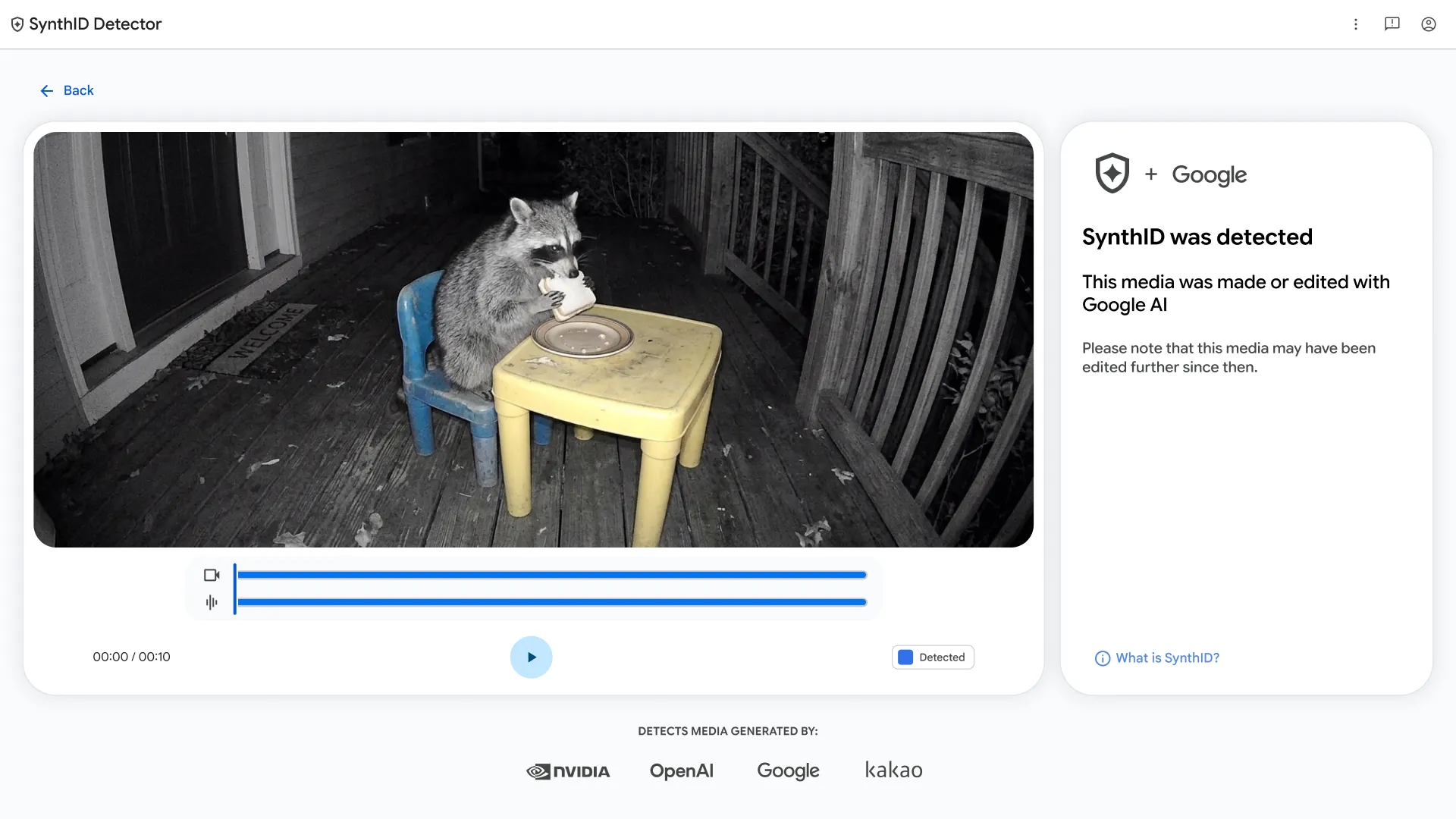
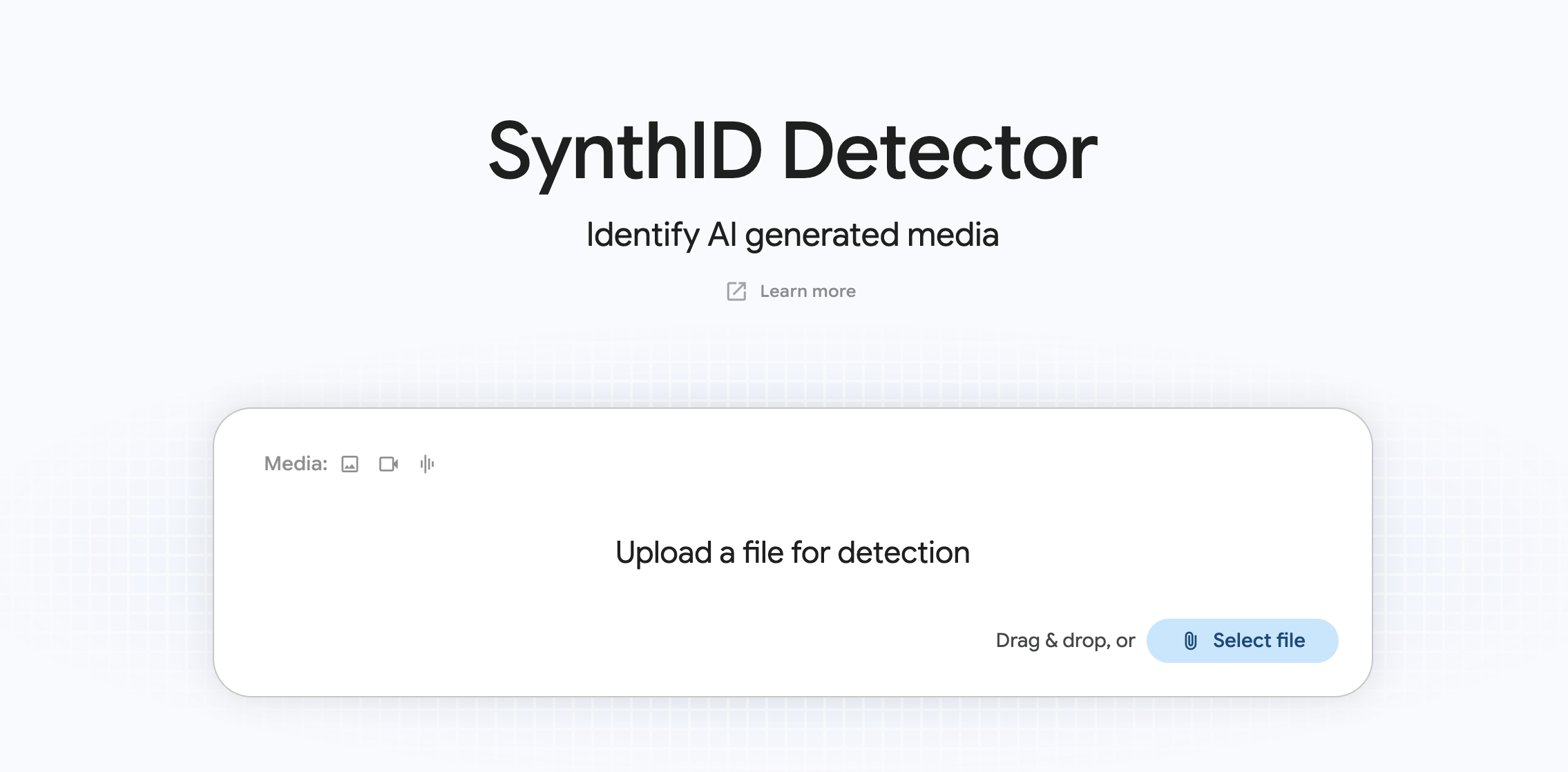
Google is expanding access to SynthID Detector, a tool that checks images, videos, and audio for invisible watermarks indicating that AI tools helped create them. The service could give journalists, photographers, and other media professionals another way to investigate suspicious content, although it cannot identify every AI generated file.
Google DeepMind introduced SynthID in 2023 to embed imperceptible watermarks in AI generated media. The company says it has now watermarked more than 180 billion images and videos, along with 240,000 years of audio content.

How does Google’s SynthID Detector work?
The detector lets users upload media and check for SynthID watermarks associated with AI generated content from Google and its partners. Google says the tool can identify content made using supported technologies from companies including OpenAI, NVIDIA, and Kakao, with Apple expected to join soon.
Google initially introduced an early version of the detector for media professionals last year. It is now making the tool available globally in English through SynthID.com.
The technology embeds information directly into generated media in a way designed to remain imperceptible to people. This differs from visible labels or metadata, which can be removed or lost when a file is edited, exported, or shared.
However, SynthID is not a universal AI detector. It looks for the watermark associated with supported tools, so content created using other systems may not produce a match. A result without a detected watermark does not automatically prove that an image is authentic or came from a camera.
Could AI watermarks reach cameras, too?
For photographers, SynthID raises a broader question about how audiences can verify the origins of images as AI generated content becomes more common.
Camera makers and industry groups are also developing ways to establish image provenance. Sony and Nikon, for example, have introduced camera systems that support content credentials, which can record information about an image’s origin and editing history. The Content Authenticity Initiative promotes the C2PA standard behind these credentials.
These systems work differently from SynthID. Rather than embedding an invisible watermark into AI generated media, content credentials attach verifiable information about an image’s creation and subsequent edits. They can help establish provenance, but they do not independently prove that a photograph depicts the truth.
A watermark is not a truth detector
Google says its verification features across Search, Gemini, and Chrome now handle more than one million requests daily. SynthID Detector adds another option for people trying to assess media they encounter online.
Still, no single tool can settle every question about an image. Watermarks and provenance records can offer useful clues, but context, original files, and independent verification remain important.
For photographers and journalists, the challenge is no longer simply spotting an image that looks fake. It is finding evidence that shows where it came from, and what happened to it along the way.
See more from DIYPhotography.net on Google
Add DIYPhotography.net as a trusted source. This makes
our stories more likely to appear in your Google Search results.
 Add as a preferred source on Google
Filed Under:
Tagged With:

Alysa Gavilan
Alysa Gavilan has spent years exploring photography through photojournalism and street scenes. She enjoys working with both film and mirrorless cameras, and her fascination with the craft has grown over the decades. Inspired by Vivian Maier, she is drawn to capturing everyday moments that often go unnoticed.




Join the Discussion
DIYP Comment Policy
Be nice, be on-topic, no personal information or flames.