



















What Does Photography Mean? A Simple Guide to Photography in 2026
Aug 19, 2026
Leonard Skapp

Alex Baker is a portrait and lifestyle driven photographer based in Valencia, Spain. She works on a range of projects from commercial to fine art and has had work featured in publications such as The Daily Mail, Conde Nast Traveller and El Mundo, and has exhibited work across Europe
Share:
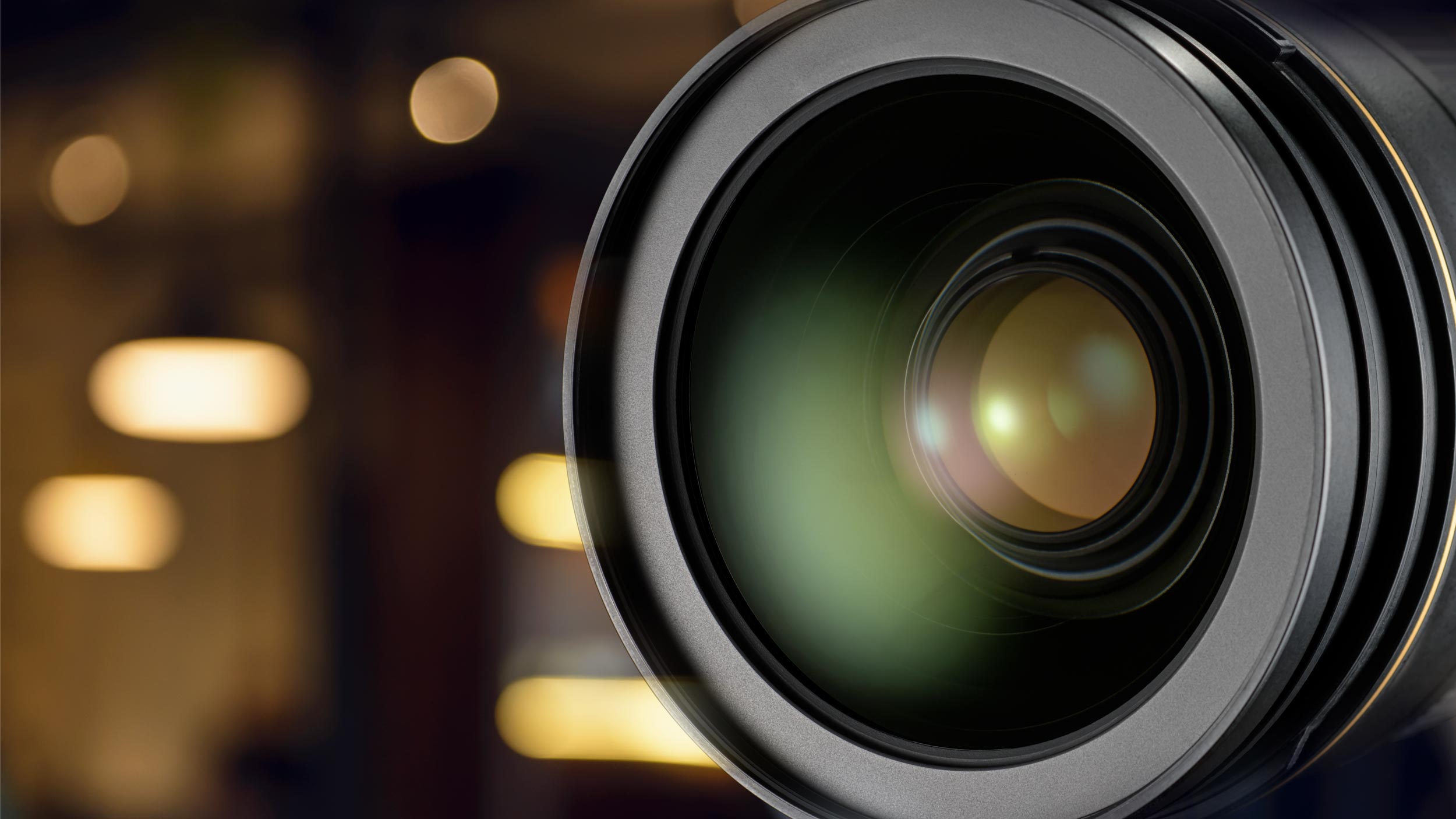
What does the word photography actually mean? The short answer is that photography is the process of creating images by recording light. The slightly more interesting answer is that photography is both a technology and a way of seeing the world.
The word itself gives us a pretty big clue. Photography comes from the Greek words “phōs”, meaning light, and “graphē”, meaning drawing or writing. In other words, photography roughly translates to “drawing with light”. Which is a surprisingly poetic name for something that now mostly involves arguing about megapixels on the internet.
What is photography?
Photography is the process of creating a permanent or digital image by capturing light. A camera controls that light using a lens, aperture and shutter, while a digital camera records it with an electronic image sensor. Film cameras use light-sensitive photographic film instead.
The basic principle hasn’t changed much since the earliest days of photography. Light enters the camera, an image is formed, and that image is recorded so it can be viewed later.
Of course, modern cameras have made the process considerably more complicated. We now have autofocus systems that can track people’s eyes, cameras that can shoot dozens of frames per second, and smartphones that can computationally combine multiple exposures before you even see the finished photograph.
What does the word photography mean?
The literal meaning of photography is essentially “drawing with light”. The term comes from the Greek words phōs, meaning light, and graphē, meaning drawing or writing.
The word “photography” wasn’t really used in the earliest days of the technology. Different inventors and scientists had their own names for their processes, including Joseph Nicéphore Niépce’s “heliography” and Louis Daguerre’s daguerreotype. The word photography eventually became the standard term for the medium we know today.
Is photography an art?
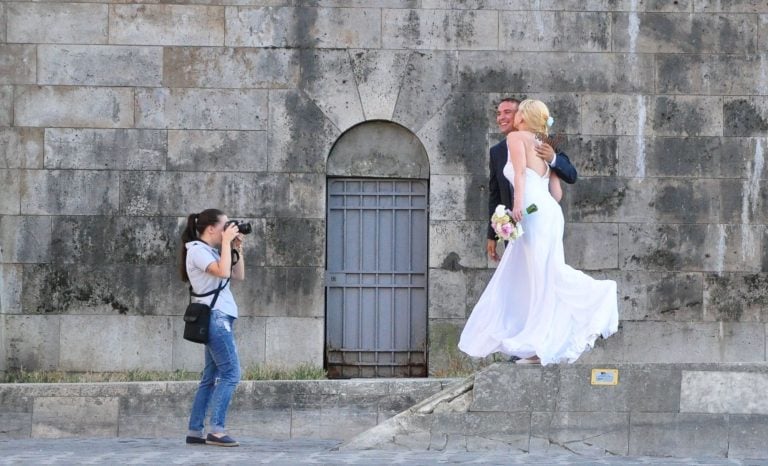
Photography can absolutely be an art form, although not every photograph is necessarily art. A photograph can be used for countless practical purposes. Passport photos, photographs of products, scientific images, crime scene photographs and pictures taken for insurance claims all serve a particular function.
Photography can also be used creatively to express ideas, emotions and personal perspectives. Landscape, fine art, fashion, documentary and street photography can all be considered forms of artistic expression.
The photographer makes creative decisions about composition, lighting, timing, perspective and subject matter. The camera might record the light, but it doesn’t decide what the photograph should mean.
Photography isn’t just about cameras
When people hear the word photography, they usually think about cameras. But photography is much broader than the equipment used to make the image.
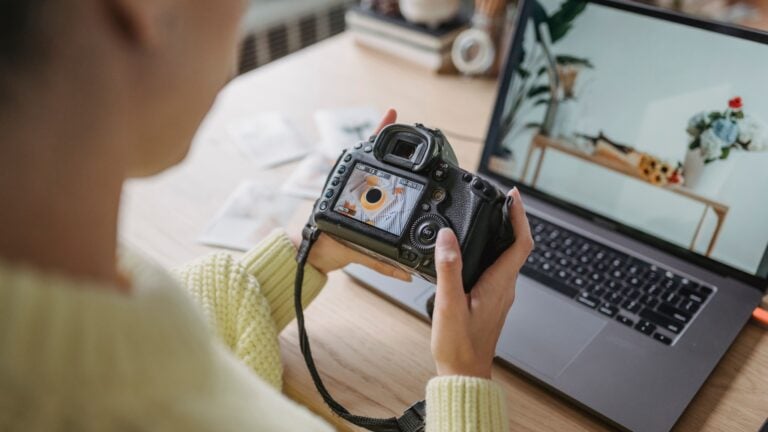
A photograph can be made with a professional mirrorless camera, a film camera, a compact camera or a smartphone. You can even create photographic images without a conventional camera through techniques such as photograms, where objects are placed directly onto light-sensitive material.
The equipment has changed dramatically over the past two centuries, but the fundamental idea remains the same: using light to create an image.
Why is photography important?
Photography has become one of the most important ways we record and communicate information. Photographs document history, preserve memories, tell stories and allow us to see events and places we might otherwise never encounter. Photojournalists have documented wars and political movements, scientists use photography to record discoveries, and families use it to preserve moments that would otherwise exist only in memory.
Photography can also change how we see familiar things. A photograph freezes a particular moment and lets us examine it in a way that isn’t possible when we’re simply experiencing an event in real time.
Sometimes that means documenting something genuinely important. Sometimes it means taking 47 photographs of your dinner because the lighting was nice. Both are technically photography.
How has photography changed?
Photography has changed enormously since the first successful photographic experiments in the 19th century. Early photographs could require hours of exposure and involved complicated chemical processes. Film eventually made photography faster and more accessible, while digital cameras removed the need for photographic film altogether.
Today, photography is almost everywhere. Billions of people carry cameras in their pockets, and taking a photograph has become an almost automatic part of everyday life.
The technology has changed, but the fundamental appeal hasn’t. We still want to capture something that happened once and keep it for later.
What does photography mean in 2026?
In 2026, the word photography is becoming slightly more complicated. Cameras can now use computational photography to combine multiple exposures, remove unwanted objects, enhance details and generate parts of an image that weren’t captured in a single exposure. At the same time, generative AI can create an entirely convincing image of something that never existed in front of a camera at all.
That raises an obvious question: if an image looks like a photograph but wasn’t made by photographing anything, is it actually a photograph?
For a strict definition of photography, the answer is no. A photograph requires light from a real subject to be captured and recorded by a photographic system. An entirely AI-generated image doesn’t meet that definition because no real-world scene was photographed. It is a generated image, not a photograph.
That doesn’t mean AI-generated images can’t be art, or that they aren’t visually interesting. They can be incredibly sophisticated creative works. But calling something a photograph simply because it looks photographic blurs an important distinction between an image captured from reality and an image created from scratch by an algorithm.
There is an important difference between that and using AI as part of photography. A photographer might use AI-powered autofocus, noise reduction, upscaling or object removal while creating a photograph. The original image still came from light being captured by a camera, even if software subsequently helped process it.
The same distinction applies to traditional editing. Dodging and burning, colour grading, cropping, removing a distracting object or combining exposures doesn’t necessarily stop an image from being a photograph. Photography has always involved some degree of processing, whether that happened in a darkroom or inside a computer.
The interesting question for photography in 2026 isn’t whether technology has changed what a camera can do. It clearly has. The bigger question is where we draw the line between photographing reality and generating an image that merely looks like reality.
For photographers, that distinction matters more than ever. When someone says an image is a photograph, we increasingly need to know whether it was captured by a camera, heavily manipulated from a photograph, or generated entirely from a text prompt.
And perhaps that is the biggest change to the meaning of photography in 2026: we’re no longer just deciding what makes a good photograph. We’re also deciding what actually counts as one.
So, what does photography mean?
At its simplest, photography means creating an image by recording light. But the medium has become much more than that simple definition suggests.
Photography can be science, art, journalism, communication, documentation, business or simply a way of remembering what happened on a particular day.
The technology has changed enormously, from glass plates and chemical processes to digital sensors, smartphones and AI-assisted cameras. But at its heart, photography is still about capturing light and using it to create an image.
And perhaps that’s what makes photography so interesting. The technology might be about capturing light, but what we choose to do with that captured light is entirely up to us.
Key takeaways
Photography literally means “drawing with light”, and the term comes from the Greek words for light and drawing or writing. At its most basic level, photography is the process of recording light to create an image. But photography can also be an art form, a way to document history, a profession, a form of communication or simply a hobby.
In 2026, the definition is becoming more complicated as computational photography and generative AI become increasingly sophisticated. An AI-generated image can look exactly like a photograph, but if no real scene was captured by a camera, it isn’t a photograph in the traditional sense.
The cameras might have changed dramatically since the 1800s, but the basic idea remains remarkably simple: see something worth capturing, use light to record it, and try not to accidentally leave the lens cap on.
See more from DIYPhotography.net on Google
Add DIYPhotography.net as a trusted source. This makes
our stories more likely to appear in your Google Search results.
 Add as a preferred source on Google

About Leonard Skapp
Leonard “Len” Skapp is a photographer with a particular interest in cameras, lenses, accessories, camera bags, lens filters, tripods, camera straps, and, on rare occasions, photography itself. Equal parts reviewer and enthusiast, he enjoys digging into the technical details behind the latest gear and translating them into plain English for fellow photographers. He maintains that every purchase is a carefully considered investment, although his bank account and overflowing camera cupboard continue to dispute this claim.
We love it when our readers get in touch with us to share their stories. This article was contributed to DIYP by a member of our community. If you would like to contribute an article, please contact us here.



Join the Discussion
DIYP Comment Policy
Be nice, be on-topic, no personal information or flames.